
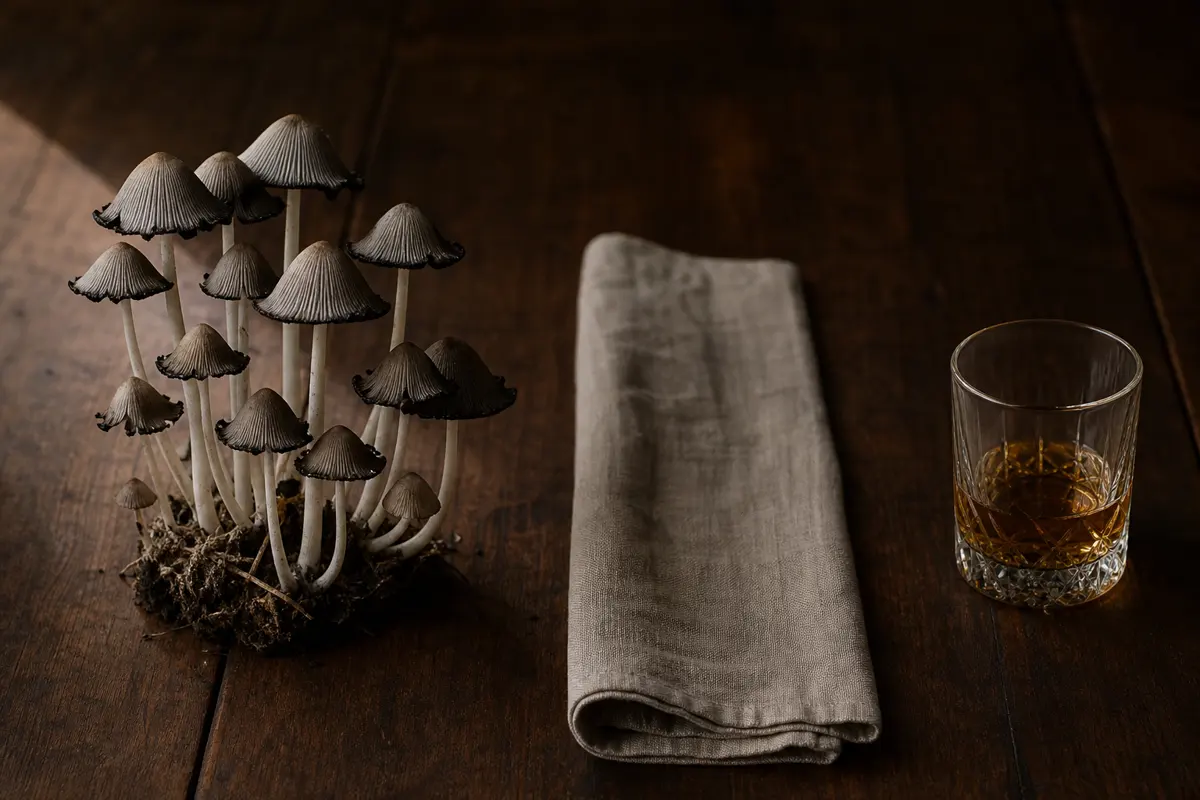
Coprine poisoning is an alcohol-triggered reaction linked most clearly to the common inkcap, Coprinopsis atramentaria. The mushroom meal may cause no immediate problem, then alcohol can bring on flushing, pounding headache, nausea, palpitations, weakness, or low blood pressure.
Warning
Stop all alcohol and call Poison Control at 1-800-222-1222 in the United States when this pattern follows an inkcap meal. Call 911 for chest pain, fainting, breathing trouble, severe weakness, confusion, seizure, or inability to wake the person.
What to do during a suspected reaction
Remove the drink and prevent another alcohol exposure.
Sit or position the person as emergency dispatch directs because dizziness and low blood pressure can make standing unsafe. Do not induce vomiting, force fluids, or give another person's heart or blood-pressure medicine.
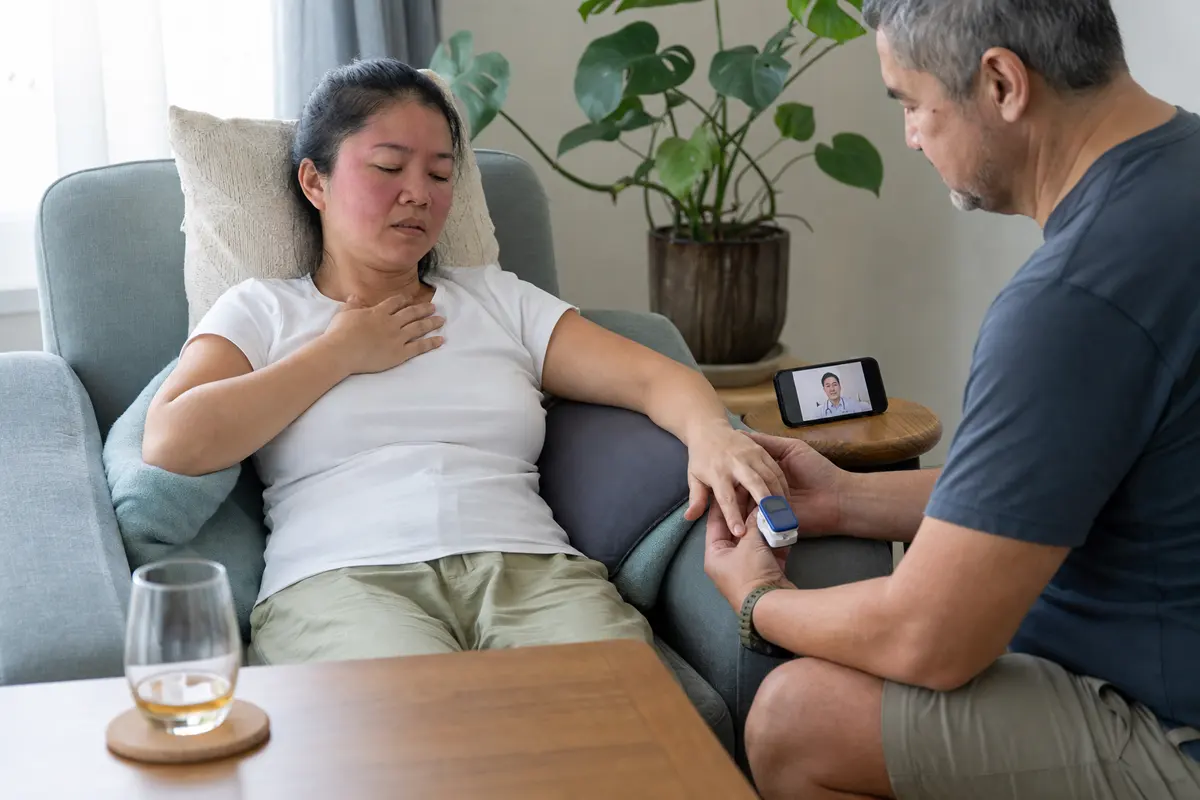
Record the mushroom meal time, alcohol time, first symptom, pulse reading, and whether the person fainted or developed chest pressure. Report the actual drink and amount rather than saying only that alcohol was involved.
These cardiovascular signs determine urgency.
A red face and warmth can look dramatic but remain stable, while fainting, severe breathlessness, persistent chest pain, marked weakness, or an irregular heartbeat can signal a more serious circulation problem or another diagnosis. A watch reading cannot replace a clinical pulse, blood pressure, oxygen level, and electrocardiogram.
Keep the person under direct observation while help is arranged. Do not let someone with dizziness drive, shower alone, or walk around to test whether the reaction has passed.
Two clocks reveal coprine poisoning
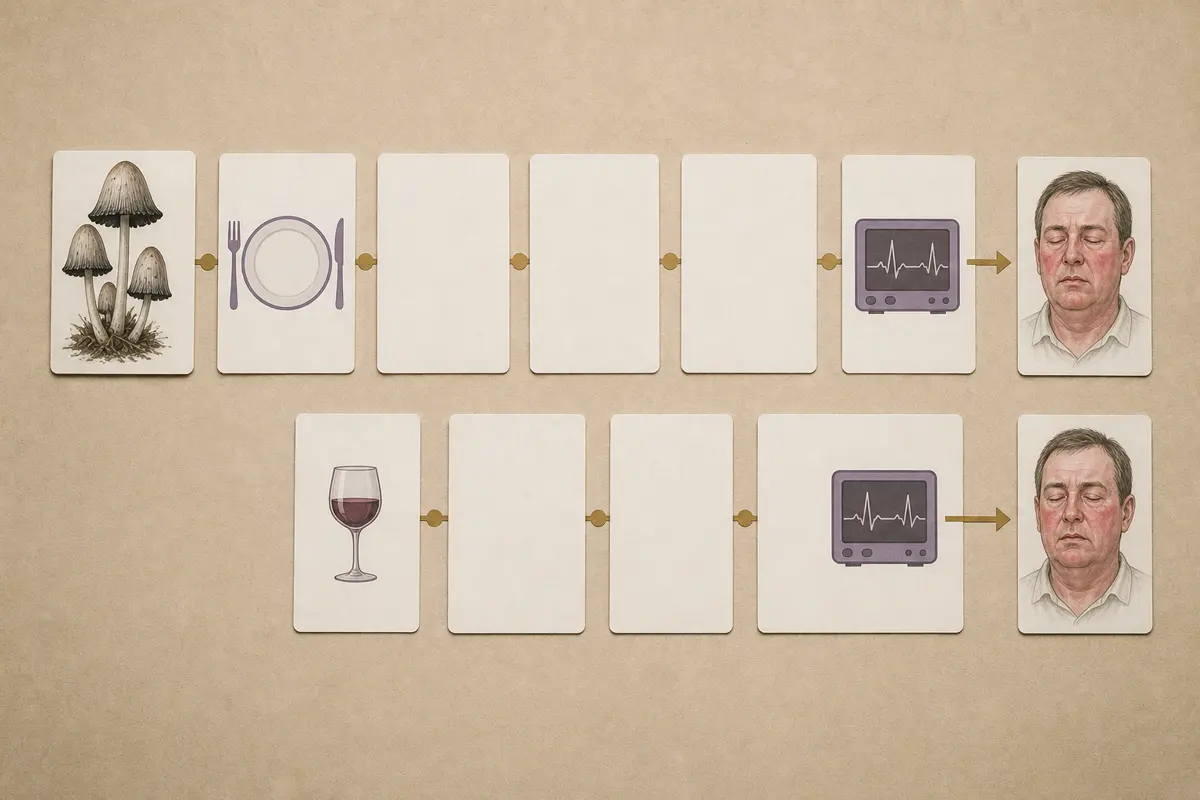
The case makes sense only when the mushroom and alcohol clocks are placed together.
| Clock | Detail to record | Why it changes the interpretation |
|---|---|---|
| Mushroom meal | Species, amount, preparation, date, and time | Establishes when coprine or its active metabolite could affect alcohol metabolism |
| Alcohol exposure | Beverage, food, medicine, amount, date, and time | Identifies the trigger that may cause acetaldehyde to accumulate |
| Symptom onset | First warmth, flush, headache, nausea, dizziness, or palpitations | Tests whether the sequence fits the interaction |
| Repeat exposure | Any alcohol after initial improvement | Explains a second episode without another mushroom meal |
Alcohol may be taken before, with, or after the mushroom, and published reports describe reactions when the timelines overlap within a vulnerable period. The exact window varies, so one remembered cutoff cannot replace poison-center guidance for a specific exposure.
Symptoms commonly follow the alcohol rather than the mushroom.
That sequence explains why diners may blame a later drink, assume the first meal was safe, or miss the connection entirely. It also explains why someone can feel normal after eating, react at dinner the next day, improve, and react again after another alcoholic product.
This means each diner needs a separate record.
One person may avoid alcohol, another may drink a small amount, and a third may have a medicine containing alcohol. Their different outcomes support the interaction but do not prove the mushroom species without specimen evidence.
Specimens and alcohol sources belong in the same history
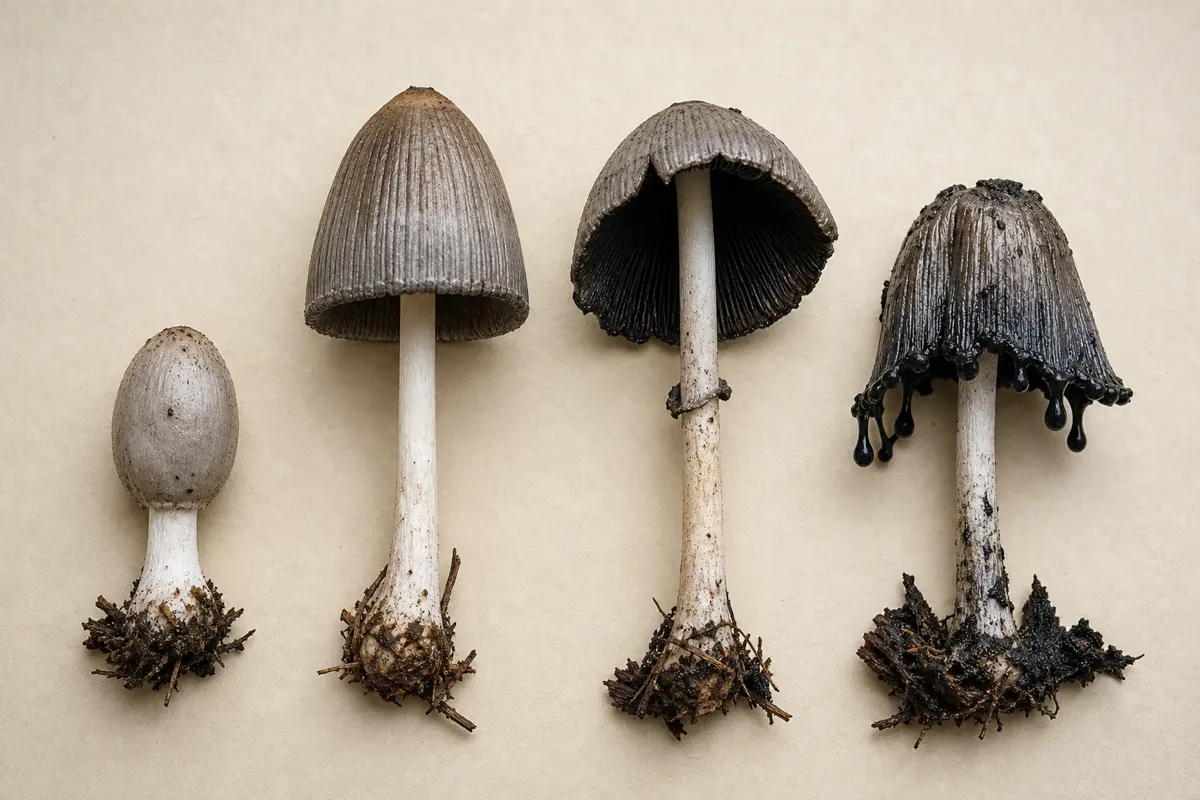
The common inkcap is the best-known source. It often grows in clusters as a wood-decomposer mushroom from buried roots, stumps, disturbed soil, lawns, and paths, with gray-brown caps that can become grooved and gills that darken toward black.
Not every darkening inkcap should be assumed to contain the same amount of coprine.
Several related genera and species share delicate caps, black spores, or self-digesting gills, while chemistry varies. Preserve complete young and mature specimens, stem bases, habitat photographs, and raw or cooked leftovers for an identifier.
The alcohol inventory must be equally specific.
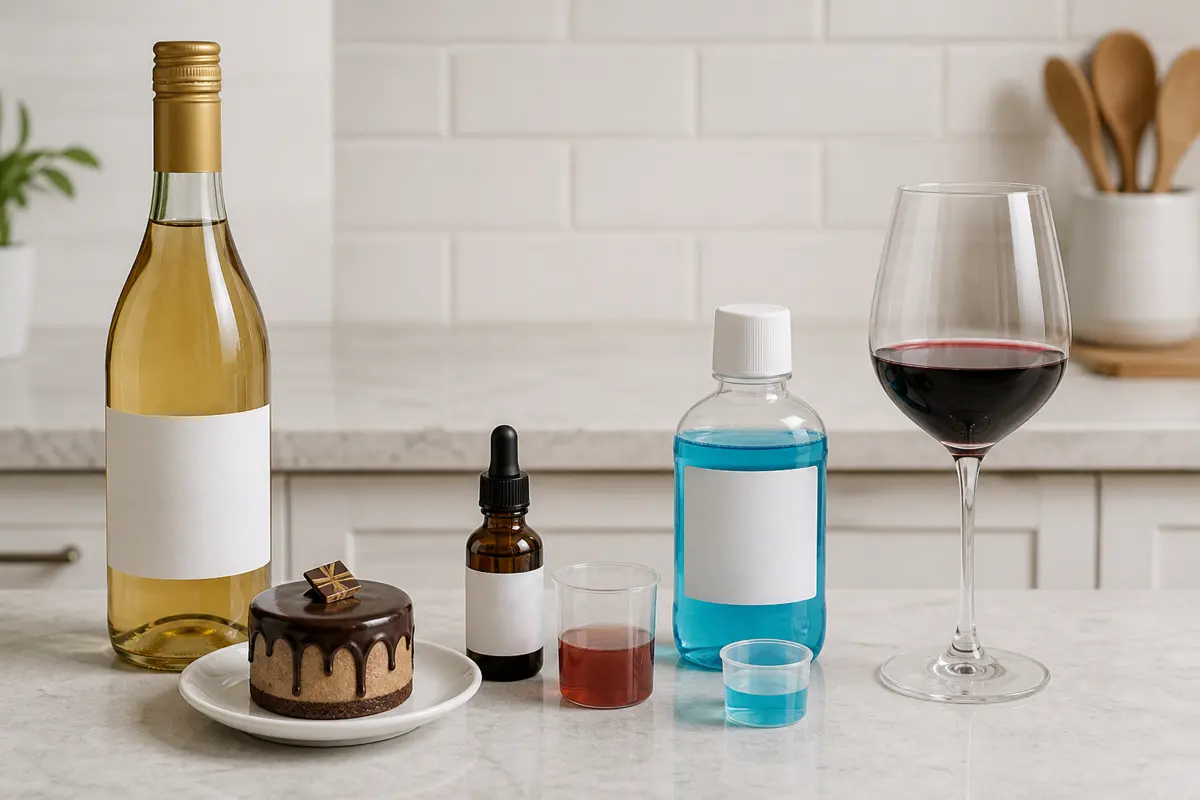
Beer, wine, spirits, cocktails, cooking wine, alcohol-containing desserts, tinctures, mouth products, and some liquid medicines can matter. Tell the poison center about every possible source rather than testing small amounts to see whether symptoms return.
That amount printed on a label may not equal the amount consumed.
A sauce can retain variable alcohol depending on preparation, a mixed drink may contain more than one measure, and a person may underestimate a refill. The team needs the best honest estimate, not a falsely precise number.
Alcohol in a product can matter even when nobody calls it a drink.
A medicinal dose, dessert, or sauce may be small, but the presence and amount still belong in the history because the vulnerable person cannot use taste to measure the interaction. Poison specialists interpret that exposure alongside symptoms rather than declaring every trace equally dangerous.
Acetaldehyde creates the reaction
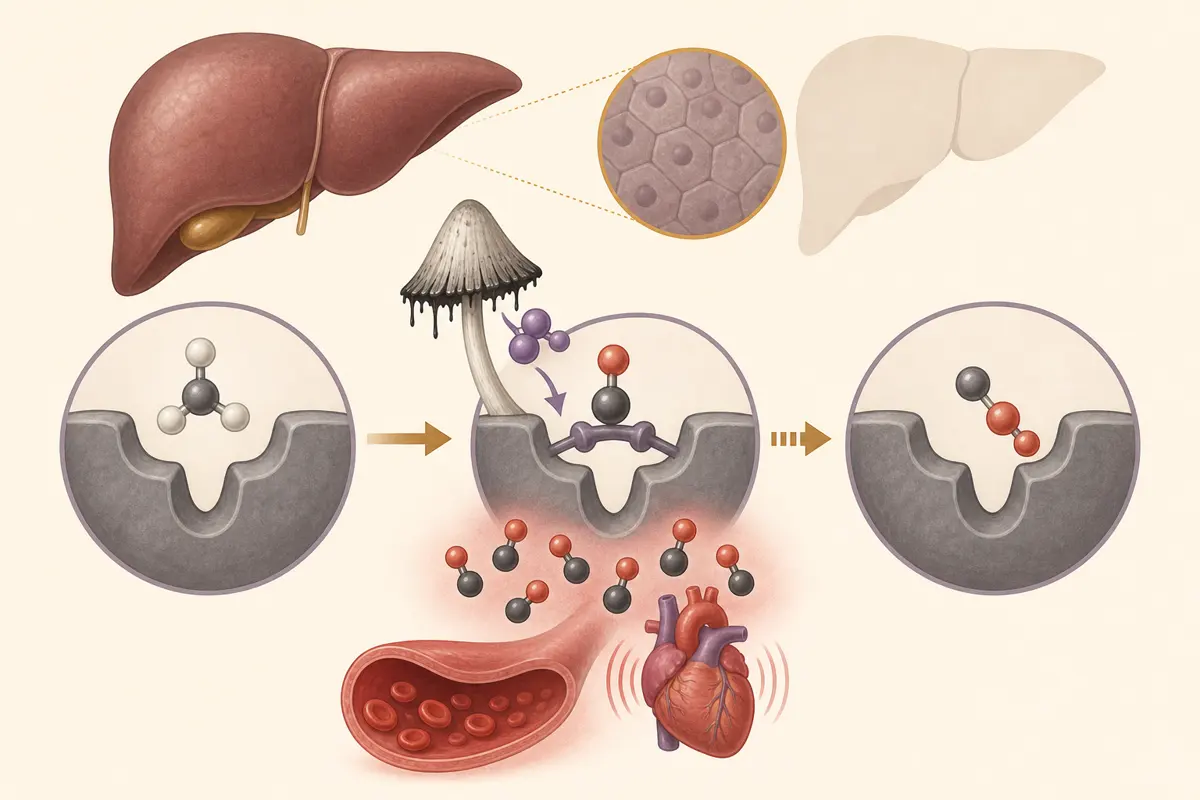
Alcohol is normally converted first to acetaldehyde and then to acetate, with aldehyde dehydrogenase performing the second step that prevents acetaldehyde from building up.
- Mushroom compound
- Coprine is converted to 1-aminocyclopropanol
- Enzyme target
- The metabolite inhibits aldehyde dehydrogenase
- Trigger
- Alcohol then produces acetaldehyde faster than the body can clear it normally
- Body response
- Blood vessels dilate and cardiovascular and gastrointestinal symptoms can appear
Acetaldehyde accumulation explains the characteristic warmth, flushing, throbbing headache, nausea, and palpitations. Vessel dilation can lower blood pressure, while the heart may speed up in response.
This mechanism resembles the reaction produced by disulfiram, but resemblance does not make the exposures identical in dose, duration, or severity. Clinicians still evaluate the actual patient rather than assume a predictable textbook reaction.
The enzyme effect can outlast the visible flush.
That persistence is why another drink may restart symptoms after a person seems recovered. It is also why avoiding only the beverage that triggered the first episode is inadequate.
Although the mushroom alone may be tolerated by some people, species uncertainty, individual health, hidden alcohol, and other compounds prevent that observation from making it a safe food choice for every diner.
What the symptom pattern can and cannot prove
The classic pattern combines rapid warmth and facial or upper-body flushing with a pulsating headache, nausea, palpitations, dizziness, weakness, sweating, or low blood pressure after alcohol. Some people also report tingling, chest discomfort, shortness of breath, or a sense of impending illness.
Onset can be fairly quick after the alcohol trigger, but timing varies with food, dose, beverage, metabolism, and the remaining enzyme effect. A later onset does not authorize a home challenge with another drink.
These findings can also appear in several other conditions.
Alcohol itself can cause flushing, nausea, dehydration, or rapid heartbeat, while an allergy can add hives, swelling, wheeze, or throat symptoms. Panic, arrhythmia, heart disease, sepsis, medication interactions, and other mushroom toxins can also produce cardiovascular distress.
An allergic reaction follows a different emergency pathway.
Rapid lip or tongue swelling, widespread hives, wheezing, throat tightness, or trouble breathing requires emergency care even when flushing began after alcohol. Coprine history must not delay treatment of suspected anaphylaxis.
This is especially true for chest pain.
Do not assume it is merely acetaldehyde when a person has known heart disease, an irregular pulse, fainting, breathlessness, or persistent pressure. Emergency clinicians can assess rhythm, circulation, oxygenation, and other causes while the poison history is reviewed.
That is why the absence of one common sign does not clear the exposure.
Skin tone, lighting, and observation time can hide flushing, and a blood-pressure drop may have recovered before measurement. Witness descriptions and time-stamped photographs can supplement the current examination without replacing it.
Clinical monitoring follows the cardiovascular risk
Assessment starts with airway, breathing, circulation, alertness, temperature, oxygenation, pulse, and blood pressure. An electrocardiogram can reveal rate or rhythm problems that a sensation of pounding heartbeat cannot distinguish.
Clinicians may check glucose, electrolytes, kidney function, hydration, and other tests based on vomiting, fainting, chest symptoms, medical history, or an uncertain mushroom. Repeat vital signs show whether circulation is stabilizing as acetaldehyde effects ease.
These measurements matter most in their direction, not as one dramatic reading.
Pulse and pressure can change as the person lies down, receives fluids, becomes less anxious, or clears acetaldehyde. Repeated values tied to symptoms help distinguish steady recovery from an unstable rhythm or continuing circulatory problem.
This makes supportive care the foundation.
Positioning, monitored fluids when appropriate, nausea control, oxygen or respiratory support, and treatment of a dangerous rhythm or blood-pressure problem follow the patient's needs. There is no household antidote that safely substitutes for this assessment.
Activated charcoal is not an automatic response.
The timing of the meal, vomiting, alertness, and aspiration risk matter, so decontamination belongs to poison specialists. Inducing vomiting or swallowing charcoal at home can create a new airway hazard.
This medical history changes the margin for error.
Heart disease, blood-pressure medicines, dehydration, pregnancy, older age, and other alcohol or drug exposures can alter risk and treatment. Bring a medication list and report recreational substances without withholding details.
SafetyMuscarine Poisoning: Why Sweating and Salivation Start FastRecurrence after apparent recovery
Visible flushing may fade before aldehyde dehydrogenase activity has fully recovered. A new alcohol exposure can therefore recreate acetaldehyde accumulation without another mushroom meal.
That improvement starts a prevention period, not a test period.
Avoid all alcohol-containing products for the interval directed by the poison center or treating clinician. References often advise caution for several days, but individual timing and product exposure vary, so the medical instruction should control.
These hidden sources are the common trap.
Cooking wine, extracts, fermented drinks, tinctures, mouthwash that is swallowed, and liquid remedies may expose a recovering person. Read labels and ask a pharmacist when a product's alcohol content or safer alternative is unclear.
The product review should include what was already used as well as what is planned.
If a liquid medicine or dessert preceded the first reaction, save its container and report the serving time. If it has not been used, set it aside until a pharmacist or clinician confirms the avoidance plan.
That is why a tiny drink should never be used as a challenge.
A small amount that produces no symptoms cannot prove enzyme recovery, while a provoking dose can cause another cardiovascular reaction. Waiting through the advised interval is safer than testing the boundary.
Recurrent symptoms need a fresh assessment when they are severe, prolonged, or different from the first episode. Another exposure, dehydration, a heart problem, or a different toxin may now be contributing.
Evidence that supports recovery
Save complete mushrooms, raw scraps, cooked food, packaging, drink containers, and time-labeled photographs without tasting anything or delaying care.
The sample should stay separate from food that anyone might eat. Place dry specimens in a paper container when practical, refrigerate cooked leftovers as poison specialists direct, and keep photographs in their original resolution so cap, gill, stem, base, and habitat details remain visible.
A description such as "gray mushroom" carries little identifying value after cooking. Notes about clustered growth, buried wood, blackening gills, cap breakdown, and the exact collection place give a mycologist more usable evidence than a common name alone.
Write one line per person.
Include the mushroom portion, every alcohol source and estimated amount, the interval between exposures, any alcohol used in food, whether symptoms began before or after alcohol, pulse or blood-pressure readings, treatment, improvement, and recurrence. An unaffected person who did not drink alcohol is informative, but different portions and health histories mean that person cannot prove the mushrooms safe.
This recovery means more than fading skin color.
Clinicians look for stable blood pressure and rhythm, clear alertness, controlled nausea, safe walking, adequate hydration, and no ongoing chest or breathing symptoms. The observation period follows the severity, health history, and uncertainty in the exposure.
No routine blood test confirms coprine exposure by itself.
The diagnosis rests mainly on the species evidence, paired timing, characteristic reaction, and exclusion of conditions that need different care. Blood tests and an electrocardiogram assess consequences such as dehydration, electrolyte disturbance, kidney stress, or an abnormal rhythm rather than proving which mushroom compound was present.
A normal measurement taken after the flush has faded must be placed on the timeline.
It can document recovery at that moment, but it cannot erase an earlier faint, low pressure reading, or irregular pulse reported by a witness. Photographs, device records, dispatch notes, and treatment times help clinicians reconstruct changes that are no longer visible during examination.
The specimen record has limits too.
A photograph may support an inkcap identification, yet cooking and self-digestion can remove the gill and cap characters needed for confidence. A qualified identifier may narrow the species from intact material, habitat, and development stage, while the medical team continues treating the syndrome without waiting for a perfect name.
Recovery decisions also account for uncertainty when a mixed meal contains more than one species and the specimen record is incomplete.
If several wild species entered the pan, rapid flushing after alcohol does not rule out a second toxin with a delayed phase. The team may extend observation or testing when the basket history, symptom timing, or remaining specimens leave that possibility open.
Children, older adults, pregnant patients, and people with heart disease or medicines that affect blood pressure need an especially cautious assessment. Their symptoms do not prove a stronger mushroom dose, but the same vasodilation, vomiting, or rapid pulse can leave less room for compensation.
An uncertain mixed basket changes the recovery decision because early improvement from an alcohol-triggered reaction does not exclude a second mushroom toxin with a delayed liver or kidney phase.
After discharge, follow the alcohol-avoidance and return precautions exactly. Fainting, chest pressure, irregular heartbeat, breathing trouble, confusion, persistent vomiting, or a stronger recurrent reaction needs prompt care.
This encounter should name both exposures in the record.
That makes later recurrence easier to interpret and gives every diner a clear warning about alcohol during the vulnerable period.
When several people react, the poison center may ask for details that support public-health follow-up. Collection site, remaining mushrooms, serving list, and beverage history can reveal whether the same paired exposure explains the group or whether another food hazard needs investigation.
Document who ate mushrooms but no alcohol, who drank but ate no mushrooms, and who had both exposures. Those natural comparisons can strengthen or weaken the suspected interaction, although unequal portions and individual health differences prevent them from proving causation.
Safeguards for the next meal
Do not treat a common inkcap as an ordinary edible mushroom when guests may have consumed alcohol before arriving, take an alcohol-containing medicine, or have a health condition the collector does not know about.
Separate uncertain inkcaps from edible collections and preserve complete young specimens before the gills dissolve. A black spore print or inky cap alone does not establish species or chemistry.
Tell every diner the exact mushroom and the alcohol interaction before food is served.
Cooking does not remove the need to manage the interaction, and a past symptom-free meal is not a guarantee. The safest choice is to exclude the mushroom whenever identification or alcohol avoidance is uncertain.
Sources & References
- https://namyco.org/interests/toxicology/mushroom-poisoning-syndromes/
- https://pubmed.ncbi.nlm.nih.gov/21370948/
- https://pubmed.ncbi.nlm.nih.gov/39882097/