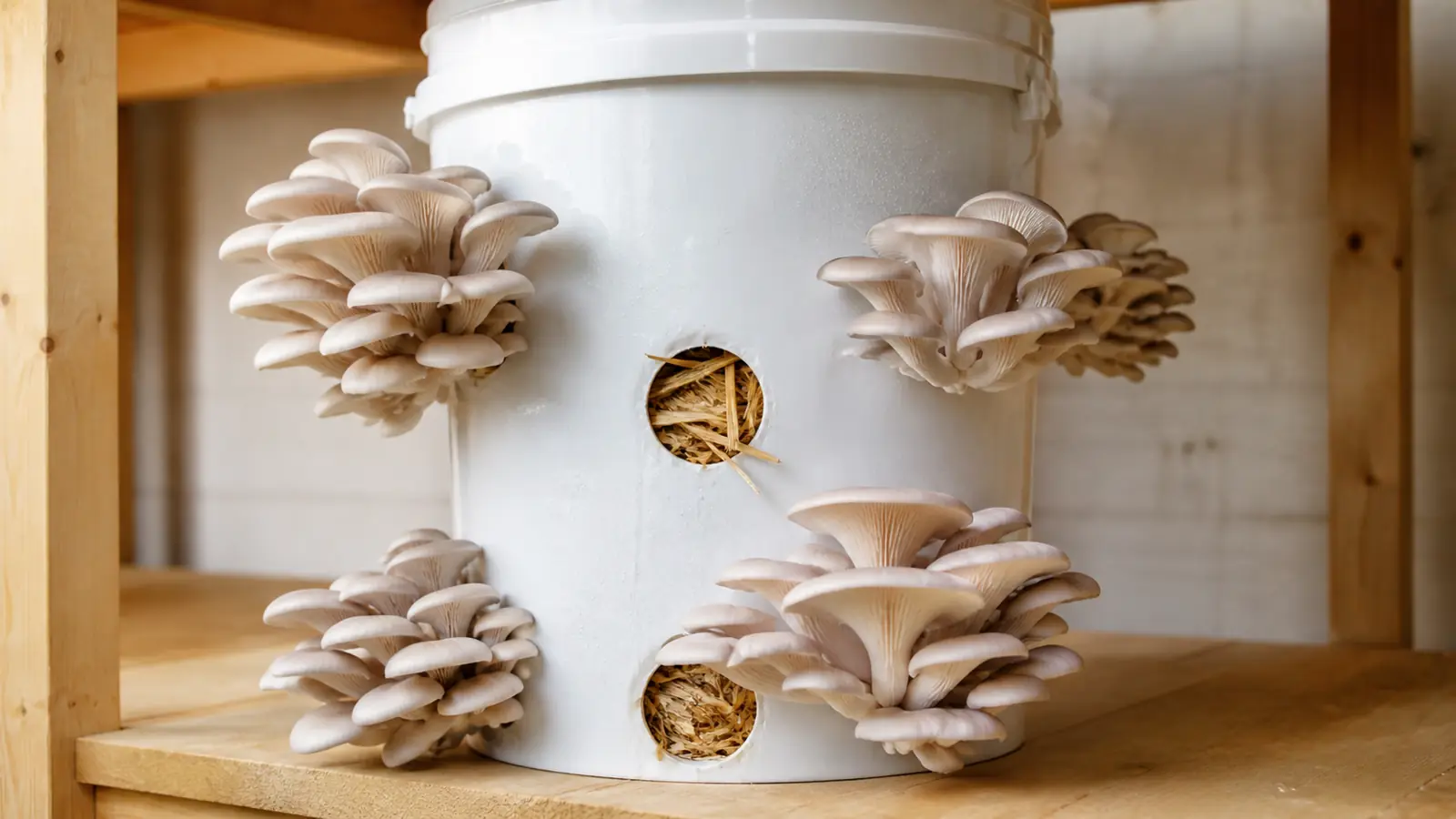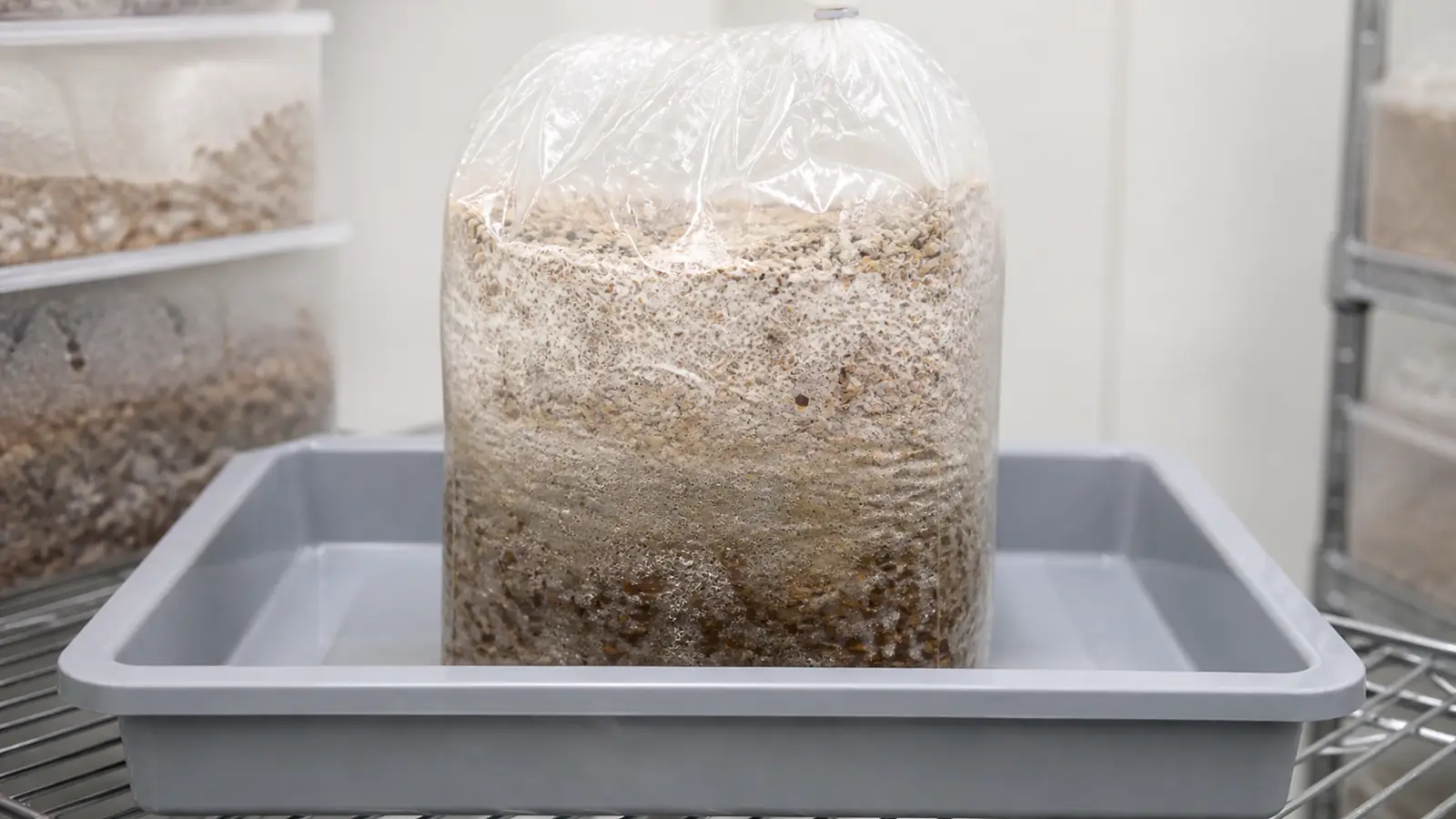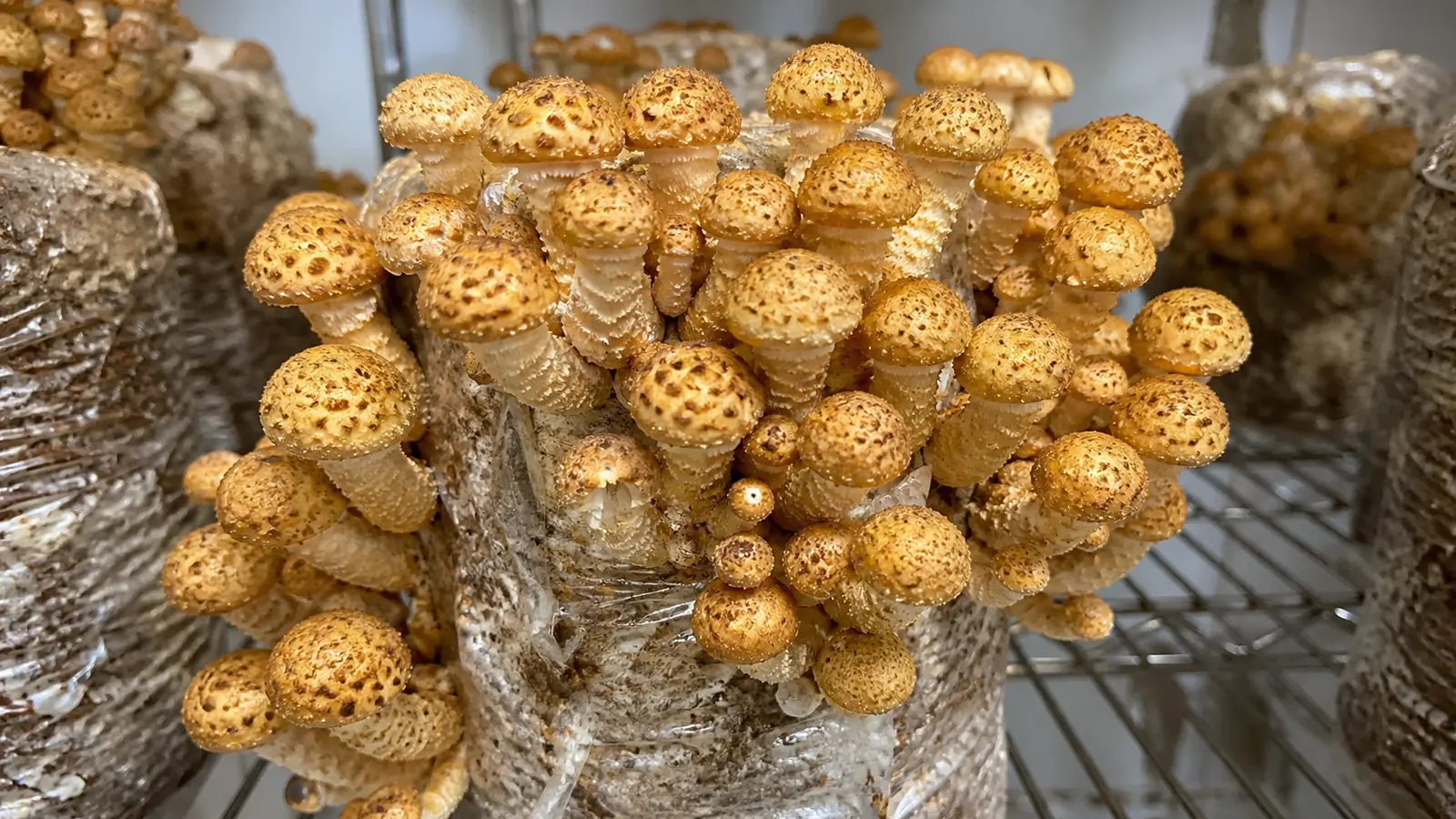
Chestnut mushroom cultivation starts with verified Pholiota adiposa and one complete substrate system whose formula, moisture, container, heat treatment, incubation, fruiting climate, and harvest decisions stay together.
Which mushroom is sold as chestnut mushroom?
- Cultivated subject
- Verified Pholiota adiposa
- Excluded grocery product
- Brown Agaricus bisporus sold as chestnut mushroom
- Excluded related crop
- Pholiota microspora sold as Nameko
- Material boundary
- Traceable cultivated spawn, block, or bottle
Chestnut mushroom names more than one grocery product, so scientific identity must come before the grow method. This guide covers verified cultivated Pholiota adiposa, a clustered wood decomposer with yellow-brown scaled caps.
Brown button-form Agaricus bisporus is also marketed as chestnut mushroom in some countries, but its different body form and production system mean a supplier must name P. adiposa before the substrate or climate evidence below applies.

The Nameko crop P. microspora is another separate species in the same genus. Its glossy amber clusters do not authorize transferring a Nameko schedule to Chestnut on the strength of genus alone.
Wild material is excluded because cap color and scales cannot authenticate a culture, so record the producer, scientific name, strain or lot, container format, and supplied stage instructions before changing its environment.
That record keeps later observations attached to the culture that produced them. If the scientific name or lot identity is missing, pause before choosing a formula or fruiting schedule because appearance cannot repair the broken evidence chain.
Growing MushroomsWhat Does a Mushroom Farm Actually Cost to Start?Should you start from a block or from spawn?
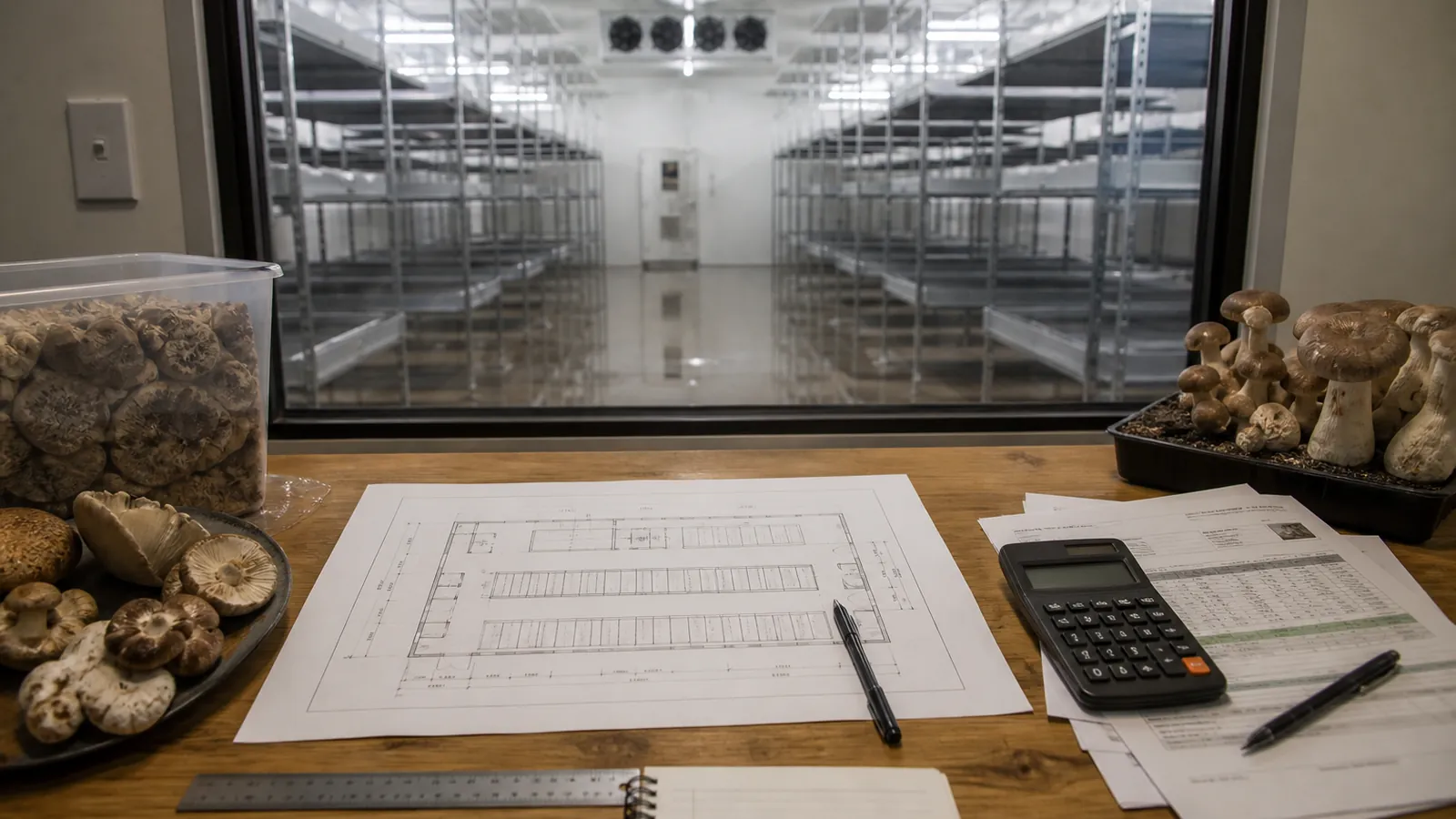
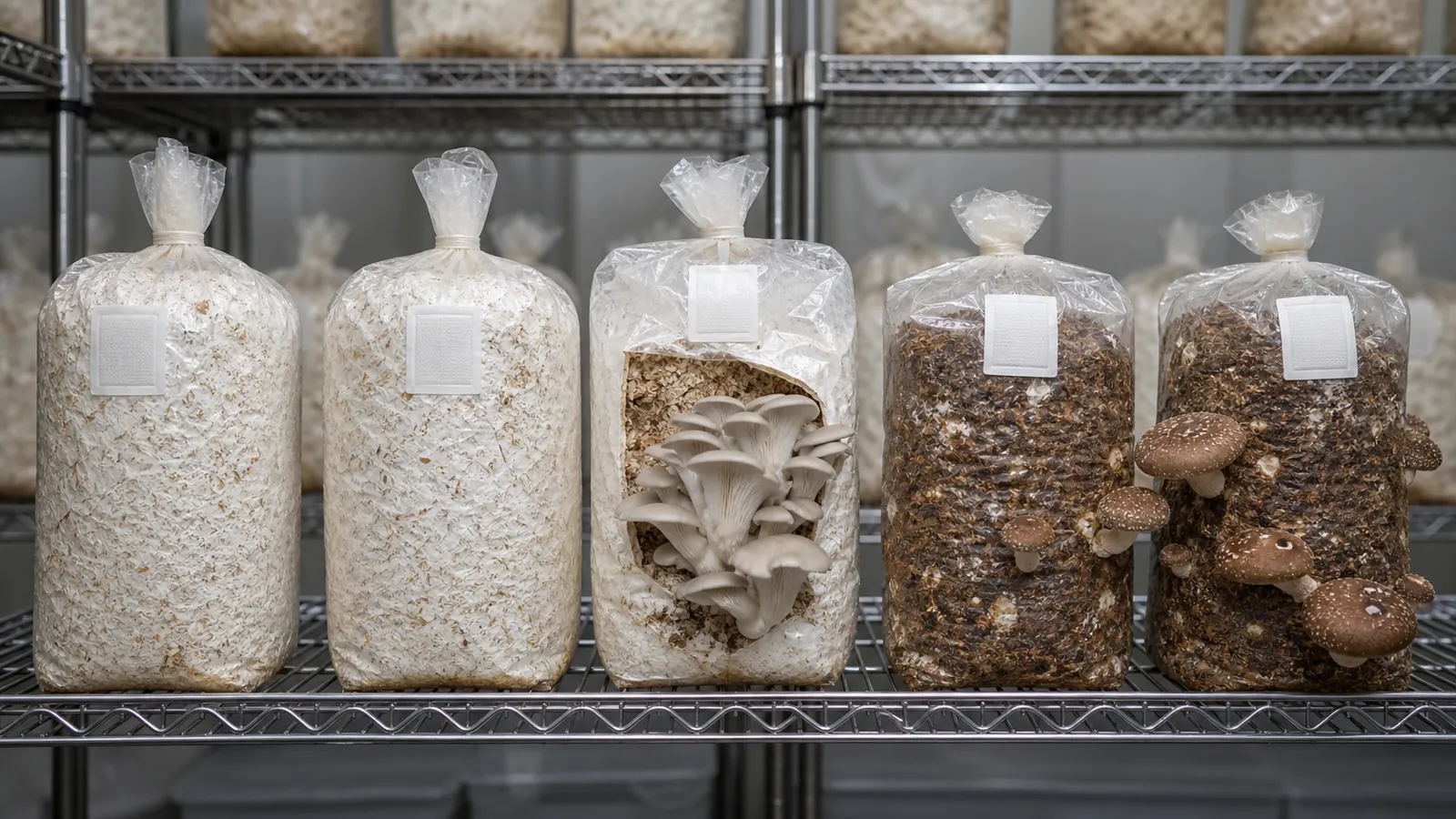
A prepared colonized block is the practical route when you can manage fruiting conditions but cannot pressure sterilize supplemented woody substrate. The producer handles the formula, heat treatment, cooling, inoculation, and early contamination controls.
Starting from verified spawn gives control over the formula and container, but it transfers every upstream defect to the grower. Pressure-vessel operation remains governed by the equipment manual and proper training.
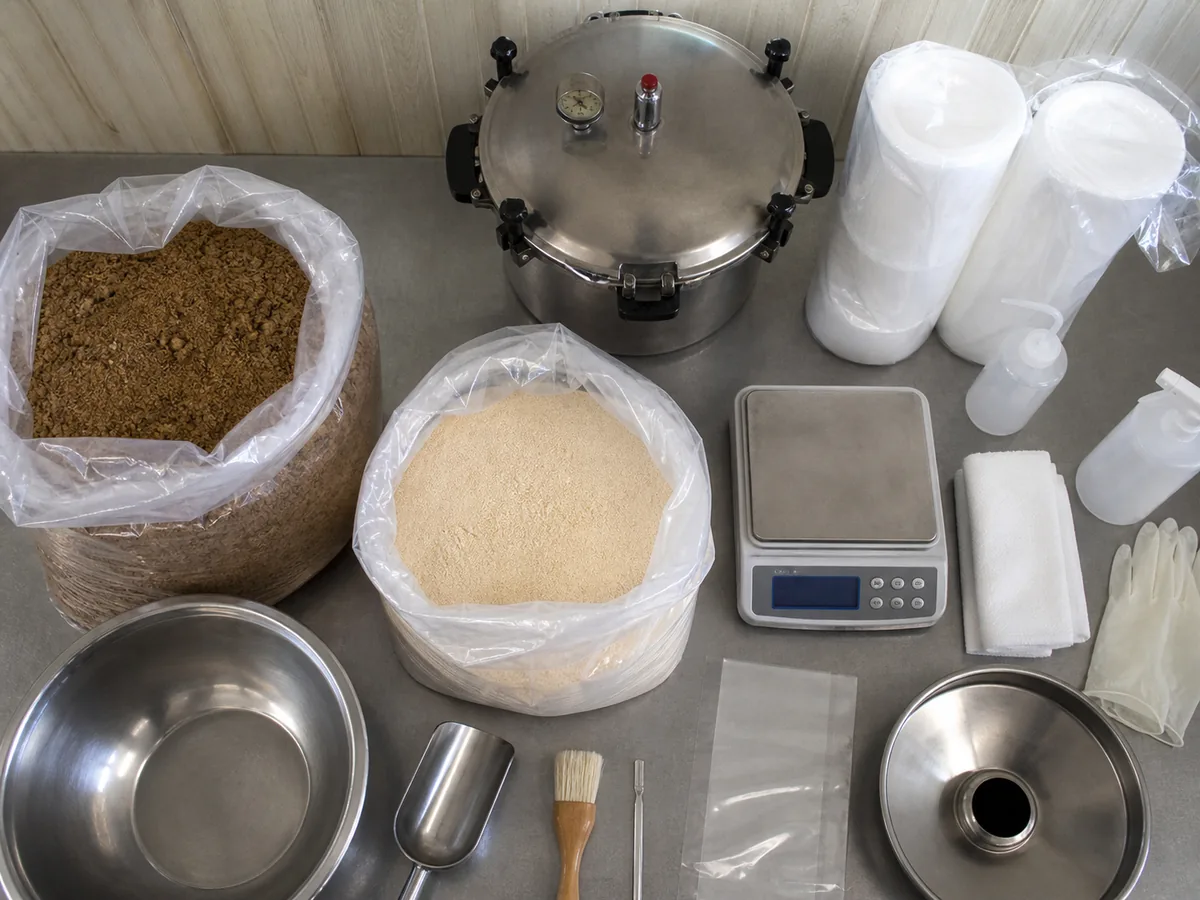
Each tool marks work that the prepared-block route leaves upstream, while choosing spawn brings formula measurement, heat processing, complete cooling, clean inoculation, and incubation records into the home process before fruiting can begin.
| Decision signal | Prepared block | Spawn route |
|---|---|---|
| Sterile substrate work | Producer-owned | Grower-owned |
| Formula and moisture record | Supplied | Must be preserved by grower |
| Clean transfer | Not part of home start | Required |
| Best fit | First crop or limited sterile equipment | Established sterile workflow |
SCORE Lowest preparation burden | Prepared species-labeled block
SCORE Most process control | Verified spawn with a complete validated substrate chain
A delivered block still needs a stage check. Confirm whether colonization or maturation remains, how the surface is exposed, which climate belongs to the strain, and whether the producer supports another flush.
The choice therefore depends on which work you can verify rather than convenience alone. A defect visible inside an unopened delivered block belongs with the supplier, while a defect after home inoculation requires review of substrate preparation, cooling, transfer, and incubation.
A beginner who lacks validated sterile processing should choose the species-labeled colonized block because it preserves a known preparation chain. Spawn is appropriate only when the grower can execute and document every upstream control that the route transfers.
What substrate do chestnut mushrooms need?
Sawdust is an ingredient rather than a recipe because particle size, supplement, water, fill, container, gas exchange, sterilization, cooling, inoculum, and strain act together, so copying one percentage creates an untested process.
The 1979 bottle study tested sawdust and rice bran and found its best spawn run at a 5-to-1 volume ratio with about 70 percent water. Researchers used 800 ml polypropylene bottles and reported that airtight covers inhibited growth.
The airtight-cover result makes gas exchange part of the historical bottle system rather than a separate fruiting-room setting. A formula can keep the same ingredients and water yet behave differently when its incubation cover changes the exchange available to growing mycelium, so container closure belongs in the preparation record.

That study sterilized its bottles at 100 C for six hours before inoculation. This documents one complete historical treatment and does not replace a modern validated pressure-sterilization cycle for a different container.
The 5-to-1 ratio, roughly 70 percent water, 800 ml bottle, cover behavior, heat treatment, and 23-day spawn-run result form one chain whose reported outcome cannot validate a process that removes the bottle size or cover condition.
Growing MushroomsHow Do Mushroom Sawdust Blocks Work from Mix to Fruit?Which substrate formula performed best?
A recent study tested 40 percent sawdust, 30 percent corn straw, 17 percent corn flour, 10 percent bran, and small mineral additions, sterilized that formula at 121 C for 90 minutes, then compared 50, 65, and 80 percent substrate water.
| Source-owned system | Materials and water | Processing evidence |
|---|---|---|
| Sawdust-rice bran bottles | 5:1 by volume, about 70% water | 800 ml bottles, 100 C for six hours |
| Sugi woody substrate | Sugi sawdust with cotton hull, corncob meal, and rice bran | Its own 500 g bottle and cultivation sequence |
| Recent residue formula | Sawdust, corn straw, corn flour, bran, minerals; 50%, 65%, and 80% water tested | 121 C for 90 minutes in that experimental system |
The recent experiment found stronger primordium number and biological efficiency at 65 percent water than at 50 or 80 percent within its formula. That result supports moisture control without turning 65 percent into a universal target.
The recent residue system couples its sawdust, corn straw, corn flour, bran, minerals, water treatment, and 121 C sterilization for 90 minutes. Its stronger result at 65 percent water compares moisture levels inside that exact system and does not answer which water level belongs to another particle blend or container.
The Sugi system adds a third complete chain with its own supplemented woody formula, 500 g bottle, dark culture, and later fruiting climate. These three studies are useful as bounded systems because their differences reveal which records must remain together, not because their ingredients can be combined into a preferred recipe.
Key takeaway
Choose one documented substrate chain. Ingredient percentages cannot be separated from water, container geometry, gas exchange, heat penetration, cooling, clean inoculation, and strain history.
How do you know colonization is complete?
Complete colonization means coherent white growth has reached through the visible substrate without persistent bare channels, while loose waterlogged material, expanding color, or an abrupt growth boundary changes the decision from waiting to isolation.
- Historical bottle spawn-run example
- 23 days under its preferred tested conditions
- Recent study culture stage
- 40 days at 25 C before post-ripening treatment
- What determines the schedule
- Verified strain, formula, container, and supplier protocol
Those observations describe different stages and systems rather than a universal 23-to-40-day window, so advance only when the supplied schedule and visible condition agree.
The historical 23-day result describes the preferred spawn run in its sawdust-rice bran bottles, while the recent 40-day value belongs to culture before a later treatment. One number cannot replace the other because the studies measured different systems and stage boundaries.
During the vegetative part of the mushroom life cycle, mycelium binds and consumes the substrate before the crop shifts toward reproduction. Early exposure can leave nutrient-rich bare material undefended.
Check sides and bottom under steady light, then compare the same container over time. Sound white growth should advance or remain coherent, while a stationary wet pocket or colored colony needs containment.
Open a partly colonized block to force pins
Opening early breaks the comparable closed stage and exposes unfinished substrate, so hold a sound advancing block within its verified incubation conditions.
A useful transition decision needs three agreements: white growth has reached through the visible material, the substrate remains coherent without a foreign boundary or wet collapse, and the verified schedule authorizes exposure. A failure in any one check keeps the container closed.
Move forward only after complete sound coverage and the supplier's maturation gate
What conditions trigger the first pins?
Published climates belong to full treatments rather than a menu of interchangeable numbers, so prepare temperature, humidity, light, drainage, and safe room ventilation before exposing a mature block.
The Sugi sawdust study cultured 500 g bottles at 22.5 C in darkness for about ten weeks, then used 14 C, more than 95 percent relative humidity, and about 700 lux for fruiting. Those values belong together with its strain and bottle system.
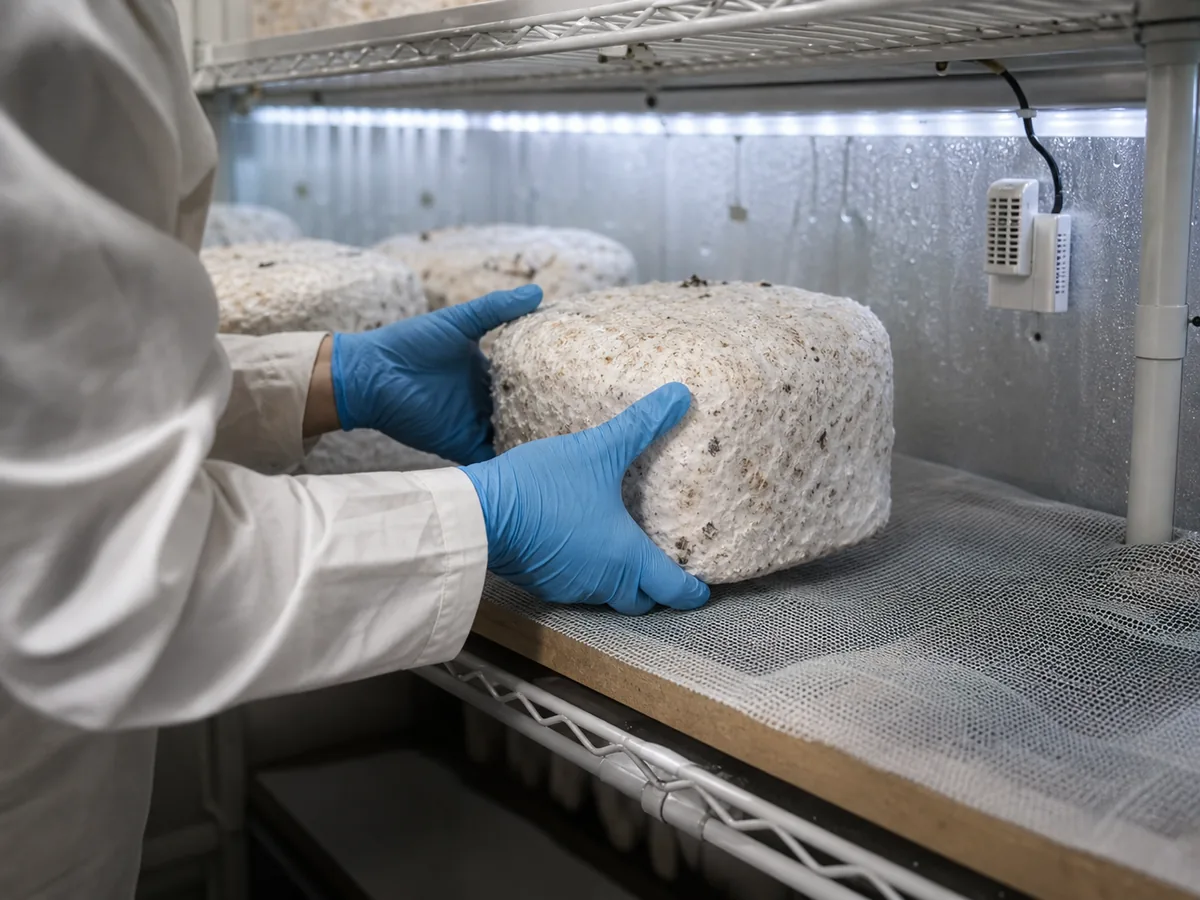
The newer study focused on high-temperature adaptability and found that 35 C produced many primordia that later shrank and died. That finding warns against treating initial pin count as proof that a hot treatment supports development.
The Sugi values describe a linked shift from 22.5 C dark culture to 14 C fruiting with more than 95 percent humidity and about 700 lux, and keeping that sequence intact matters because the fruiting measurements were not tested as independent upgrades for the recent residue formula.
The 35 C result separates induction from successful development. Primordia can appear under a treatment that fails to carry them forward, so continued enlargement and firm tissue must confirm that the climate supports more than initiation.
| Control | Evidence to preserve | Home decision |
|---|---|---|
| Temperature | Strain-owned incubation and fruiting stages | Follow one verified schedule |
| Humidity | Surface hydration without pooling | Measure at crop height |
| Air | Container exchange during incubation, safe room ventilation during fruiting | Avoid airtight incubation and direct fan blast |
| Light | Modest source-owned fruiting exposure | Do not copy one study into another system |
A humidifier slows evaporation but cannot replace air exchange, while a fan aimed at caps can exchange air and dry them simultaneously, so adjust one control and watch the next growth interval.
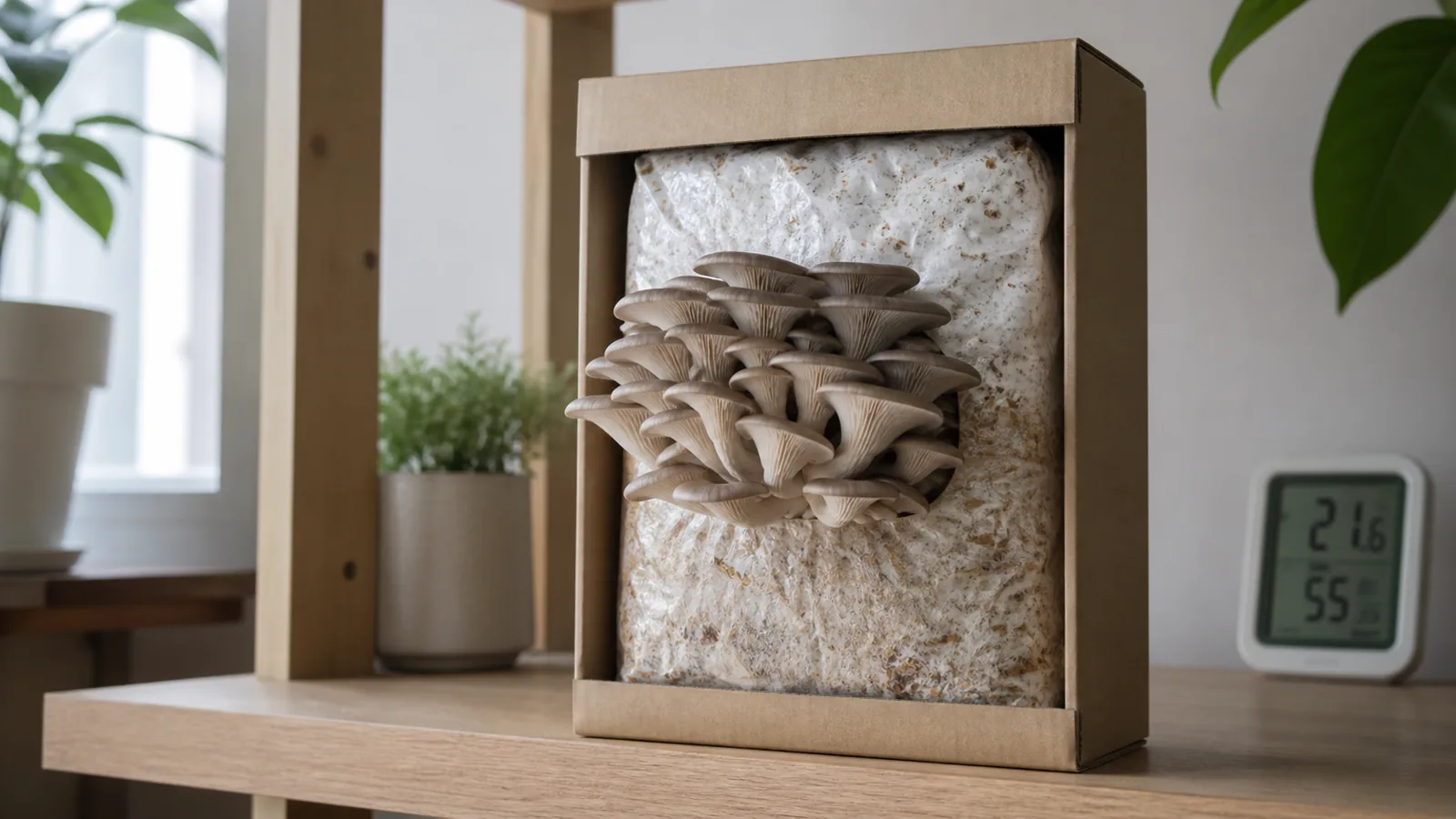
Place temperature and humidity sensors at crop height rather than beside the room door or humidifier outlet. A stable distant reading cannot show whether the exposed block alternates between pooled condensation and drying airflow.
Tip
Test the empty fruiting shelf first. Stable sensors, drainage, modest light, and safe ventilation make crop response easier to interpret.
Read the whole cluster as a changing pattern
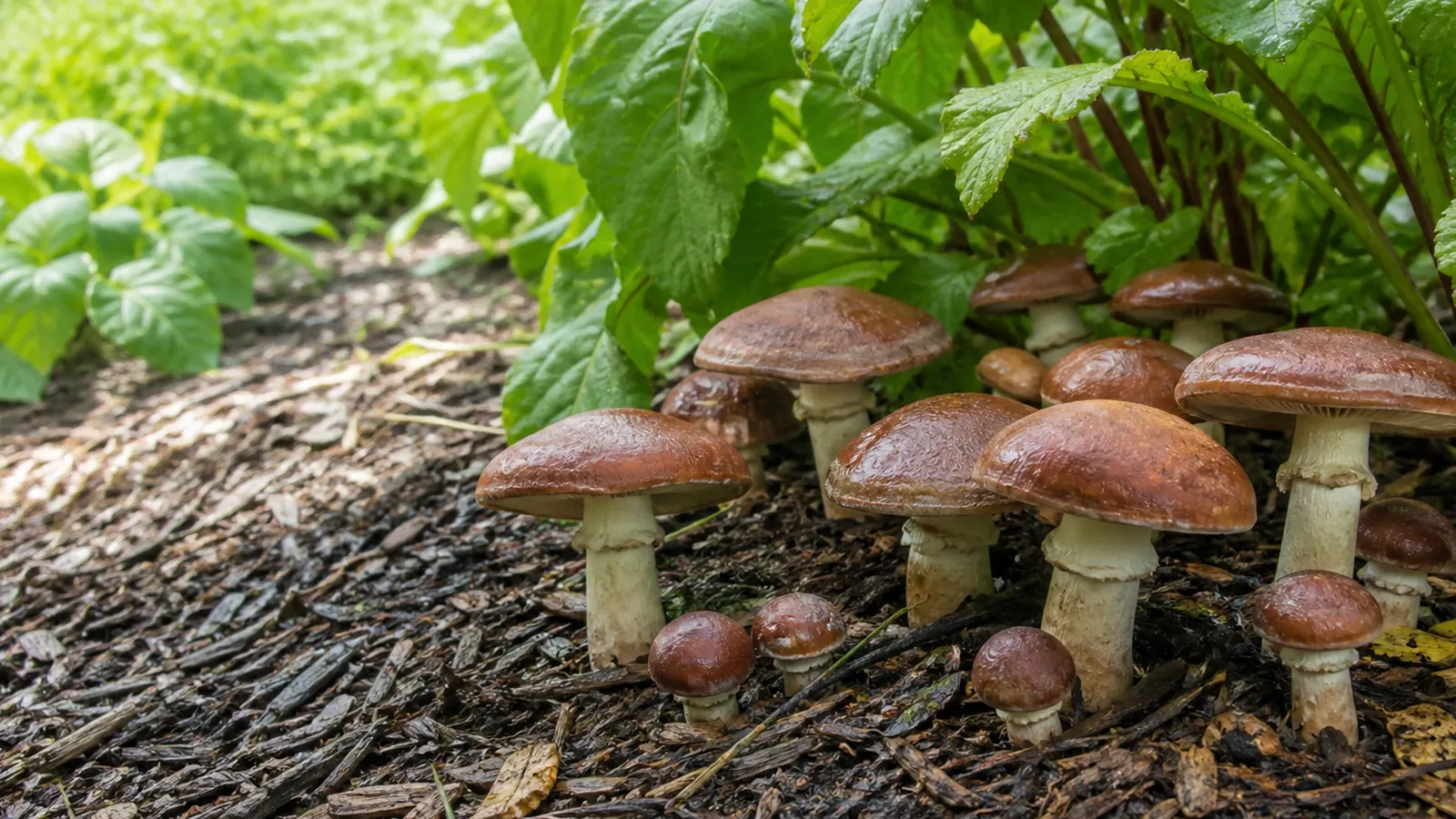
Sound P. adiposa development produces clustered stems under yellow-brown caps with darker scales that must be read beside tissue firmness, surface moisture, substrate condition, and continued enlargement.
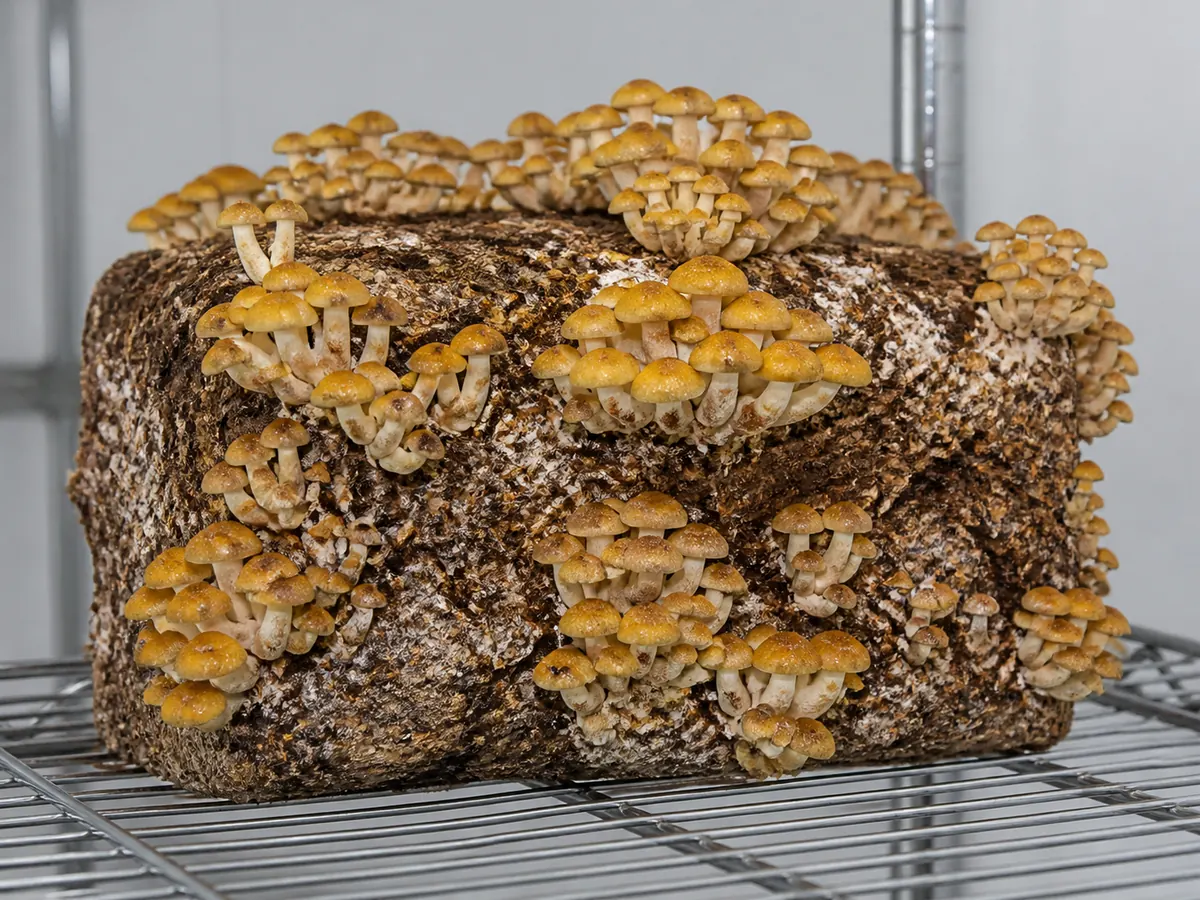
The whole-cluster view establishes whether stems, caps, spacing, and the exposed substrate are changing together. A shared slowdown across the cluster points toward a common room or substrate pressure rather than one damaged cap.
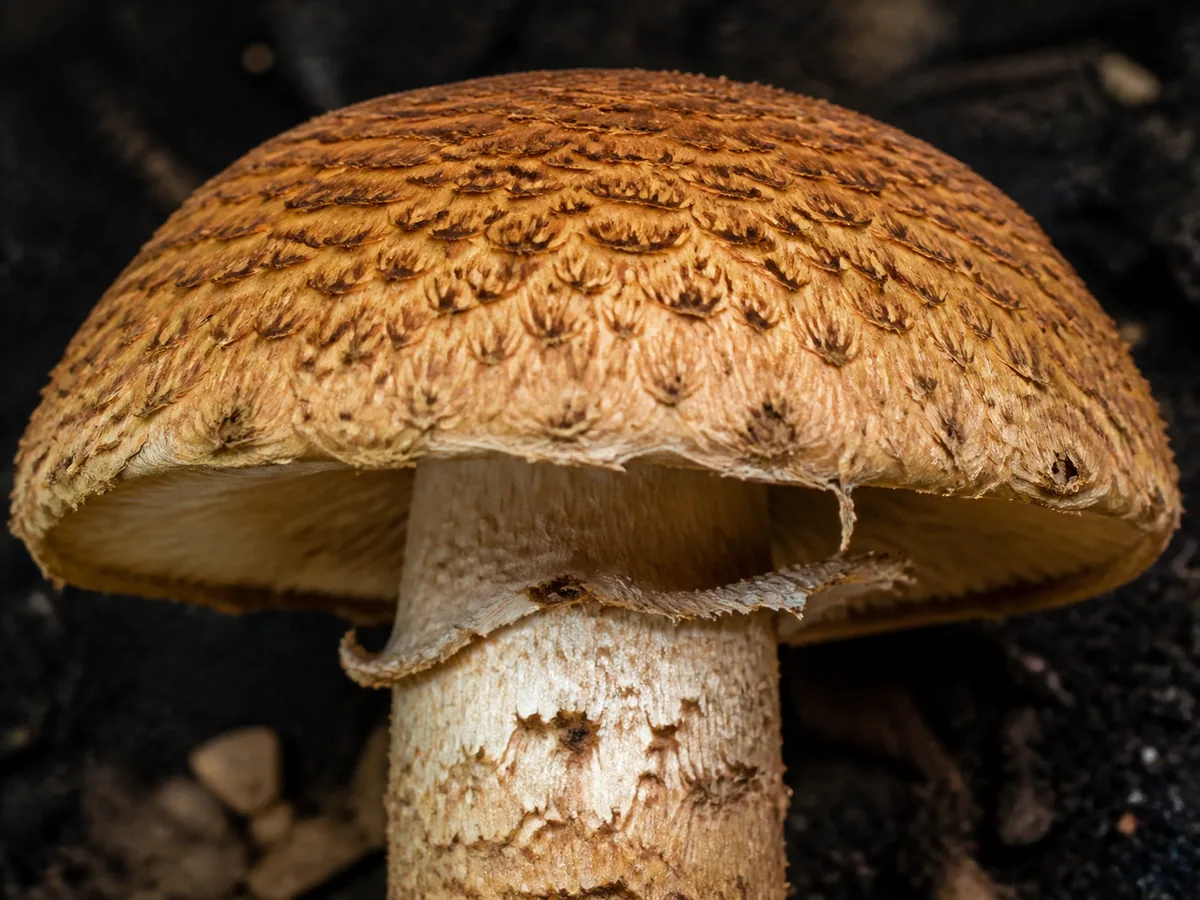
The macro view then tests whether the expected dark scales sit on firm tissue with intact margins. Scales alone establish neither identity nor crop health, so read them with daily enlargement, stem strength, surface moisture, and the attached substrate.
| Crop evidence | Likely interpretation | Bounded response |
|---|---|---|
| Firm clusters continue enlarging | Development is progressing | Keep the verified range steady |
| Dry margins or stalled tiny pins | Excess evaporation | Check humidity and direct airflow |
| Long weak stems with small caps | Air may accumulate near the crop | Check shelf obstruction and safe exchange |
| Soft tissue above pooled water | Surface remains too wet | Stop direct wetting and improve drainage |
The recent experiment recorded primordia after about 7 days at 65 percent substrate water, compared with about 10 days at 50 percent and 8 days at 80 percent. These are experimental checkpoints, not promised dates for another strain or block.
The timing comparison is meaningful inside the shared formula because water level was the tested difference, but outside that experiment a later pin can reflect strain, container, colonization, or climate, so the date cannot diagnose the cause by itself.
If cap margins dry while stems remain compact, check evaporation before changing temperature. If the whole cluster stretches under small caps, inspect shelf obstruction and air movement first, then compare the next growth interval with the one before it.
When do you harvest, and will it fruit again?
Cut a cohesive cluster while its tissue remains firm
Harvest readiness belongs to cap and tissue condition rather than a universal day. Choose a cohesive cluster while caps remain firm, scaled surfaces are intact, and stems still hold cleanly together.

Follow the supplier's cutting or twisting instruction, then trim attached substrate away from the food, handle the joined base instead of squeezing caps, and refrigerate the clean crop promptly in a shallow breathable container.
Later cap expansion may change texture without proving decay, so pair appearance with firmness, odor, and storage history. Soft collapsing tissue or foul odor is not a normal maturity signal.
Cutting a firm cluster answers what to do with the crop. It does not show whether the remaining substrate is sound enough for another flush.
Reset, isolate, or retire from substrate evidence
Foreign green, black, pink, or sharply spreading growth across the substrate is not a cap scale. Keep the container closed, move it away from sound cultures, and follow local disposal guidance.

Broader mushroom contamination controls apply after immediate containment, and a suspect bag must not be opened for smelling or harvested through expanding foreign growth, wet decay, or foul odor.
Substrate should be isolated when foreign color, wet decay, unexplained collapse, or foul odor appears because the closed boundary protects nearby cultures. It should be retired when its structure is spent, production repeatedly stalls, or the supplier's supported flush cycle is complete.
Isolation answers an immediate containment risk, while retirement ends a container that no longer supports a sound next cycle. Neither decision is reversed by harvesting an apparently firm cluster from a different container.
After a clean harvest, inspect the remaining surface without digging into it. Reset only when the substrate stays cohesive, drains correctly, smells normal, shows no foreign colony, and the supplier supports another flush.
Warning
Never cultivate unidentified wild Pholiota, and never salvage food from a container with expanding foreign growth, wet decay, or a foul odor.
The closing action must match one visible state.
| Final state | Action |
|---|---|
| Sound cohesive substrate and supported next flush | Reset by supplier instruction |
| Foreign color, wet decay, unexplained collapse, or foul odor | Isolate closed and dispose safely |
| Spent structure, repeated nonproduction, or completed supplier cycle | Retire |