
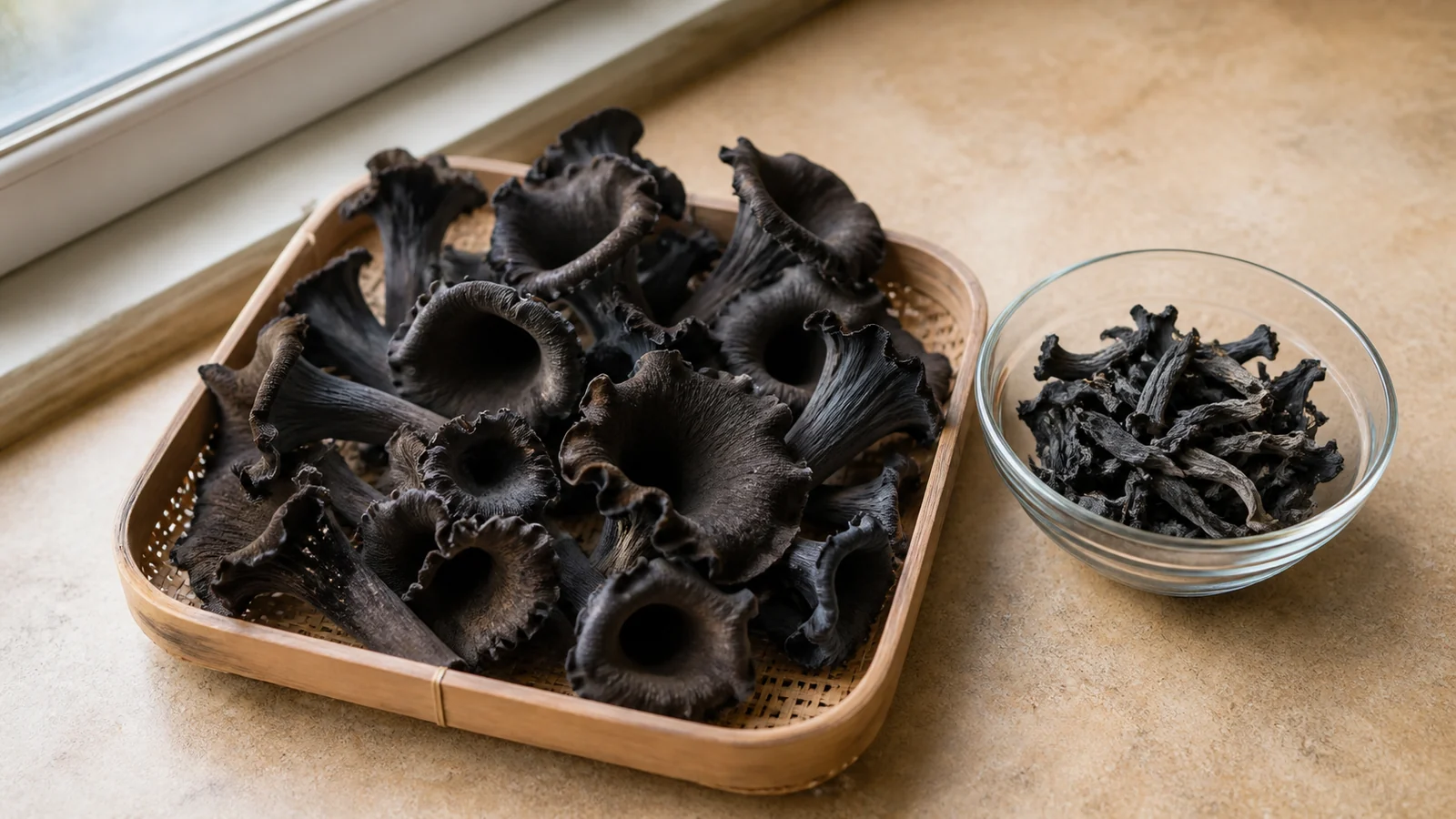
Professionally identified black trumpets can be a reasonable pregnancy food when the batch is traceable, sound, cleaned one mushroom at a time, and thoroughly cooked. A self-foraged handful, an unmarked gift, or a dark powder with no species record is a different exposure and belongs outside the meal.
No human pregnancy study specific to culinary black trumpets was identified. The answer therefore rests on official pregnancy food-handling guidance, wild-mushroom sale controls, university descriptions of the species, and poison-center advice for uncertain exposure.
Why the source label decides whether this is a food question
Black trumpets are recognized edible mushrooms, but that status applies to correctly identified Craterellus fruit bodies in sound condition. The label edible is the conclusion of identification, not a shortcut around it.
The form in front of you changes which evidence is still available because a fresh batch can retain whole shapes and lot records, while drying, chopping, and powdering progressively remove the features an identifier used.
| Form | Evidence to expect | Pregnancy decision |
|---|---|---|
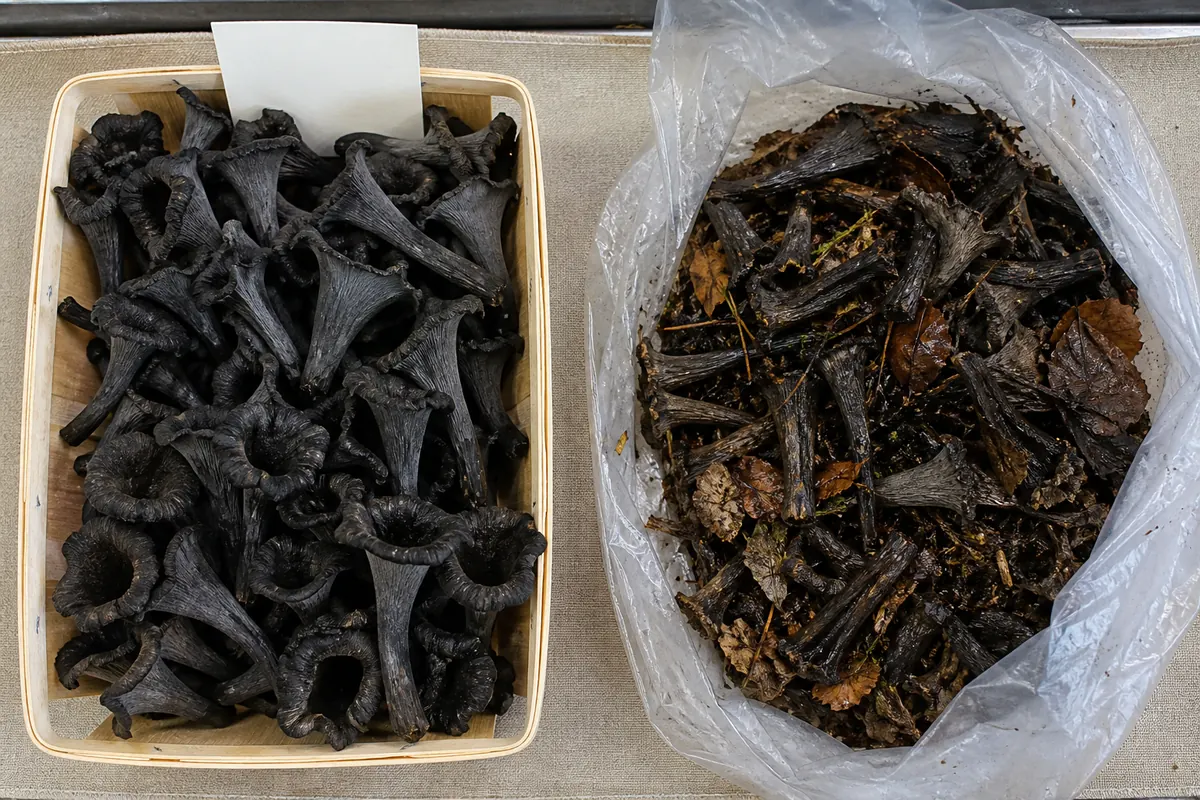
| Fresh retail batch | Supplier, harvest lot, fresh-state identification, and intact mushrooms | Reasonable to assess for condition, cleaning, and cooking |
| Sealed dried product | Named species, processor, intact package, lot or date, and recognizable pieces | Reasonable only when the processor and product history are credible |
| Restaurant dish | A kitchen that can name its wild-mushroom supplier and preparation | Ask before ordering when the source is unclear |
| Self-foraged, gifted, mixed, or unmarked | No dependable chain from fresh identification to the plate | Skip the dish during pregnancy |
This table does not turn packaging into proof because it only shows which questions remain answerable before ordinary kitchen handling begins.
CDC guidance says pregnant people are more likely to become ill from certain foodborne germs and should follow clean, separate, cook, and chill practices. It describes washed and then cooked produce as the safest choice, but those steps only begin after the mushroom species is settled.
A menu description such as wild black trumpet says what the cook believes the ingredient is. It does not reveal who identified the mushrooms, whether different collections were mixed, or whether the pieces were verified before they were dried.
If the seller cannot answer those questions, choose a cultivated mushroom from a controlled commercial supply because that substitution resolves the uncertainty without asking heat to do a job it cannot perform.
SafetyAre Golden Oyster Mushrooms Safe During Pregnancy?Which records make a wild batch traceable?
Wild-mushroom rules vary by jurisdiction, but several official programs show what responsible control looks like. Washington requires permitted wild mushrooms to be individually identified in the fresh state before sale or service, and its list includes black trumpet.
Virginia also lists Craterellus fallax among species eligible for wild retail sale. The same guidance says wild mushrooms should be thoroughly cooked, should show no rot, slime, mold, sogginess, or insect infestation, and should not be mixed across different harvest locations or dates.
Those requirements matter because a mistake becomes harder to isolate once several woodland trips enter one tray, while a retained harvest lot allows a seller to identify where and when the mushrooms were collected if a complaint or recall follows.
Vermont guidance asks commercial foragers to keep location, species, amount, and sales records. A buyer does not need to inspect the paperwork at the counter, but a supplier should be able to trace the batch rather than offer only a confident common name.
These checks translate foraging safety rules into a purchase decision rather than a field lesson. They do not ask a pregnant customer to identify a wild mushroom from memory.
Restaurant staff may need time to ask the chef or supplier, especially when black trumpets arrive dried. A specific answer about the distributor and batch is useful, while statements such as local, natural, or picked by a friend do not establish control.
Breathable packaging matters because trapped moisture speeds deterioration, so condensation, compressed wet pieces, or a sour smell is a condition failure even when the species was identified correctly.
SafetyAre Hedgehog Mushrooms Safe During Pregnancy?What the hollow funnel changes in cleaning
A black trumpet is thin and hollow toward the base, with folded dark surfaces that can hide forest debris. That shape makes one-by-one opening more useful than a quick wipe over the outside of a pile.
Split larger specimens lengthwise and open every deep fold before rinsing, then remove soil, leaf fragments, pine needles, small insects, and badly damaged tissue instead of expecting the pan to make the debris disappear.
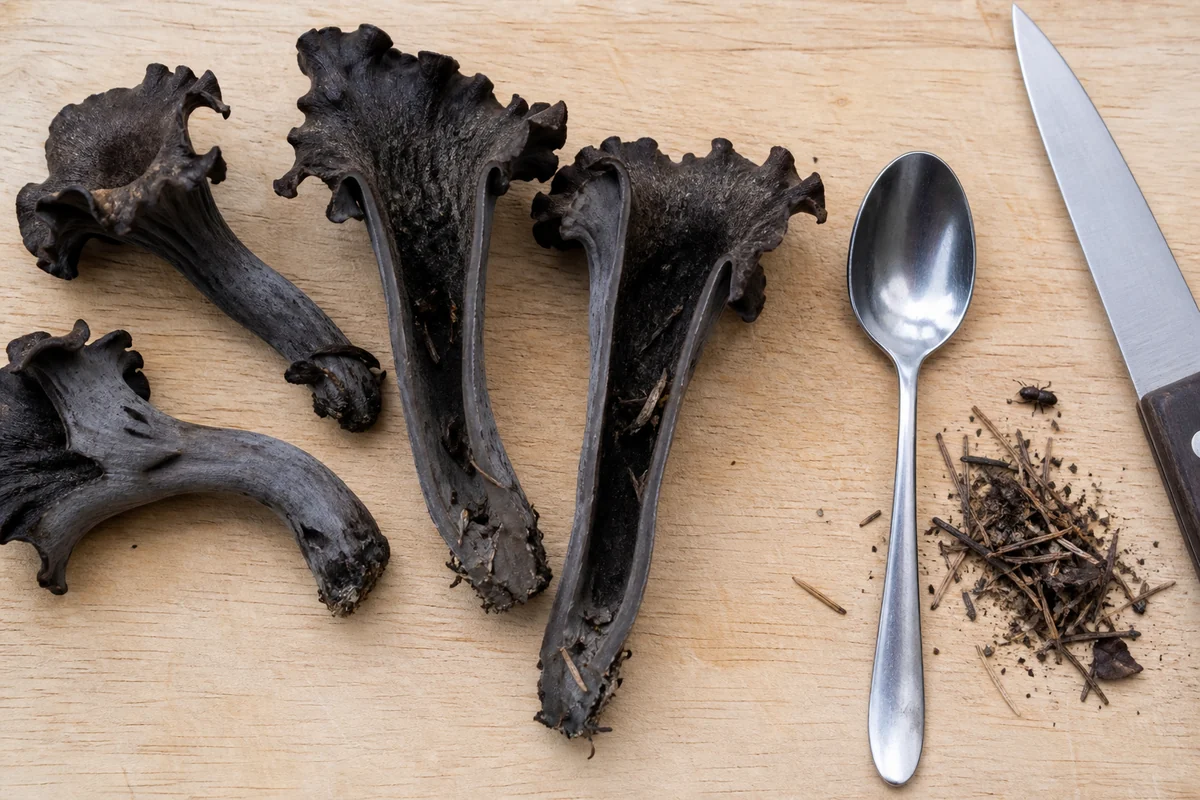
FDA produce guidance says to wash under running water, cut away bruised or damaged areas, and avoid soap, detergent, bleach, and commercial produce wash. Washing reduces surface bacteria but does not sterilize the mushroom or correct a species error.
Dried black trumpets need a second inspection after rehydration because dirt lodged in a fold can release into the bowl. Lift the mushrooms out instead of pouring the sediment back over them, then rinse the softened pieces if grit remains.
If the soaking liquid will flavor a sauce or soup, let sediment settle and pass the liquid through a fine coffee filter before boiling it in the dish. Discard cloudy liquid that smells fermented, musty, or otherwise wrong rather than treating concentrated aroma as proof of quality.
Powder presents the narrowest evidence window because you cannot see species, damage, insects, or mixed fragments, so the processor and sealed lot carry nearly the entire purchase decision.
Keep raw mushrooms and their debris away from ready-to-eat foods, clean the board and knife, and wash your hands after handling. These ordinary controls are especially useful when the mushrooms arrived directly from a woodland harvest.
Cook until the whole portion reaches the same finished state
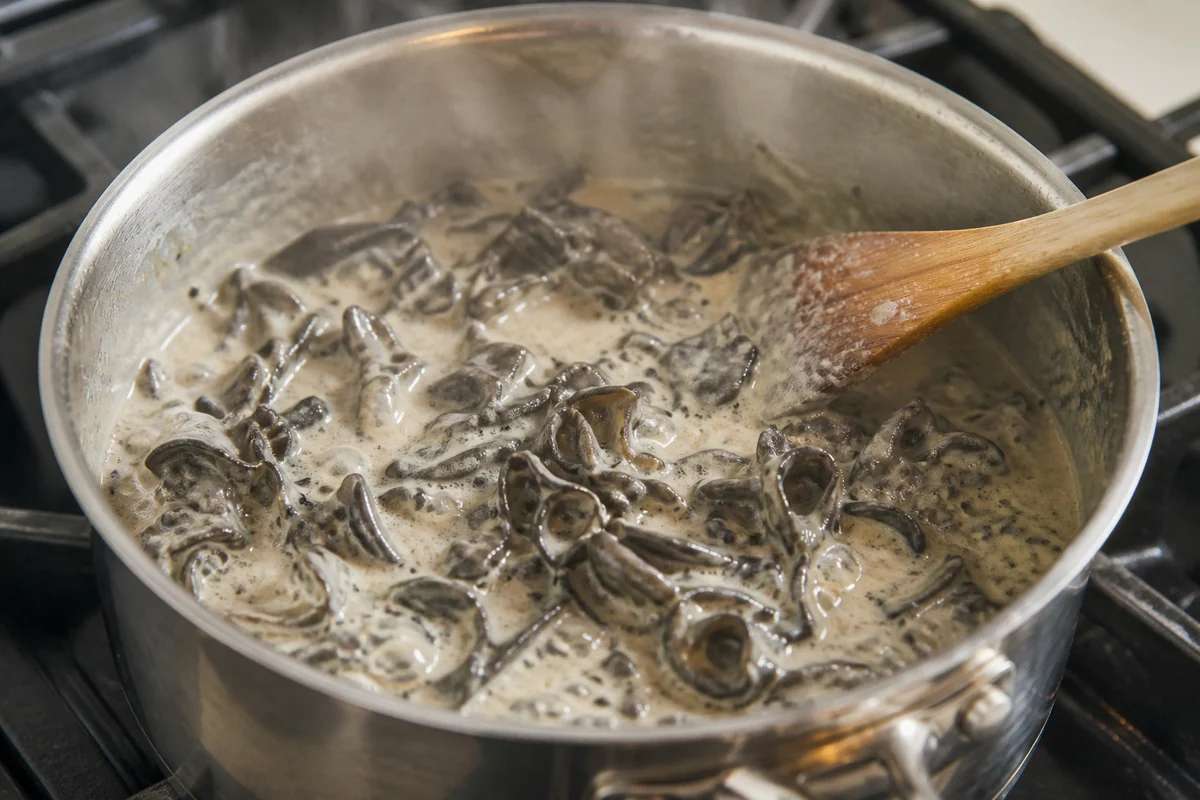
Black trumpets are thin, so their edges can look done before a folded center or rehydrated clump is hot. Cook the entire portion until every piece is steaming, softened, and integrated into the dish rather than merely warmed on top.
Fresh mushrooms release moisture quickly in a pan, so give that water time to evaporate before continuing until the pieces are tender and no cool dense folds remain.
Rehydrated mushrooms need the same endpoint even when their soaking liquid enters a sauce. Bring the sauce back to an active simmer and stir through the folded pieces so a warm broth does not conceal a cool center.
The separate question about raw black trumpets concerns digestion and preparation after identity is established. During pregnancy, raw garnish, uncooked powder stirred in at the end, and mushrooms that were only briefly warmed are avoidable choices.
Warning
Cooking makes a verified black trumpet into cooked food. It cannot make a wrongly identified poisonous mushroom safe, so an uncertain batch must be rejected before the stove is turned on.
There is no official black-trumpet internal-temperature standard for home cooks, so inventing one would create false precision. The useful endpoint is thorough heating across the whole portion, paired with the source and condition checks already completed.
FDA lists mushrooms among perishable produce that should be kept at 40 F or below, so refrigerate fresh mushrooms promptly, chill cooked leftovers in a shallow covered container, and discard a dish whose time at room temperature cannot be established.
If this is your first black trumpet meal, a small side portion is easier to evaluate than a large serving mixed with several unfamiliar foods. A familiar cultivated mushroom is the calmer choice when you do not want to test a new personal tolerance during pregnancy.
SafetyAre Oyster Mushrooms Safe to Eat During Pregnancy?Which field marks should stop the meal?
Black trumpet is a common name applied to close Craterellus species, including Craterellus fallax in North America and Craterellus cornucopioides in Europe, so the scientific name on a supplier record provides more information than the word trumpet alone.
University of New Hampshire describes black trumpet as gill-less and growing from forest leaf litter. Intact specimens are thin, dark gray to brown-black funnels with a hollow center, while the outer fertile surface is smooth to wrinkled rather than lined with separate blade-like true gills.
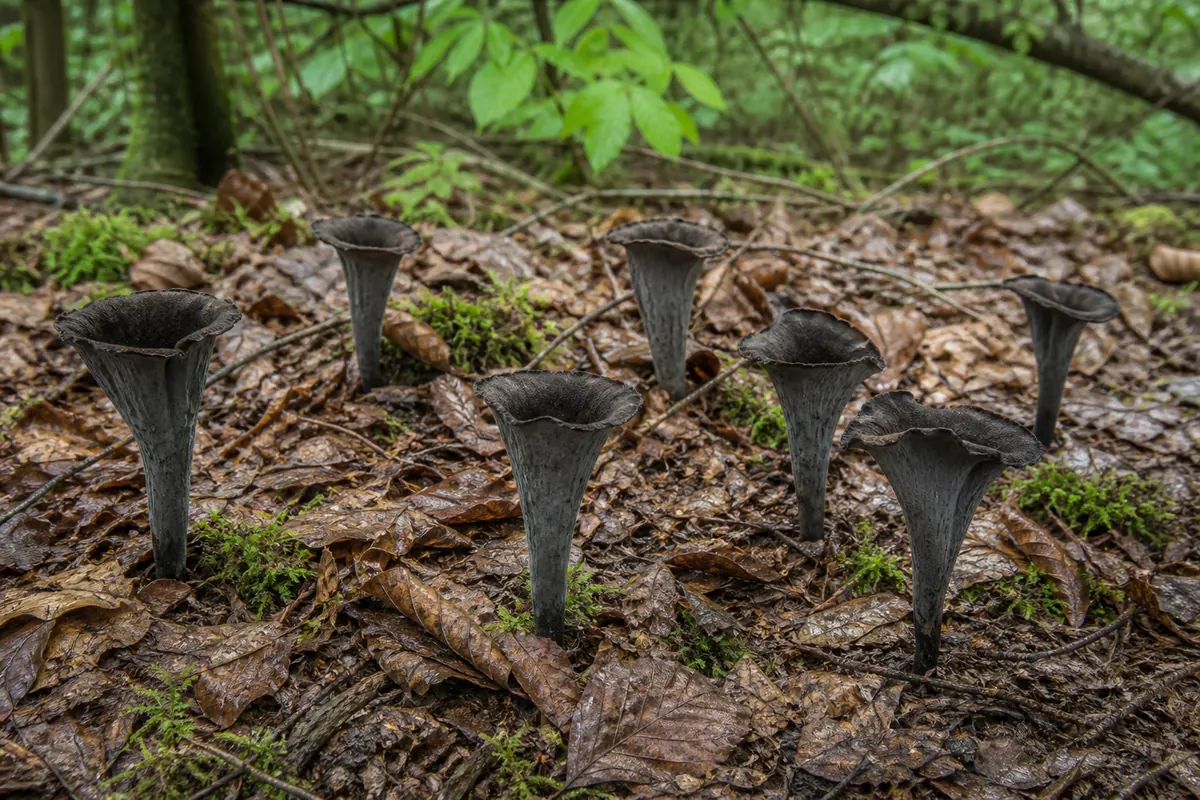
Color varies with moisture, age, and species, so black color is not an identity test. A dark cup, a dark chanterelle relative, and a decaying mushroom can share a photograph without sharing the same safety conclusion.
Wisconsin mycologist Tom Volk notes that close black Craterellus species can differ in underside ridges and spore-print color, which is why regional expertise belongs in the chain instead of a home checklist for approving dinner.
A claimed black trumpet identity fails in four situations.
- The mushrooms have true gills, thick brittle flesh, a closed cup with no hollow path, or a growth habit the supplier cannot explain.
- Several dark species were mixed before identification, or all diagnostic features disappeared during chopping, drying, or powdering.
- The seller uses only a phone photograph, an app result, or color as the basis for the name.
- A restaurant cannot separate black trumpets from an unnamed wild-mushroom blend.
A dried piece can still show its thin funnel form, but it cannot recreate the fresh habitat, full color, or spore deposit. This is why fresh-state identification belongs upstream with the harvester or processor.
A species description cannot settle a purchase made from an untraceable powder or mixed restaurant dish, so use a qualified local identifier and a traceable commercial source whenever the whole fresh mushroom is no longer available for inspection.
After an uncertain meal, timing matters more than reassurance
Call Poison Control in the United States at 1-800-222-1222, or the local poison service where you live, if the identity or source becomes uncertain after eating. Do not wait for nausea because poison-center guidance notes that symptoms from dangerous mushrooms can be delayed for many hours.
Tell the specialist that you are pregnant during the first call. Give the meal time, estimated amount, product form, supplier or harvest source, cooking method, and any symptoms for each person who shared the food.
Do not induce vomiting or use a home remedy unless a clinician directs it, and call emergency services for collapse, seizure, trouble breathing, severe confusion, or inability to wake the person.
Preserve evidence without delaying the call.
- Keep uncooked mushrooms, dried pieces, powder, cleaning scraps, and cooked leftovers in separate containers.
- Save the package, receipt, lot mark, supplier name, restaurant details, and photographs taken before preparation.
- Record a separate meal time, portion, first symptom, and symptom change for each diner.
- Note whether other wild species were mixed into the dish and whether soaking liquid was used.
Even a correctly identified edible mushroom can cause an unpleasant individual reaction. Prior hives, swelling, wheezing, repeated vomiting, or severe diarrhea after black trumpets is enough reason to avoid another exposure and discuss the history with a clinician.
- First action
- Call Poison Control or the local poison service without waiting for symptoms
- Pregnancy
- State the pregnancy during the first call so clinical assessment has the right context
- Evidence
- Keep mushrooms, leftovers, package, lot details, receipt, and photographs
- Timing
- Record the meal and symptom course separately for every person
Feeling well does not verify the species or close an uncertain exposure because the safe endpoint is advice from the poison specialist or clinician who assessed the actual meal and the evidence attached to it.
Sources & References
- Safer Food Choices for Pregnant Women, CDC
- Selecting and Serving Produce Safely, FDA
- Wild Mushroom Retail Sales Application, Virginia Department of Agriculture and Consumer Services
- WAC 246-215-03225 Sources, Wild Mushrooms
- Foraging Mushrooms for Retail Sale, Vermont Department of Health
- Craterellus fallax, the Black Trumpet, University of Wisconsin
- Mushroom Madness, University of New Hampshire
- Wild Mushroom Warning, Poison Control