
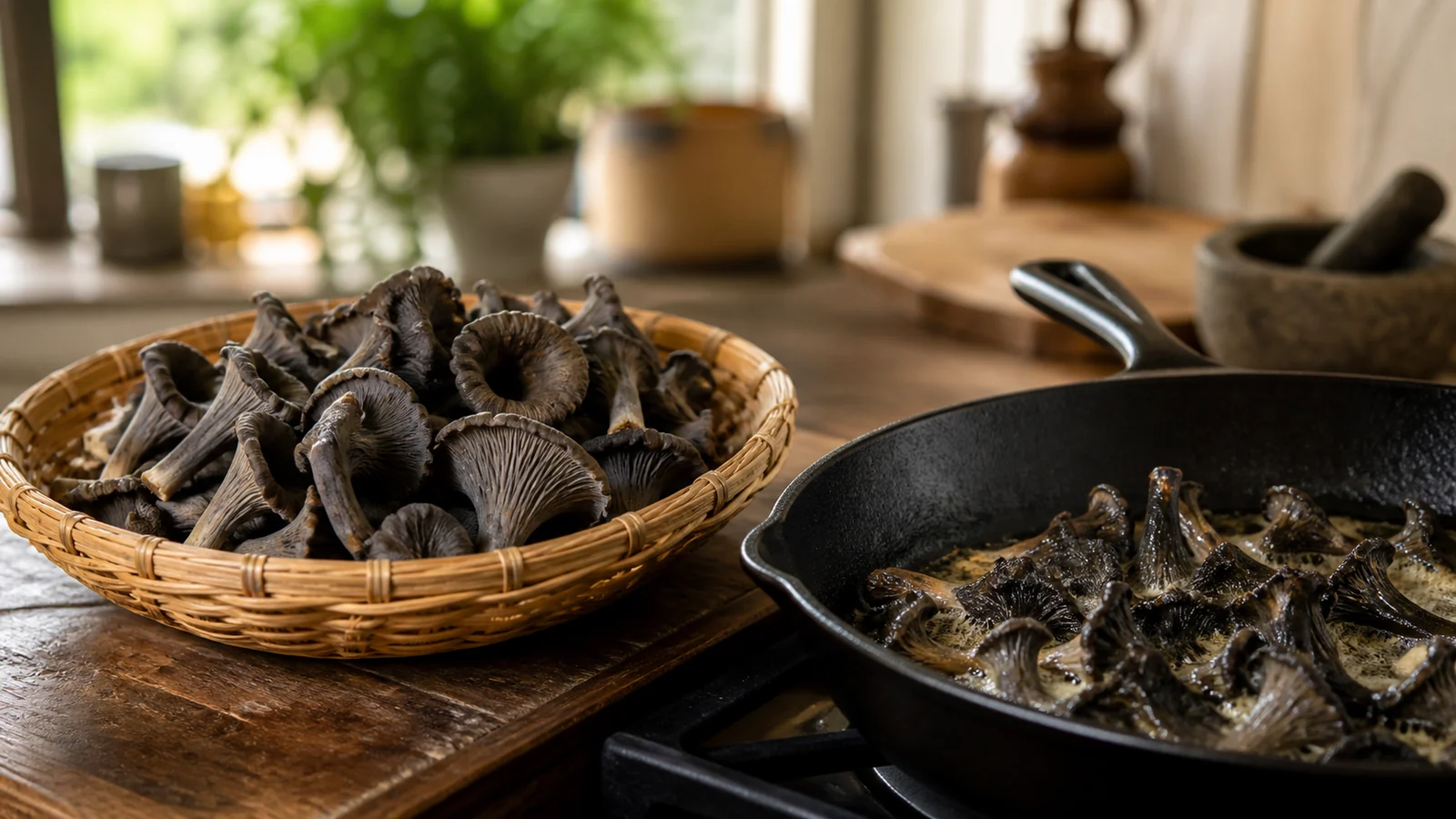
Most raw-edibility answers for wild mushrooms arrive as a flat no with no reason attached. Black trumpet deserves a more precise one.
No toxin specific to this species has been documented, which puts it in a different category from morels or raw shiitake. Cook them anyway, for reasons that have nothing to do with poison.
Can you eat black trumpet raw?
A small raw taste is unlikely to hurt you, and a plate of them raw is a bad idea.
Craterellus cornucopioides carries no documented species-specific toxin, so the case against raw black trumpets is not a case about poisoning. It rests on how well a person digests raw fungal tissue, and on what the mushroom is still carrying when it comes out of the woods.
- Documented species toxin
- None recorded for Craterellus cornucopioides
- Small raw amount
- Tolerated by most people, and it tastes of very little
- Large raw amount
- Poorly digested, and the usual result is stomach upset
- Real reason to cook
- Digestibility, trapped grit, and flavor that only heat creates
- Best form
- Dried, where the flavor is strongest and the grit problem is already solved
There is a difference between no documented hazard and safe to eat freely, and it is worth holding onto.
No documented hazard means nobody has recorded a reaction that this species causes in people generally. It does not promise that a given person will tolerate a raw bowl of them, and it says nothing about the leaf litter still sitting inside the funnel.
The raw mushroom salads people have seen are a different food entirely.
Those use cultivated button and cremini, grown indoors on pasteurized substrate and picked into a clean tray. A black trumpet grew in leaf litter under an oak and arrived in a basket, which is a different starting point before anyone argues about digestion.
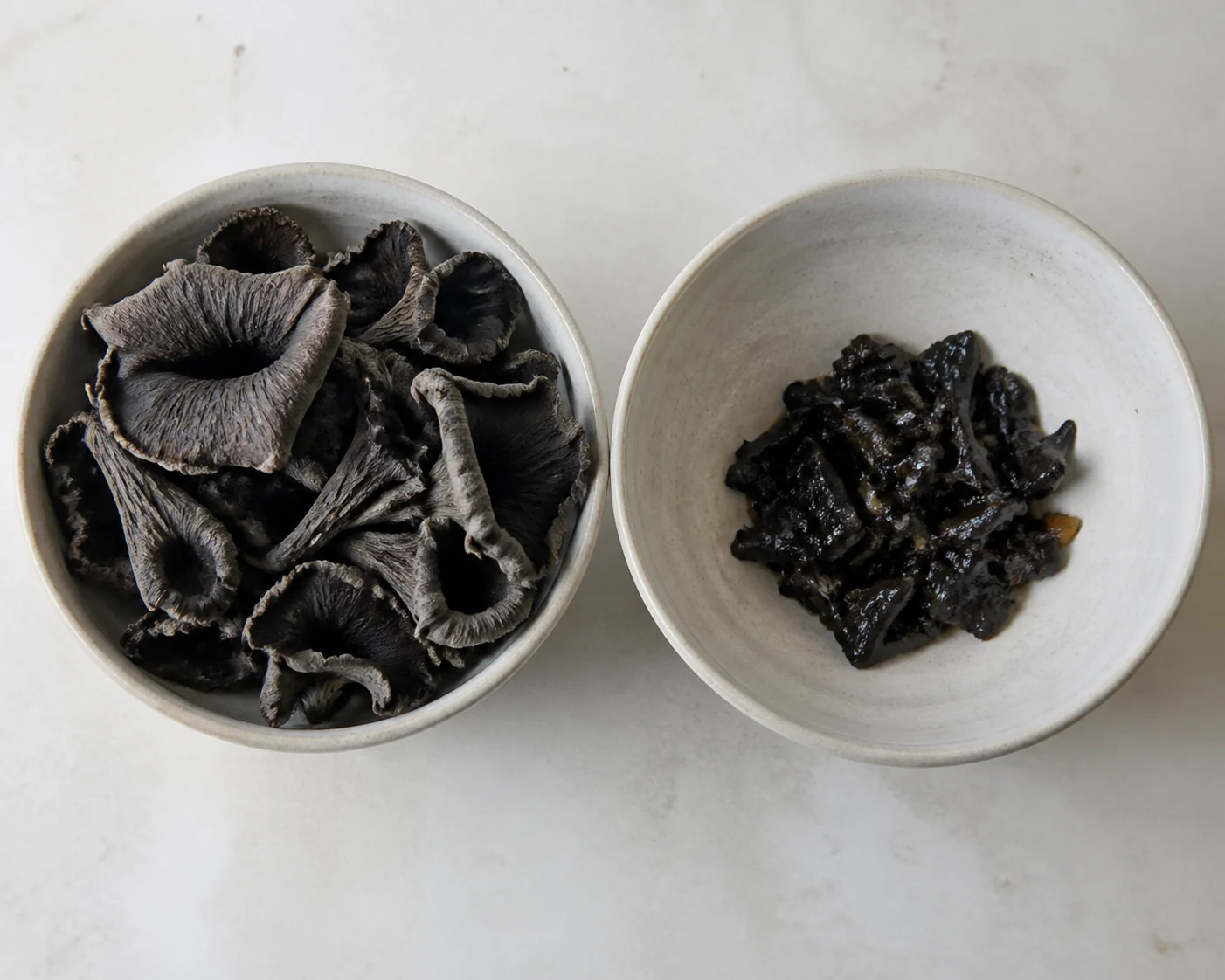
You already ate some raw
Plenty of people reach this question after the fact, having eaten a piece straight from the basket to see what it tasted like.
With no species toxin in play, there is nothing to time and nothing to counteract. The realistic worst case is the same stomach upset that raw mushroom tissue causes across the board, and it either arrives within a few hours or it does not arrive.
That twelve-hour line is the part worth remembering.
Ordinary upset from raw fungal tissue is prompt, and it wants fluids and a bland meal rather than any attempt to bring the food back up. Serious wild-mushroom poisonings are the ones that stay quiet for half a day and then begin, so a late start is a question about what you actually picked rather than about how you prepared it.
What cooking actually changes
Three things, and only one of them is about safety.
Fungal cell walls are built from chitin, the same material that stiffens an insect shell. Human digestion handles it poorly, which is why raw mushrooms of almost any species sit heavily and why the usual complaint is cramping rather than anything dramatic.
The flavor point is the one that changes how people feel about the rule for this species.
A raw black trumpet tastes faintly of nothing much. The fruity, slightly smoky quality that makes it worth the walk is created in the pan, so eating one raw skips the entire reason to pick it.
Thin flesh also means a trumpet needs very little time in the pan.
A dense chanterelle needs real time to drive off its water, while black trumpets collapse and darken within a couple of minutes in butter or oil. Cooking them is a quick job rather than a chore, which removes the last practical argument for eating them raw.
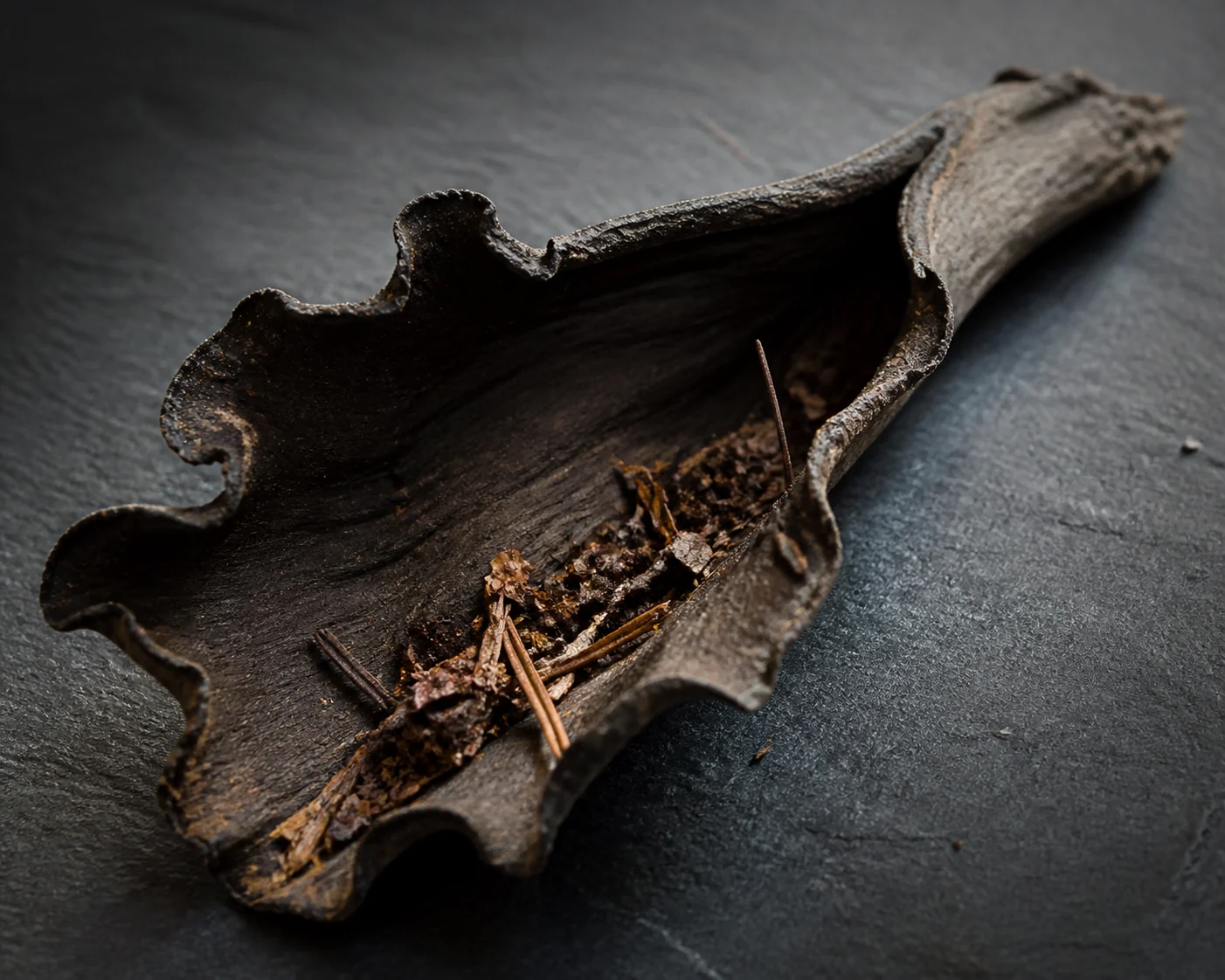
The grit problem belongs to this species
A thick-stemmed mushroom can be wiped clean. A black trumpet cannot, because its shape is a funnel that has been collecting the forest floor since it emerged.
These fruit in moss and leaf litter under oak, beech and maple, often in damp hollows and washes. What ends up inside the funnel is whatever was on the ground around it.
- Fine soil and leaf mold washed in by rain
- Conifer needles and small fragments of bark
- Slugs and other small invertebrates sheltering in the cavity
- Grit fine enough to survive a rinse and still crunch The mushroom is dark, thin and open along one side, so soil, needles and small insects settle inside where nothing shows from above.
Split each trumpet lengthwise and open it out flat
Brush the opened surface dry before anything else
Soak them, because thin flesh waterlogs in seconds
Skip the check because the outside looks clean
The split is the step everything else depends on.
Tip
Split each trumpet lengthwise and open it out flat before it goes anywhere near a pan. That one step turns an unreachable cavity into a surface you can brush, and it costs a few seconds per mushroom.
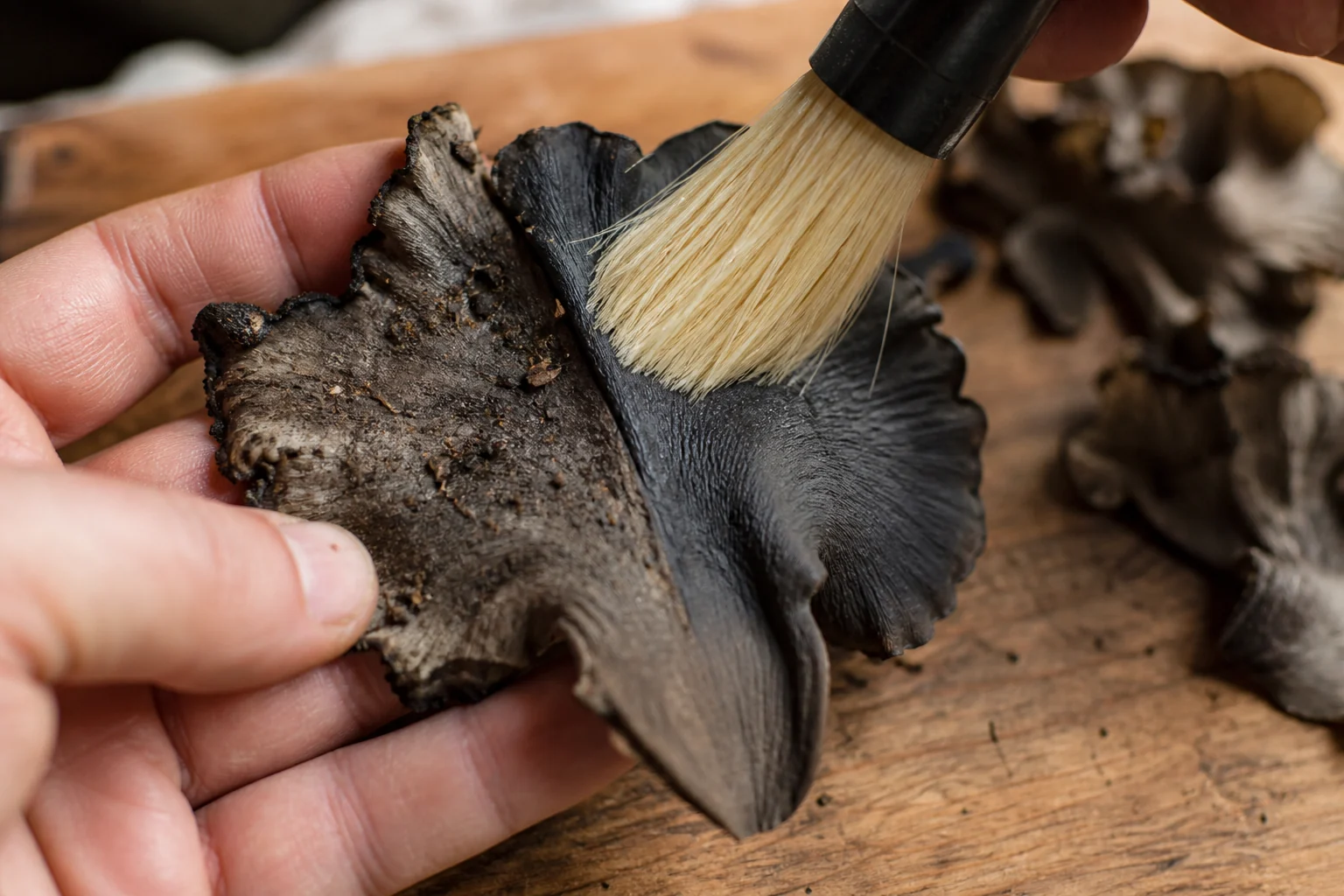
Once they are opened out, a soft brush or a dry cloth does most of the work.
A quick rinse handles stubborn grit, but thin flesh waterlogs fast, so keep it short and pat them dry afterwards. A soaked black trumpet steams in the pan instead of browning, which costs you the flavor you cooked it for.
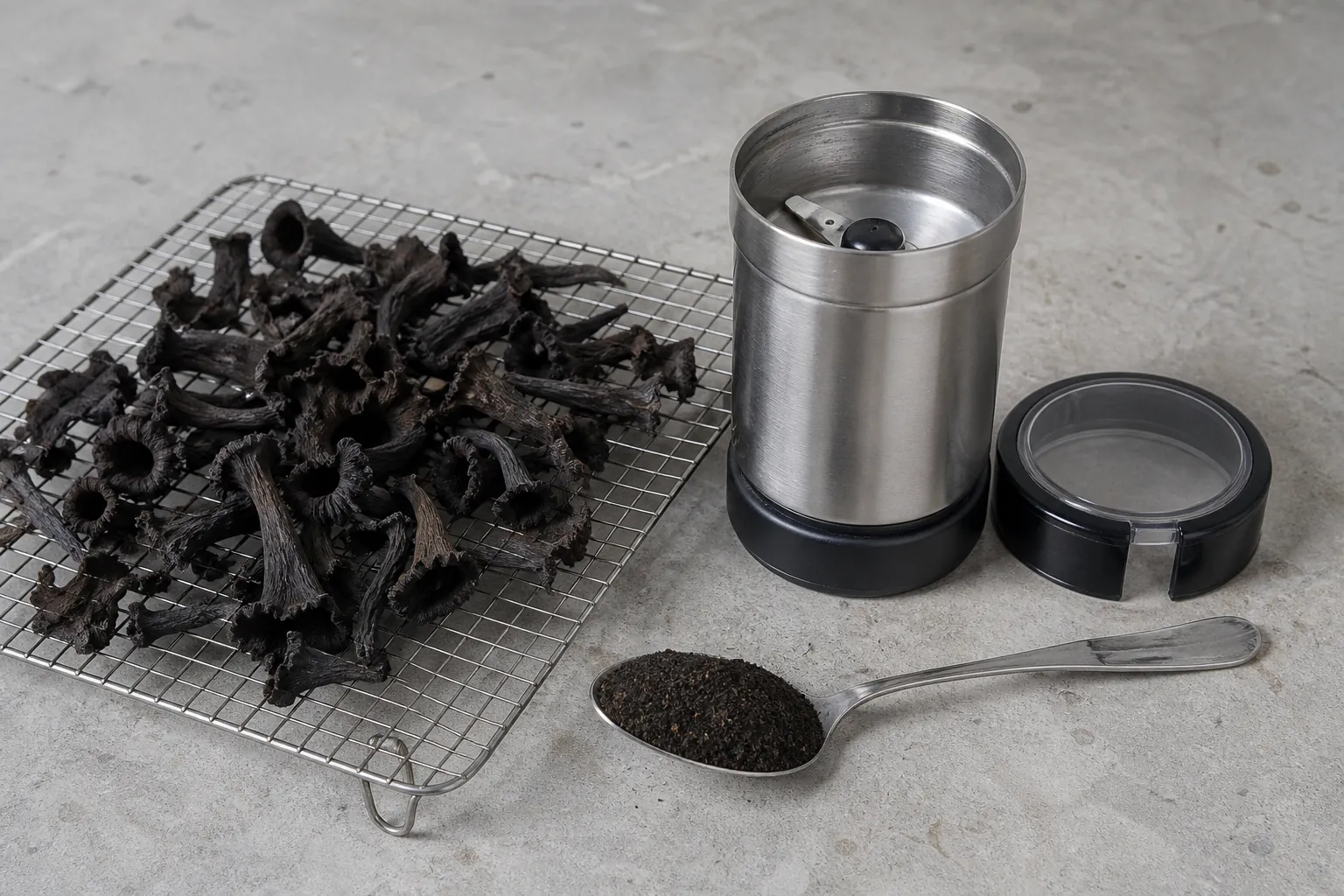
Dried and powdered is the form worth planning for
This is the species where drying is not a compromise. It is an upgrade.
When dried, the mushroom acquires black truffle notes and can be crumbled as a condiment.
The reference description of dried black trumpet
Dried black trumpets take on notes usually described as close to black truffle, a character the fresh species does not have at all. Their thin flesh also means they dry quickly and come back without turning to rubber.
The powder is where the raw question quietly returns.
Drying is not cooking, and powder stirred into a finished dish at the table never meets pan heat. The amounts involved are tiny and nobody reports trouble from them, but a spoonful of raw powder is still raw mushroom tissue for anyone whose digestion objects to it.
Trying a species for the first time
Every species has people who do not get along with it, including species that carry no general hazard at all.
The sensible approach here is the one experienced foragers use for anything new. Eat a small cooked portion, wait a day, and find out how you feel before committing to a full plate.
That last point matters more than it sounds.
If something does go wrong, an intact specimen answers the identification question far faster than a description of what the mushroom looked like before it went in the pan. A photograph of the cooked dish settles nothing at all.
Which wild mushrooms are actually unsafe raw
The blanket rule flattens a real difference, and seeing where that difference lies is what makes the genuine warnings land.
| Species | What raw does | Kind of risk |
|---|---|---|
| Morel | Hydrazine compounds in the raw flesh, broken down by thorough cooking | Documented, species-specific |
| Shiitake | A raised flagellate rash attributed to lentinan, following raw or undercooked portions | Documented, species-specific |
| Honey fungus | Reliable stomach upset raw or undercooked, even for people who eat it often | Documented, species-specific |
| Chanterelle | Digestive upset with no named toxin behind it | General to raw fungal tissue |
| Black trumpet | No reaction on record attributed to the species itself | General to raw fungal tissue |
Black trumpet sits in the lower half of that table, next to chanterelle rather than next to morel.
That placement is the useful part. The reason to put these in a pan is that raw fungal tissue is hard work for anyone, the funnel is holding forest floor, and the flavor you came for has not happened yet.
Note
All of this assumes the name is settled. Black trumpets are dark and easy to overlook rather than easy to confuse, but check the smooth to faintly wrinkled underside, which separates them from the ridged Craterellus cinereus and the purple-tinted Polyozellus multiplex.
Sources & References
- Craterellus cornucopioides Edibility, drying and the black truffle character, habitat under broad-leaved trees, and the lookalike species.
- Species Spotlight: Black Trumpet Thin flesh and hollow stems, drying and grinding to a seasoning powder, and the small-portion first-time advice.