
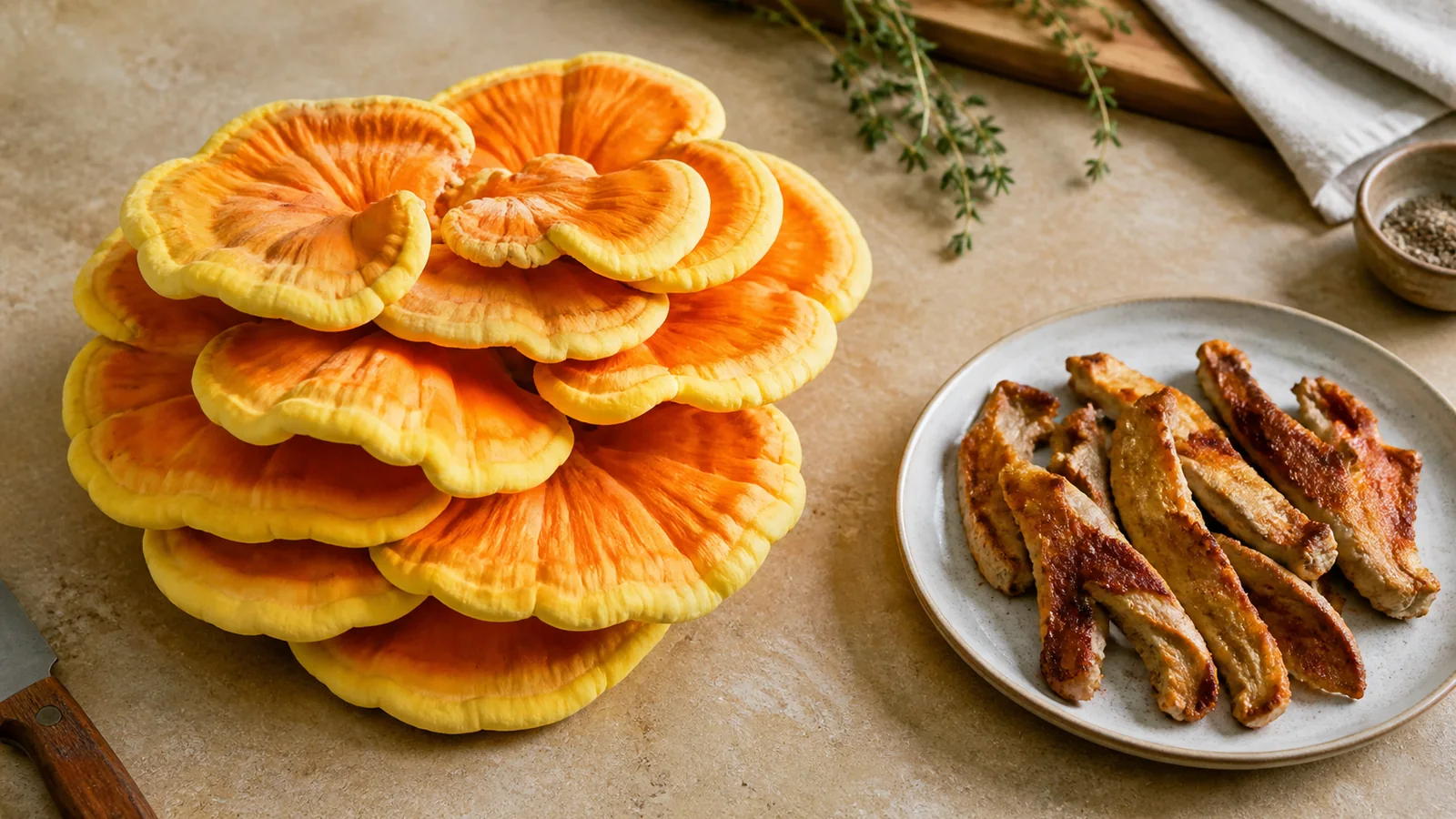
Chicken of the woods is not proven broadly safe during pregnancy. A young, reliably identified Laetiporus serving may fit as cooked food when you have eaten that same kind without a reaction before, but pregnancy is a poor time for a first trial.
The caution combines absent direct pregnancy studies with reports of gastrointestinal illness after raw or undercooked Laetiporus and reactions in sensitive individuals.
Four gates decide whether this is a reasonable pregnancy food
All four gates must clear. A familiar taste cannot compensate for uncertain identity, and a confident identification cannot predict whether a first-time eater will develop nausea, diarrhea, or an allergic response.
University of Florida IFAS describes chicken of the woods as the Laetiporus sulphureus species complex, with gastrointestinal problems reported after raw or undercooked servings and allergy in some individuals. The edible label therefore needs a personal-tolerance boundary.
Prior tolerance does not guarantee that every future meal will be uneventful, but it removes one avoidable unknown when vomiting or diarrhea can create a hydration problem during pregnancy.
If this would be your first serving, defer it until after pregnancy rather than treating a small bite as a safety test. If you have eaten it before, the remaining gates still apply to this exact specimen and meal.
SafetyAre Golden Oyster Mushrooms Safe During Pregnancy?The common name covers more than one North American group
Chicken of the woods describes several related shelf fungi rather than one uniform organism across the continent. Forest Service research separates North American groups by host, pore-layer color, and geographic distribution.
| Evidence | What it can support | What it cannot prove |
|---|---|---|
| Layered yellow-orange fans on wood | The specimen may belong to Laetiporus | That it is edible or suitable for this eater |
| Tiny pores beneath the shelf | It is a polypore rather than a gilled mushroom | Which regional Laetiporus group it is |
| Host tree and attachment point | A qualified identifier can narrow the group | That the collection site is clean |
| Soft fleshy young tissue | The shelf is at a culinary stage | That it was stored safely after harvest |
| A familiar common name | The seller or collector has a label for it | That every piece belongs to one batch |
The USDA field guide depicts Laetiporus sulphureus as multiple yellow-orange shelves growing on wood with no gills and distinguishes Laetiporus cincinnatus, which can fruit from roots near the ground.
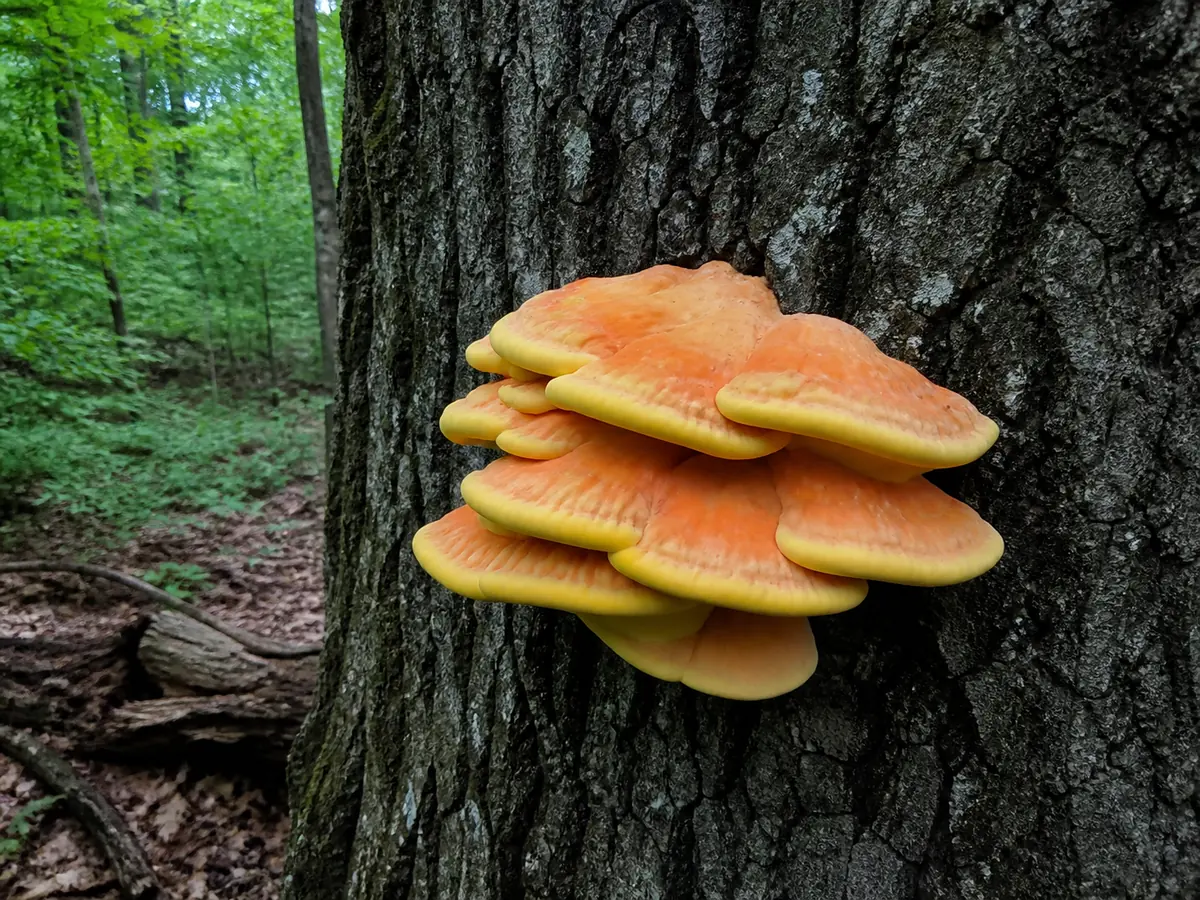
These traits form an evidence set, not a one-feature shortcut. Bright color fades with age, pore color varies among groups, and a photograph cropped away from the tree can hide information an identifier needs.
Keep the scientific conclusion narrow because a regional expert may resolve a specimen to an edible Laetiporus, but that decision does not create pregnancy-specific research or erase individual sensitivity.
SafetyAre Hedgehog Mushrooms Safe During Pregnancy?The tree and collection site remain part of the specimen
Before cutting a shelf, photograph the entire fruiting body, its exact attachment, the bark, leaves or needles, and the surrounding ground. Record whether the wood is living, dead, standing, or fallen, because detached pieces cannot reconstruct those relationships later.
Warning
Do not accept a bag of anonymous orange pieces | Ask for the identifier, scientific conclusion, host, collection location, harvest time, and whole-specimen photographs. Decline the food when pieces from different trees or baskets have been mixed or the field evidence is gone.
This host information helps distinguish members of the species complex, but it should not be turned into a simple claim that one tree poisons an otherwise safe mushroom. Let a qualified regional identifier interpret the host together with anatomy and location.
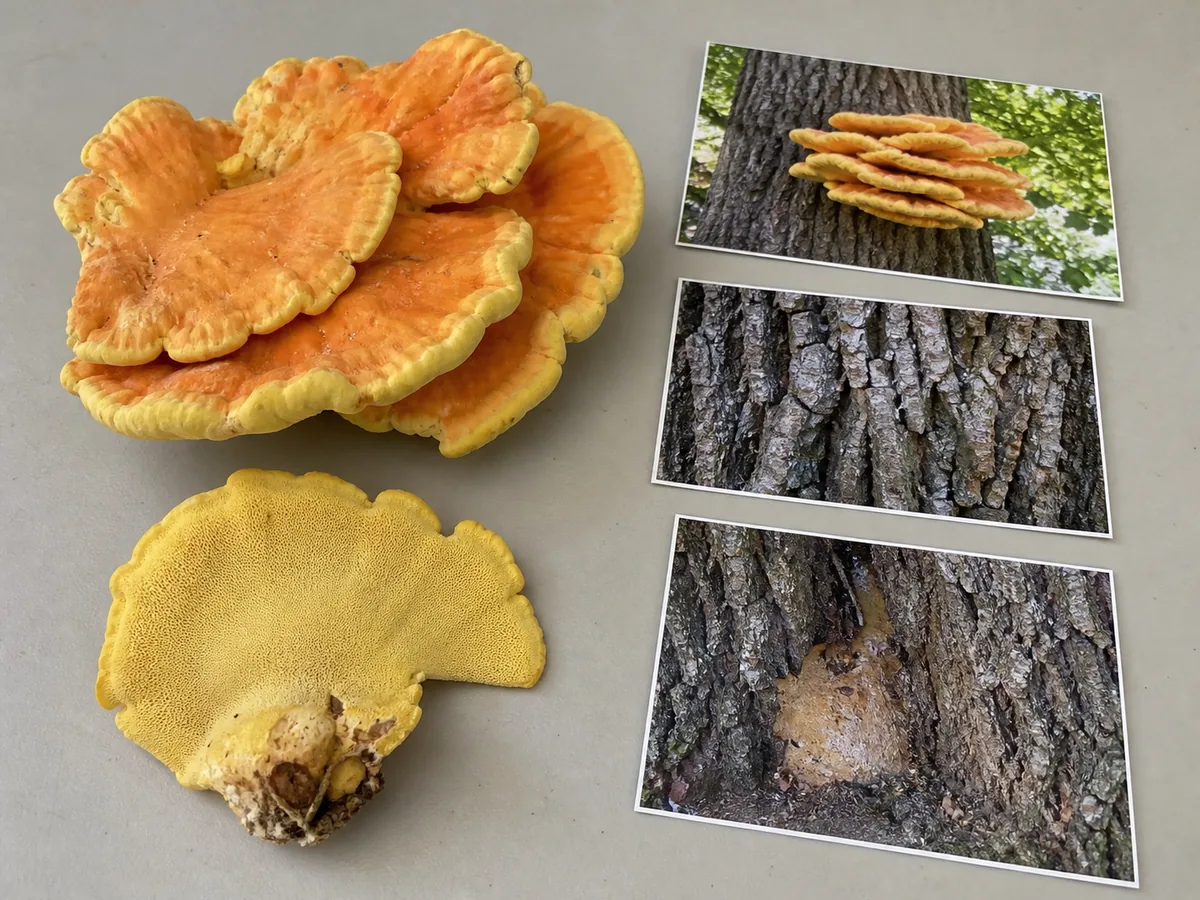
The site creates a separate boundary because washing and cooking cannot establish what the tissue absorbed beside busy roads, treated lawns, industrial ground, utility poles, rail corridors, or places with uncertain chemical use.
Keep the batch cold after harvest and examine it as one lot. If one piece has different pores, texture, color pattern, or attachment tissue, isolate it instead of assuming every orange shelf came from the same fungus.
Tender margins and an aging base give different answers
Young chicken of the woods feels moist and flexible enough to bend slightly before tearing. The outer margin is usually the most tender part, while tissue thickening toward the attachment becomes fibrous first.
The Forest Service calls the young stage soft and fleshy and notes that mature shelves turn hard, an aging change that affects eating quality even when no microbial spoilage is visible.
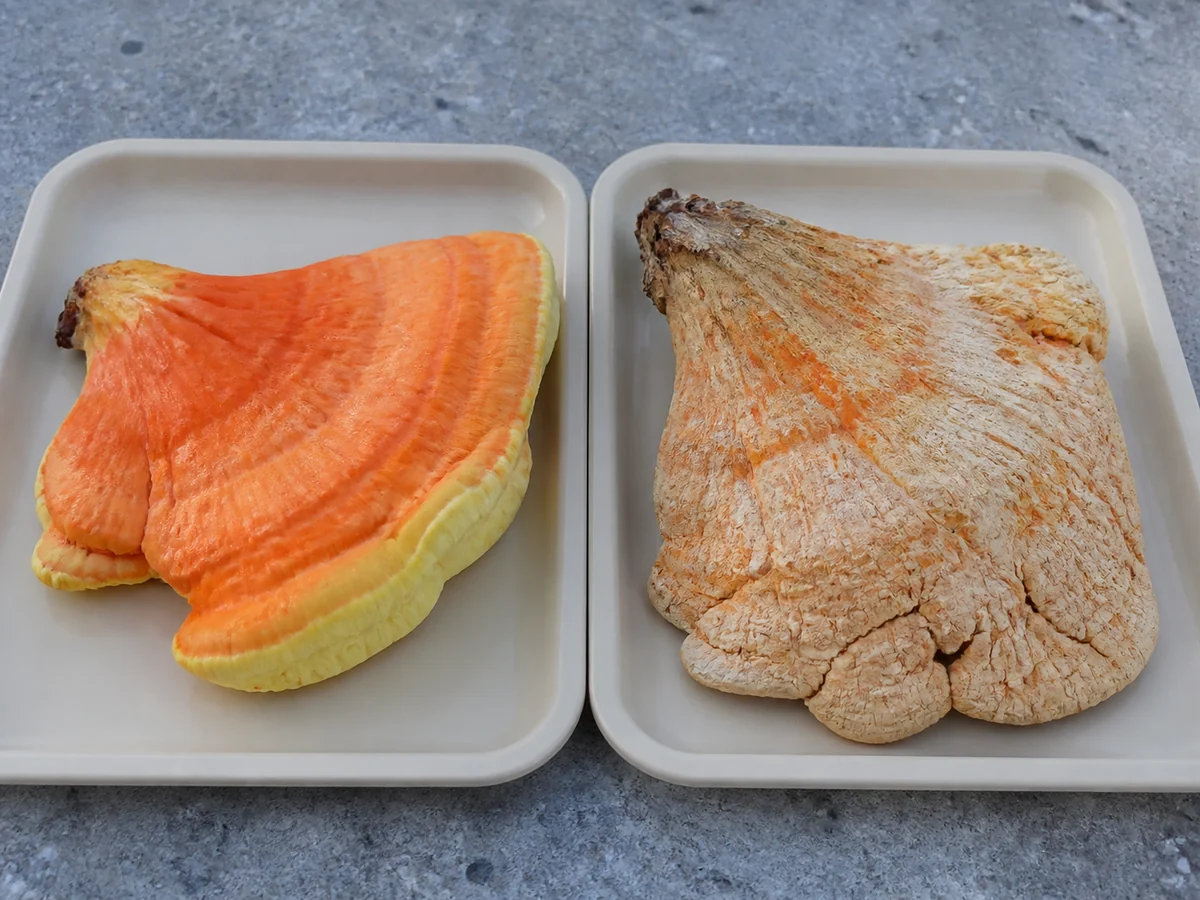
Cut one shelf from margin to attachment and inspect the cross-section. Sound flesh should remain consistent for its age, while insect tunnels, wet pockets, dark spreading damage, or an off odor justify discarding connected tissue.
A knife can remove one dry edge or a clean insect channel, but trimming cannot rejuvenate a woody shelf or rescue a batch when deterioration extends through several overlapping fans.
SafetyAre Oyster Mushrooms Safe to Eat During Pregnancy?Cooking must reach the thick attachment, not just the orange edge
After brushing away loose debris, rinse sound pieces briefly under cool running water and pat them dry. Do not use soap, detergent, or bleach on food, and clean the knife, board, sink, and hands before they contact ready-to-eat ingredients.
Slice the tender margins wider and the dense attachment tissue smaller so both can finish without burning. An uncrowded pan lets released moisture escape and keeps cold stacked layers from sheltering one another.
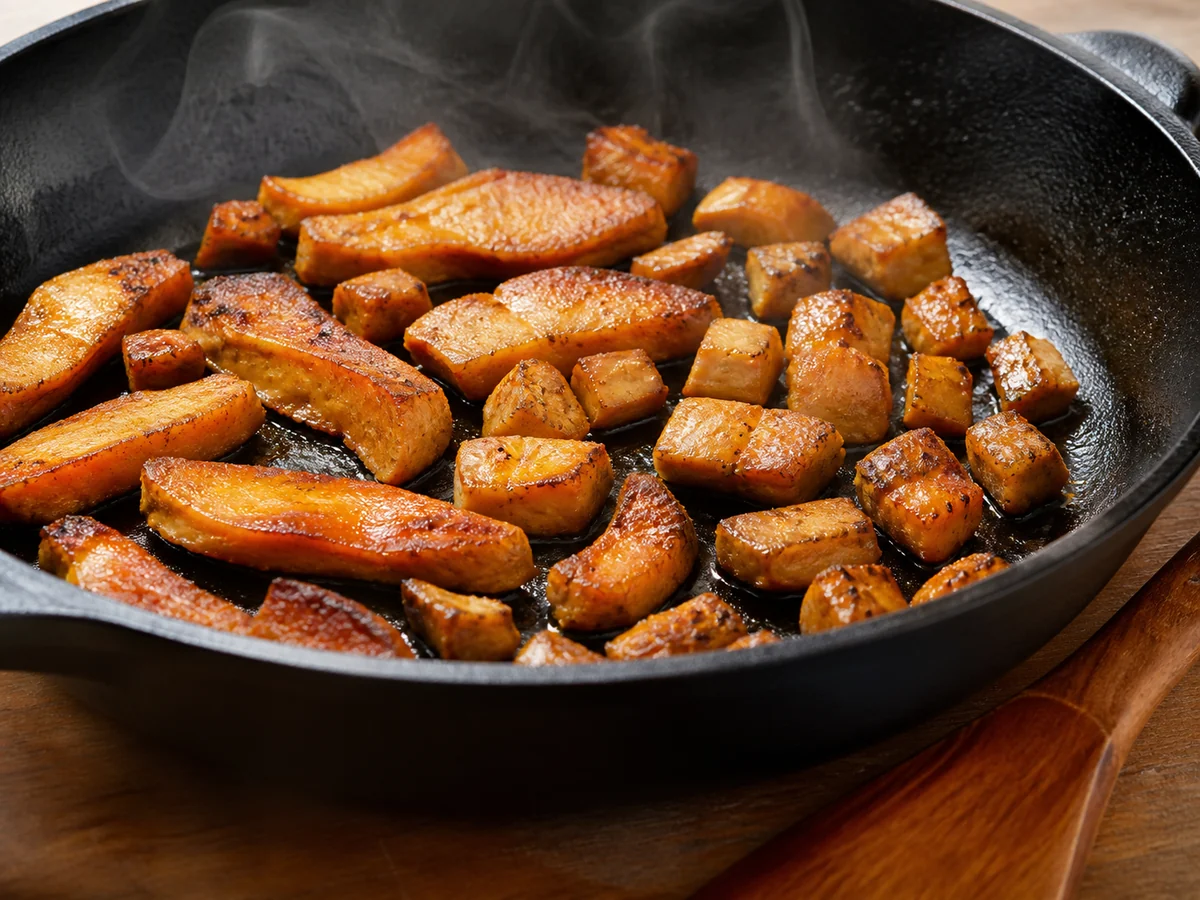
- Keep raw pieces and their utensils away from the cooked serving.
- Turn thick pieces through the moist stage and test their centers for heat and tenderness.
- Continue cooking after the first orange edges brown if dense pieces remain firm or cool inside.
- Serve only a modest portion of a previously tolerated kind, not a first-exposure tasting plate.
- Refrigerate leftovers in shallow containers within two hours, or within one hour above 90 F.
There is no official pregnancy temperature or universal minute count for this mushroom. The useful endpoint is thoroughly hot, tender tissue throughout every thickness with no raw garnish reserved from the batch.
Complete cooking reduces the avoidable undercooking risk, but it cannot correct a species mistake, contaminated collection site, spoilage, or allergy that should have stopped the meal before the pan heated.
Symptoms decide who to call and what to save
Stop eating and preserve the remaining raw and cooked mushrooms if nausea, vomiting, abdominal pain, diarrhea, hives, or unusual flushing begins. Save the field photographs, host record, meal time, amount eaten, and information about everyone who shared the dish.
- Stomach symptoms
- Call the obstetric clinician promptly for repeated vomiting, diarrhea, severe pain, inability to keep fluids down, or signs of dehydration
- Fever or flu-like illness
- Contact the obstetric clinician after a possibly contaminated food and give the meal timeline
- Uncertain wild identity
- Contact Poison Control promptly in the United States at 1-800-222-1222 or the local poison service
- Allergy emergency
- Call emergency services for breathing trouble, throat or facial swelling, collapse, seizure, confusion, or inability to wake
- Evidence to retain
- Intact specimen, photographs, host and site details, leftovers, package or seller details, time eaten, and symptom onset
Do not induce vomiting or try a household remedy unless a poison specialist or clinician tells you to do so. A reaction after a correctly identified edible can still need treatment, and symptoms alone cannot establish the cause at home.
The conservative answer is therefore conditional. Choose only young, positively identified Laetiporus that you have tolerated before, preserve its field evidence, cook every thickness completely, and leave a first trial for another time.
Sources & References
- Chicken of the Woods, University of Florida IFAS
- USDA Forest Service Field Guide
- North American Laetiporus Groups, USDA Forest Service Research
- Wild Mushrooms, Michigan State University Extension Archive
- Safer Food Choices for Pregnant People, CDC
- Cleaning, Food Safety for Moms-to-Be, FDA
- Preventing Staph Food Poisoning, CDC
- Symptoms of Listeria Infection, CDC
- Wild Mushroom Warning, National Capital Poison Center