
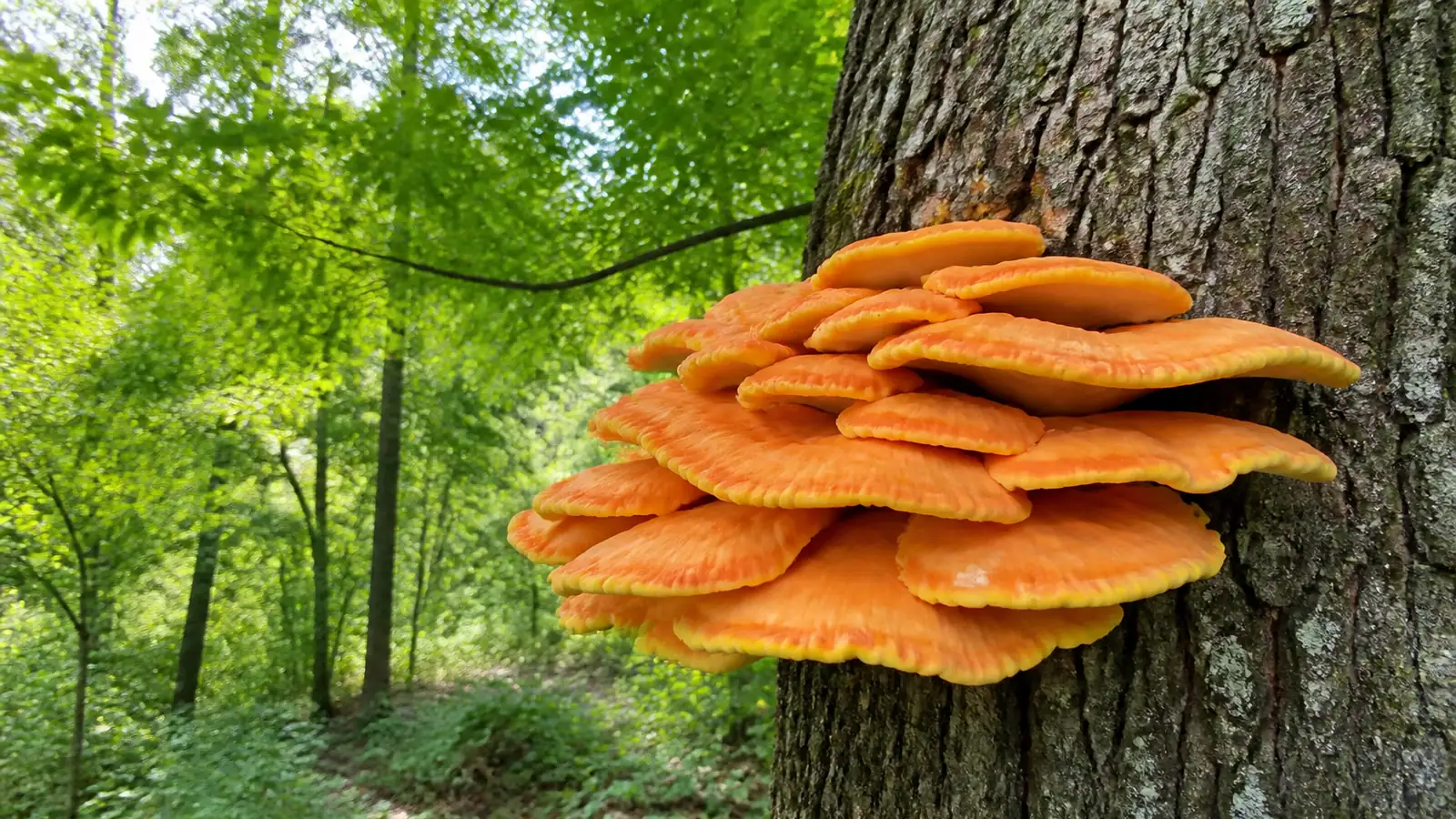
Chicken of the woods is the mushroom people get handed first. Bright orange, growing in slabs off a trunk, and impossible to confuse with anything that will kill you.
Then you read the replies under any post about it and someone is describing a night of vomiting. Preparation and individual tolerance both matter.
Can you eat chicken of the woods raw?
No, and this is the one page in this series where cooking it properly still does not close the question.
Warning
References state plainly that chicken of the woods should never be eaten raw. It is treated as conditionally edible rather than simply edible, which means young fruit bodies from the right trees, cooked through, and even then a share of people report a reaction.
That last clause is the part worth sitting with. Every other species in this series has a raw problem that heat solves, and this one has a raw problem that heat solves plus a second problem that it does not.
The number everyone quotes has no study behind it
The figure you will meet everywhere is that about one eater in ten reacts to it.
- The quoted figure
- Roughly one eater in ten
- Where it comes from
- Forager reports and repetition, not peer-reviewed work
- How experts phrase it
- Probably over ninety percent can eat it without issue
- The suspected agent
- A lectin found in Laetiporus sulphureus
- What nobody knows
- Whether that lectin survives cooking, or reaches the bloodstream at all
Ninety percent and ten percent are the same sentence read from opposite ends, and the second version travels further because it sounds like a warning. Neither version is a measurement.
That difference matters more than it looks.
A number with a study behind it tells you your odds. A number with foragers behind it tells you that something real happens to some people and that nobody has counted them properly, which you can act on but not in the same way.
It also means the usual explanation is a guess. A lectin is the leading suspect and nobody has established whether it comes through a hot pan intact, so the honest position is that the agent is unidentified.
Lectins are worth a sentence because of the company they keep.
They are the class of protein that makes an undercooked kidney bean dangerous and a properly boiled one dinner, which is why heat is the first thing anyone suspects here. The difference is that the bean case was settled long ago and this one has never really been opened.
SafetyCan You Eat Beech Mushrooms Raw? Not Poisonous, Just BitterWhat a reaction looks like and how fast it arrives
The reported range is wide enough that two people can use the word reaction and mean completely different things.
The severe end of that list reads alarmingly, and a medical journal has carried exactly it. A case published in 1988 describes a six-year-old girl with visual hallucinations and ataxia after eating this species, which is a clinical record rather than a forager anecdote.
But the timing is the reassuring part of the picture.
Two to four hours is fast, and a fast onset is the pattern that goes with mushrooms that make you ill rather than the ones that destroy an organ quietly. The poisonings that kill people are the ones where nothing happens for six hours or more.
So a reaction here is genuinely unpleasant and is not the shape of a serious poisoning. That is not a reason to invite one, and it does change how worried to be while it runs its course.
None of that turns a bad afternoon into an emergency by itself, and one kind of reaction is different.
What does change the picture is a reaction still going after a day, anything involving breathing, or symptoms in a child, and each of those is worth a phone call rather than a wait.
Which tree it grew on changes the answer
This is the variable a forager actually controls, and most answers leave it out.
| Host tree | What is reported | What to do |
|---|---|---|
| Oak and other hardwoods | The usual host, with the fewest complaints attached to it | Take it |
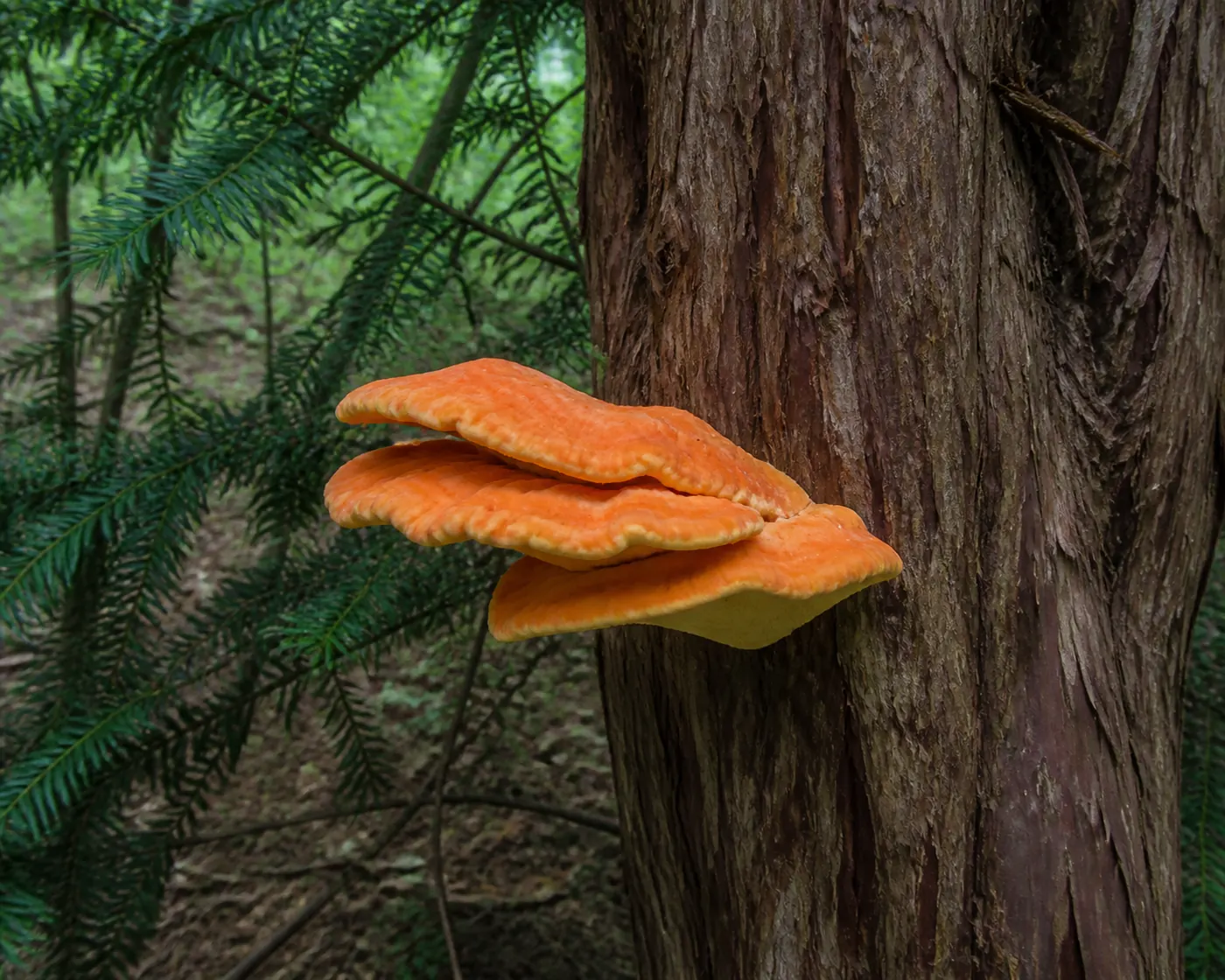
| Yew | The bracket grows around obstacles and can enclose needles and bark from a tree that is toxic in tiny amounts | Leave it |
| Conifers | Different Laetiporus species, reported by foragers to cause more trouble | Leave it |
| Eucalyptus | Another species again, with its own reports of stomach upset | Leave it |
The yew row is the one to take seriously even though no study connects it to a single case. A bracket does not push obstacles aside as it expands, it grows around them, so needles and fragments of bark end up sealed inside the flesh you are about to cook.
Yew is toxic in quantities too small to notice as an ingredient, and no study is needed to act on that.
That is enough to settle it. The species is common on oak, and there is no reason to take the one growing out of the tree with taxine in it.
The conifer and eucalyptus rows are weaker and they point the same way. Both are different species of Laetiporus carrying a reputation among foragers rather than a result, and the cost of avoiding them is that you walk on.
Part of the confusion is that chicken of the woods is not one species.
What goes by the name is a group, and which member you meet depends on where you are standing and what it is growing out of. The oak ones and the conifer ones are not the same fungus, and the reputation the group enjoys was built mostly on the oak ones.
Why the age of the bracket may be doing most of it
One foraging writer puts it more bluntly than most, and the suggestion is hard to argue with.
I suspect many reports of adverse reactions are the result of eating old, past-their-best specimens.
A foraging reference on why people get ill from this species
Old chicken of the woods is not the same food as young chicken of the woods, and most of the reports probably come from the older one. It goes woody and chalky, gives up its moisture, and stops being pleasant a long time before it stops being picked.
A bracket does not age evenly either, which is what makes the outer edge rule work.
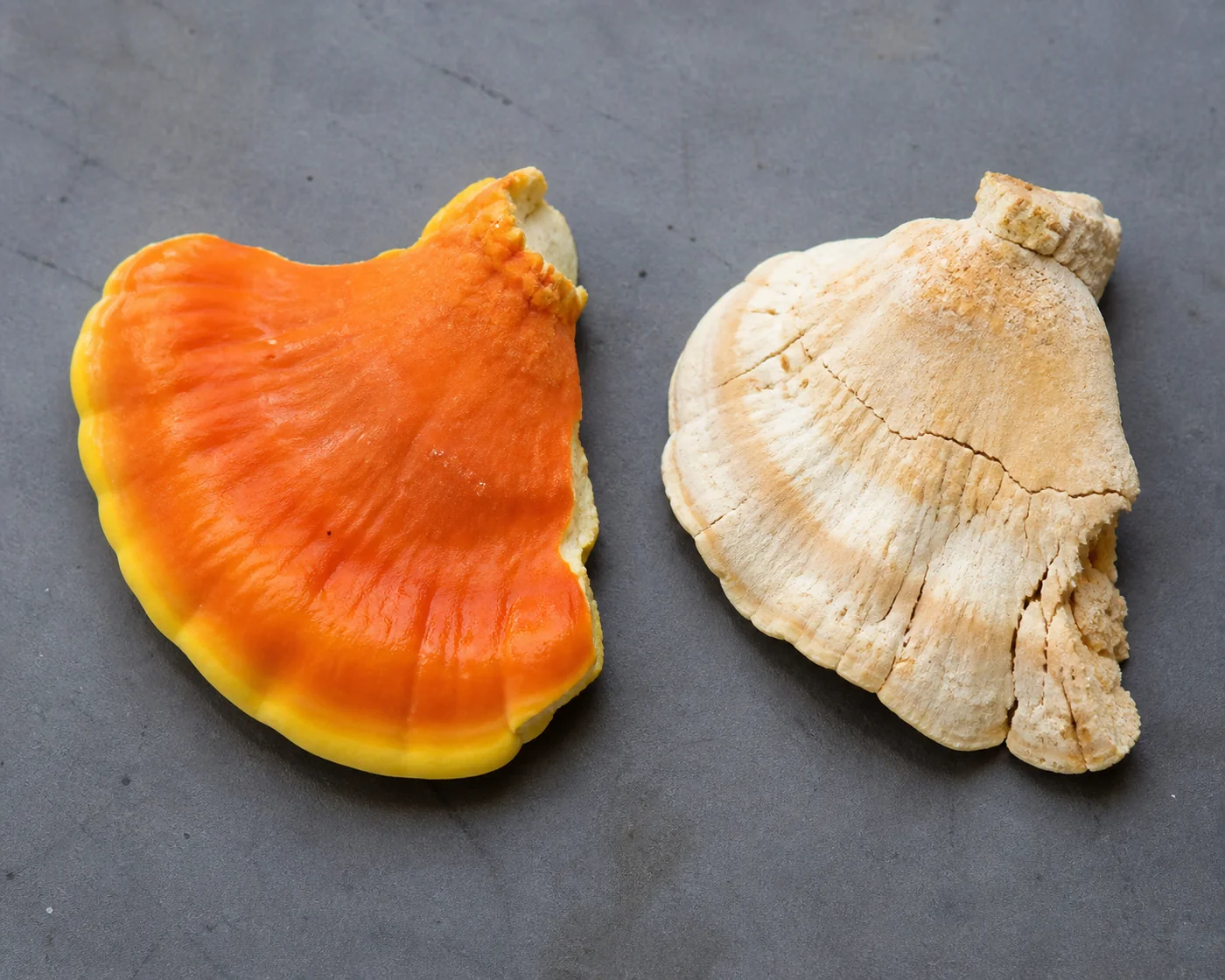
The rim is the newest tissue and the part fused to the trunk is the oldest, so a shelf gone chalky at the back can still carry a soft usable inch or two at the front. Cutting that edge off and leaving the rest is a normal way to take this species.
That last line is where most people go wrong, and it is a psychological problem rather than a botanical one. A bracket weighing several pounds is hard to walk away from, and the ones that get that big are usually the ones that have been there a while.
Compare that with a species where cooking genuinely closes the file.
A raw morel is dangerous and a cooked morel is dinner, with no residual argument about who reacts and who does not. Chicken of the woods never reaches that settled state, which is why the picking matters here in a way it does not there.
How to eat it the first time
None of this is a reason to leave it on the tree, and all of it is a reason to start small.
The wait is the part people skip and it is the only part that produces information. Eating it twice in one evening tells you nothing except that you were fine for an evening.
It also comes back, which is what makes all of this affordable.
The same trunk fruits again, often for years, so a bracket found too old this time is a note in a diary rather than a loss. Getting to one young is a matter of walking past more often rather than of luck.
Tolerance appears to be real here, which is another oddity of eating this species.
One eater who spent twenty four hours seriously ill later went back to eating it without trouble. That is a single report rather than a plan, and it does mean an early bad experience is not automatically a permanent verdict.
Sources & References
- Why Some People Get Sick From Eating Chicken of the Woods Mushrooms, Mushroom Appreciation Gives the estimate that probably over ninety percent can eat it without issue and states that the figure lacks peer-reviewed backing, lists the reported symptoms and the two to four hour onset, names a Laetiporus sulphureus lectin as the suspected agent and says it is unstudied for whether it survives cooking, names the conifer and eucalyptus species with worse reputations, and gives the small first portion with a twenty four to forty eight hour wait.
- Chicken of the Woods, Edibility, Identification and Distribution, Galloway Wild Foods Gives the cube and five minute simmer in salted water, the instruction to take only young tender moist specimens or the outer edge of older ones, the suspicion that many reported reactions come from old past-their-best specimens, the advice to avoid brackets from yew because the fungus can incorporate yew material as it grows, and the account of an eater who was severely ill and later built tolerance.
- Appleton RE, Jan JE, Kroeger PD. Laetiporus sulphureus causing visual hallucinations and ataxia in a child. CMAJ 1988;139(1):48-49 The published case report behind the severe end of the symptom list, describing visual hallucinations and ataxia in a six-year-old girl after eating this species.