
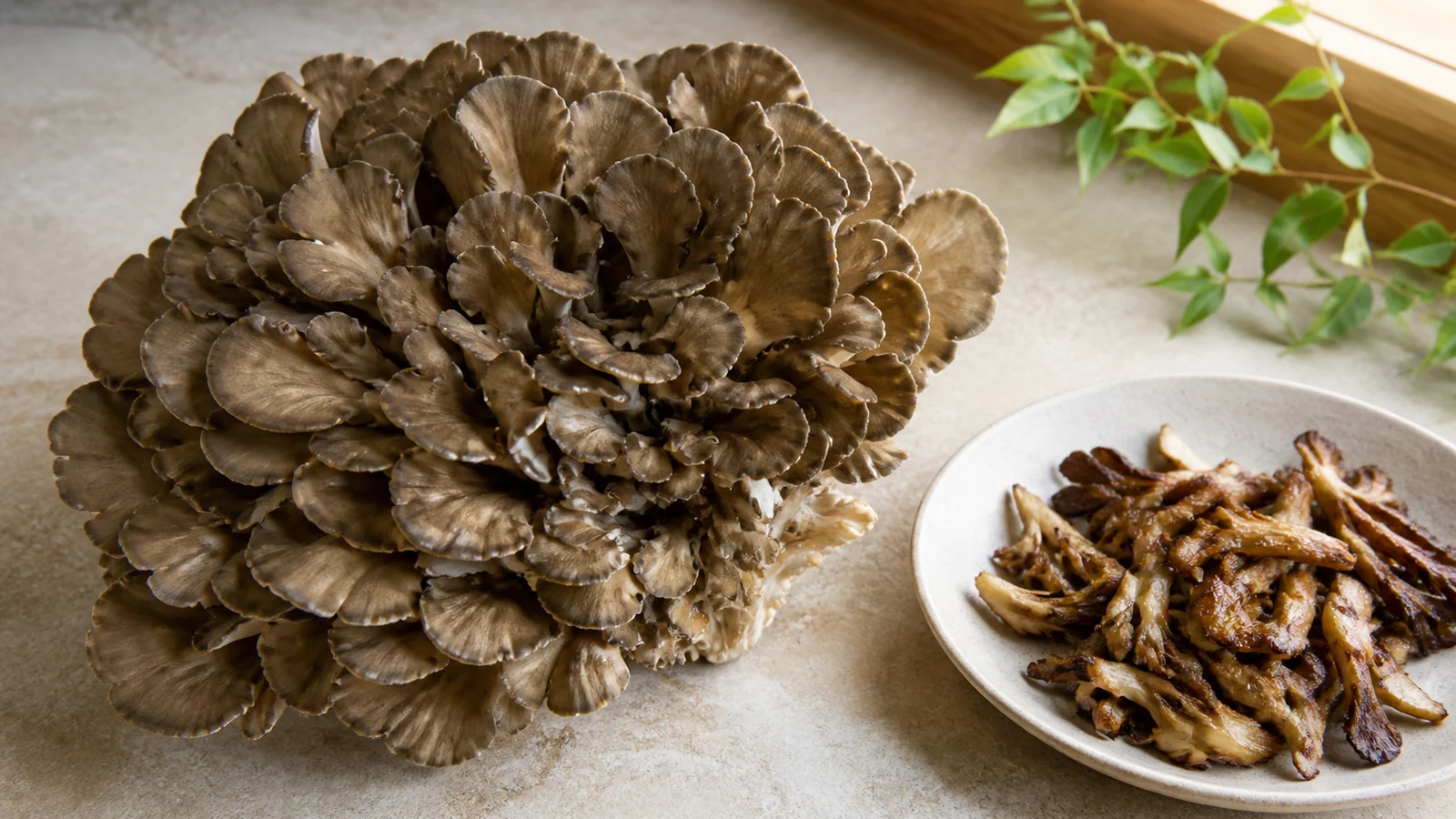
Fresh maitake can fit a pregnancy meal when it is sold or identified as culinary Grifola frondosa, the whole cluster is sound, and every piece is cleaned and cooked completely. A raw serving, an unidentified wild rosette, or a maitake extract does not inherit that answer.
This boundary matters because a skillet portion and a concentrated supplement can carry the same species name while presenting different doses, evidence, and decisions.
Why does product form decide the first answer?
Maitake, also called hen of the woods, is an edible polypore that forms a branching cluster of many gray-brown fan-shaped caps. Missouri conservation guidance and a USDA Forest Service field guide identify the culinary species as Grifola frondosa.
- Food identity
- Fresh or refrigerated Grifola frondosa sold as a culinary mushroom
- Whole form
- Overlapping fan-shaped caps rising from a branching whitish base
- Pregnancy preparation
- Cleaned, divided by thickness, and cooked completely
- Outside this answer
- Raw maitake, unidentified wild polypores, powders, capsules, tinctures, and extracts
- Leftovers
- Chilled within two hours and reheated to 165 F
FDA treats dietary supplements as different products from conventional food, so a plate of cooked maitake cannot establish the safety of an extract dose.
A systematic review found that maitake safety and effectiveness had not been studied systematically in humans. That evidence gap supports a strict food-versus-supplement boundary, not a claim that an ordinary cooked serving has a medicinal effect.
The practical yes therefore applies to a traceable food portion. It does not establish a pregnancy benefit, replace prenatal care, or clear a product marketed for blood sugar, immunity, or another health purpose.
SafetyAre Golden Oyster Mushrooms Safe During Pregnancy?Why does the whole cluster matter before trimming?
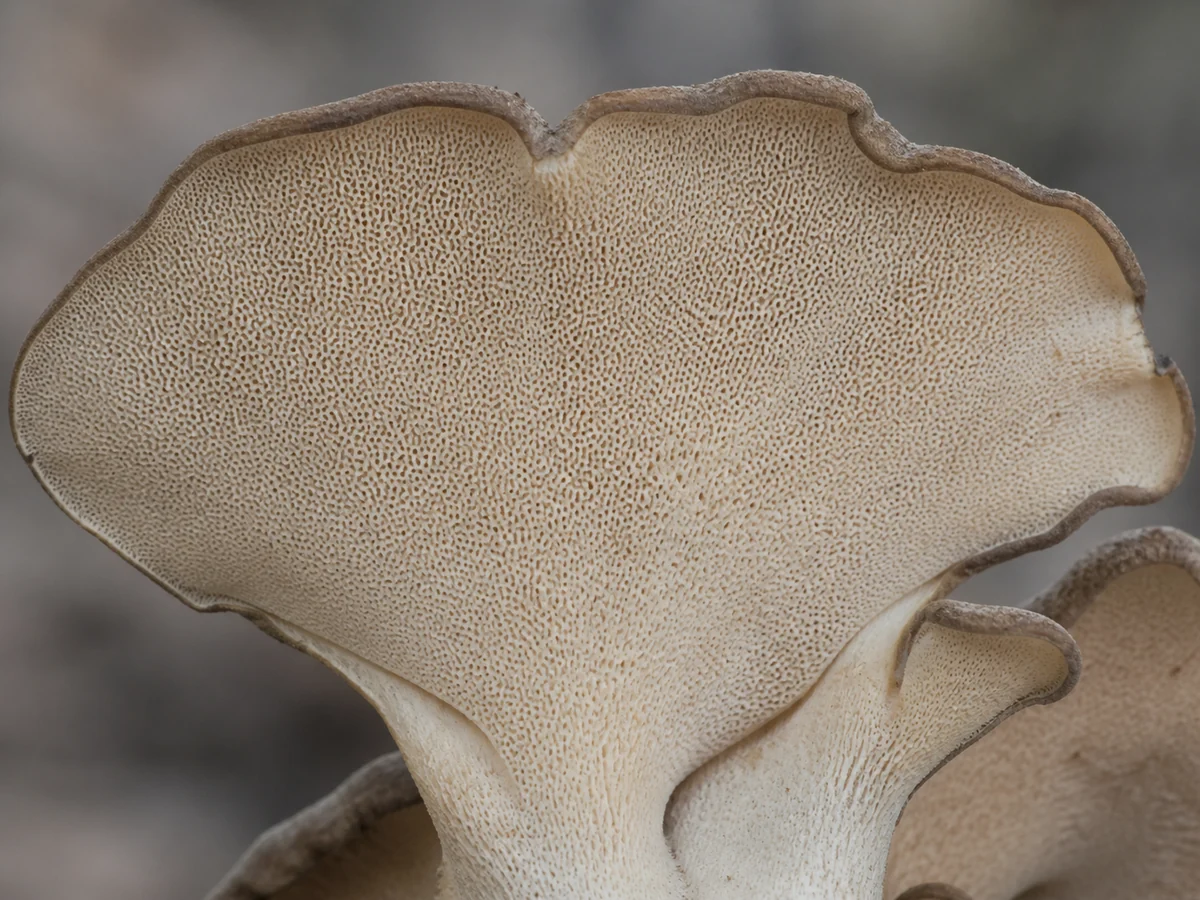
An intact maitake looks like a ruffled rosette rather than one cap on one stem. Dozens of spoon- or fan-shaped caps branch from a pale shared base, and their undersides carry tiny white to yellowish pores rather than gills.
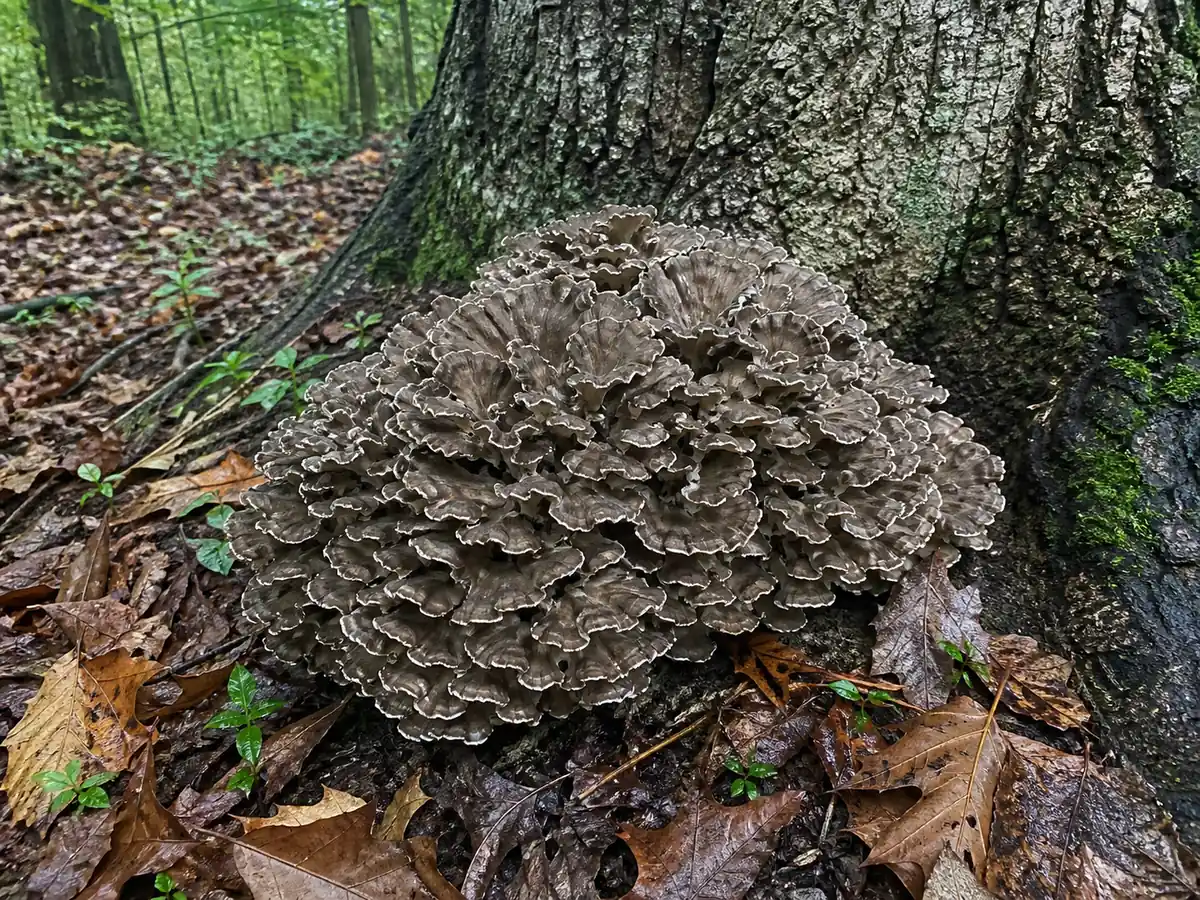
The complete rosette preserves evidence that loose fronds cannot, including cap shape, pore surface, branching pattern, bruising, attachment, and whether every piece belongs to one consistent cluster.
Wild Grifola frondosa commonly fruits on the ground near the base of oaks and other hardwoods, but habitat alone cannot confirm identity. Black-staining polypore can form a somewhat similar mass and darkens after handling, so an oak and a brown rosette are only parts of a professional identification.

Keep the cluster whole until its source and condition are clear, then photograph the top, pore surface, and base if the mushrooms were gathered. Once a restaurant chops the rosette into a sauce, those checks are no longer available at the table.
How do the fronds reveal freshness and damage?
Read the cluster from its outer tips toward the core. Fresh fronds should feel resilient enough to keep their layered shape, while the pale branches should remain firm rather than wet or compressible.
Because maitake caps naturally range from dull gray to gray-brown and can lighten with age, color alone is weak evidence.
Thin margins lose moisture before the dense central base, so a few dry tips do not carry the same meaning as a wet core. Press the branches near their junctions and smell the newly exposed area rather than judging only the photogenic top layer.
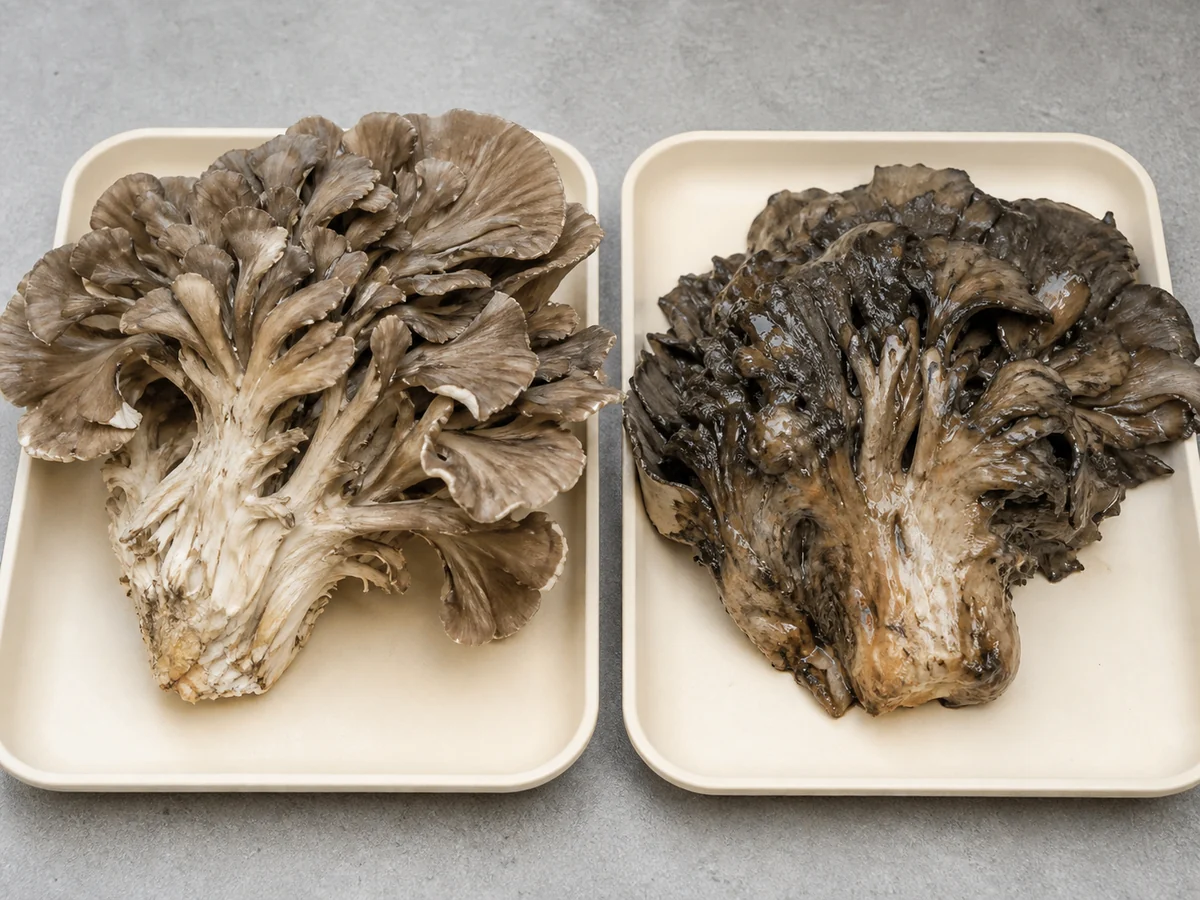
Discard connected sections when slime, mold, or wet collapse enters the branching base. Trimming one attractive cap from a deteriorating core does not create a clean new batch.
SafetyAre Hedgehog Mushrooms Safe During Pregnancy?How should the branching core be cleaned?
Start with the underside and base facing upward because grit, bark, leaf fragments, and insects settle where branches converge. Inspection comes before breakdown so a hidden soft pocket cannot be scattered through the sound fronds.
For the remaining surface dirt, FDA advises rinsing produce under running water and cutting away damaged areas while avoiding soap, detergent, or bleach on food.
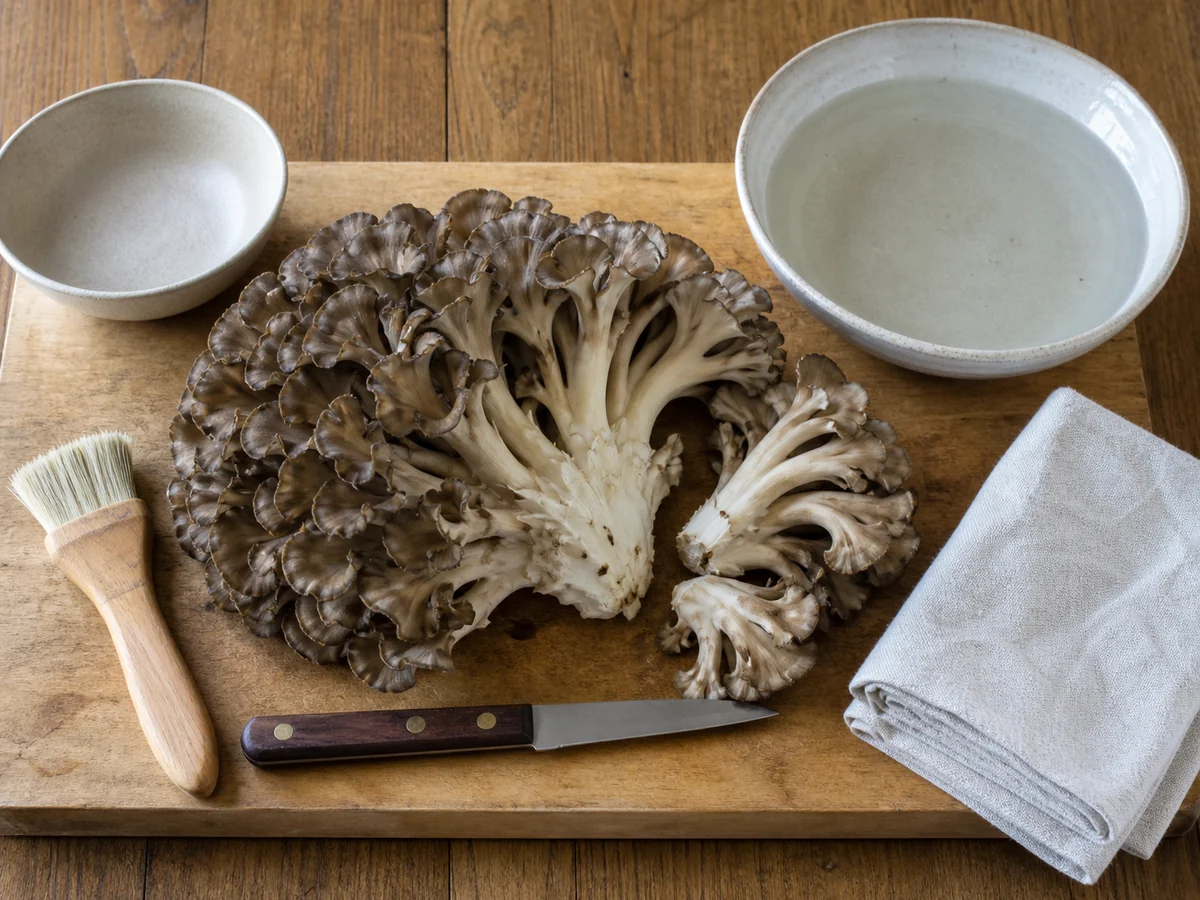
Cut through the central base only after the outer fans have been separated. The exposed cross-section should look pale and firm, not waterlogged, brown through the interior, or webbed with colored growth.
- Keep large clean fans together while you inspect their smaller branches.
- Trim compact core pieces smaller than the thin fronds they supported.
- Rinse briefly under gentle running water rather than soaking the cluster.
- Wash hands, knife, board, colander, and sink before the mushrooms meet ready-to-eat food.
- Use a clean towel to dry the pieces instead of returning wet maitake to storage.
Washing reduces surface soil and some germs, but it cannot repair spoilage, remove every environmental contaminant, or establish the species.
SafetyAre Oyster Mushrooms Safe to Eat During Pregnancy?What does complete cooking look like in a branching cluster?
Maitake geometry creates two heat paths in the same rosette. Thin frond tips brown quickly, while compact branches and core pieces need more time to become hot and tender through the center.
Separate pieces by thickness before the pan heats.
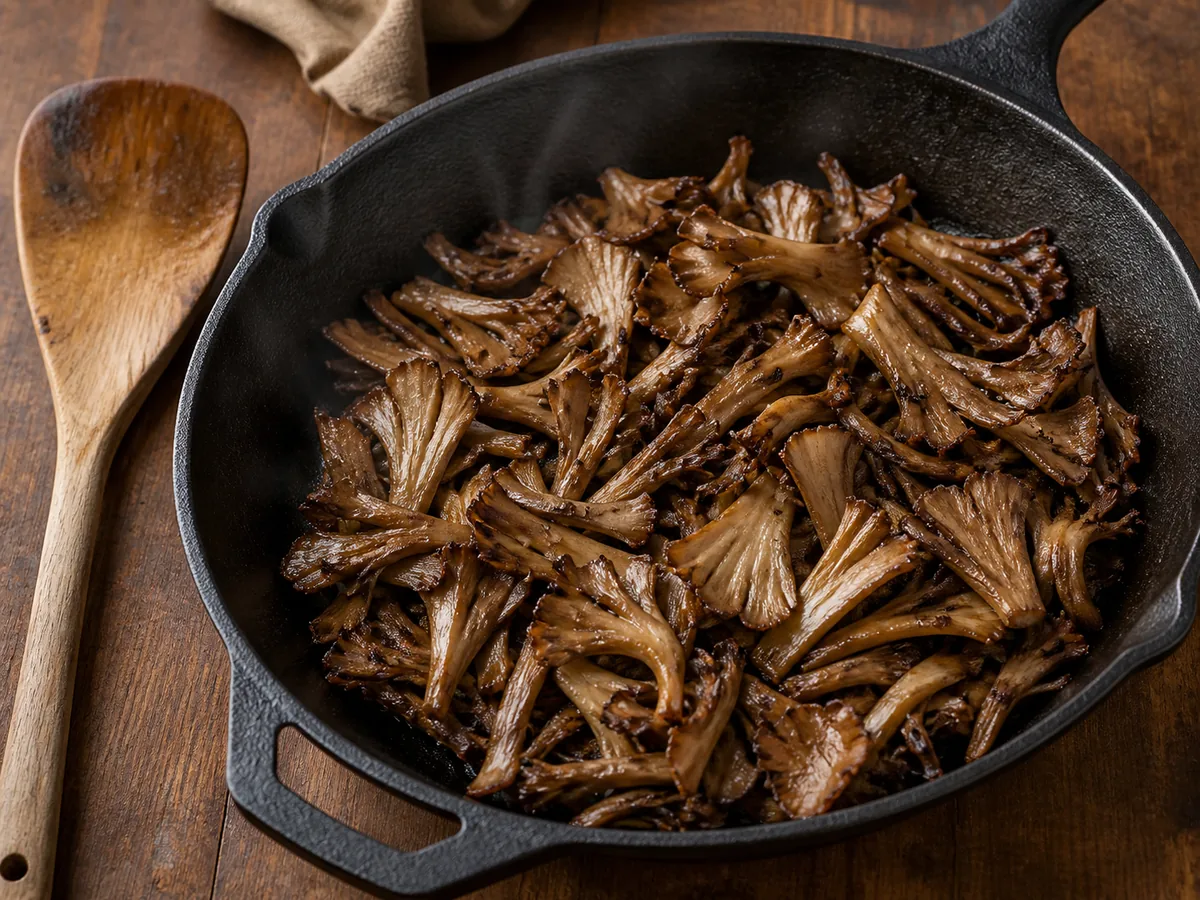
Cook in a shallow uncrowded layer so released moisture can escape and each piece keeps contact with heat. Turn the thicker branches through the wet stage, then test one core piece for tenderness instead of stopping when the first cap edge crisps.
- Tear broad fans along their natural branches rather than leaving a dense fist-sized center.
- Cut compact white core pieces smaller than the fronds.
- Cook in two batches when one layer cannot touch the pan.
- Keep raw pieces and their utensils away from the finished dish.
- Serve the maitake hot, with no raw fronds reserved as garnish.
There is no official maitake pregnancy temperature or universal minute count, so browned tips alone cannot prove the cluster is done.
Cook every piece until steaming hot and tender, then refrigerate leftovers in shallow containers within two hours. FDA advises reheating leftovers to 165 F and discarding food whose cooling history is uncertain.
Which maitake sources stay inside the answer?
A refrigerated grocer pack or cultivated cluster from a known grower offers the clearest food evidence because it can preserve the species name, supplier, harvest date, cold condition, and intact base until inspection.
A restaurant should be able to confirm maitake from a commercial supplier before the dish arrives chopped. If the kitchen cannot distinguish fresh culinary Grifola frondosa from a mixed mushroom blend or maitake powder, choose another dish.
Warning
A wild oak-base cluster needs qualified regional identification | Growth beside an oak, layered brown caps, and pale pores support a hypothesis but do not clear a meal. Keep every specimen separate and skip the serving when the identifier, collection site, or batch consistency remains uncertain.
Home-cultivated maitake still needs a clean fruiting block, normal color and odor, prompt harvest, and refrigeration. Cultivation resolves the intended species only when the culture and block history are known.
Cooking cannot correct a wild-species mistake or remove contaminants from a roadside, treated landscape, industrial site, or unknown dumping area.
Which outcome changes what you do next?
After an ordinary traceable cooked portion with no symptoms, keep the supplier and meal details and follow normal prenatal advice. The next step changes when the product was concentrated, the identity was uncertain, or illness begins.
Contact the obstetric clinician for fever with unusual fatigue or muscle aches after a possibly contaminated food. Repeated vomiting, diarrhea, or trouble keeping fluids down also deserves prompt advice because dehydration can become the immediate problem.
Bring a maitake supplement label to the clinician or pharmacist with the serving size, extract ratio, other ingredients, planned dose, medicines, and reason for use rather than treating the word natural as a safety clearance.
If a wild mushroom identity remains uncertain after eating, contact Poison Control promptly in the United States at 1-800-222-1222 or the local poison service. Save an intact raw specimen, photographs, collection location, meal time, amount eaten, and leftovers without delaying the call.
| Outcome | Evidence to keep | Next action |
|---|---|---|
| Traceable cooked maitake, no symptoms | Package, supplier, meal time, and portion | Follow ordinary prenatal guidance |
| Maitake powder, capsule, tincture, or extract | Full label, dose, other ingredients, and medicine list | Ask the obstetric clinician or pharmacist before use |
| Fever with fatigue or muscle aches | Meal history, temperature, symptom onset, and pregnancy details | Contact the obstetric clinician promptly |
| Repeated vomiting, diarrhea, or dehydration | Meal time, fluid loss, symptoms, and retained food | Seek prompt clinical advice |
| Wild or uncertain mushroom identity | Intact specimen, habitat photographs, amount, and meal time | Contact Poison Control promptly |
| Breathing trouble, facial or throat swelling, collapse, seizure, or inability to wake | Immediate condition and location | Call emergency services |
Do not induce vomiting or use a household remedy unless a poison specialist or clinician directs it.
The useful pregnancy answer remains a food answer. Choose traceable Grifola frondosa, inspect the full cluster and its shared core, cook every thickness completely, and keep concentrated products outside the meal decision.
Sources & References
- Hen of the Woods (Maitake), Missouri Department of Conservation
- USDA Forest Service Field Guide
- Safer Food Choices for Pregnant Women, CDC
- Cleaning, Food Safety for Moms-to-Be, FDA
- Food Safety at Home, FDA
- FDA 101: Dietary Supplements
- Pregnancy, FDA
- Maitake mushroom systematic review, PubMed
- Symptoms of Listeria Infection, CDC
- Wild Mushroom Warning, National Capital Poison Center