Grow Phoenix oyster mushrooms from verified Pleurotus pulmonarius spawn or a labeled block. Match the substrate to its treatment, wait for complete colonization, prepare the fruiting room before cutting, and use pins, cap shape, surface moisture, and contamination boundaries to guide each change.
Phoenix oyster mushrooms grow best when each stage has its own proof. Confirm the culture, choose a substrate process you can execute cleanly, wait for complete colonization, and prepare the fruiting room before exposing the block.
The name Phoenix oyster refers to Pleurotus pulmonarius. Its commercial strains do not all share one temperature schedule, so the supplier's instructions remain the operating authority for your block or spawn.
Which species is the phoenix oyster?
| Question | Evidence to require | Why it matters |
|---|---|---|
| Species | The label identifies Pleurotus pulmonarius | A generic oyster label does not define this species or strain |
| Starting material | A reputable supplier identifies the culture or finished block | Unknown wild material can be misidentified or contaminated |
| Stage ranges | Instructions separate incubation from fruiting | One room setting cannot serve every stage equally |
| Bag method | The supplier shows where and when to open it | Opening design affects moisture loss and cluster space |
University of Florida Extension identifies Phoenix oyster as Pleurotus pulmonarius. A federal identity dossier independently uses the same taxon for a genetically confirmed Phoenix oyster strain.
Those sources establish the species boundary, but neither turns an unlabeled wild cluster into safe cultivation material.
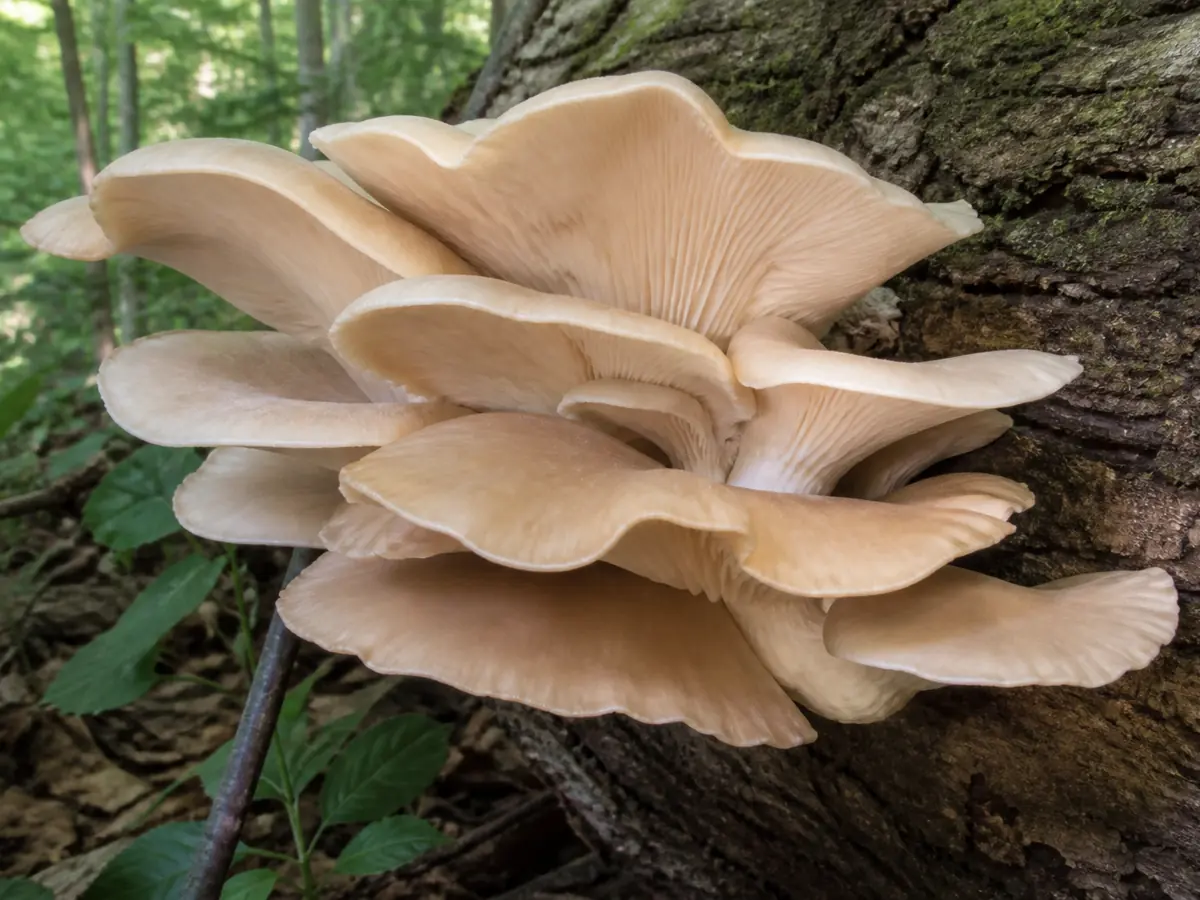
Buy verified edible spawn or a colonized block. Cloning an oyster-shaped mushroom found outdoors adds an identification decision to an already contamination-sensitive process.
- Scientific name
- Pleurotus pulmonarius
- Common cultivation names
- Phoenix oyster, summer oyster, and Indian oyster may be used for commercial cultures
- Growth form
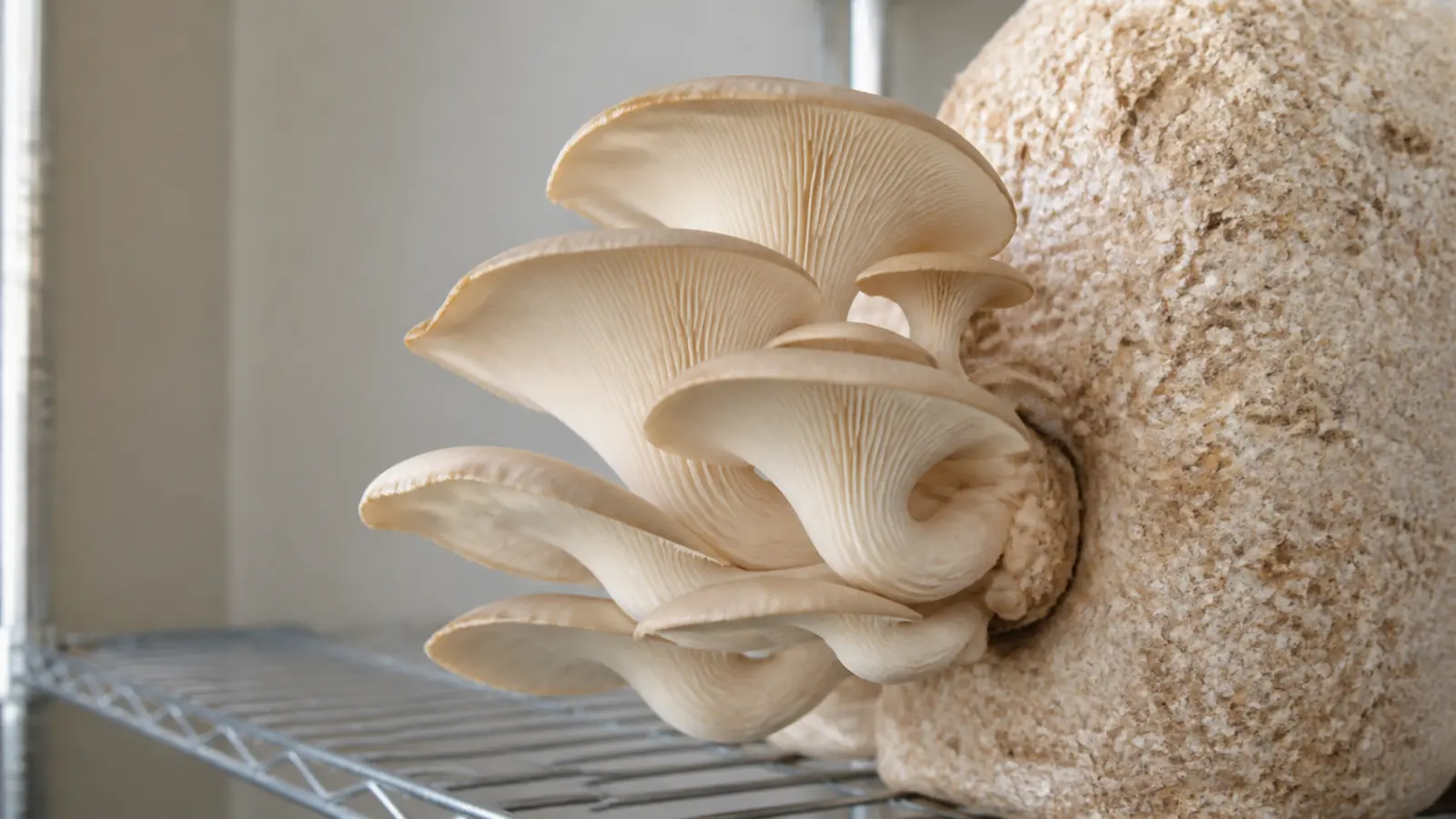
- Pale cream to warm tan fan caps grow in joined lateral clusters
- Identity limit
- A trade photograph, cap color, or seller nickname cannot replace a strain label
Let the labeled culture own the settings.
Published temperatures below are examples from named experiments, not a replacement for the instructions supplied with your strain.
Which route can you keep clean?
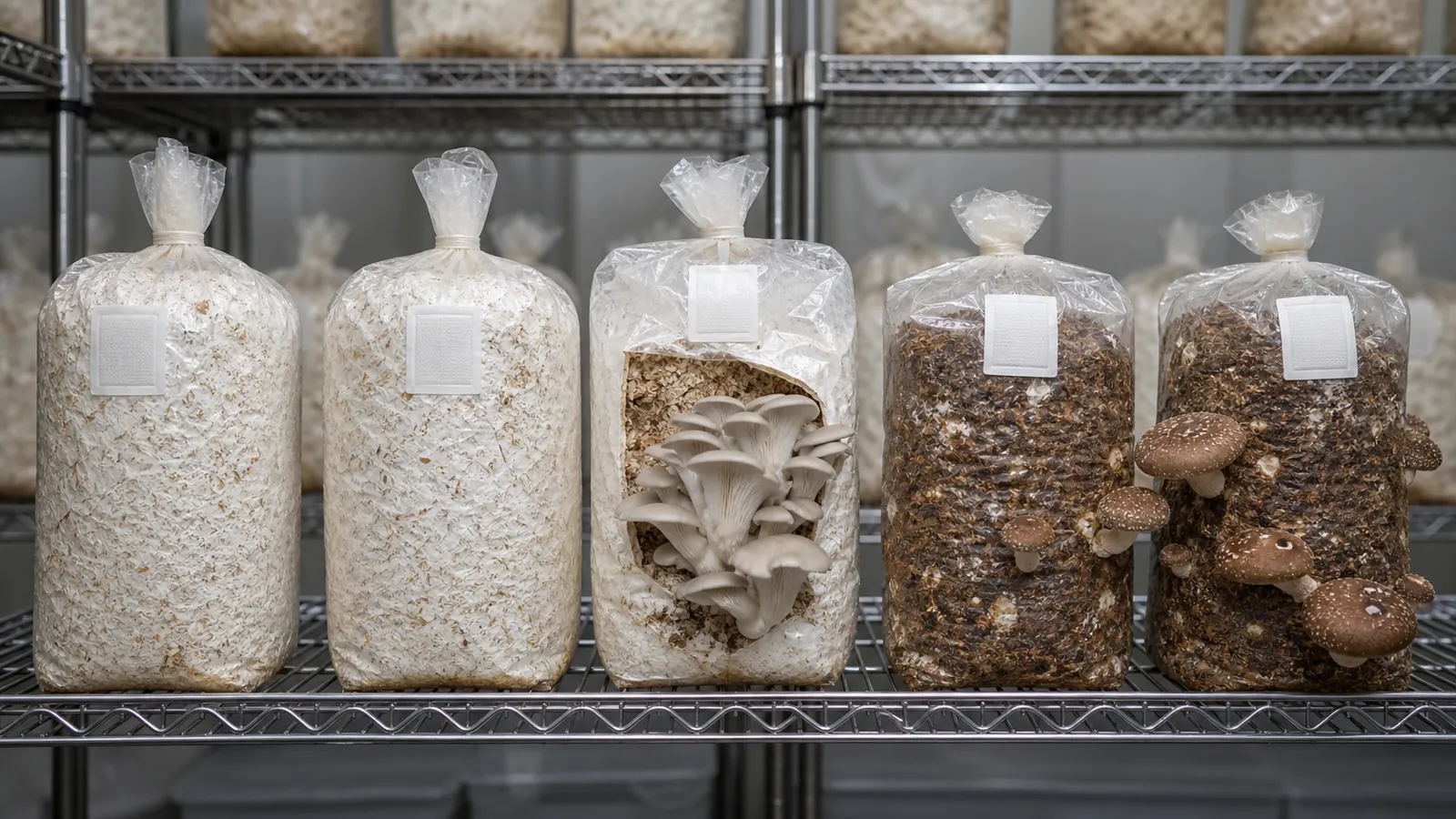
A ready-to-fruit block lets you begin with room preparation, bag opening, pin care, and harvest. The producer has already completed the early stages described in the broader oyster mushroom profile.
Starting with verified spawn gives you control over the substrate. It also makes treatment, cooling, transfer, moisture, packing, and incubation your responsibility.
| Route | Work you own | Useful first lesson | Main failure point |
|---|---|---|---|
| Ready block | Inspect, position, open, fruit, and harvest | Reading pins and cluster form | A room that dries or traps carbon dioxide |
| Treated low-nutrient substrate | Prepare material, cool, inoculate, pack, incubate, and fruit | Connecting substrate condition to colonization | Incomplete treatment or wet packing |
| Supplemented sawdust | Sterilize, cool, transfer cleanly, seal, incubate, and fruit | Repeatable production with proper equipment | Contamination surviving or entering during transfer |
Choose one route for the first crop because running several methods together produces different clocks and contamination risks. A single route makes the cause of a failure easier to identify.
Tip
Prove the fruiting room first | A finished block is the shortest way to learn whether your space can supply diffuse light, humid air, and replacement air without also testing your substrate preparation.
Supplements such as bran make a substrate more nutritious for the mushroom and for competing organisms, so use them only when your equipment can sterilize the complete mass and protect it after cooling.
Growing MushroomsWhat Does a Mushroom Farm Actually Cost to Start?What substrate do phoenix oysters need?
Phoenix oyster mycelium can use several lignocellulosic materials.
Controlled work has tested sawdust, cottonseed hulls, wheat straw, corn straw, soybean straw, wood chips, and bran-containing formulas, with meaningful differences in growth, harvest time, and yield.
That evidence supports material flexibility. It does not support combining the highest-performing ingredients from unrelated experiments into one home recipe.
- Use clean, dry material without visible mold, chemical treatment, manure, or prolonged weather exposure.
- Match particle size to the heating method so the center receives the intended treatment.
- Treat a supplemented hardwood formula as a sterile process rather than a casual pasteurization project.
- Cool the center below the culture's safe transfer temperature before opening spawn.
- Pack the substrate evenly while preserving fine air spaces and avoiding free water.
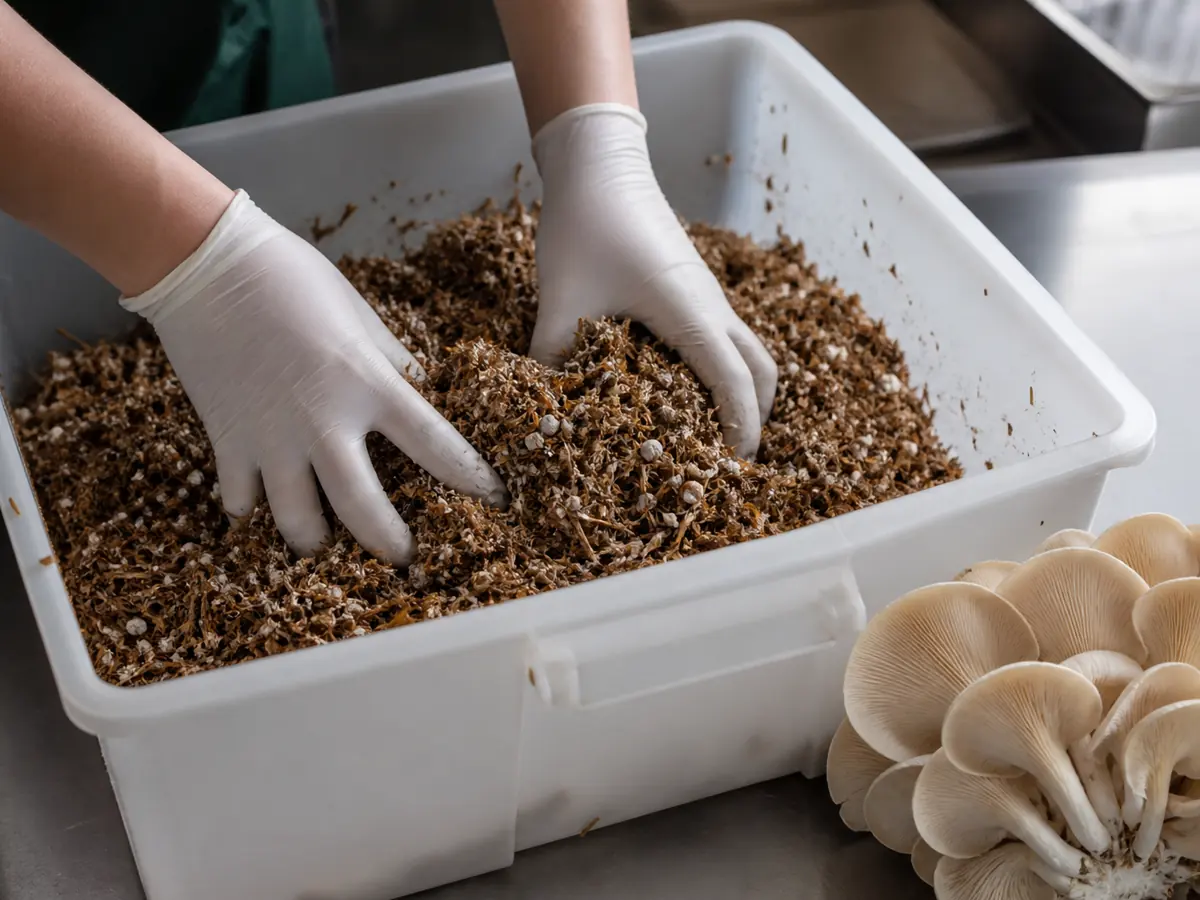
One study used a sterilized mixture of wood chips, cottonseed hulls, bran, lime, and sugar at 60 percent moisture. Another trial tested straw combinations against a sawdust and cottonseed-hull control, so their results belong to those formulas and equipment.

Squeeze testing can reveal free water in a cooled low-nutrient substrate. A stream signals excess water.
A few drops and material that springs apart indicate a more workable physical state.
Do not use that hand test to improvise a supplemented sawdust formula. Weighing dry ingredients and water is more repeatable, and the validated method should specify the treatment that follows.
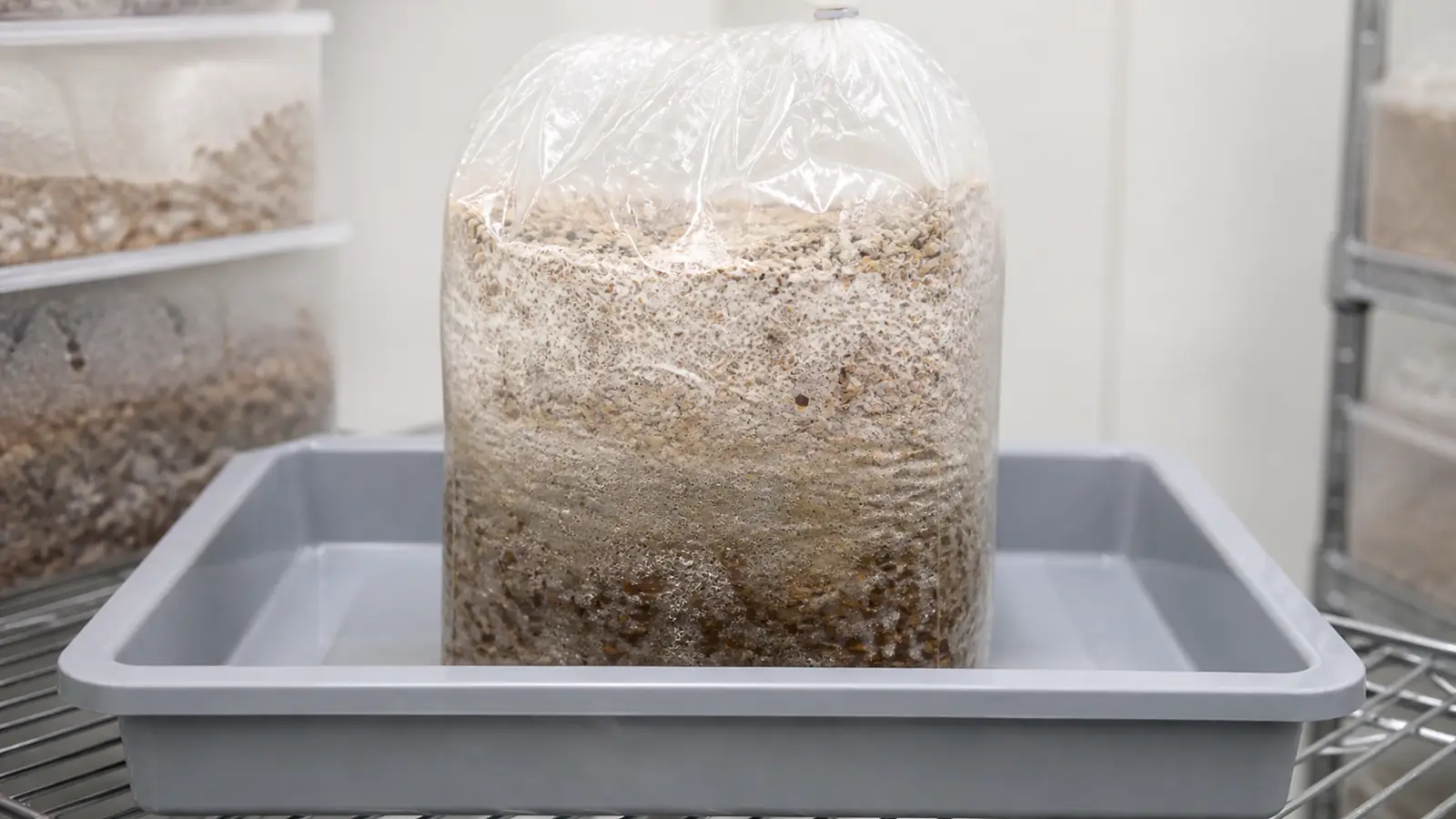
When is the block fully colonized?
Incubation then gives mycelium time to occupy and bind the substrate, one stage in the mushroom life cycle.
A Phoenix oyster straw experiment incubated bags at 22 to 24°C, then allowed four more days after the bags appeared full before fruiting, while another verified strain was incubated at 22 to 25°C.
These are protocol examples rather than a universal Phoenix oyster range. Bag mass, spawn rate, substrate, strain, and internal heat change the clock.
- Continue incubating
- White growth is advancing between checks and remaining tan areas are shrinking
- Nearly complete
- The outside is white but a stable uncolonized pocket remains near the center or base
- Ready for the next stage
- White growth covers the intended substrate and the block holds together without an expanding foreign boundary
- Isolate
- Green, black, orange, or wet translucent growth expands between observations
Compare the whole surface before deciding that a bag has finished.
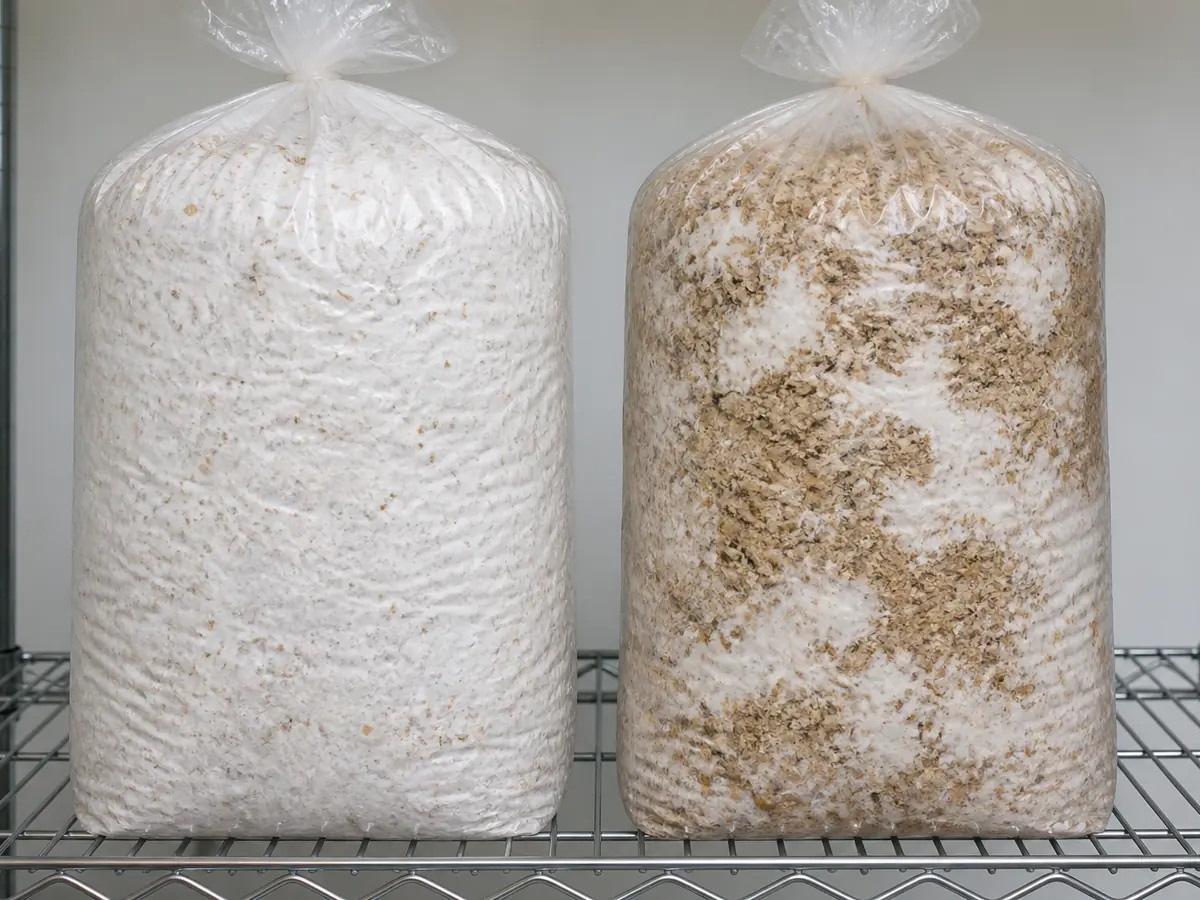
Full binding outranks the calendar.
One sawdust study harvested its Phoenix oyster strain on day 26, but that result cannot date a home block that begins with different spawn, mass, or conditions.
Several active bags can become warmer inside than the surrounding room. Leave space between them, measure near the substrate rather than near the ceiling, and respond to sustained heat instead of moving a healthy bag after one reading.
Avoid squeezing and rotating the bag during routine checks because repeated handling can fracture new connections and pull unfiltered air through weak closures.
Growing MushroomsHow Do Mushroom Sawdust Blocks Work from Mix to Fruit?What does the fruiting room need?
Fruiting begins with a coordinated change in air, moisture, light, and sometimes temperature. Establish those conditions first, because an exposed block starts losing surface water immediately.
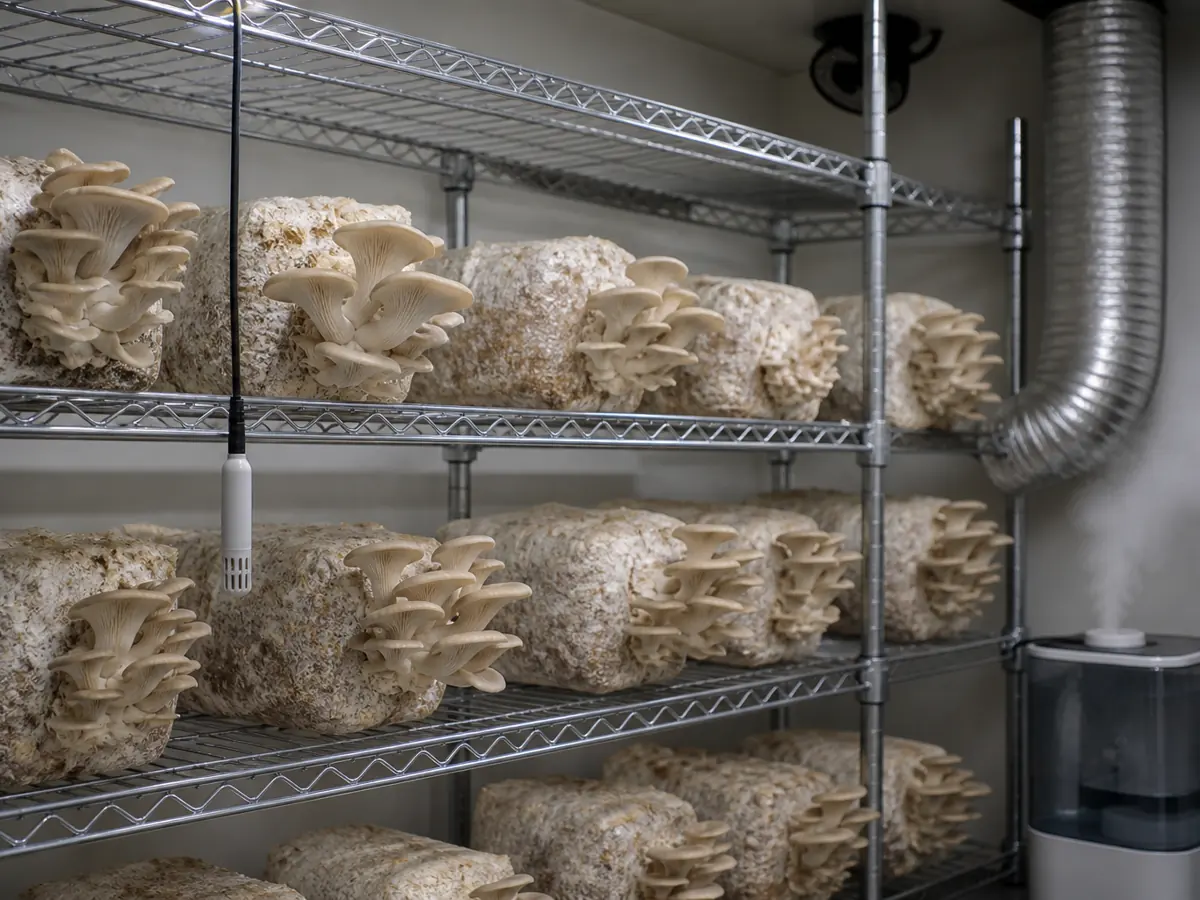
One controlled trial fruited its strain at 15 to 17°C, 90 to 95 percent relative humidity, 400 to 700 parts per million carbon dioxide, and 200 lux for ten hours daily. Those values describe that strain and room, so they remain an example.
A different Phoenix oyster protocol used 24 to 26°C and 2,000 parts per million carbon dioxide, which shows why copying a single setpoint across strains is unsound.
The supplier's range sets the starting room. The growing crop then shows whether that room works.
- Place the temperature and humidity sensor at the same height as the openings.
- Supply diffuse light on a regular cycle without direct solar heating.
- Exhaust stale air and provide a path for replacement air to enter the room.
- Keep the block away from direct fan, heater, humidifier, and air-conditioner discharge.
- Stabilize the room before cutting plastic.
Humidity slows evaporation, while fresh-air exchange removes accumulated carbon dioxide. A humidifier cannot replace ventilation, and a fan aimed at a cluster can exchange air while ruining its surface.
How many openings should you cut?
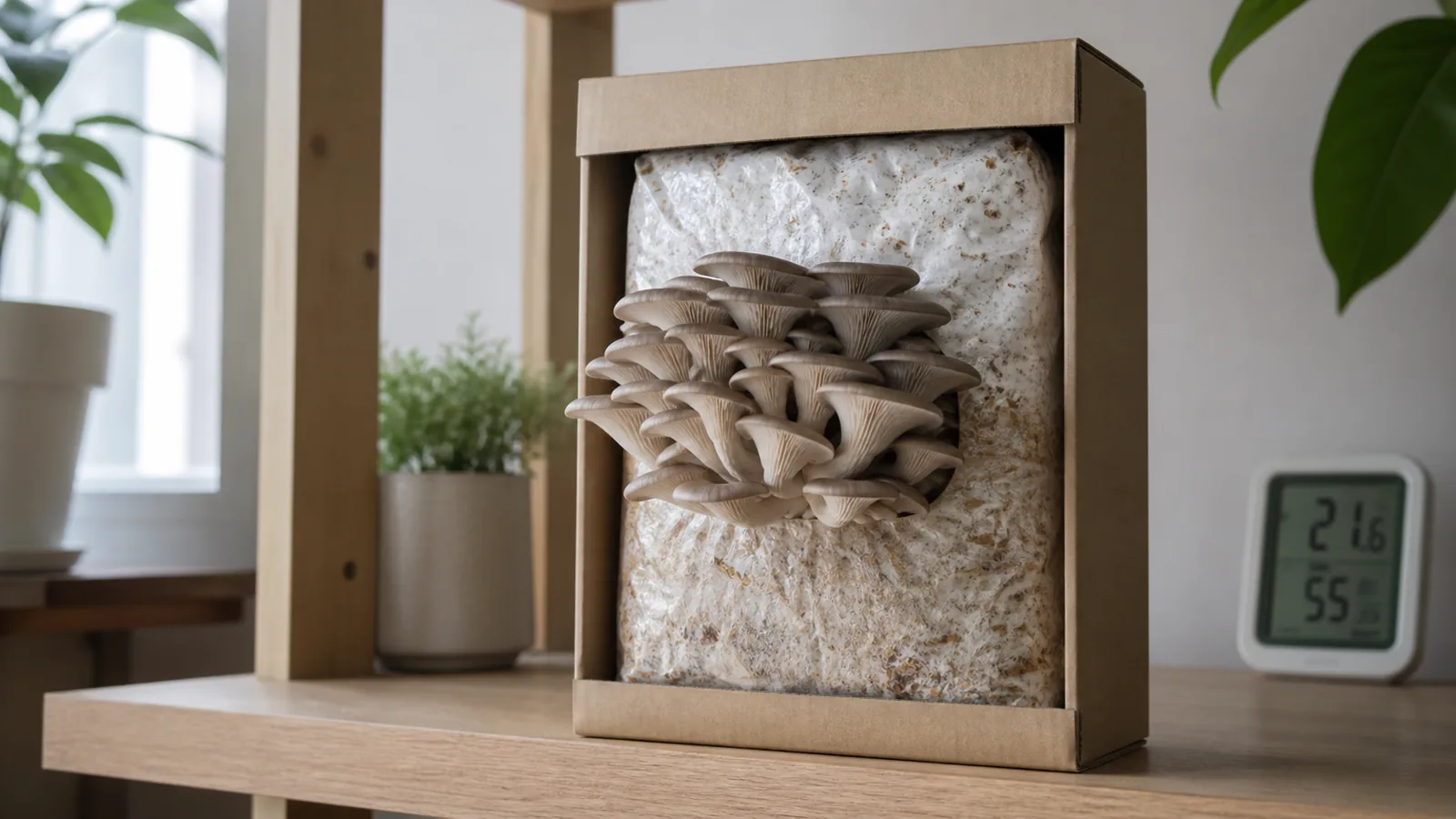
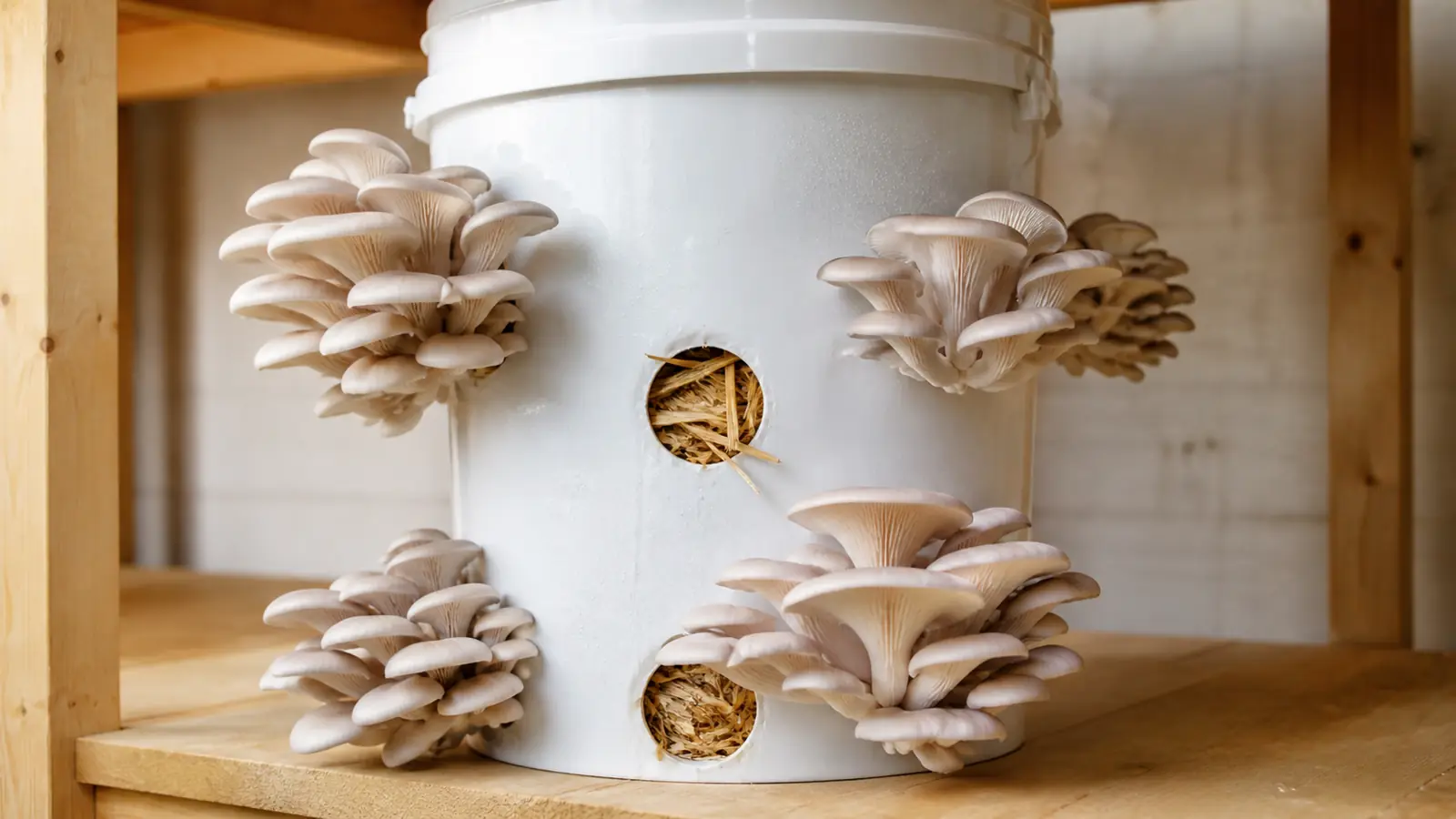
Phoenix oysters naturally form joined lateral clusters.
Small side openings concentrate fruiting at manageable sites and leave most of the substrate protected by plastic.
One research protocol cut two V-shaped holes in each fully colonized bag. A commercial block may instead specify an X cut, a removed patch, or another opening designed for its bag and substrate, and its printed method takes priority.
Clean the work area
Wash hands, clean the cutting tool, and wipe the bag exterior before making an opening
Confirm the stage
Open only a fully colonized healthy block. Follow any different explicit instruction supplied with the product
Follow the bag design
Use the marked cut or the producer's method for a ready block
Preserve covered surface
Avoid peeling away a large plastic panel that the method does not require
Reserve expansion space
Keep the opening clear of walls, shelves, and neighboring clusters
Because the block has a limited water and nutrient reserve, more holes can create numerous weak clusters and faster drying instead of guaranteeing more mushrooms.
Watch the cut for several days without enlarging it. Mycelium may recover at the edge before pins appear, and repeated trimming resets the surface while increasing exposure.
What do healthy first pins look like?
Healthy pins enlarge between daily observations and remain firm at their bases, while their early color can range from cream to tan. Progress and texture matter more than matching one product photograph.
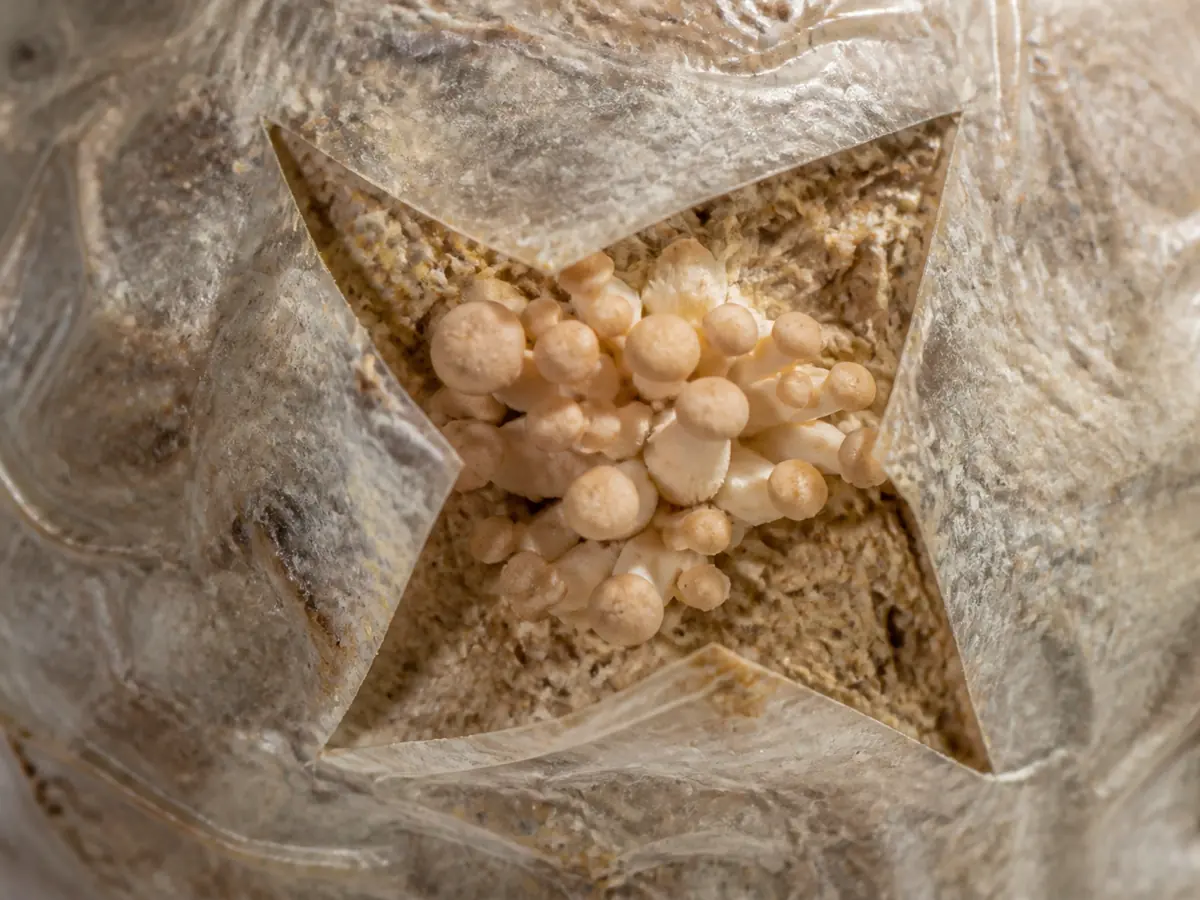
Across cultivated Pleurotus, mature mushrooms may appear within several days after pin formation, which makes daily inspection useful without creating a harvest appointment.
Change one control, then observe the next growth interval. Raising humidity, reducing a direct draft, and increasing exhaust simultaneously removes the evidence needed to learn which condition was wrong.
Mist the room or use controlled humidification rather than soaking young clusters. Standing droplets do not prove that the air is humid, and direct spraying can damage crowded pins.
Growing MushroomsHow Do You Build an Outdoor Mushroom Bed That Lasts?Why are the stems long and the caps small?
Cluster shape is a practical record of the air around the opening. Long stems with small caps point toward accumulated carbon dioxide, while dry curled margins and stalled growth point toward excessive evaporation.
Published Phoenix oyster experiments used carbon-dioxide targets ranging from hundreds to thousands of parts per million.
The strain, room, measurement location, and production goal differ, so the crop and supplier guidance must interpret the meter together.
| What you see | Likely pressure | First bounded check |
|---|---|---|
| Long stems and undersized caps | Carbon dioxide remains around the cluster | Confirm exhaust and replacement air at cluster height |
| Firm broad caps with steady expansion | Air and moisture are supporting development | Hold conditions and continue daily observation |
| Dry pale opening and crisp margins | Airflow or low humidity is removing water too quickly | Move direct air away before raising humidity broadly |
| Wet glossy tissue and persistent droplets | Water is landing on or lingering around caps | Stop direct mist and verify drainage plus exchange |
| Uneven clusters across one shelf | Local airflow differs from the room average | Compare sensor and air path at each block position |
Do not point a stronger fan at stretched mushrooms. Increase gentle room exhaust and confirm that replacement air reaches the crop without becoming a drying jet.
A compact room can change quickly after several clusters expand because their respiration and physical size alter local air movement. A setting that worked at pinning may need a small adjustment later.
When should you throw a bag out?
Phoenix oyster fruit bodies may be cream or tan, and healthy mycelium is normally white. Those expected colors establish the comparison for a suspect bag.
A new green colony belongs to the broader problem of mushroom grow contamination, while a black or orange boundary or wet translucent patch is also a different biological event.
Warning
Keep a suspect bag sealed | Move it away from healthy blocks before pressing, smelling, cutting, or attempting to fruit it, because opening a sporulating contaminant spreads the problem through the room.
The bag should reach its isolation location before anyone examines the boundary more closely.
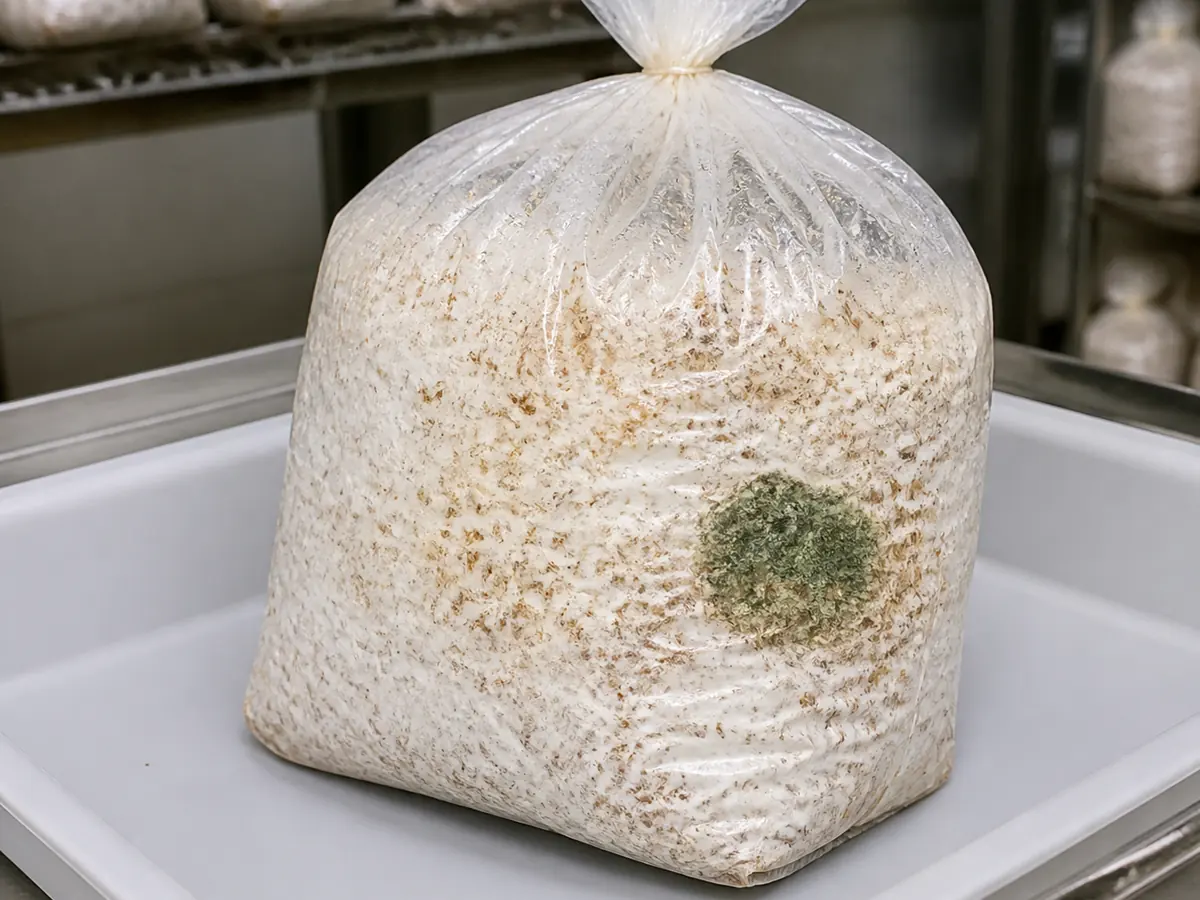
Do not cut around an expanding colony and eat mushrooms from the remaining substrate. The visible boundary does not show the full extent of competing growth or bacterial activity inside the block.
Record the bag, spawn source, substrate batch, treatment, cooling time, inoculation date, and first abnormal observation. A pattern across several bags points upstream toward material treatment, transfer, or incubation rather than bad luck at fruiting.
After cleaning the isolation path and any surface the bag touched, review where the defect first appeared before changing the fruiting room, which may have had no role in introducing it.
When should you harvest phoenix oysters?
Harvest when most caps have expanded but remain firm, with margins gently curved to nearly level. Waiting for every cap to flatten can leave the oldest caps fragile while the smallest members of the joined cluster continue growing.
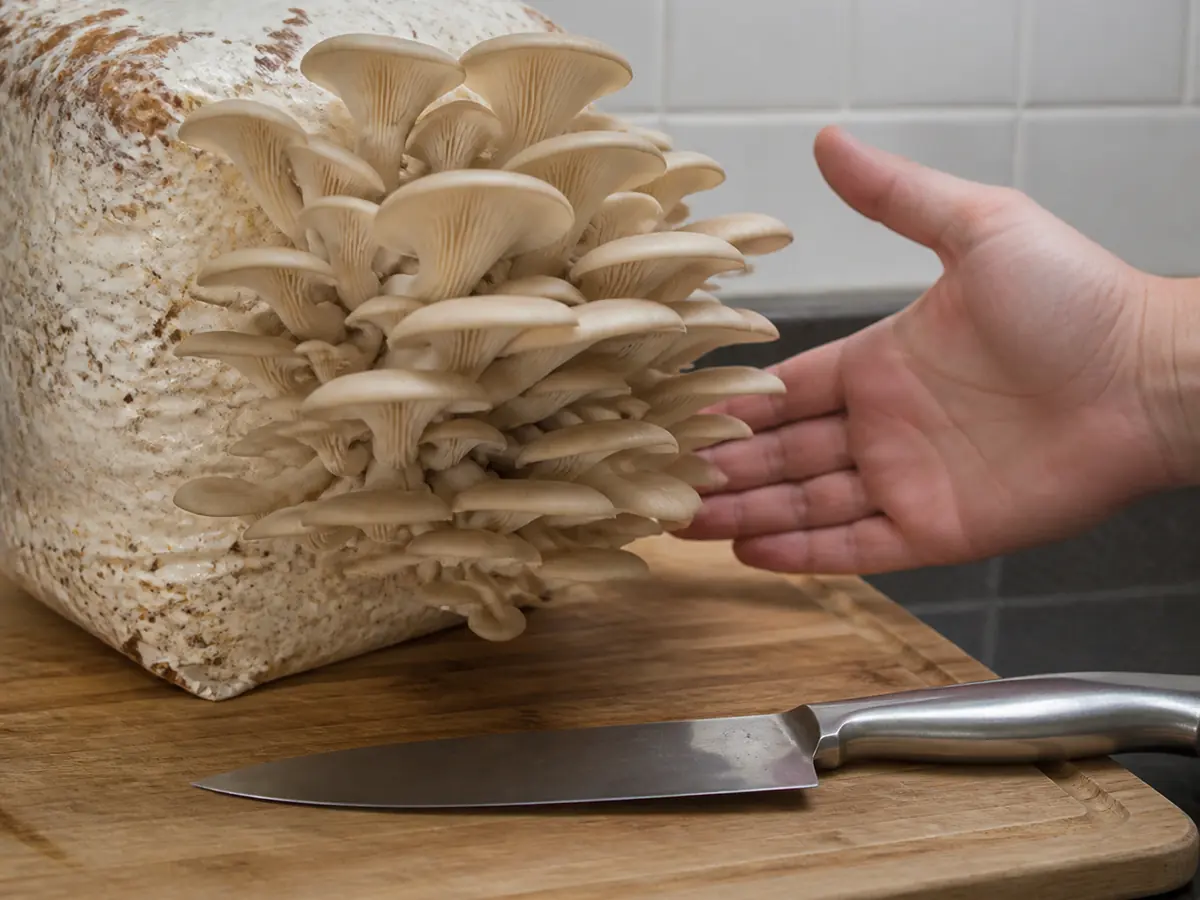
Support the cluster with one hand and cut the joined base close to the block with a clean knife. Avoid tearing a deep crater from the substrate because damaged loose material dries and becomes harder to inspect.
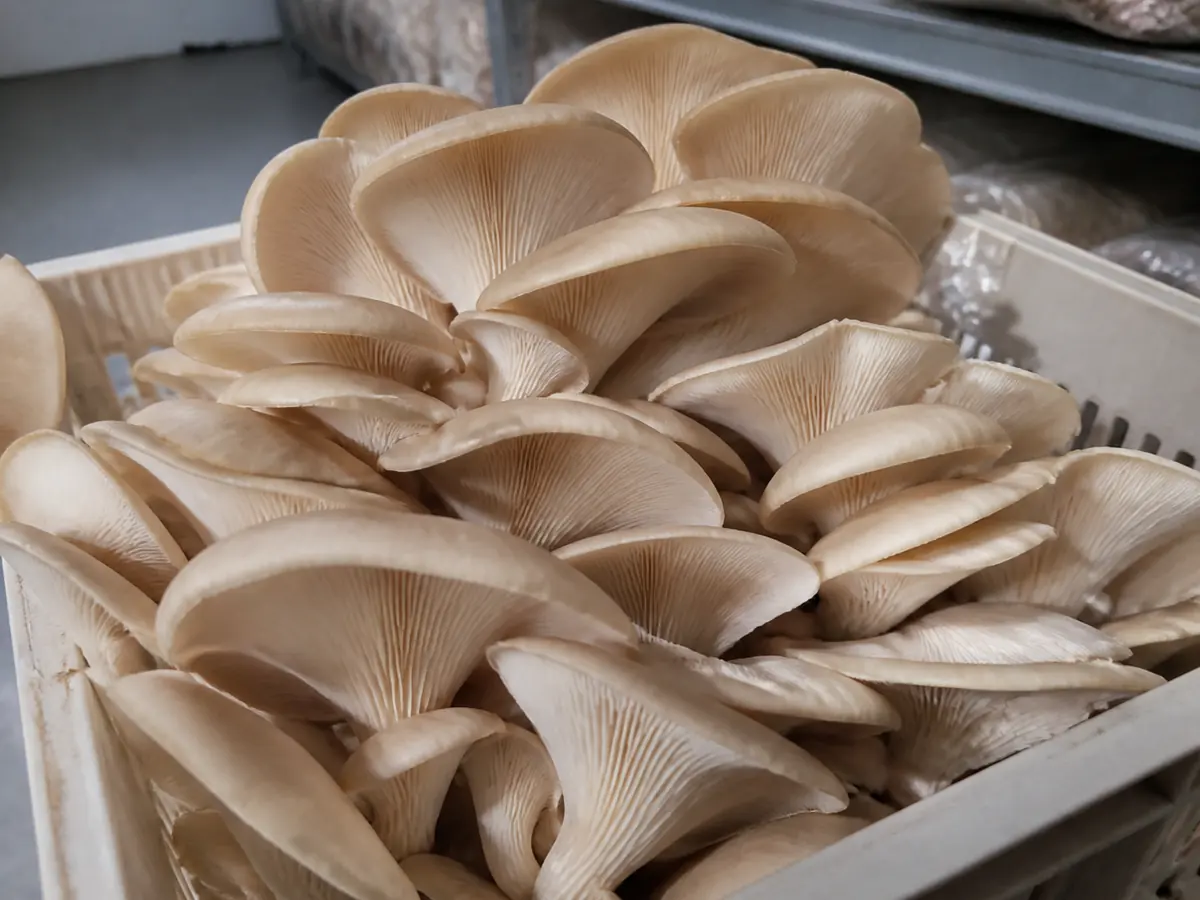
One study found that wild-type P. pulmonarius isolates produced a heavy visible white spore deposit within a day, supporting harvest before advanced flattening to reduce room spore load and usually preserve firmer cap margins.
Cool the mushrooms promptly in a breathable container. Trim loose substrate at the base, keep the harvest dry, and cook cultivated oyster mushrooms before eating them.
After harvest, remove loose tissue from the opening and let the block rest according to the supplier's method. Some blocks support another flush after their water balance recovers, but the next crop is not guaranteed.
The harvest clock closes with evidence, not a date. Record the time from opening to pins, pins to harvest, cluster form, room readings, and any adjustment so the next block begins with your own strain-specific history.
Sources & References
- UF/IFAS: Isolation of Mother Cultures and Preparation of Spawn for Oyster Mushroom Cultivation
- FDA GRAS Notice 1152: Phoenix Oyster Mushroom Mycelia Biomass
- Optimization of Agro-residues as Substrates for Pleurotus pulmonarius Production
- Pleurotus pulmonarius on Softwood and Hardwood Sawdusts
- Identification and Cultivation of a Pleurotus pulmonarius Strain
- Spore Production in Cultivated Pleurotus pulmonarius