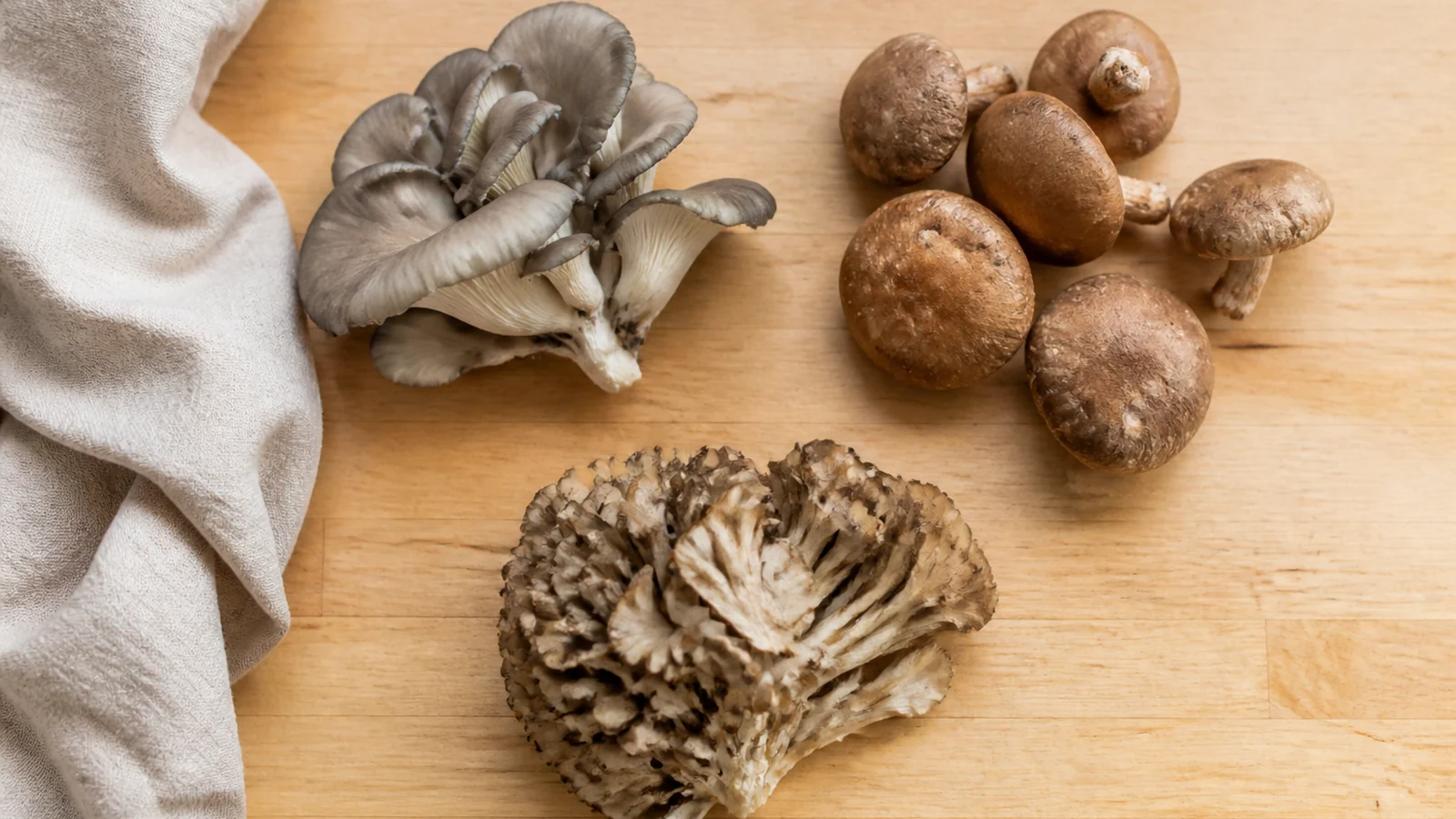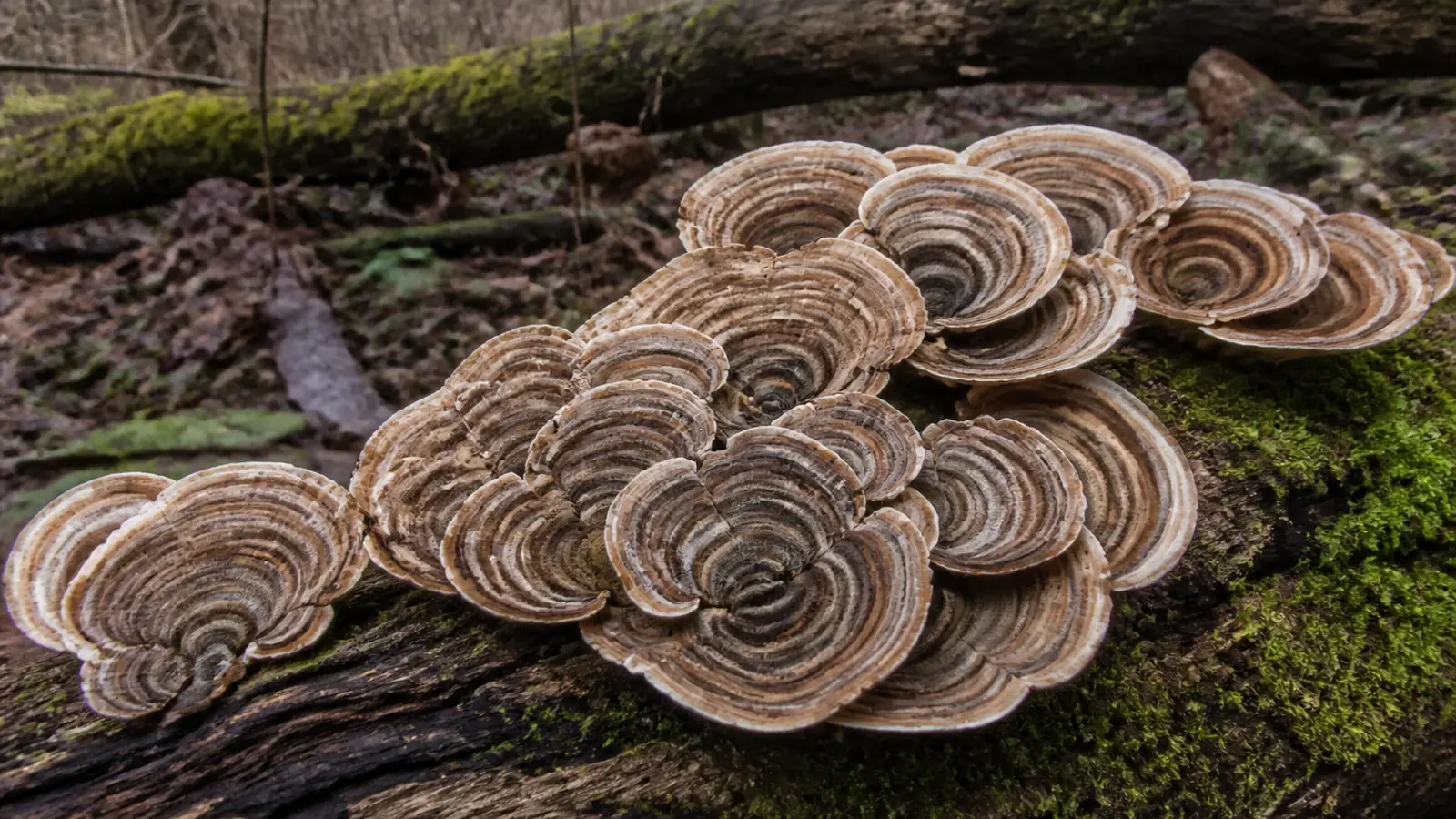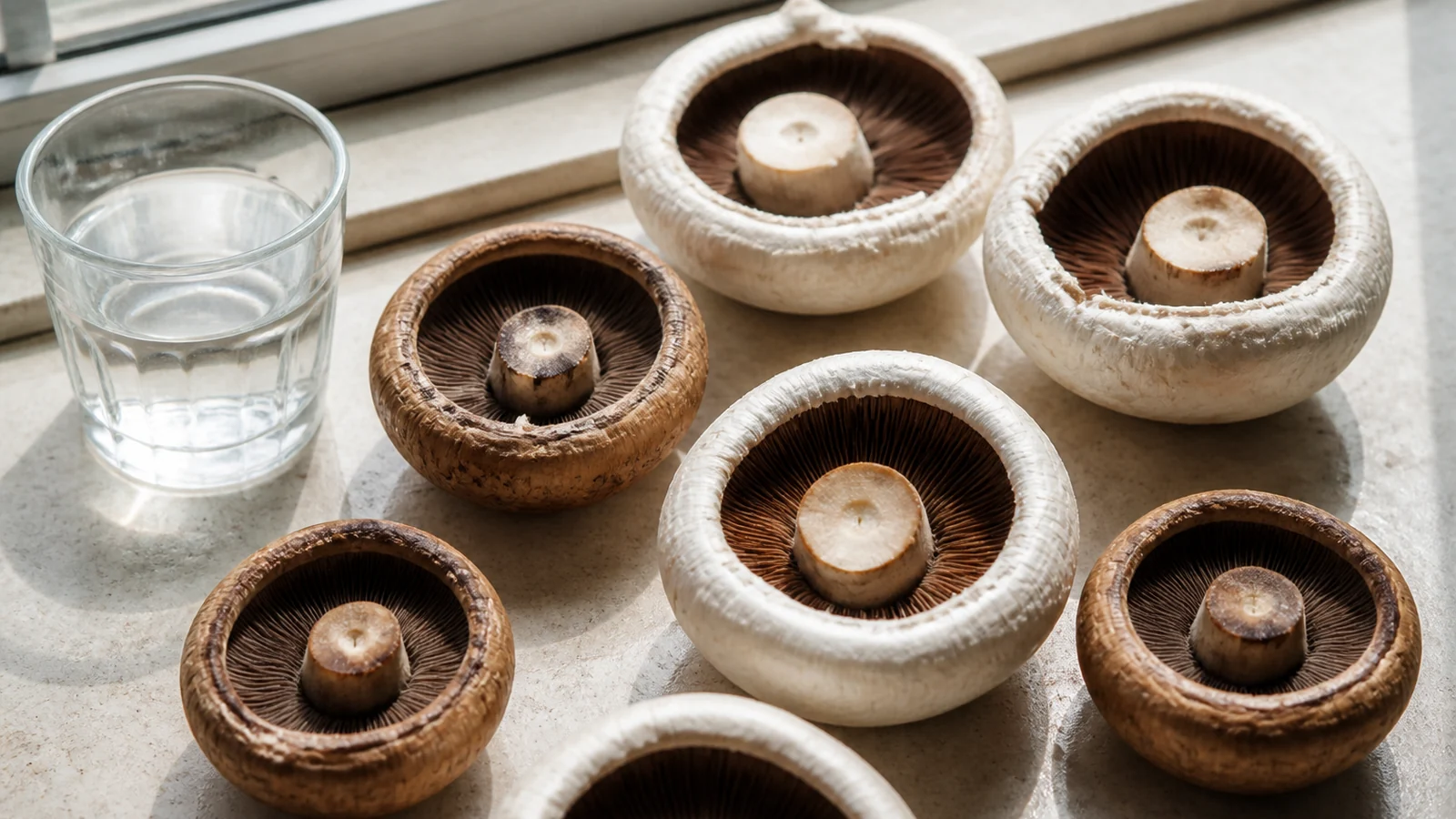
An evidence audit that separates osteoarthritis from rheumatoid arthritis before reporting anything, because the findings land differently on each. It covers the single randomized trial of a mushroom in arthritis and its null primary outcome, why a within-group improvement is not a treatment effect, the vitamin D path with the baseline status its significant result depended on, the measured finding that untreated cultivated mushrooms carry no vitamin D2 at all, and two large trials that answer the opening split in opposite directions.
Joint pain is not one condition, and the mushroom evidence answers one version of it badly and the other version not at all.
Establish which joint condition is involved before considering a supplement claim.
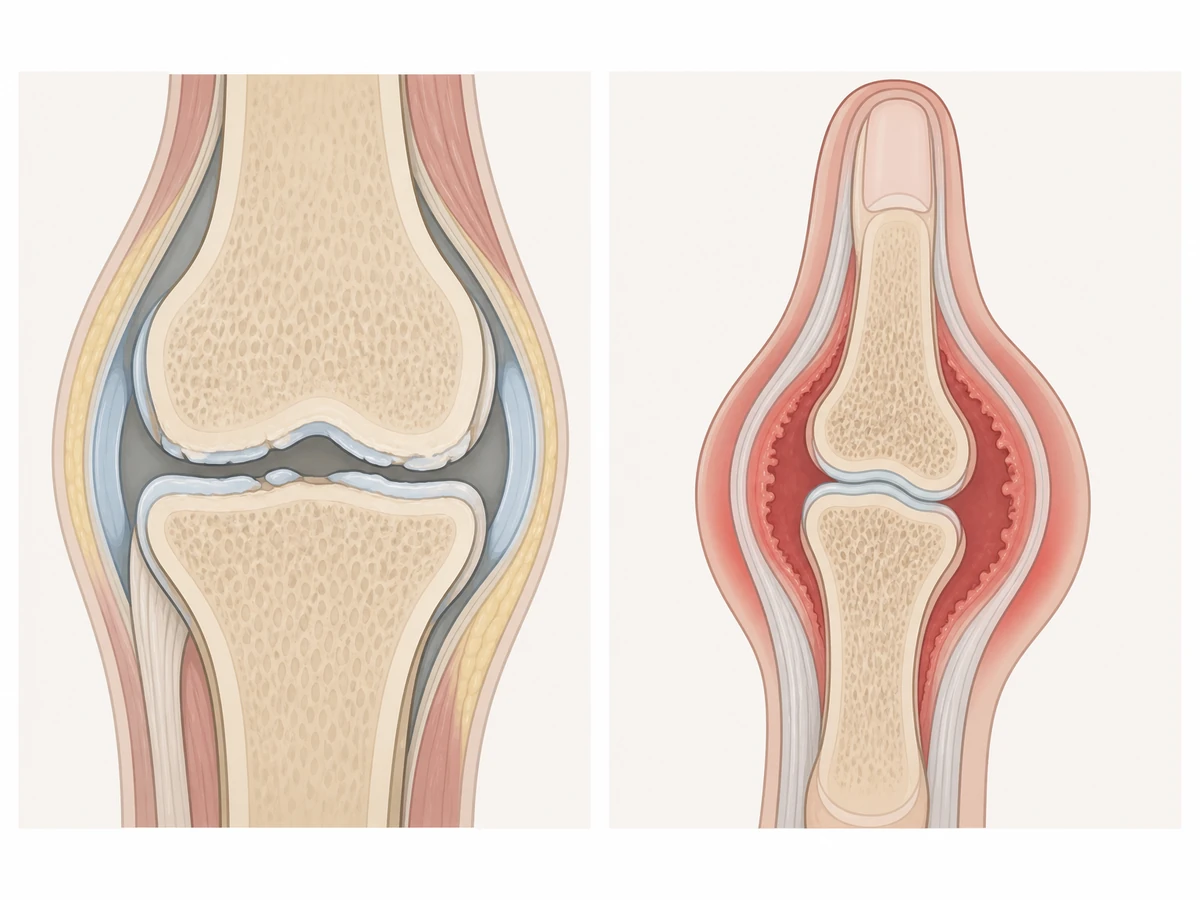
Which joint problem you have decides which evidence applies
Two different joint diseases require different clinical assessments.
| Osteoarthritis | Rheumatoid arthritis | |
|---|---|---|
| What it is | Wear and damage to the joint surface | The immune system attacking the joint lining |
| Typical joints | Knees, hips, thumb base, often one side worse | Small joints of hands and feet, usually both sides at once |
| Morning stiffness | Usually under thirty minutes | Often an hour or more |
| Pattern through the day | Worse with use, better with rest | Often better once you get moving |
| What treatment targets | Load, strength and pain | The immune process itself |
Those are sketches rather than a test. Plenty of people have both at once.
There is a third group worth naming, because it is large. Widespread aching with no swelling and no joint damage often turns out not to be arthritis at all, and it belongs in neither column.
The reason the split matters here is mechanical. Almost everything sold for joints is sold on an anti-inflammatory claim, and an anti-inflammatory mechanism has an obvious target in one of those two columns and much less of one in the other.
Which one a person has is a clinical question, and it is not something a page can decide for anybody.
- An examination looks at which joints are involved and whether the pattern is symmetrical
- Blood tests look for inflammatory markers and for antibodies associated with the autoimmune form
- Imaging looks at the joint surface itself, which is where the wear disease shows
- None of those is a self-assessment, and the two diseases overlap often enough that guessing is a poor idea
But it is worth knowing that the question exists before reading a single result, because the evidence below lands very differently on the two columns.
Medicinal MushroomsLion's Mane Benefits: What Human Trials Actually FoundThe one trial that gave a mushroom to arthritis patients
Many mushroom species are marketed for joint health. The randomized evidence names one, once.
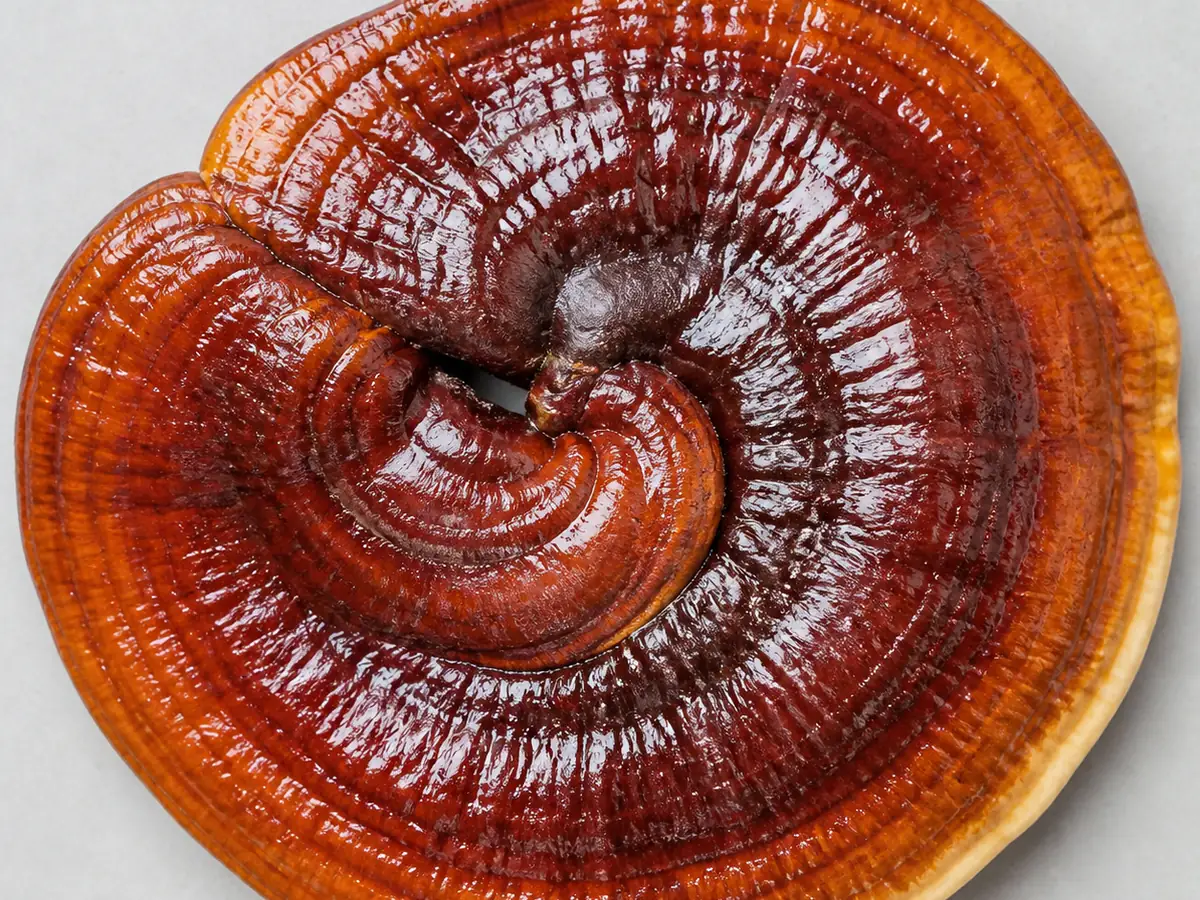
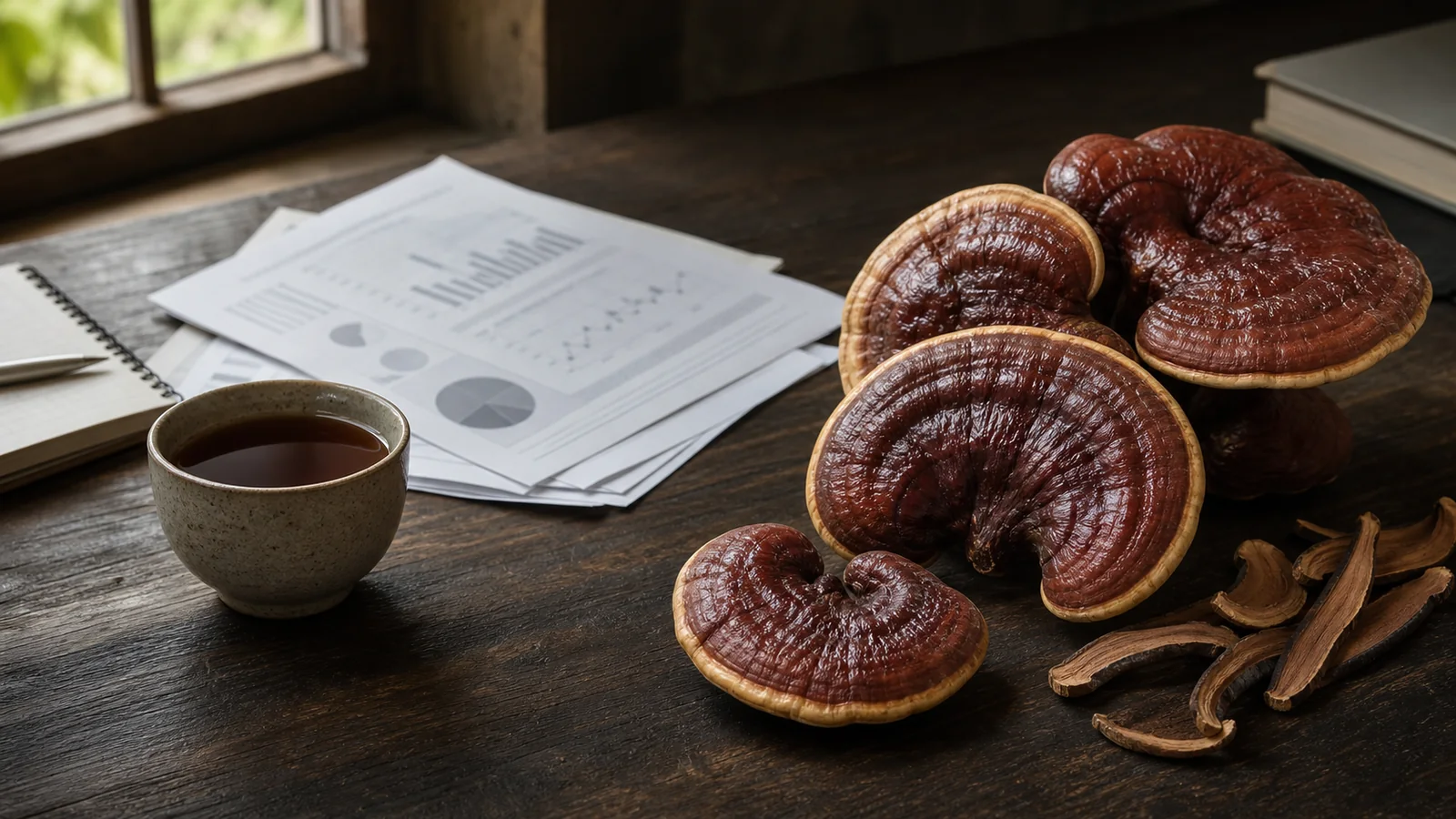
A double-blind placebo-controlled trial in Hong Kong recruited 65 people with active rheumatoid arthritis and followed them for 24 weeks.
Everybody in it stayed on the disease-modifying drugs they were already taking. The 32 people in the treatment group added 4 grams of Ganoderma lucidum and 2.4 grams of a herbal preparation called San Miao San every day, and the other 33 added a placebo.
The primary outcome is the one the trial was designed around and the one it was sized for, and it is where an honest summary starts.
It was a standard rheumatology measure, a twenty percent improvement across a defined set of joint counts and blood markers. Six people out of thirty-two reached it on the mushroom combination and three out of thirty-three on placebo.
The authors reported that plainly. Their own conclusion was that the combination may have analgesic effects and was generally safe, and that no significant antioxidant, anti-inflammatory or immunomodulating effect could be demonstrated.
That last clause is worth sitting with, because an anti-inflammatory effect is the entire premise on which these products are sold for joints.
Why improved in the treatment group is the phrase to distrust
The one positive-sounding line in that trial is that pain and patient global score improved significantly in the treatment group. It is quoted everywhere without the words that follow it.
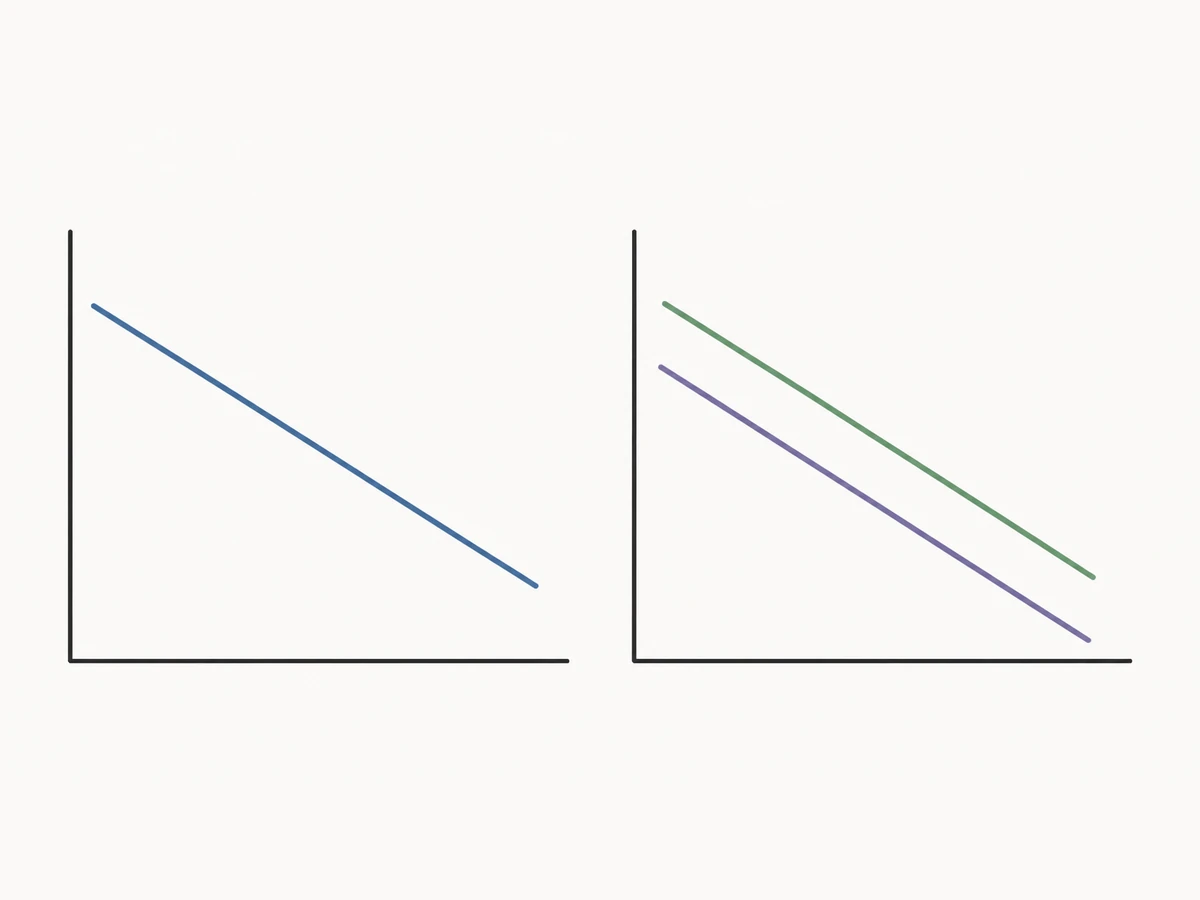
Two different comparisons hide inside that sentence, and only one of them is a test of anything.
People in trials get better for reasons that have nothing to do with what they were given.
They are being seen regularly, they are paying attention to their symptoms, they often join at a bad patch that was going to ease anyway, and they expect the thing to work. A placebo group exists precisely to absorb all of that.
So a within-group improvement is not a finding about the treatment. It is a finding about the twenty-four weeks.
There is a reason the primary outcome carries this much weight, and it is worth stating.
A trial names its primary outcome before it starts and calculates how many people it needs to detect a difference in that one measure. Everything else it records is secondary and underpowered by design.
So a trial that misses its primary outcome and reports a secondary one has not found a smaller effect. It has produced a result that its own design cannot support.
There is a second problem, and it is structural rather than statistical.
Reishi was not given alone. It was given with San Miao San, a separate multi-herb preparation, so even a clean positive result could not have been assigned to the mushroom rather than to the other half of the combination.
- The primary outcome was not met, which is the headline result
- The pain result compares each group with itself rather than with the other
- Two preparations were given together, so neither can be credited alone
- Sixty-five people can detect a large effect and will routinely miss a small one
None of that makes the trial bad. It was well designed and honestly reported, and the sentence that travels is the one its own authors declined to lean on.
Medicinal MushroomsWhich Reishi Benefits Hold Up in Human Studies?The vitamin D path is the one with real trials behind it
There is one path from mushrooms to joints that has genuinely large trials attached, and it does not involve any medicinal species.
Mushrooms make vitamin D the way skin does, by converting a sterol under ultraviolet light. Theirs is ergosterol and it converts to vitamin D2.

Six randomized trials have fed people ultraviolet-exposed mushrooms and measured what happened to their blood levels, and a meta-analysis pooled all six.
Warning
Across all six trials serum vitamin D was not significantly increased, at P equals 0.12, with very high disagreement between the studies. The result was significant only in the three European trials, where participants started at a mean of 38.6 nmol per liter, at a weighted mean difference of 15.2 with an interval of 1.5 to 28.8. In the three United States trials, where participants started at 81.5, there was no significant effect at all.
Read those two subgroups as one finding rather than two, because together they say something specific.
Eating vitamin D raises your level if your level is low, and does much less if it is already adequate. That is unremarkable nutritionally and it is the opposite of how the headline usually gets used.
One more detail from the same analysis is rarely mentioned. The D2 fraction rose by 20.6 while the D3 fraction fell by 13.3, so the net movement was smaller than the mushroom contribution on its own.
Two forms of the vitamin are in play here and they are not interchangeable in every respect.
- D3 is what skin makes in sunlight and what most supplements and oily fish supply
- D2 is what fungi make, and it is the only form a mushroom can contribute
- A blood test for total vitamin D counts both, which is why the mushroom trials could measure any of this
- The fall in D3 alongside the rise in D2 is why six trials pooled to a smaller net figure than the mushrooms delivered
That is a nutritional detail rather than a warning, and it explains an otherwise confusing set of results.
Medicinal MushroomsMushrooms for Brain Health, Ranked by EvidenceWhat a mushroom carries, and when it carries nothing
The obvious next question is whether any of this applies to the mushrooms in an ordinary fridge, and it has a measured answer.

Researchers measured three cultivated species before and after ultraviolet B treatment. Before treatment, the mushrooms were devoid of vitamin D2.
Not low. None at all, in any of the three species.
Commercial mushrooms are grown in dark rooms because that is what suits the crop, and a mushroom that has never seen ultraviolet light has nothing to convert its ergosterol.
- Untreated, any of the three species
- No vitamin D2 detected
- White button after treatment
- 3.55 micrograms per gram of dry weight
- Shiitake after treatment
- 29.46 micrograms per gram of dry weight
- Oyster after treatment
- 58.96 micrograms per gram of dry weight
- During refrigerated storage
- Content fell in shiitake and oyster over ten days
Two of those three numbers belong to species most people never buy loose.

The spread between species is the surprise in that table. Oyster carried roughly sixteen times what button carried after the same treatment.
Some producers do irradiate deliberately and say so on the pack, which is the only reliable way to know. A mushroom with no such claim on it should be assumed to be one of the untreated ones.
What is there does not stay put either. Over ten days in a refrigerator the measured content fell in the shiitake and the oyster, and in the button it rose until the sixth day before falling.
So even a treated mushroom carries a moving number rather than a fixed one, which is worth knowing before reading any figure on a pack as what will reach you.
Does raising vitamin D help a joint
This is where the split from the first section earns its place, because the answer is different on each side of it.
For the wear-and-tear disease, the answer is no. It was tested carefully enough that the answer is worth trusting.
| Knee osteoarthritis trial | Autoimmune disease trial | |
|---|---|---|
| Who | 146 people with symptomatic knee osteoarthritis | 25,871 adults with no autoimmune disease at the start |
| How long | Two years | A median of 5.3 years |
| What was given | Vitamin D, escalated until blood levels rose well above target | Vitamin D at 2000 IU a day |
| What was measured | Knee pain and cartilage volume | Newly diagnosed autoimmune disease, confirmed from records |
| Result | Pain fell equally in both arms, cartilage loss identical | 22 percent fewer cases, hazard ratio 0.78 with an interval of 0.61 to 0.99 |
Of the two, the knee trial is the cleaner design and the more disappointing result.
Blood levels went up as intended, by 16.1 ng per milliliter against 2.1 on placebo, so the intervention did what it was supposed to. Pain still fell by about the same amount in both groups, and the cartilage loss figures were 4.30 percent against 4.25 percent.

Notice that pain fell in the placebo arm of the knee trial too, which is the same pattern the arthritis trial showed.
Joint pain fluctuates, and people join trials when it is bad rather than when it is quiet. Some of the improvement in any arm is simply the bad patch ending.
Apply the same evidence check to other supplement claims.
The autoimmune result points the other way and needs its own careful reading. Over more than five years, people taking vitamin D developed fewer confirmed autoimmune diseases, rheumatoid arthritis among them, and the interval just cleared no difference at 0.61 to 0.99.
That endpoint is developing a disease, not treating one. Nobody in that analysis had the condition when they started, so it says nothing about whether vitamin D helps joints that already hurt.
Put the two together and the shape is consistent. Vitamin D looks like it belongs to the immune column rather than the mechanical one, and even there it belongs to onset rather than to relief.
What this leaves you with
The honest residue of all this is small, and most of it is not about mushrooms.
- Testable
- Whether your own vitamin D level is low, which is a blood test and not a guess
- Not shown
- Any treatment effect from any mushroom on either joint disease
- Not shown
- An anti-inflammatory effect in the one trial that measured for it
- Not supported
- Changing or reducing a prescribed antirheumatic medicine for any reason on this page
- Worth an appointment
- Joints swollen, hot, or stiff for more than an hour every morning, especially on both sides
That last line is the most useful thing here.
Inflammatory arthritis responds much better to early treatment than to late treatment, and the months somebody spends working through supplements are months that count.
A capsule is a cheap thing to try. Delaying assessment or effective treatment can have lasting consequences.
For the wear-and-tear side the picture is less urgent and the conclusion is duller. Load, strength and weight are what the treatment of that disease is built around, and no mushroom in this literature touches any of the three.
If you eat mushrooms because you like them, nothing on this page is a reason to stop, and the deliberately irradiated ones are a genuine source of a vitamin some people are short of.
If you are eating them because a page told you they were anti-inflammatory, the one trial that looked for that effect did not find it.
Sources & References
- Safety and efficacy of Ganoderma lucidum and San Miao San supplementation in patients with rheumatoid arthritis, Arthritis and Rheumatism 2007 The 65 participants, the 24 weeks, the primary outcome of 15 percent against 9.1 percent, the unchanged inflammatory markers, the adverse event counts and the authors' own conclusion.
- Effect of Ultraviolet Light-Exposed Mushrooms on Vitamin D Status, The Journal of Nutrition 2016 The six pooled trials, the non-significant overall result, the European and United States subgroups with their baseline levels, and the D2 rise against the D3 fall.
- Vitamin D2 Stability During the Refrigerated Storage of Ultraviolet B-Treated Cultivated Culinary-Medicinal Mushrooms, International Journal of Medicinal Mushrooms 2017 That untreated cultivated mushrooms were devoid of vitamin D2, the three species figures after treatment, and the decline during refrigerated storage.
- Effect of vitamin D supplementation on progression of knee pain and cartilage volume loss in patients with symptomatic osteoarthritis, JAMA 2013 The two-year design in 146 people, the achieved rise in serum levels, and the equal fall in pain and identical cartilage loss between arms.
- Vitamin D and marine omega 3 fatty acid supplementation and incident autoimmune disease, The BMJ 2022 The 25,871 participants, the median 5.3 years, the hazard ratio of 0.78 with an interval of 0.61 to 0.99, and that the endpoint was incident disease rather than treatment.