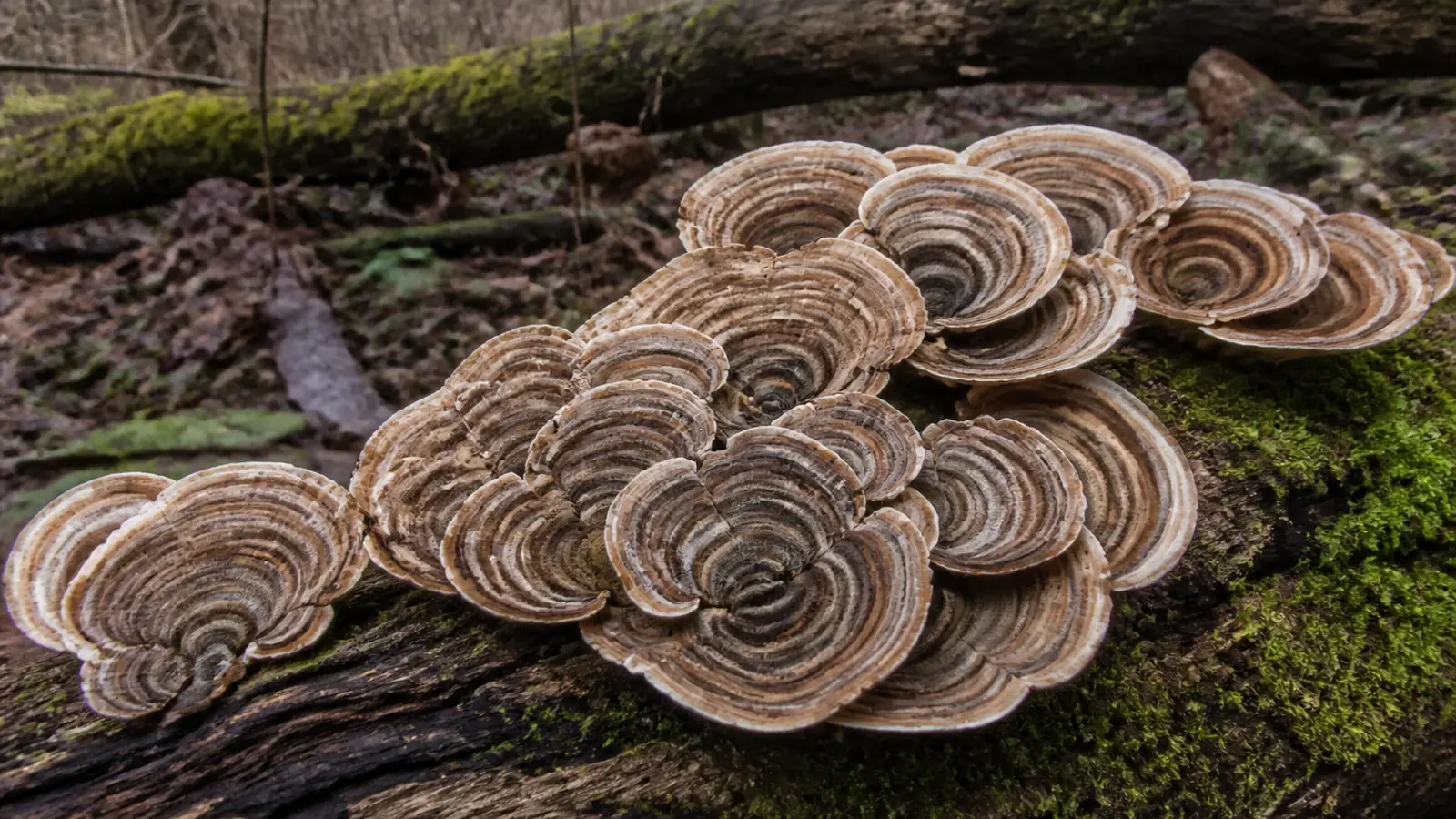
An audit of the two randomized trials behind mushroom claims for menopause, both reported by their primary endpoints rather than the secondary findings that get quoted, followed by the two reasons this symptom cannot be judged from personal experience: a measured 79 percent placebo share in trials of the approved non-hormonal drug, and a measured median duration of 7.4 years across which symptoms fluctuate on their own.
Two randomized trials of a mushroom in menopause exist, and neither one reported a result for the menopause symptoms it set out to measure.
That is a strange sentence, and unpicking it turns out to be more useful than any species list.
What the two trials actually measured
Search results here name five or six mushrooms with confidence. The randomized record is two studies, and both are worth knowing in full.
| The first trial | The second trial | |
|---|---|---|
| Who | 30 women | Middle-aged and elderly men |
| How long | 4 weeks | 12 weeks |
| What they took | Lion's mane baked into cookies | An enoki extract powder |
| Primary measure | Not stated as such, four instruments named | Total Aging Males' Symptoms score |
| What was reported | Depression and complaints scores, against baseline | One subscale of the total score |
| Menopause symptom result | None reported | Total score did not move |
Neither of those entries in the last line is a typo.
Check whether the study used the instrument that measures the symptom you want to improve.
The Kupperman Menopausal Index is a standard questionnaire that scores a list of menopausal symptoms, hot flashes among them, and weights them into a single number. It is the obvious tool for the job and the trial named it.
Nothing here is about balancing hormones. Neither trial measured a hormone in women, and no mushroom has a described mechanism for doing so.
Menopause symptoms can change over time, so improvement during supplement use does not by itself show that the product caused it.
Medicinal MushroomsLion's Mane Benefits: What Human Trials Actually FoundThe lion's mane study, read properly
One 2010 paper carries the entire weight of the lion's mane and menopause claim. It is worth reading in the order its own authors wrote it.
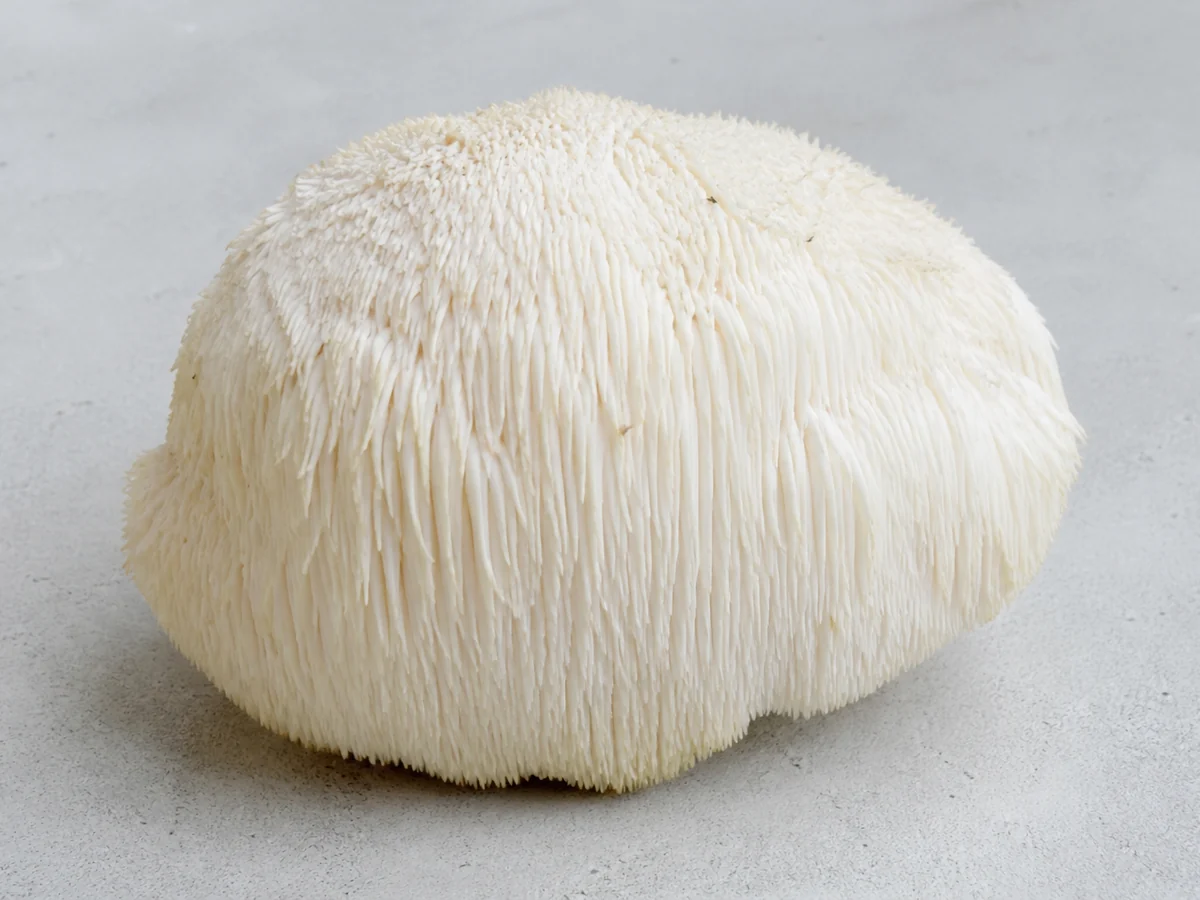
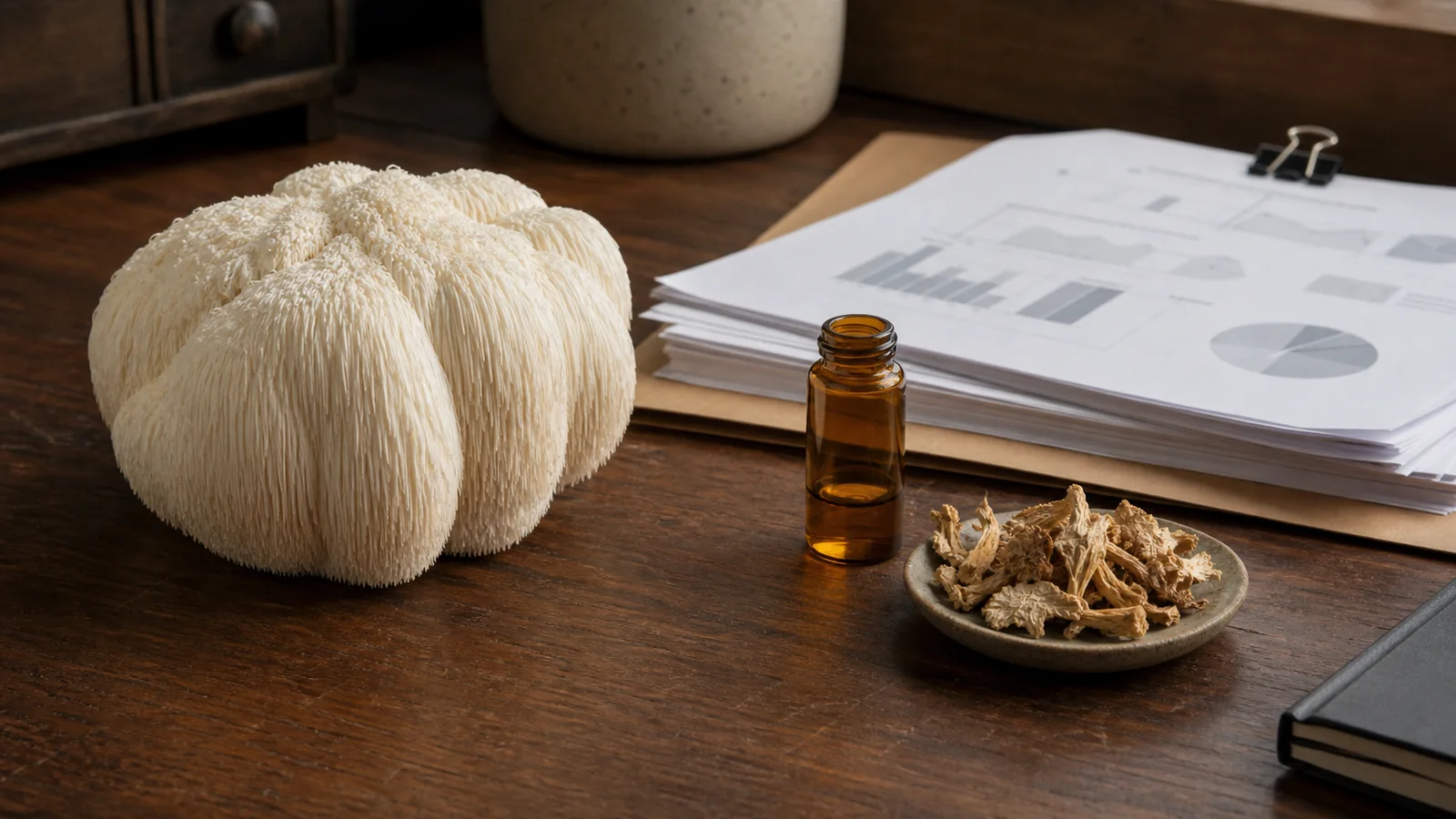
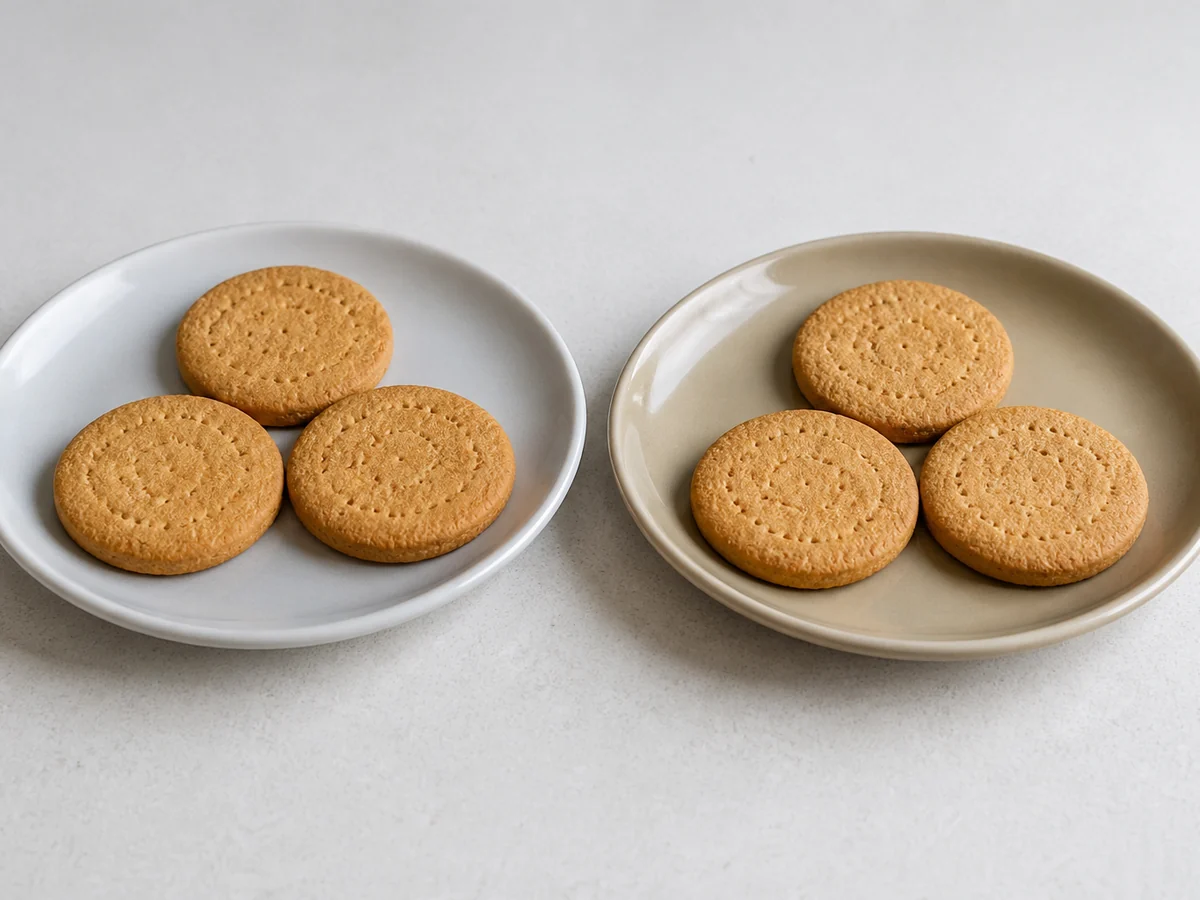
Thirty women were randomly assigned to eat cookies containing lion's mane or identical placebo cookies for four weeks.
The study said it was investigating effects on menopause, depression, sleep quality and indefinite complaints, and it named a specific instrument for each.
The menopause index is the first instrument in that list, and the reason this trial appears in menopause searches at all. Everything written about lion's mane and hot flashes descends from that one line in the methods.
No result for it is reported anywhere in the paper. The same is true of the sleep index, which is the other outcome most often attributed to this study.
The instrument that did produce a reported result is worth a word too, because its name is unfamiliar in English.
The Indefinite Complaints Index comes from a Japanese clinical tradition of recording diffuse symptoms that do not sort neatly into a diagnosis, things like fatigue, poor concentration and palpitations. It is a reasonable thing to measure and it is not a menopause scale.
Then there is the shape of the two results that were reported. Use the same check when judging other supplement studies.
The depression and complaints scores after intake were lower than the same group's scores before intake. That compares the treatment group with its own starting point, not with the placebo group.
People in trials improve for reasons unrelated to what they were given, which is precisely why a placebo group is there.
A comparison that does not use it is not a test of the treatment.
The paper does report two narrow between-group results, in which two items of the complaints index were significantly lower in the mushroom group than in the placebo group, while three others were reported only as tending to be lower.
- The primary menopause instrument has no reported result
- The headline improvements are against baseline rather than against placebo
- Two sub-items of a four-instrument battery beat placebo
- Fifteen women per arm over four weeks
Fifteen women per arm is worth pausing on as well. A group that size can detect a very large effect and will routinely miss a moderate one, which is why a small trial finding nothing is much weaker evidence of absence than people assume.
That cuts in both directions here. It means the missing menopause result is not proof that lion's mane does nothing, and it also means the two sub-items that did reach significance are the kind of finding a larger trial exists to confirm or discard.
None of that means the study was dishonest.
It was small, it reported what it found including the parts that went nowhere, and the distortion happened afterwards, in the pages that cited it.
The second trial was in men
The other randomized trial is more recent and better designed. It does not answer this question either, for a reason visible in its first line.
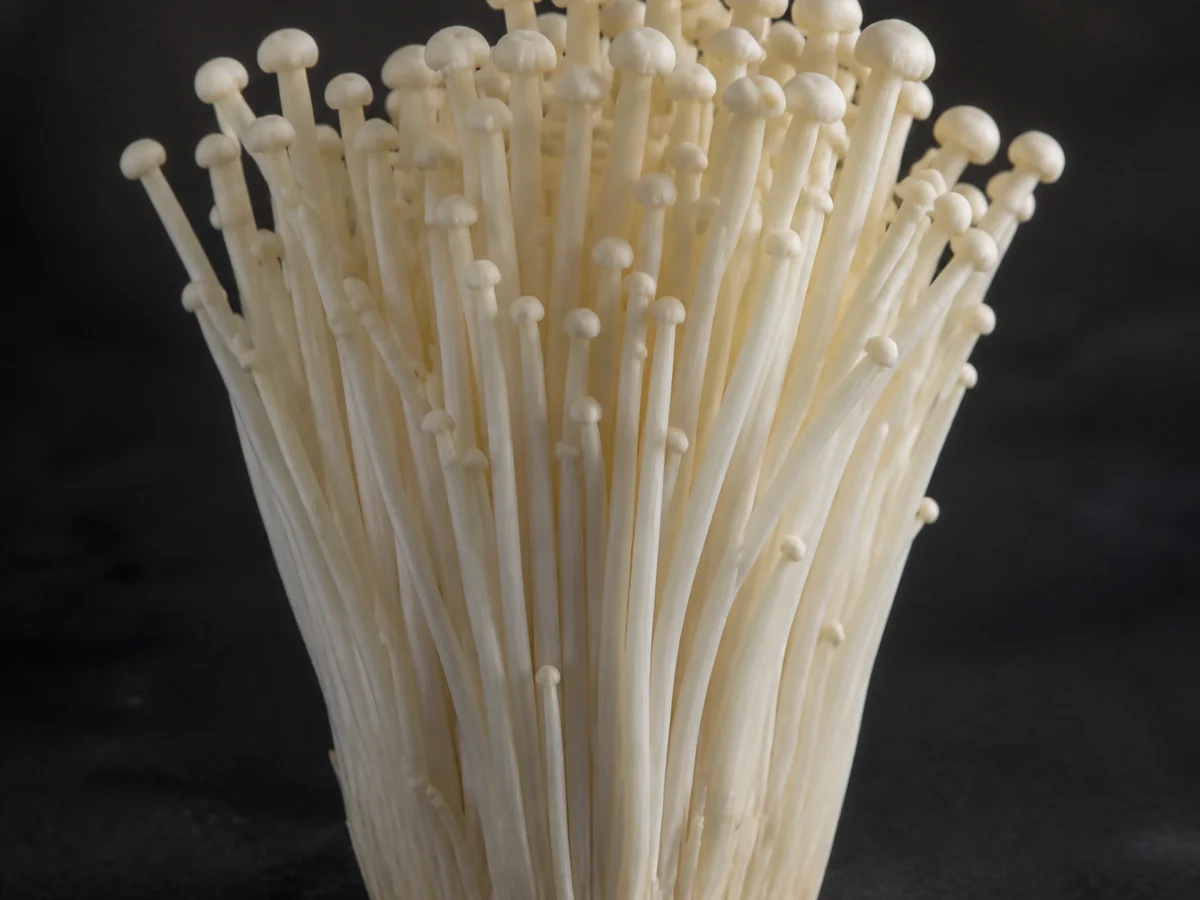
It gave a powdered enoki extract or placebo to healthy Japanese men for twelve weeks. All of them had moderate scores on an aging males' symptom scale at the start.
Warning
The primary endpoint was the total score on that scale, and the reported result was an improvement in the sexual subscale rather than in the total. The testosterone secondary endpoint was reported as a count of men whose level rose by at least a set amount rather than as an average change. Two of the authors were employed by a commercial laboratory company, which is disclosed in the paper.
Male menopause is a contested term for a real thing. Testosterone declines gradually with age in men, without the defined endpoint a final menstrual period gives, and the symptom scales used are built around that slow decline.
That is a separate clinical question from menopause symptom relief.
The hormonal changes are different, the symptoms are different, and a result in men would not transfer to women even if the primary endpoint had been met. It was not.
A subscale result also deserves its own note, because it recurs everywhere in supplement research. A scale with several subscales offers several chances to find something, and the endpoint chosen in advance is the one that controls for that.
The extract detail matters too. This trial used a processed extract standardized on a specific compound, which is a different object again from eating the mushroom.
Medicinal MushroomsWhich Reishi Benefits Hold Up in Human Studies?Why feeling better proves so little here
Most readers arrive having heard from somebody it worked for.
That impression deserves a serious answer rather than a dismissal, and this symptom happens to have one.
Hot flashes have one of the largest measured placebo responses in medicine, and the size of it has been calculated for this exact symptom.
Read those two numbers against the thing they were measured on. Compare the measured result with the treatment claim.
This was not a supplement. It was the one non-hormonal medicine approved by the United States regulator for this symptom, tested properly, and roughly four fifths of the improvement people experienced on it also happened to the women taking nothing.
A large placebo response does not mean a symptom is imaginary. Hot flashes are measurable physiological events, and the finding is about how the symptom responds to being treated, not about whether it is real.
It is worth knowing what that response is actually made of, because none of the parts are imaginary either.
- Expectation genuinely changes how a symptom is perceived and reported, which is a measurable effect rather than a lie
- Being in a trial means being asked about symptoms regularly, and attention changes what gets recorded
- People enroll when things are bad, and a bad stretch tends to be followed by a less bad one whatever happens
- Keeping a daily record at all can shift behavior, sleep and stress in ways nobody intended to test
Every one of those operates on somebody buying a supplement, and none of them is subtracted out unless there is a control group to subtract them with.
What it does mean is arithmetic. If the approved drug can only claim a fifth of the response it produces, an untested capsule in an uncontrolled personal experiment can claim nothing at all.
That is why sincere testimonials pile up on this subject faster than on almost any other. Everybody in them felt better, and most of them would have felt better on the placebo.
Mood outcomes are a separate question with their own evidence, and the two mood scales the first trial reported are covered on their own page.
Medicinal MushroomsMushrooms for Brain Health, Ranked by EvidenceA symptom that lasts years defeats a four week impression
There is a second reason personal experience cannot settle this, and it is one almost nobody is told.
A long American cohort study followed 3,302 women from 1996 to 2013 and analyzed 1,449 of them who had frequent vasomotor symptoms.
- Median total duration
- 7.4 years of frequent symptoms
- Median persistence after the final period
- 4.5 years
- If symptoms began before the transition
- Median above 11.8 years
- If symptoms began after the final period
- Median 3.4 years
- Longest reported group
- African American women, at a median of 10.1 years
The authors' own conclusion was that women should be told to expect frequent symptoms to last more than seven years. That is a recommendation about counseling rather than about treatment, and it exists because so few people are told anything.
That figure is worth having for its own sake, because most people are told nothing at all about duration and assume something has gone wrong when it continues past the point they expected.
The variation inside that median is the part worth reading twice. Beginning early is the single strongest predictor of a long course, which means the women most likely to go looking for something to take are also the ones with the longest run ahead of them.
It is also the second reason a four week impression means nothing. Symptoms that persist across years do not persist evenly, and they cluster into bad weeks and quiet ones.
Anybody starting a supplement during a bad stretch is very likely to feel better within a month, would have felt better within a month regardless, and is describing the natural course of the symptom rather than gullibility.
Put the two findings together and a symptom with an enormous placebo response, fluctuating across a median of seven years, cannot be evaluated by one person over four weeks under any circumstances.
What actually has evidence, and who owns that conversation
Nothing above says there is no help available, and that would be a bad conclusion to draw from it.

Treatments for these symptoms exist and are prescribed. They are chosen against a personal and family medical history that a page cannot see.
A clinician needs that history before choosing a treatment. The right answer differs by cardiovascular history, cancer history, how far past the final period somebody is, and what else they are taking.
Even the approved non-hormonal option in the placebo analysis above is a real prescribed treatment with a real effect, and the analysis argued about its size rather than its existence.
That distinction is worth holding on to. A treatment whose benefit is smaller than the marketing suggests is still in a different category from one that has never been tested against a placebo at all.
It is a longer conversation than most people expect, and knowing its shape makes it easier to start.
- What the symptoms actually are, how often, and how much they interfere with sleep and work
- Personal and family history, particularly cardiovascular events and hormone-sensitive cancers
- How long it has been since the final period, which changes what is appropriate
- Everything already being taken, prescribed or not, including anything bought as a supplement
That last point is the one most often skipped, and it is the one a prescriber cannot work around if they do not know.
What the duration figure changes is the urgency of asking. Seven years is not a stretch to wait out quietly, and it is long enough that a conversation started early pays back over a long period.
What to do with all of this
The useful residue is small and none of it involves buying anything.
- Not shown
- Any vasomotor symptom result for any mushroom, in any trial
- Not shown
- Any hormonal mechanism for any mushroom in menopausal women
- Not evidence
- A four week personal trial of anything, for this symptom specifically
- Worth doing
- Writing down what your symptoms actually are and how often, before an appointment
- Worth mentioning
- Any supplement you already take, to whoever prescribes for you
That fourth line is the quiet one that helps most.
Symptom counts written down over a fortnight give a clinician something to work with, and give you a baseline that memory will not.
Memory compresses a bad month into a worse one and a good month into a shorter one, which is exactly the error the duration figures above are made of. It is also the only way you would ever detect a real change from anything.
If you already take a mushroom supplement and it suits you, nothing here is a reason for alarm, though the documented side effects and the interaction picture are worth reading if you take anything prescribed.
One more thing is worth saying to anybody who has been at this a while. Trying a series of supplements and finding that each one seemed to help for a few weeks is exactly what this symptom produces in the absence of any treatment at all.
And eating mushrooms is not what any of this is about. The trials used cookies and extracts precisely because dinner is not a dose.
Sources & References
- Reduction of depression and anxiety by 4 weeks Hericium erinaceus intake, Biomedical Research 2010 The 30 participants, the four named instruments, the within-group nature of the reported improvements, and the two complaints sub-items that beat placebo.
- Beneficial Effects of Enoki Mushroom Extract on Male Menopausal Symptoms in Japanese Subjects, Nutrients 2025 The male population, the twelve weeks, the total symptom score as primary endpoint, the subscale that improved, and the commercial employment of two authors.
- Magnitude of placebo response in clinical trials of paroxetine for vasomotor symptoms, Frontiers in Psychiatry 2023 The six pooled trials, the 1,486 women, and the 79 percent and 68 percent placebo shares of the treatment response.
- Duration of menopausal vasomotor symptoms over the menopause transition, JAMA Internal Medicine 2015 The 3,302 women followed to 2013, the 7.4 year median total duration, the 4.5 year post-period persistence, and the variation by onset timing and ethnicity.