
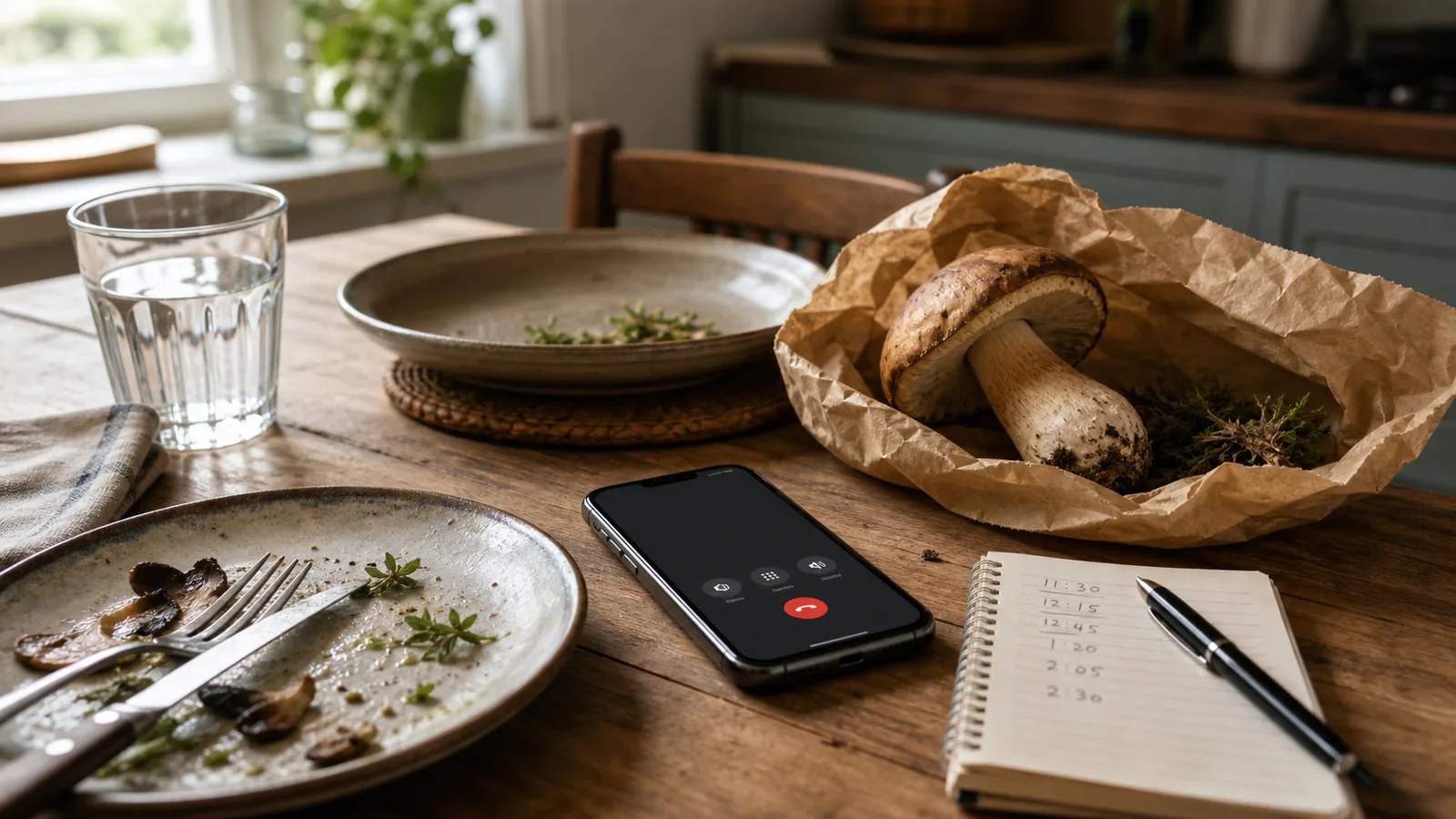
If you ate a poisonous or unidentified wild mushroom, call Poison Control now at 1-800-222-1222 in the United States. Do not wait for nausea, do not induce vomiting, and call 911 immediately for collapse, breathing trouble, seizure, severe confusion, inability to wake, or rapidly worsening illness.
The first useful job is not proving the species from photographs. It is connecting the exposure, the person, the meal time, and any symptoms to a poison specialist while preserving evidence that can narrow the risk.
| Situation | First contact | What to do while calling |
|---|---|---|
| No symptoms yet | Poison Control | Stop the meal, record time and amount, save specimens |
| Vomiting or diarrhea | Poison Control or urgent medical care as directed | Protect the airway, record fluid loss, do not force drinks |
| Collapse, seizure, breathing trouble, severe confusion | 911 or local emergency service | Place the person safely, follow dispatcher instructions |
| Outside the United States | Local poison center or emergency service | Use the country's official poisoning service |
Call before symptoms decide the case
Poison Control can assess a wild-mushroom ingestion before illness begins. The specialist will ask who ate it, the person's age and weight, when the meal occurred, how much was eaten, how the mushroom was prepared, whether alcohol or other substances were involved, and which symptoms are present.
Record each person's mushroom portion separately for the poison specialist.
One person may have eaten a whole cap while another tasted a bite, and pieces from a mixed dish may not contain the same species. A group meal therefore produces several individual exposures rather than one average case.
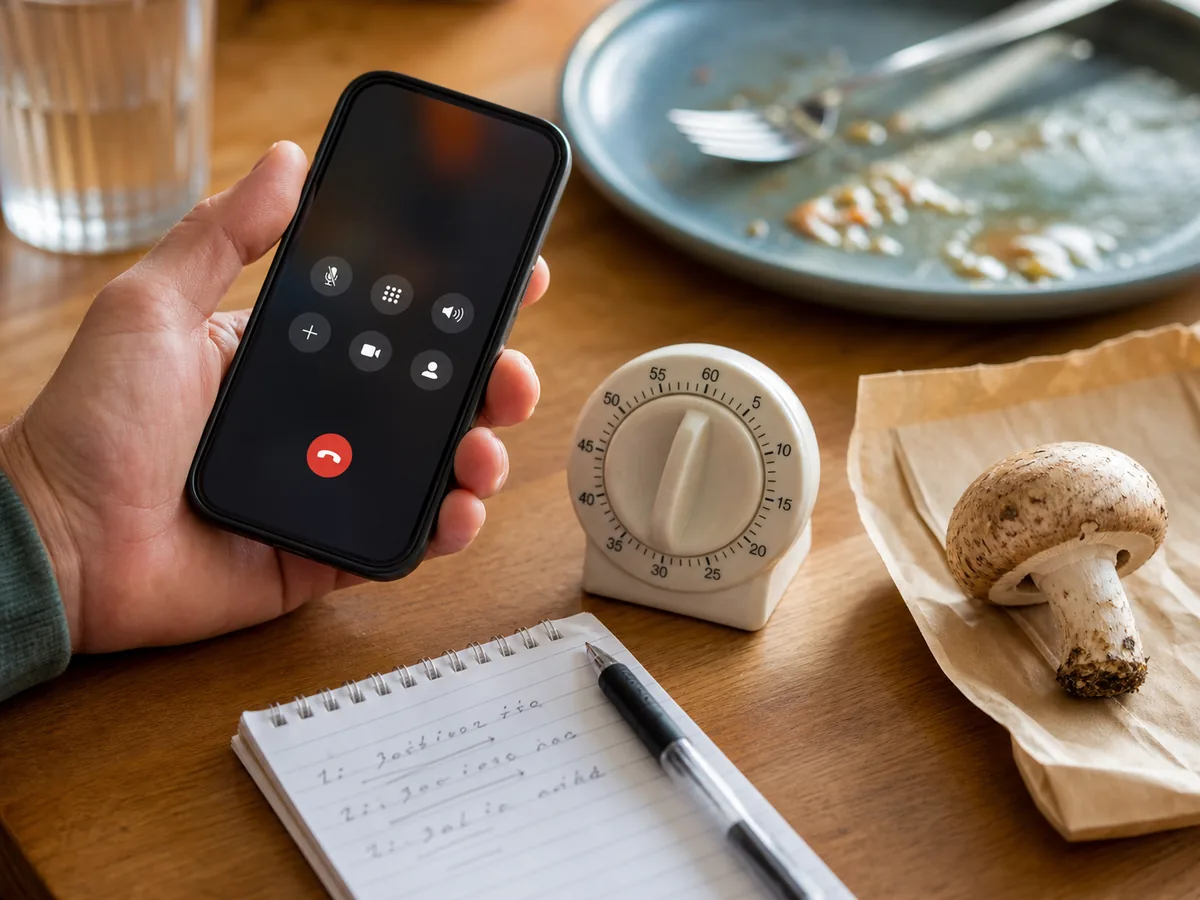
Call even when the person feels normal.
Some mushroom toxins act quickly, while others produce no obvious effect for six hours or much longer. The absence of symptoms during the first hour cannot distinguish a harmless species from an exposure that later injures the liver, kidneys, brain, circulation, or muscle.
Have a short factual record ready.
- Person's age, weight, medical conditions, pregnancy status, and regular medicines
- Meal time, estimated amount, preparation, and whether several mushroom meals occurred
- First symptom time, current symptoms, and changes since the first call
- Raw specimen, cooked leftovers, photographs, collection place, and supplier
Do not spend the calling window browsing image matches.
Online photographs often hide scale, gill attachment, the stem base, bruising, habitat, and regional lookalikes. A poison specialist can coordinate expert identification while clinicians respond to the syndrome that is already developing.
The poison-center recommendation may be home observation, an emergency department, ambulance transport, or another pathway based on the specific exposure. Follow that recommendation rather than substituting a generic internet timetable.
SafetyFirst Aid for Mushroom Poisoning Starts With One CallWhich signs mean call 911 now
Breathing and consciousness come before mushroom identification. Call emergency services when the person struggles to breathe, becomes blue or gray around the lips, cannot speak normally, collapses, cannot be awakened, has a seizure, or develops severe confusion.
These signs threaten the airway and circulation regardless of the toxin.
Repeated vomiting can become an emergency when the person cannot keep fluids down, becomes faint, produces very little urine, or shows signs of shock. Cold or clammy skin, extreme weakness, a rapid weak pulse, and worsening alertness suggest that fluid loss or toxin effects have moved beyond ordinary stomach upset.
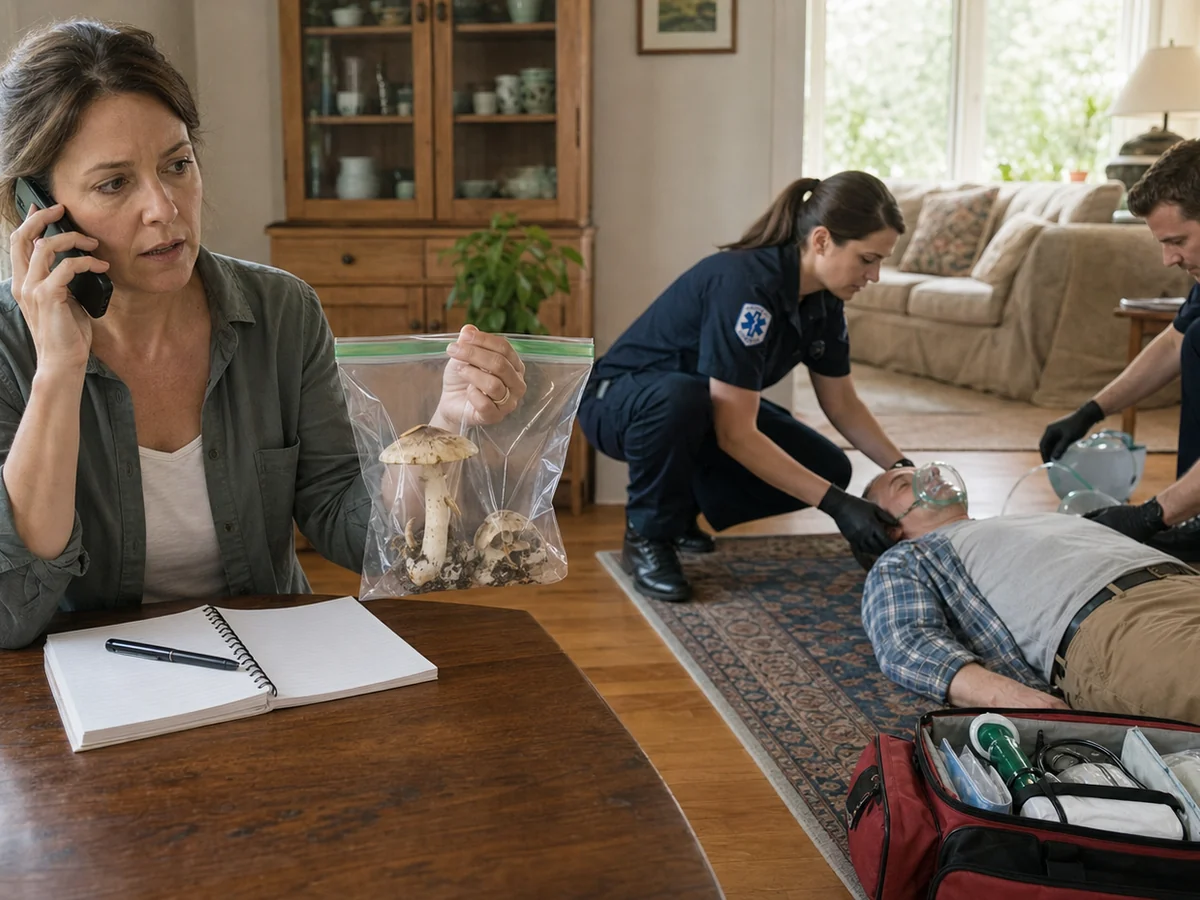
Changes in alertness or behavior also need fast emergency escalation.
Agitation, hallucinations, extreme sleepiness, poor coordination, muscle rigidity, uncontrolled movements, or behavior that makes the person unsafe can progress quickly. Keep the person away from stairs, traffic, water, heat sources, sharp objects, and driving while help is arranged.
Later symptoms can shift from behavior and alertness to organ-warning signs.
Yellow skin or eyes, very dark urine, reduced urine, unusual bleeding, severe muscle pain, profound weakness, chest symptoms, or recurrent illness after a temporary improvement all warrant urgent reassessment. These findings can reflect liver, kidney, blood, muscle, or circulatory injury that cannot be measured at home.
A symptomatic person should not drive to an emergency department because fainting, confusion, poor coordination, vomiting, or sudden weakness can make the trip dangerous. If emergency services are not indicated and Poison Control recommends evaluation, have another adult drive, keep the patient where the driver can observe changes, and take the specimen bundle, medicine list, case number, and updated timeline.
Call emergency services again if the person's breathing, consciousness, circulation, or behavior worsens during the wait for transport, and leave specimen photography, spore printing, cleaning, or unrelated belongings behind rather than delaying departure.
Why feeling well is not clearance
Symptom timing helps toxicologists sort syndromes, but a quiet interval is not a safety test. The most dangerous delayed mushroom poisonings may begin after the eater has gone home and assumed the meal was harmless.
Amatoxin poisoning illustrates the problem.
Gastrointestinal illness often begins about 6 to 24 hours after ingestion, with vomiting, watery diarrhea, and abdominal pain causing major fluid loss. The person can then feel better while liver injury progresses, so apparent recovery during the next day does not guarantee that the danger has passed.
Kidney syndromes can be quieter for longer.
Orellanine-containing Cortinarius species have been associated with delayed thirst, headache, flank discomfort, reduced urine, and kidney failure days after the meal. A caller who waits only for immediate vomiting can miss the period when the exposure history is clearest.
Other mushroom toxins can move from ingestion to neurologic or gastrointestinal symptoms much sooner.
Muscarine can cause sweating, salivation, tearing, vomiting, diarrhea, slow heart rate, or breathing secretions within a shorter interval. Muscimol and ibotenic acid can produce vomiting, confusion, agitation, poor coordination, unusual behavior, or somnolence, while simple timing still cannot identify the exact mushroom by itself.
- First minutes to several hours can include gastrointestinal, cholinergic, or neurologic syndromes.
- Six to 24 hours is a concerning window for delayed amatoxin gastroenteritis.
- A temporary improvement can precede worsening liver tests and organ failure.
- Several days of apparent health does not exclude every kidney-toxic syndrome.
Record the first bite and the first symptom as separate times.
Also record the last meal when mushrooms were eaten repeatedly, because some syndromes follow cumulative or repeat exposure rather than one serving. A precise timeline lets specialists compare the actual case with several possibilities instead of forcing it into a single rule.
Continue the monitoring plan Poison Control provides.
New vomiting, diarrhea, abdominal pain, sweating, salivation, confusion, weakness, dark urine, reduced urine, jaundice, or breathing change should trigger another call or emergency evaluation as directed. Do not let an earlier reassuring hour overrule a changing patient.
SafetyDeadly Mushrooms: The Most Lethal SpeciesWhat not to do at home
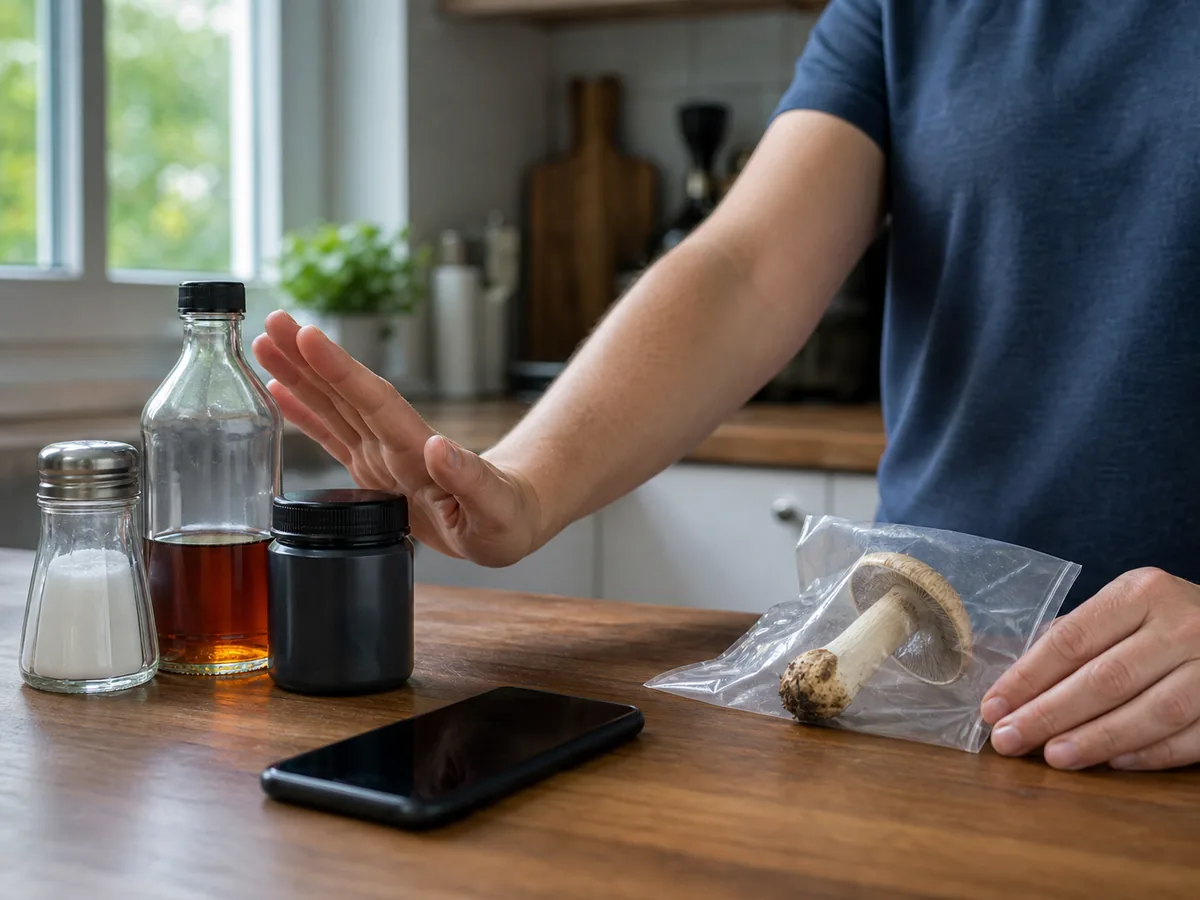
Do not make the person vomit unless a poison specialist or clinician gives that instruction. Fingers in the throat, salt water, mustard, syrup, or other improvised methods can cause aspiration, electrolyte problems, injury, and treatment delay.
Vomiting does not reliably remove an unknown dose.
The mushroom may have moved beyond the stomach, and a sleepy, confused, weak, or seizing person may inhale vomit into the lungs. If vomiting begins naturally, position and monitor the person according to emergency-dispatch instructions and report any change in alertness or breathing.
Warning
Do not improvise detoxification | Do not induce vomiting, force fluids, administer household charcoal products, give alcohol, or use supplements as an antidote unless a poison specialist or clinician directs the action.
Activated charcoal is a clinical decision, not a kitchen remedy.
Its possible benefit depends on the substance, timing, dose, vomiting, bowel function, and whether the airway can be protected. Commercial supplements and burnt food are not substitutes for medically prepared charcoal or professional assessment.
Do not force food or large amounts of water.
A fully alert person may receive different hydration advice from a poison specialist than someone with repeated vomiting, kidney disease, heart disease, reduced consciousness, or breathing trouble. Following a case-specific instruction is safer than applying one fluid rule to every syndrome.
Cooking does not reverse the exposure that already occurred.
Reboiling leftovers, discarding cooking water, frying them longer, or mixing them with another food cannot tell you which toxin was consumed. Alcohol can worsen certain mushroom reactions and can also complicate mental status, so do not use it as a disinfectant or calming drink.
Do not give the remaining meal to another person for a tolerance test. Stop access, label the evidence clearly, and keep it away from children and pets.
How to preserve useful evidence
A complete uncooked specimen is the most useful physical starting point when one is safely available. Preserve the cap, underside, stem, and entire base because a cut-off stem can remove the volva, bulb, staining, or substrate attachment needed for identification.
Use paper for a fresh whole mushroom when practical.
A paper bag or folded paper allows some airflow and keeps specimens separate, while a sealed plastic bag can accelerate decay and blur features. Cooked leftovers and cleaning scraps can stay in separate leakproof containers marked as not for consumption.
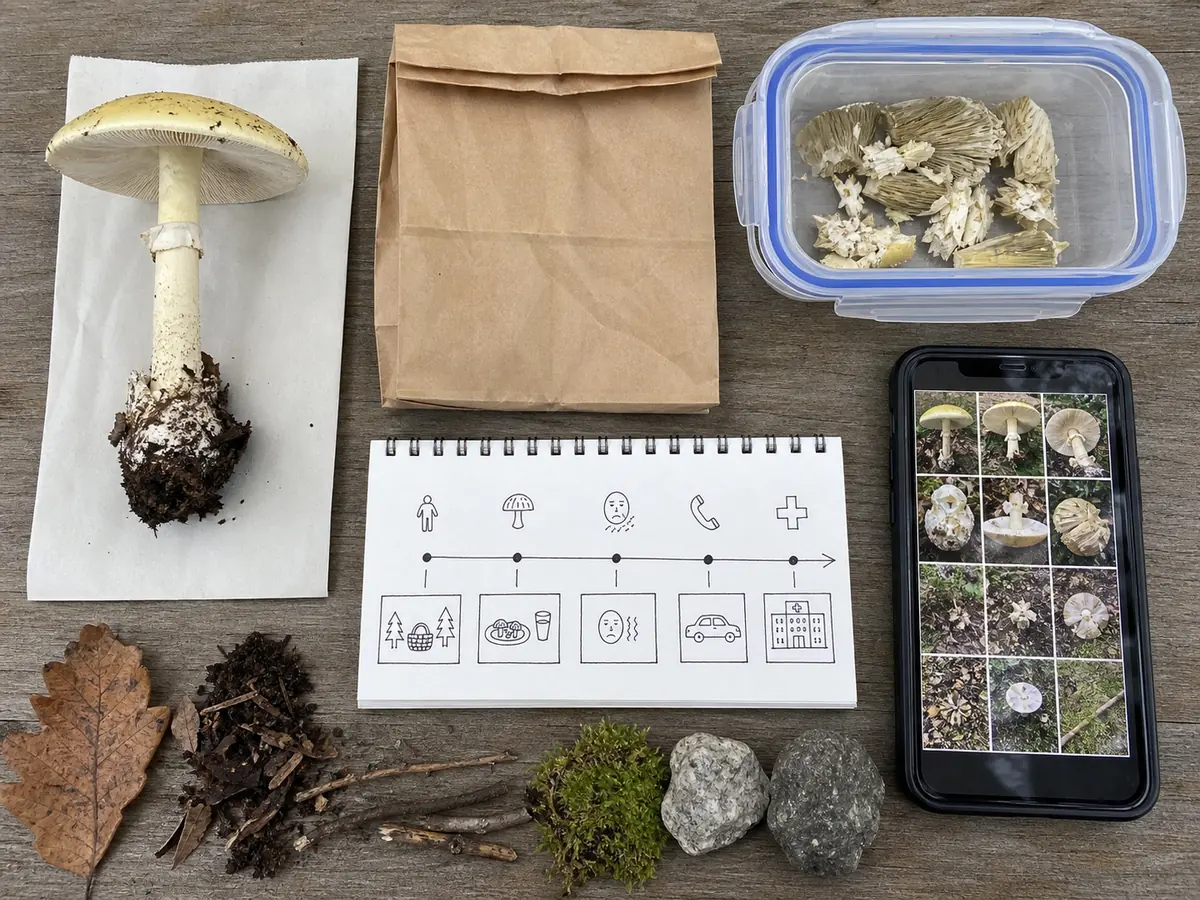
Photographs should document rather than beautify.
Use neutral light and include the cap surface, underside, gill or pore attachment, stem, base, bruising, cross-section, group arrangement, and nearby trees or substrate. Do not alter color, add filters, or rely on a single app result.
The meal record connects the specimen to the person.
Write the collection location, date, collector, common or scientific name used, preparation method, meal time, portion, other ingredients, alcohol use, and every diner's symptoms. Keep receipts, packaging, supplier messages, or restaurant information when the mushrooms were purchased rather than gathered.
KEY Specimen | Complete raw cap, underside, stem, and base from the same collection KEY Meal | Cooked leftovers, cleaning scraps, recipe, portion, and serving time KEY Place | Habitat photographs, nearby trees, substrate, weather, and map location KEY Person | Age, weight, conditions, medicines, first symptom, and symptom changes
A spore print can sometimes preserve a useful color, but it takes time and never proves edibility alone. Make one only when Poison Control or an identifier says it is useful and it will not delay transport, specimen handoff, or care.
Evidence should travel without creating another exposure.
Seal cooked food against leakage, mark containers clearly, wash hands after handling unknown material, and keep samples away from food preparation. Do not return to a remote collection site while someone is becoming ill.
SafetyHow Is Mushroom Poisoning Treated in the Hospital?When another diner is a child or pet
Call immediately when a young child may have swallowed any part of an unidentified wild mushroom. Children may not describe nausea, visual changes, weakness, or confusion reliably, and an uncertain bite can represent a larger dose per kilogram than the same piece in an adult.
Do not wait for a child to become sleepy or vomit.
Report the child's age, weight, time last seen without the mushroom, possible amount, current behavior, and whether fragments remain in the mouth. Save matching mushrooms from the same patch without delaying the call.
Older adults and medically vulnerable people also deserve a lower threshold for evaluation.
Kidney disease, liver disease, heart disease, diabetes, pregnancy, frailty, and medicines can change fluid tolerance, metabolism, organ reserve, or the consequences of vomiting. Poison specialists need those details to choose observation and testing, not to assign blame.
Pet exposure follows a veterinary pathway.
A dog or cat may eat a different amount from the human diners and can develop gastrointestinal, neurologic, liver, kidney, or blood effects. Contact a veterinarian or animal poison-control service promptly and keep the pet's exposure record separate from each human record.
- For a child, report age, weight, possible bite size, time, behavior, and mouth fragments.
- For a vulnerable adult, report organ disease, pregnancy, medicines, and baseline function.
- For a pet, report species, breed, weight, amount, symptoms, and the veterinarian's contact details.
- For everyone, preserve matching specimens and identify who ate which portion.
Do not give a pet human medicine, peroxide, salt, charcoal, or food to trigger vomiting unless a veterinarian directs it. A treatment that is inappropriate for the animal, toxin, or timing can add another emergency.
What happens after the first call
Poison specialists combine the exposure pattern with symptom timing and mushroom evidence to estimate the likely syndrome. They may consult a mycologist, medical toxicologist, emergency clinician, laboratory, or public-health team without waiting for a perfect species identification.
The next step depends on risk rather than one universal protocol.
A small accidental taste of a confidently identified low-risk species may receive different advice from a foraged meal containing an unknown white-gilled mushroom. Delayed onset, uncertain amount, repeated meals, vulnerable patients, or signs of organ injury can justify emergency assessment and serial testing.
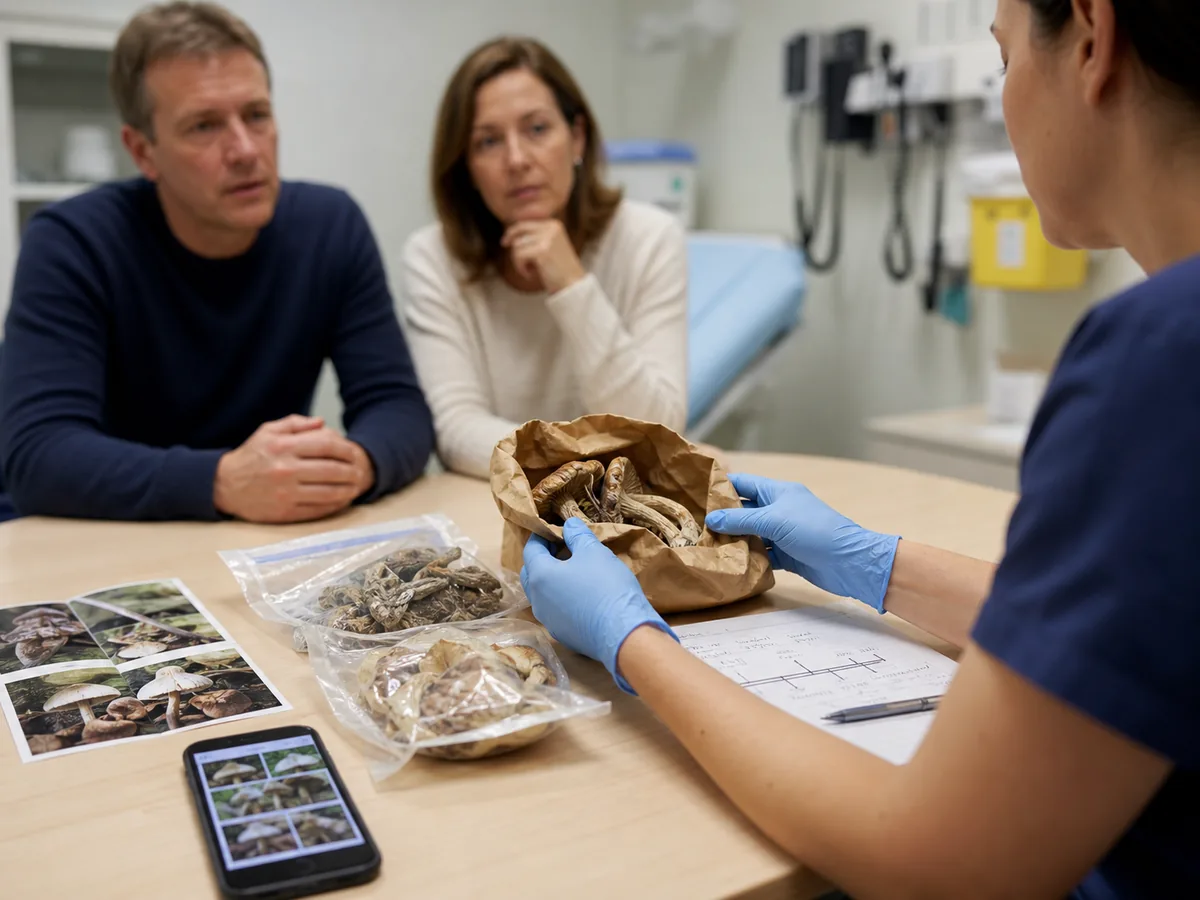
Hospital testing follows the suspected syndrome and clinical state.
Hospital clinicians may check electrolytes, glucose, kidney function, liver enzymes, coagulation, blood counts, acid-base balance, electrocardiogram, urine, muscle markers, or other studies to choose safe treatment and establish a baseline. Repeat testing can reveal developing injury that one early panel could miss.
Treatment is toxin and syndrome specific.
Supportive care can include airway protection, oxygen, intravenous fluids chosen for the person's circulation and organs, nausea control, seizure treatment, temperature management, electrolyte correction, or intensive monitoring. Antidotal or toxin-directed therapies require poison-center and specialist judgment because no single antidote covers every mushroom.
- Exposure
- Species hypothesis, meal time, amount, preparation, repeat servings, and other diners
- Course
- First symptom, progression, quiet intervals, temporary recovery, and organ-warning signs
- Testing
- Results chosen for the suspected syndrome and repeated when delayed injury remains possible
- Disposition
- Home observation, emergency evaluation, admission, or specialist care based on the whole case
The disposition is not complete until the person has a case number and follow-up instructions.
If the person was initially observed at home, know exactly which symptom requires a return call, where evaluation should occur, and how long the specialist wants monitoring to continue. Bring the evidence bundle and updated timeline if care escalates.
Preventing a second exposure
Remove the remaining meal from the table and prevent anyone else from tasting it. Keep only the portion requested as evidence, label it clearly, and discard the rest according to poison-center or local waste guidance after the investigation no longer needs it.
Notify every possible diner about the retained mushroom evidence and the need for an individual assessment.
An unaffected person still needs an individual exposure assessment because portions, species pieces, health conditions, and symptom timing differ. Do not use the sickest or healthiest diner's course to predict everyone else's outcome.
A common name does not settle safety.
Regional names can refer to different species, and a familiar edible can grow beside a dangerous lookalike. Cooking, drying, pickling, freezing, or a previous symptom-free meal does not correct a mistaken identification or guarantee toxin destruction.
The durable rule comes before the next meal.
Eat a wild mushroom only when a qualified identifier has established the species and its edibility for that collection, and keep different species separated from field to kitchen. When uncertainty remains after an ingestion, make the poison-center call first and let the evidence follow.