
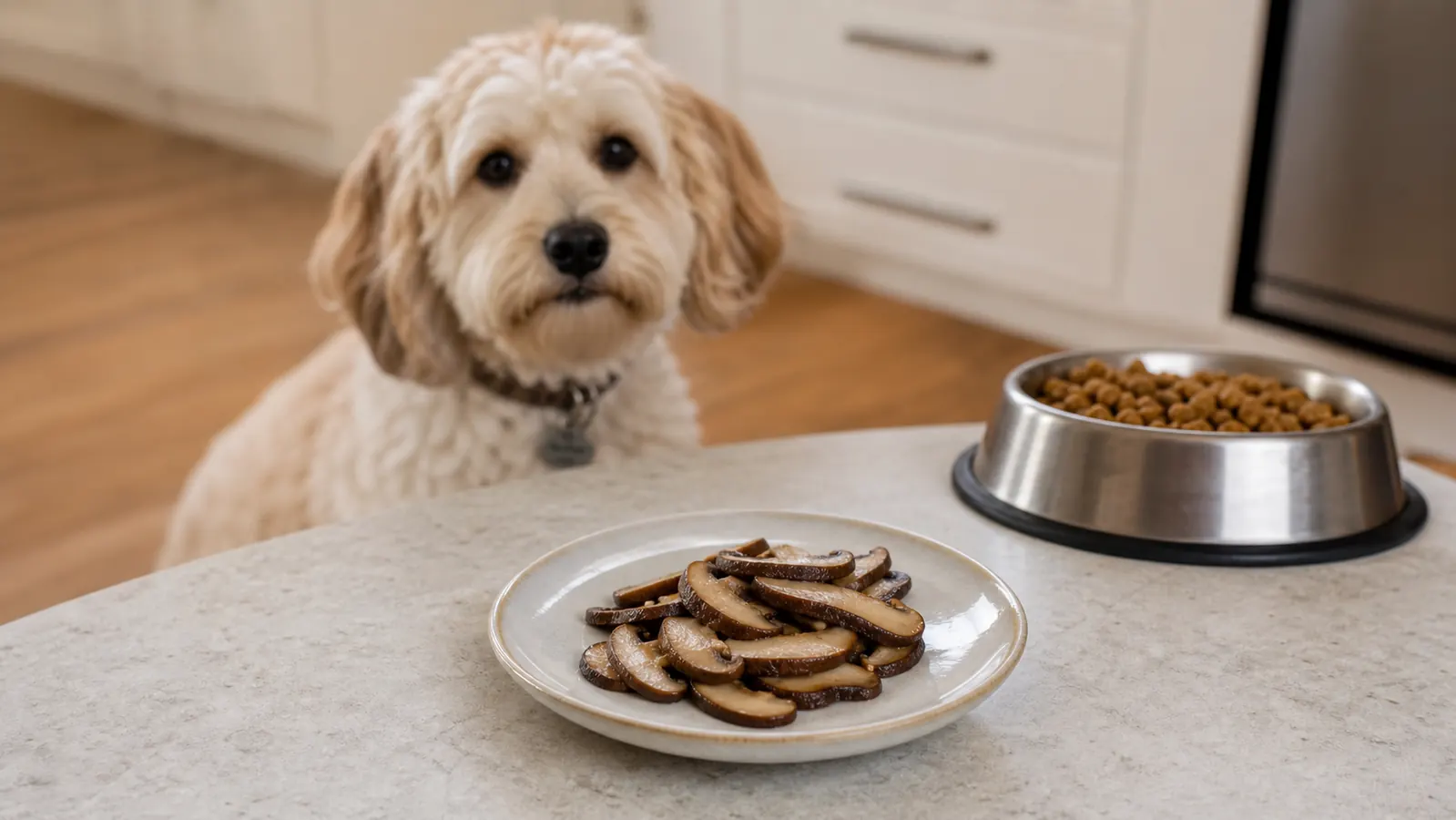
Shiitake shows up in a lot of home cooking, so it makes sense to wonder if your dog can share a bite. The short answer is that a little plain, cooked shiitake is fine for most dogs, but the way you serve it matters a lot.
Can dogs eat shiitake mushrooms?
Plain, fully cooked cultivated shiitake is not toxic to dogs when served in small amounts. A store-bought shiitake is the same cultivated species whether it goes onto a person's plate or into a dog's bowl.
Safety does not make shiitake nutritionally necessary, so keep it as an occasional treat rather than part of the meal.
Treat shiitake like any new human food by offering one simply cooked taste and waiting to see how the dog handles it, while dog mushroom safety applies a stricter rule to unknown yard mushrooms.
| Form | Decision |
|---|---|
| Plain cooked | Small taste |
| Raw | Skip |
| Seasoned | Skip |
| Wild exposure | Call a veterinarian |
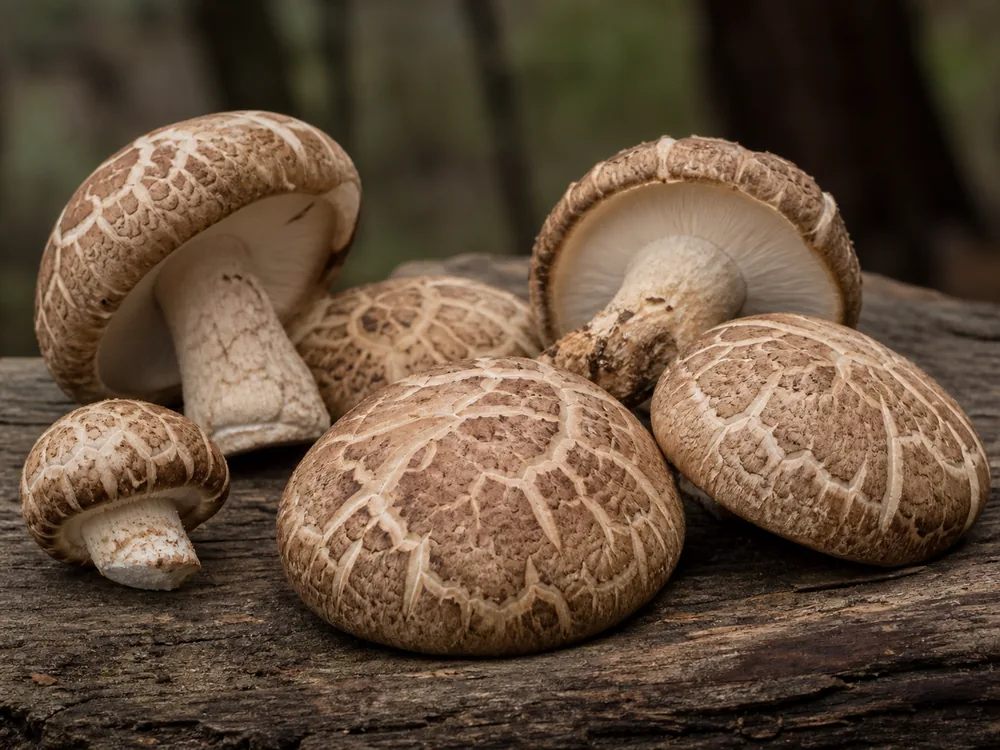
A dog already gets complete nutrition from balanced dog food, which makes shiitake an optional extra. Keeping that role clear also keeps the portion small.
SafetyCan Dogs Eat Mushrooms?How much shiitake is safe for a dog?
Body size changes the portion, but shiitake should remain a small share of the dog's food for the day. Serve a few small pieces rather than a full cap, and do not make it a daily treat.
Here is how we serve shiitake so it stays safe.
- Cook it fully, because steaming or dry-cooking softens the tough cell walls so your dog can actually digest it.
- Serve it plain, with no onion or garlic, because both are toxic to dogs even in small amounts.
- Skip the butter, salt, and oil, because fat and salt upset a dog's stomach fast.
- Cut it into small pieces so it is easy to chew and swallow.
- Start with one small piece and wait a day before offering any more.
- Keep mushrooms to an occasional treat, well under a tenth of the day's calories.
Note
A safe food can still cause a soft stomach the first time your dog tries it. Offer shiitake on its own, not buried in a big new meal, so you can tell what caused any upset.
A puppy, a senior dog, or a dog with a sensitive gut deserves an even smaller first taste. When you are unsure, less is the safer choice, and you can always offer a little more next week.
Count shiitake with every other extra the dog receives that day because a biscuit, chicken scraps, and mushroom pieces all displace balanced food. One or two small cooked pieces is enough for a medium dog, while a toy breed should receive less.
Serving shiitake no more than once or twice a week avoids turning an optional taste into a regular source of stomach upset.
How should you prepare a dog-sized taste?
Choose one fresh cap that smells clean and feels firm, then brush off dirt and remove the tough stem before cooking.
Steam, simmer, or use the shiitake cooking method until the cap is soft throughout, using a clean pan with no onion, garlic, sauce, butter, or seasoned residue. Let the mushroom cool, then cut one small piece that the dog can swallow without struggling and save the rest for the human meal.
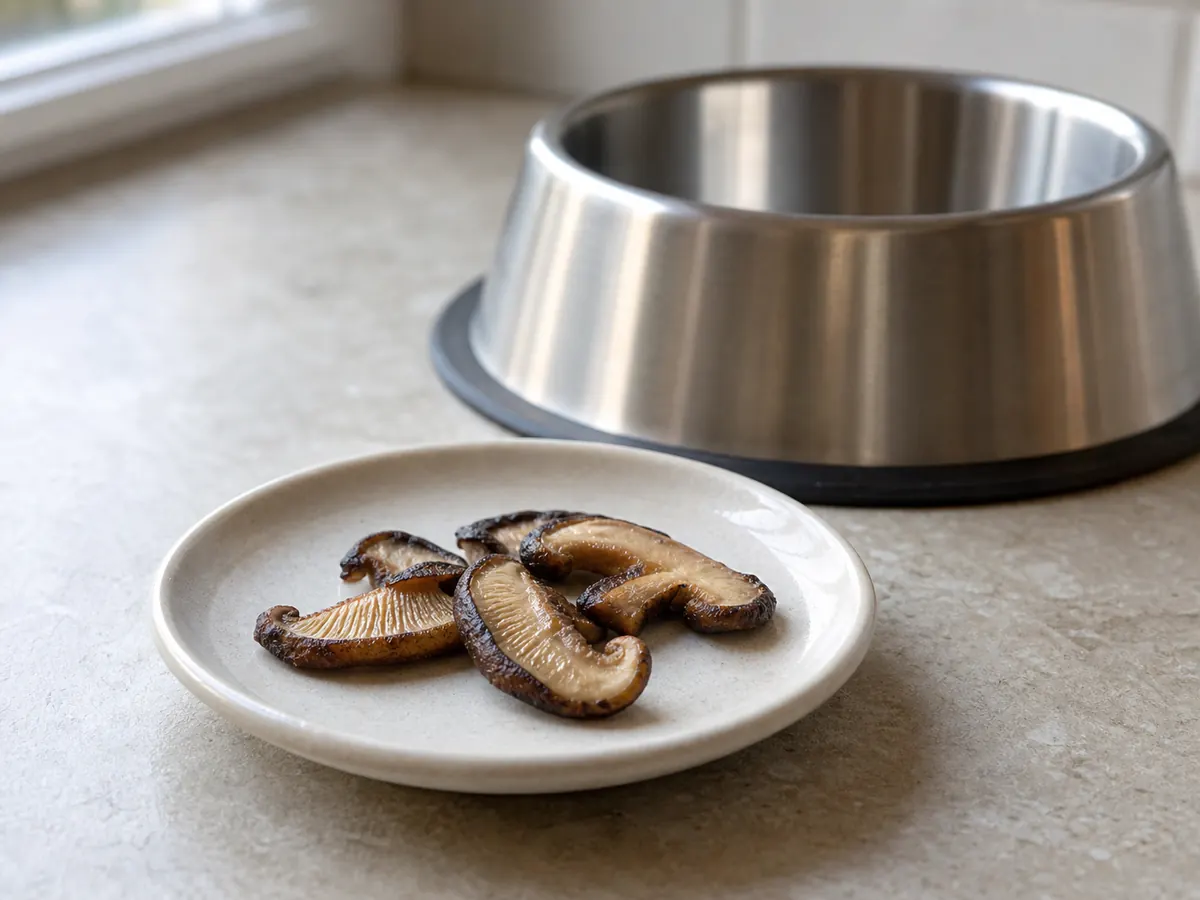
Serve the piece by itself rather than mixing it into dinner because a single new food makes any reaction easier to trace. Water should remain available, but the dog does not need broth, oil, or another ingredient to make shiitake appealing.
Wait until the following day before deciding whether to offer shiitake again.
SafetyIs Death Cap Poisonous to Dogs?Which dogs should skip shiitake?
Dogs being treated for pancreatitis, chronic digestive trouble, kidney disease, or a prescribed elimination diet should not receive a new human-food treat without veterinary approval. The mushroom may be plain, but an unnecessary dietary change can obscure symptoms or interfere with the feeding plan.
A dog that already reacted to another mushroom should also skip the experiment because the benefit is only a taste.
For a dog that should skip the food trial, shiitake powder, tinctures, chews, and concentrated extracts are not a substitute for the cooked cap. Their doses and added ingredients vary, evidence for routine use in dogs is limited, and a product sold for people may contain sweeteners or flavorings that do not belong in a pet.
Ask the veterinarian who knows the dog's medicines and medical history before using any mushroom supplement.
SafetyFirst Aid for Mushroom Poisoning Starts With One CallWhen shiitake becomes a problem
Raw shiitake is tough to digest and may cause gas, loose stool, or stomach pain in a dog. People can also develop an itchy rash after raw or undercooked shiitake.
Dogs and people differ, but thorough cooking is the practical way to avoid serving the mushroom raw.
Seasoning causes more trouble than the cultivated mushroom because common shiitake dishes contain garlic, onion, soy sauce, butter, or excess salt. Onion and garlic are toxic to dogs, so a mushroom cooked in the same seasoned pan is unsuitable.
Set aside a plain piece before flavoring the human portion.
Dried shiitake is concentrated, so a small piece contains more mushroom than its size suggests and may absorb salt or seasoning from the soaking liquid. Rehydrate any piece intended for a dog in plain water and cook it fully.
Remove or finely cut the tough stem because a whole fibrous stem can become a choking risk for a small dog.
Even safe shiitake can cause vomiting or diarrhea when the portion overwhelms a dog's gut, so more mushroom never improves the treat.
Signs your dog reacted badly to mushrooms
Even with a safe mushroom, watch your dog for a day after any new food. A bad reaction to shiitake is usually mild and passes on its own, but you should know what it looks like.
Watch for vomiting, diarrhea, drooling, and low energy during the next day. Ask a veterinarian for advice when signs are severe, recur, or include weakness instead of assuming the reaction is an ordinary stomach upset.
Because vomiting and weakness can signal high-stakes wild-mushroom poisoning, use mushroom poisoning symptoms to report the emergency pattern while contacting a veterinarian.
Write down what the dog ate, how much it swallowed, and when the exposure happened so a veterinarian can assess the timeline. In a multi-pet household, identify which animal reached the food instead of relying on an empty shared bowl.
A dog with food allergies or a sensitive stomach may be better served no mushroom at all.
A dog that ate one plain cooked shiitake and remains normal is unlikely to have a problem, so monitoring is meant to catch an unusual reaction early rather than create fear.
Wild mushrooms are the real danger
A store-bought shiitake and an unknown outdoor mushroom require different decisions. Cultivated shiitake can be shared plain, while a yard or woodland mushroom is off limits.
Dogs cannot distinguish a safe species from a deadly one by smell, and a serious exposure can begin with one quick bite during an ordinary walk.
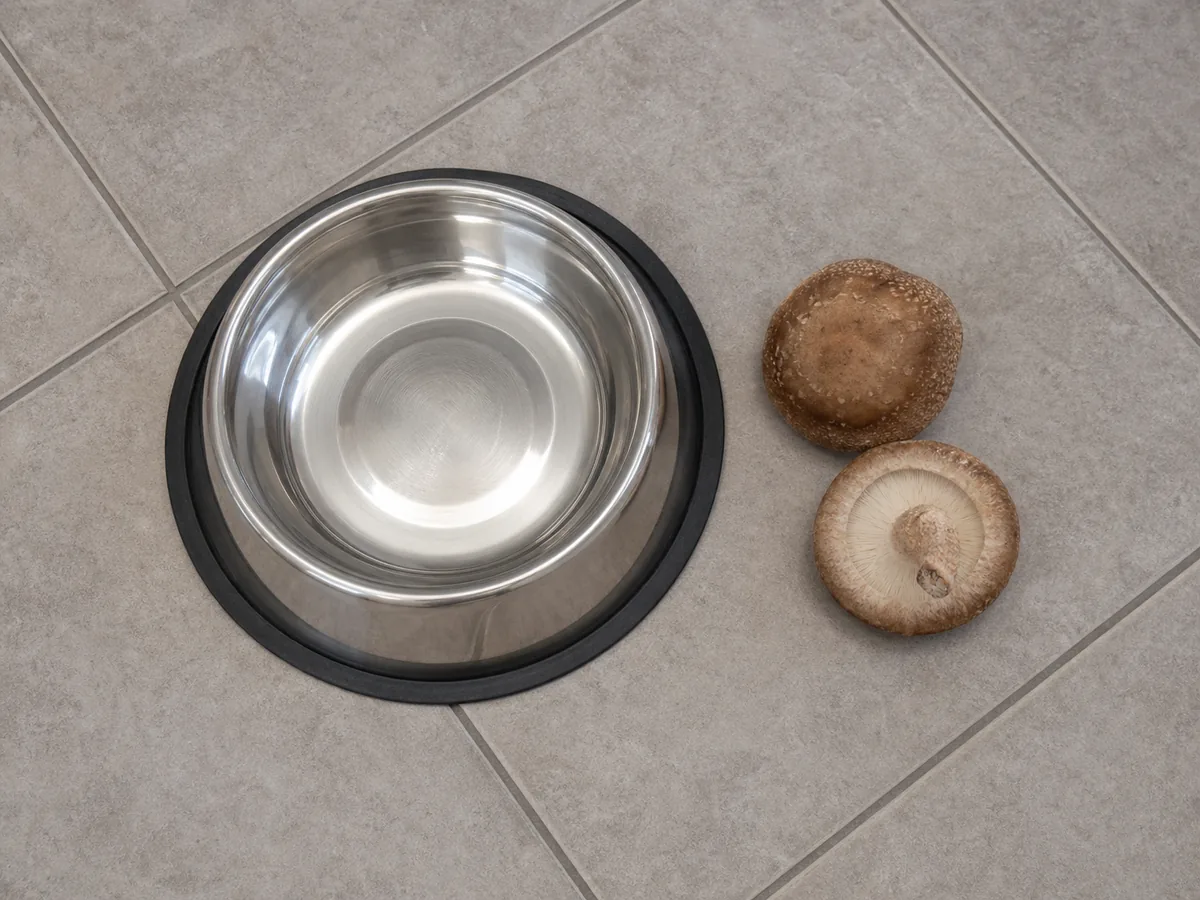
The death cap can kill a dog even though it looks plain and grows in ordinary parks and gardens. Toxic and harmless mushroom species may fruit beside one another, leaving a dog no reliable way to choose between them.
Treat every unidentified outdoor mushroom as unsafe and remove new caps from accessible parts of the yard after rain.
Safe foraging basics use the same standard that protects your dog. Do not trust a wild find by looks alone, keep dogs away from unknown mushrooms on walks, and check your yard after rain when new caps pop up overnight.
So keep shiitake as a small kitchen treat, cook it plain, and treat any wild mushroom your dog grabs as an emergency worth a call to the vet. That single habit keeps the fun part of mushrooms while cutting out the part that hurts dogs.
Warning
Unknown outdoor mushrooms are never dog treats.