
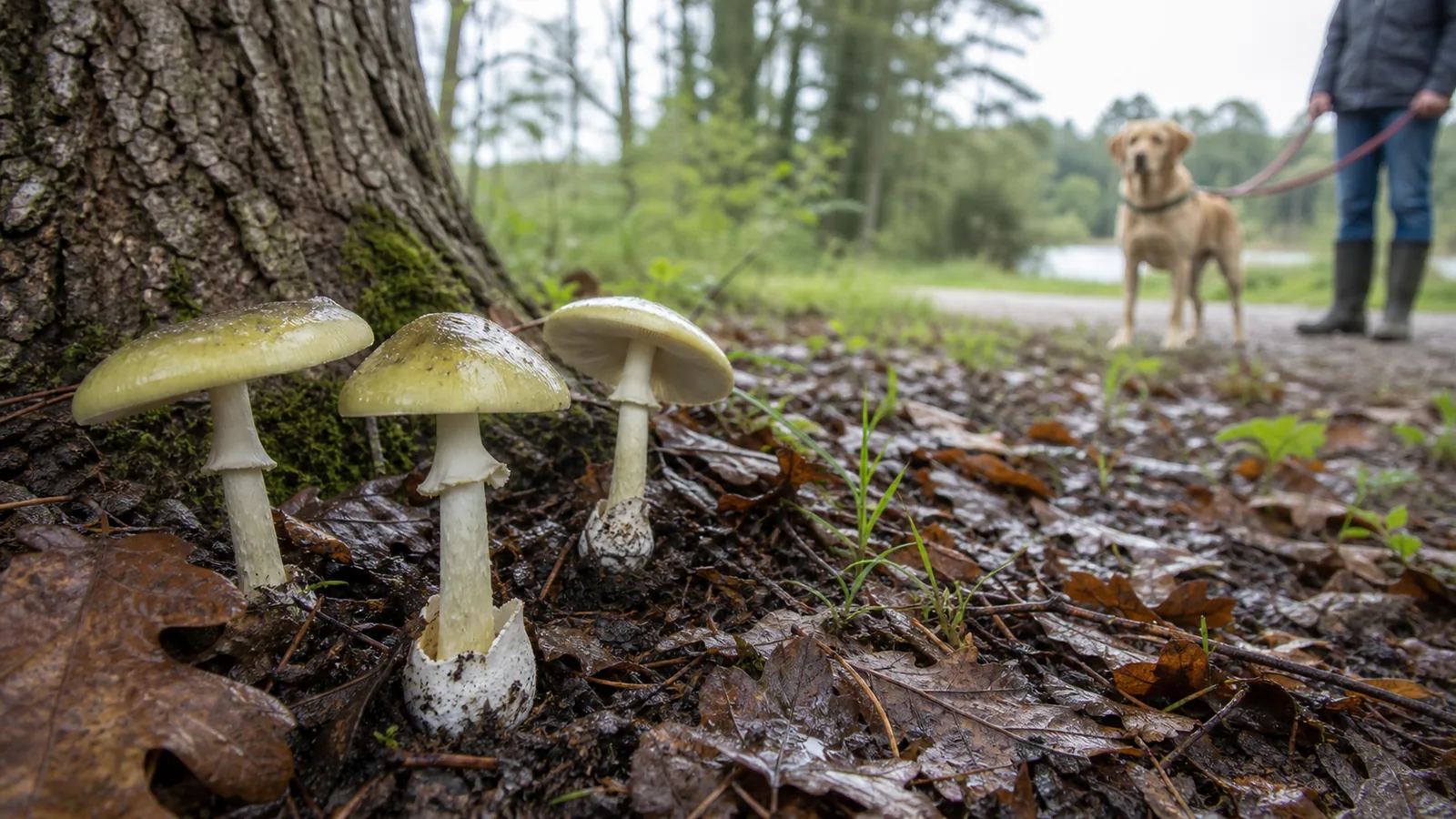
Death caps are deadly poisonous to dogs, so a dog that swallowed one needs immediate veterinary assessment even when it behaves normally during the hours before amatoxin injury becomes visible.
Why a death cap bite is an emergency before symptoms begin
A suspected bite from Amanita phalloides deserves an emergency call as soon as you notice the exposure. Do not use the absence of symptoms as reassurance, since the quiet interval is a known part of this poisoning.
Warning
Contact an emergency veterinarian or animal poison service now if your dog may have swallowed a death cap or any unidentified wild mushroom. Do not delay the call while you search for an identification.
Move the dog away from the remaining mushrooms and prevent other animals from entering the area. Note the current time, then tell the veterinary team when the dog had access and whether any pieces are missing.
- Call an emergency veterinary clinic and say that a wild mushroom exposure is possible.
- Follow the clinic or animal poison specialist's instructions during transport.
- Keep the dog calm and do not offer food, medicine, or a home remedy unless directed.
- Do not induce vomiting unless a veterinary professional specifically tells you to do it.
Identification can help treatment, but it comes after the call because mushroom photos do not measure the swallowed dose or show whether toxin has entered the bloodstream. A veterinarian can decide whether controlled decontamination is still appropriate based on the exposure time and the dog's condition.
The broader rule for dogs and wild mushrooms is simple because safe and lethal species can grow in the same yard, so every unknown outdoor exposure should be treated as potentially toxic until a qualified professional establishes otherwise.
SafetyCan Dogs Eat Mushrooms?Why can a small bite cause liver failure?
A death cap contains amatoxins, including alpha-amanitin, that behave very differently from the compounds in mushrooms that cause only short-lived stomach irritation. The toxin is chemically stable enough to survive cooking heat and stomach acidity, so a cooked or weathered piece is not cleared of risk.
After absorption, alpha-amanitin blocks RNA polymerase II, an enzyme cells need to make messenger RNA and produce proteins. Liver cells concentrate the toxin, and the loss of protein production eventually causes cell death.
Because the kidneys and intestinal tract can also be injured as the poisoning advances, vomiting is only the visible beginning rather than the full extent of the illness.
| Exposure pattern | Typical early clue | Main concern |
|---|---|---|
| Simple stomach irritant | Vomiting or diarrhea often starts quickly | Fluid loss and gastrointestinal distress |
| Amatoxin-containing mushroom | The dog can look normal for 6 to 12 hours | Delayed liver failure with possible kidney injury |
| Unknown wild mushroom | Species and dose are uncertain | Treat as potentially serious until assessed |
Body weight changes the dose question because a piece swallowed by a small dog delivers more mushroom tissue per kilogram than the same piece swallowed by a large dog. No owner can calculate a safe portion from cap size, tooth marks, or the amount left on the ground.
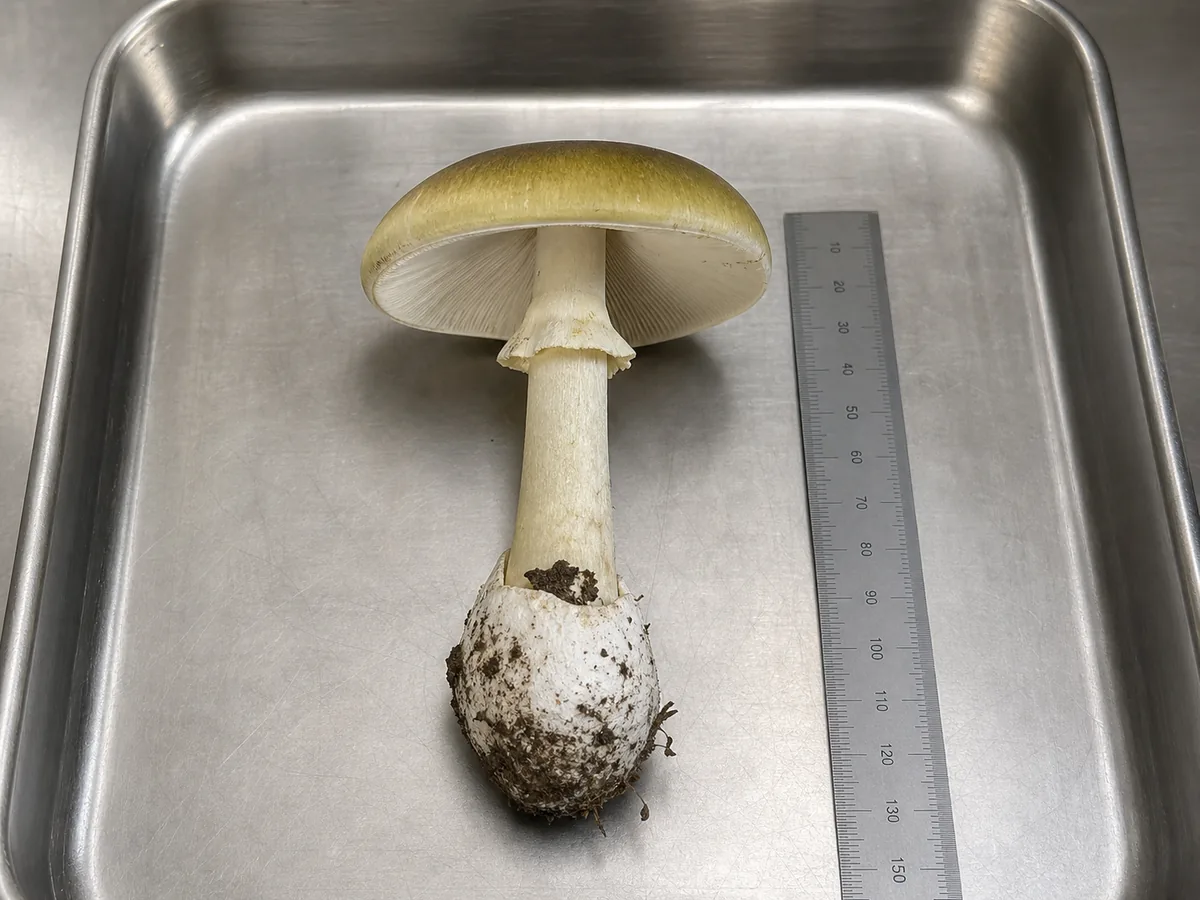
A case report shows what can happen, but it cannot predict the outcome for an individual dog. Exposure time, swallowed amount, age, body size, existing illness, and how early treatment begins all affect the veterinary assessment.
SafetyCan Dogs Eat Shiitake Mushrooms?What happens after a dog eats a death cap?
Amatoxin poisoning often follows a four-stage course that can mislead an owner twice. The dog can look well during the first stage, then seem to recover after a severe gastrointestinal phase while liver injury continues.
During the silent interval after ingestion, toxin absorption occurs without a reliable outward sign, so normal play, appetite, or sleep cannot clear the dog.
The gastrointestinal stage often brings repeated vomiting, watery diarrhea, abdominal pain, weakness, and dehydration. These signs can be intense enough to resemble a primary stomach illness, while the delayed onset gives the veterinary team an important clue.
- Record when vomiting or diarrhea first appeared.
- Report weakness, collapse, disorientation, tremors, or unusual sleepiness.
- Note changes in drinking and urination.
- Look for yellow gums or eyes, dark stool, bruising, or bleeding.
- Treat any apparent improvement as part of the history rather than proof of recovery.
Some dogs enter an apparent recovery stage when vomiting slows and they look more comfortable. That improvement can be deceptive because damaged liver cells can continue losing function after the stomach signs ease.
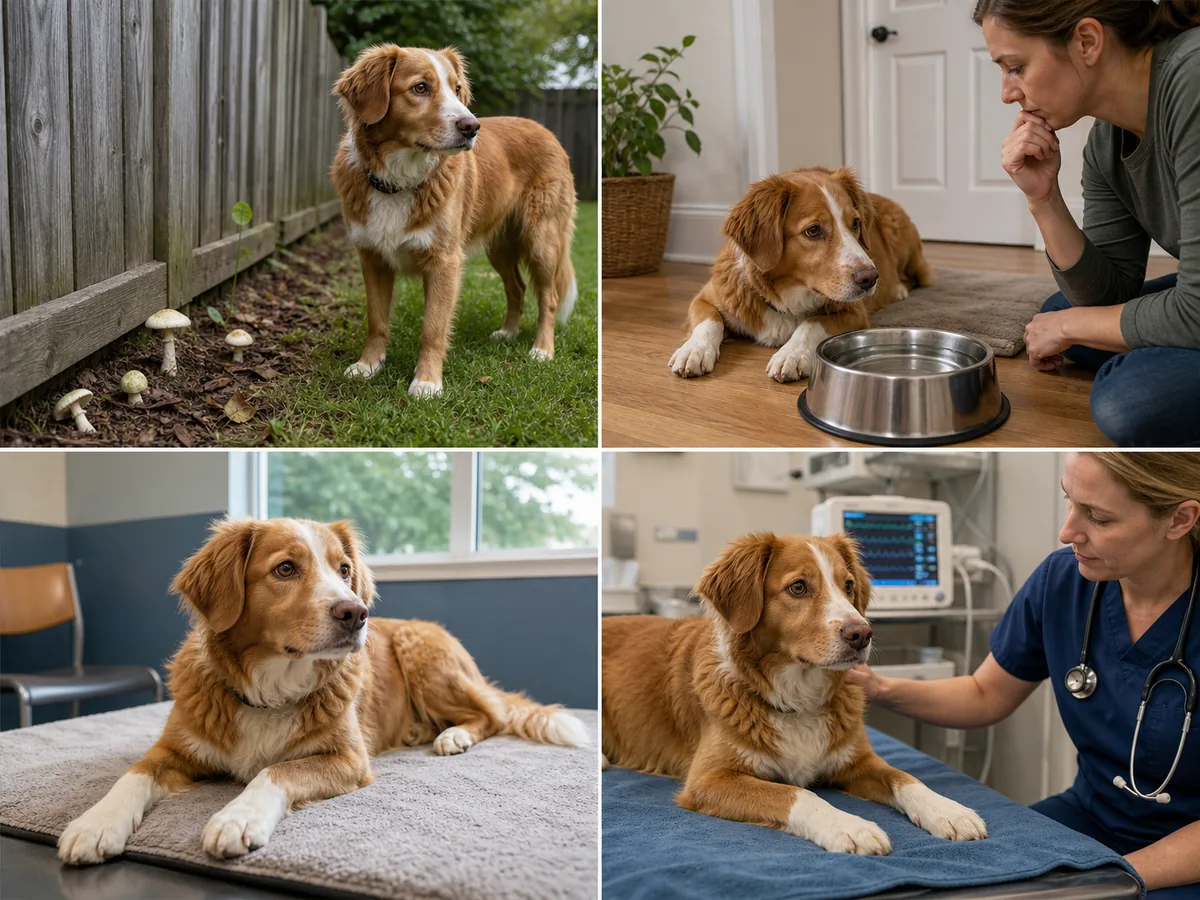
The final stage can include acute liver failure, low blood sugar, clotting problems, jaundice, neurological changes, kidney injury, shock, and collapse. ASPCA toxicology guidance places gastrointestinal onset commonly at 6 to 12 hours and notes that death can follow within one or two days in severe cases.
Puppies can deteriorate especially fast because severe hypoglycemia and organ failure leave little reserve, as shown by a confirmed 2025 case in which a 12-week-old puppy progressed to cardiopulmonary arrest within 22 hours of hospital presentation.
Which details should you take to the emergency vet?
Useful evidence begins with a short exposure history, not a perfect species name. Collect only what is immediately available and leave for the clinic while another person calls if help is available.
- Exposure time
- When the dog entered the area and the last moment it was known to be well
- Estimated amount
- Missing cap, bite marks, fragments, or witnessed swallowing
- Dog details
- Weight, age, medical conditions, medicines, and current behavior
- Specimen
- A whole mushroom or fragments kept away from people and pets
- Scene
- Clear photos of the cap, underside, complete stem base, and growing site
Wear gloves when handling the remaining mushroom and avoid touching your face. UC Davis veterinary guidance recommends wrapping a piece in a damp paper towel and placing it in a plastic bag for the veterinarian.
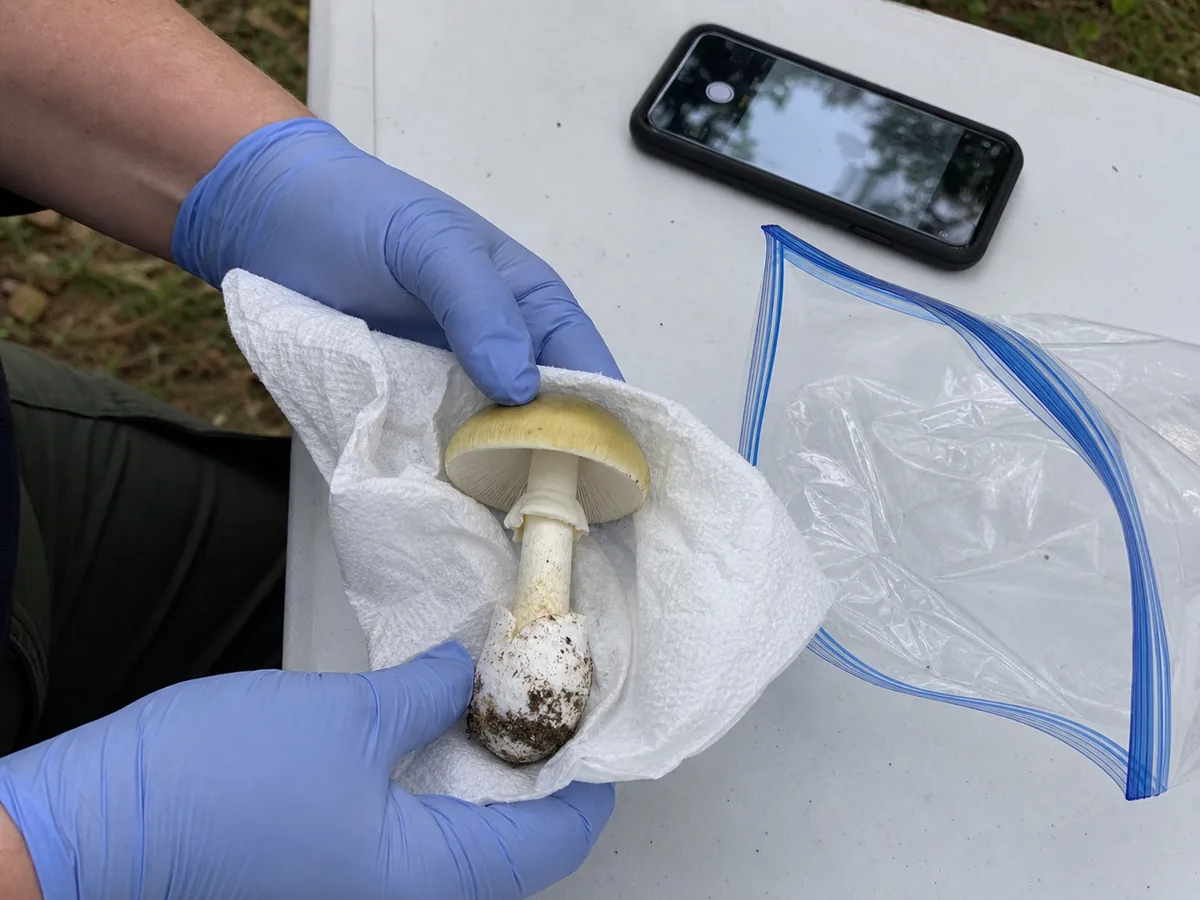
Photograph the specimen before bagging it, including the cap, white gills, stem ring, and the cup-like volva at the complete base when those features are present. Add a wider view that shows nearby trees and whether the mushroom grew from soil, mulch, or wood.
- Bring the bagged specimen or fragments without cleaning them.
- Save vomited mushroom material if the veterinary team requests it.
- Write down the exposure time instead of relying on memory during the call.
- Mention every dog that had access to the same patch.
- Share any symptom change that occurred during the trip.
Do not spend the treatment window comparing online photographs because a mycologist can examine preserved material later while the emergency team acts on the suspected exposure and clinical findings.
SafetyFirst Aid for Mushroom Poisoning Starts With One CallHow veterinarians monitor and treat amatoxin poisoning
The veterinary team first stabilizes breathing, circulation, hydration, temperature, and blood glucose while establishing when ingestion could have occurred. Treatment then changes with the elapsed time and the dog's examination, so an owner-directed protocol cannot replace hospital care.
Early treatment can include controlled gastrointestinal decontamination and activated charcoal when the clinician decides the benefits outweigh the risks. These measures require professional judgment because an unprotected airway, altered consciousness, ongoing vomiting, or aspiration risk can make a home attempt dangerous.
Veterinarians use repeated blood tests rather than one normal result to follow the poisoning. They can track liver enzymes, bilirubin, glucose, clotting times, kidney values, electrolytes, acid-base balance, and urine output as the clinical picture develops.
- Intravenous fluids support circulation and replace losses from vomiting and diarrhea.
- Glucose support can be necessary when the injured liver cannot maintain blood sugar.
- Antinausea care and other supportive treatment help control gastrointestinal losses.
- Plasma products or advanced critical care can be needed when clotting or organ function worsens.
- Specialist protocols can attempt to reduce toxin recirculation in selected hospital cases.
There is no dependable home antidote for death cap poisoning because milk thistle products, leftover medicines, food, household charcoal, and internet dosing instructions can delay care or complicate treatment.
Prognosis depends on dose, timing, laboratory changes, complications, and response to intensive care. A dog that receives prompt assessment before severe liver dysfunction has options that disappear after shock and multi-organ failure develop.
Yard checks matter after warm, wet weather
Death caps form underground partnerships with tree roots and can fruit in parks, gardens, and planted landscapes near hosts such as oak. Warm, wet conditions can bring mushrooms above ground quickly in areas a dog walked through safely the day before.
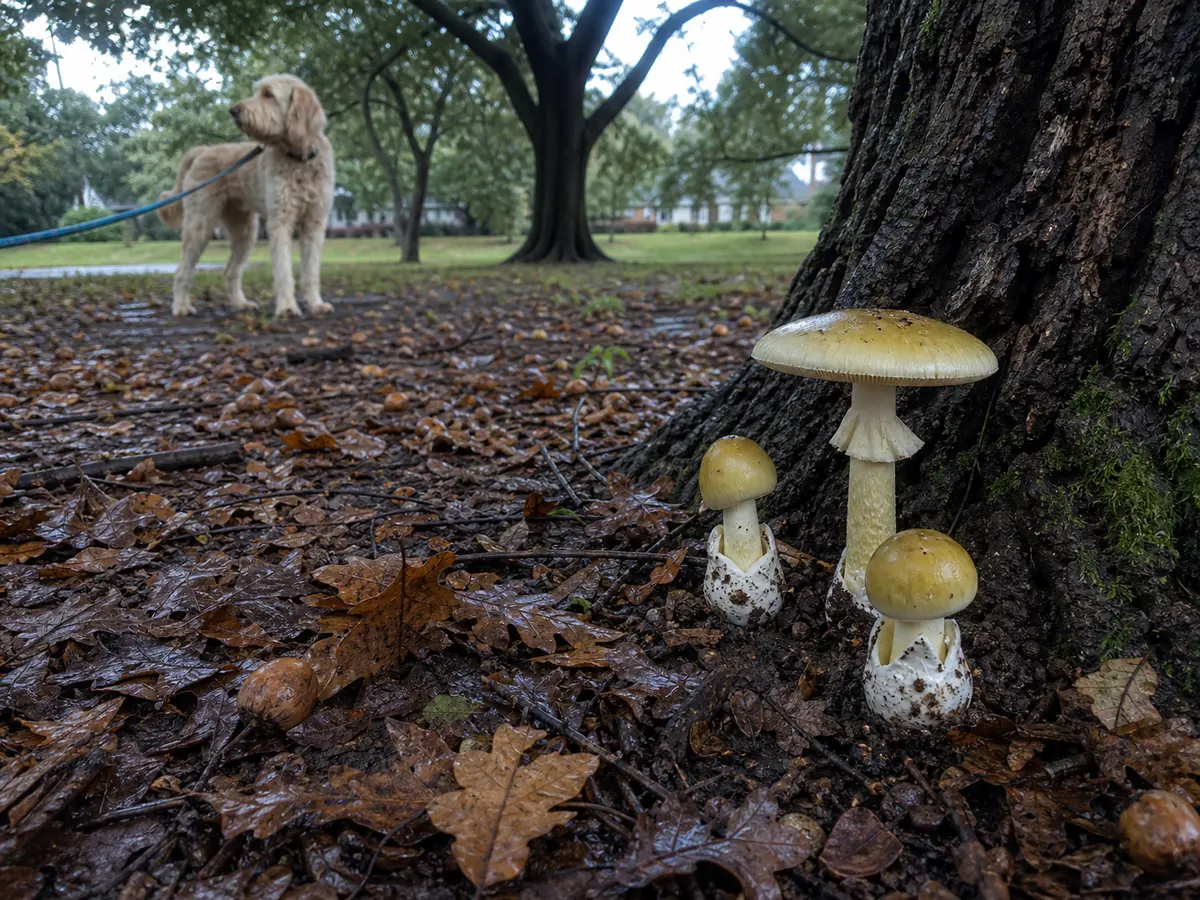
Walk the dog's accessible area after rain to check for death cap fruiting bodies in shaded grass, mulch, leaf litter, fence lines, and soil around trees, keeping the dog indoors or on a short lead until the inspection is complete.
Wear gloves, lift each visible fruiting body and loose fragment, then seal them in a bag the dog cannot reopen. Removing a cap takes away the immediate bite hazard, but the underground fungus remains and can produce more mushrooms later.
- Recheck the same ground over the following days.
- Use a flashlight for early morning or evening yard trips.
- Keep puppies and dogs that scavenge on a lead in active fruiting areas.
- Practice a leave-it cue with safe training objects away from real mushrooms.
- Photograph recurring mushrooms for later expert identification.
A trained response gives you more time to intervene, but it does not replace a physical yard check. Dogs can reach a new cap before a verbal cue lands, especially when mushrooms are hidden in grass or leaves.
Whether the mushroom looks like a death cap or remains unidentified, a possible wild-mushroom ingestion is enough reason to contact a veterinary professional because appearance alone cannot clear the exposure as harmless.