
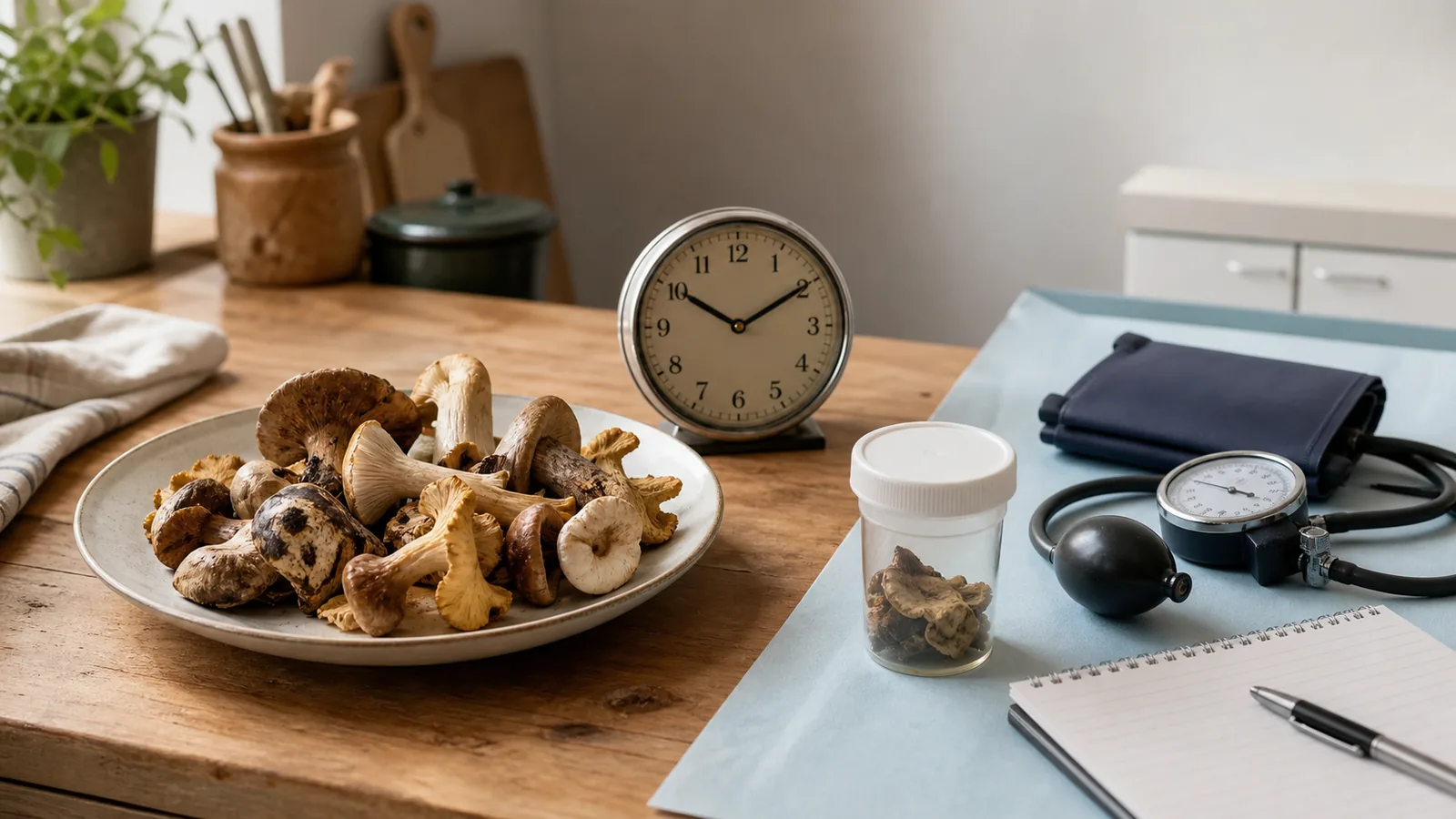
Gastrointestinal mushroom poisoning causes nausea, vomiting, abdominal cramps, and diarrhea after a mushroom meal. Many irritant syndromes begin within a few hours and resolve with supportive care, but the same symptoms can open a delayed liver or kidney poisoning.
Warning
Call Poison Control at 1-800-222-1222 in the United States after illness from any wild mushroom. Call 911 for fainting, confusion, seizure, breathing trouble, blood in vomit or stool, severe abdominal pain, or signs of shock.
First actions after vomiting begins
Stop the meal and keep every other diner from eating the leftovers.
Move the ill person away from stairs, a shower, or any place where dizziness could cause a fall. If the person is drowsy or vomiting repeatedly, follow emergency dispatch instructions about positioning and do not give food, alcohol, medicine, or large amounts of liquid.
Do not induce vomiting.
Mushroom toxins and food may already have moved beyond the stomach, while forced vomiting can cause choking or aspiration. Household charcoal also creates an airway risk and should be used only when a poison specialist or clinician decides that timing and alertness make it appropriate.
Before any decontamination decision, record the mushroom meal time and the first symptom.
Write down every mushroom species that may have entered the dish, where it was collected, how it was stored, how it was cooked, and how much each person ate. Preserve uncooked specimens, cooked leftovers, photographs, and packaging without delaying the call.
The immediate danger is not measured by the violence of one episode.
Repeated vomiting and watery diarrhea can rapidly lower circulating fluid, while a single vomit followed by fainting, confusion, severe weakness, or an irregular pulse can indicate a wider problem. Tell the poison center about the person's age, pregnancy, heart or kidney disease, diabetes, medicines, and other possible exposures.
- Keep the person under direct observation.
- Note every vomit and diarrheal episode without tasting or handling the material unnecessarily.
- Save the remaining mushrooms in a container separate from food.
- Report whether other diners are ill and when their symptoms began.
- Follow the destination and transport advice given by the poison specialist.
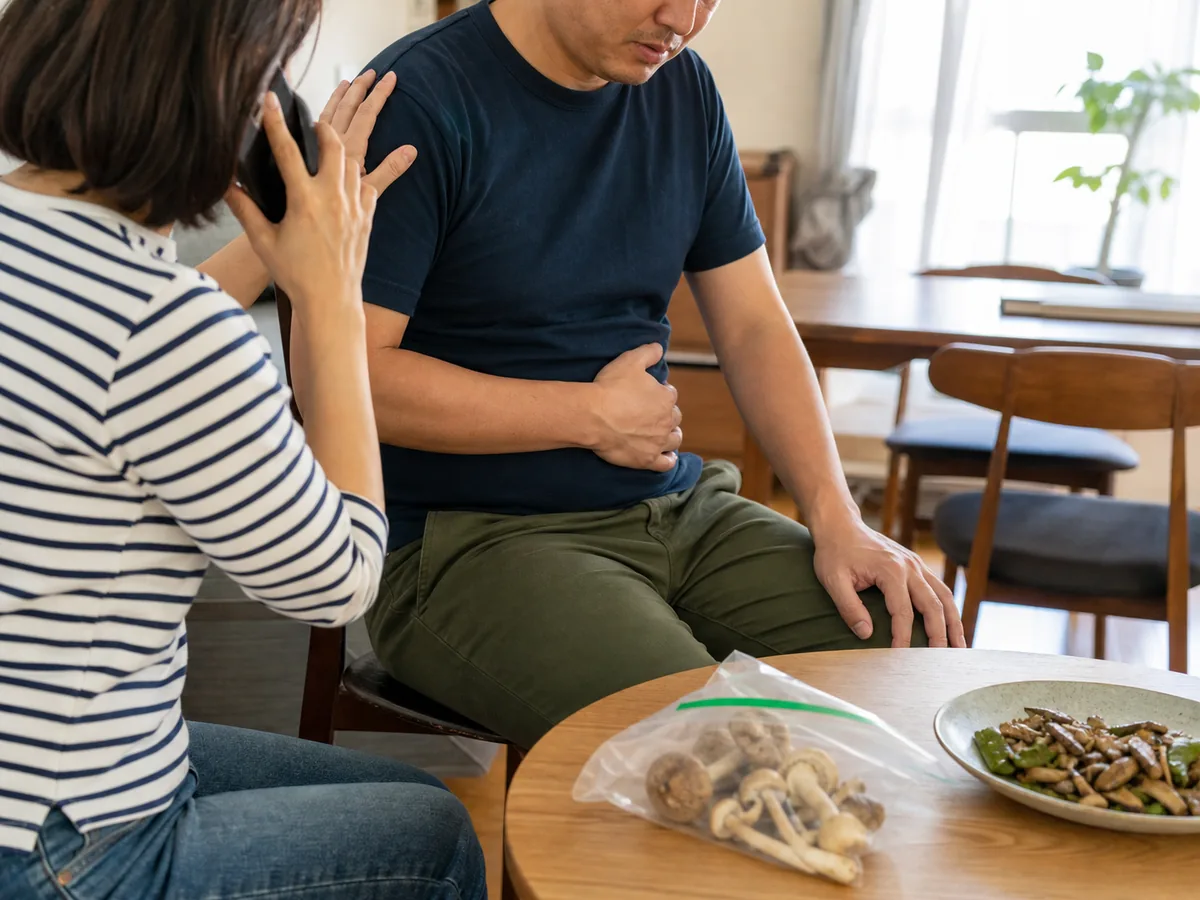
How soon do gastrointestinal irritants act?
Classic gastrointestinal irritant syndrome usually begins quickly, often about 30 minutes to four hours after the meal. Some references extend the short-latency range toward six hours, but that boundary is a clinical clue rather than a guarantee.
| Interval from meal | What it suggests | What it cannot prove |
|---|---|---|
| Under 30 minutes | Food intolerance, anxiety, contamination, allergy, or a very rapid toxin effect remains possible | That mushrooms are innocent |
| 30 minutes to 4 hours | Common range for local gastrointestinal irritants | That no other species was eaten |
| 4 to 6 hours | Overlap zone requiring careful history and observation | That the illness is mild |
| More than 6 hours | Greater concern for amatoxin or another delayed syndrome | Which toxin is responsible |
The meal clock starts with the actual eating time, not the time the group sat down.
Each diner's exposure may begin during preparation rather than at the table. A long meal, several courses, alcohol, stomach contents, portion size, and repeated tasting can widen the apparent interval.
A group case needs one meal timeline and portion record per diner.
If four people shared a dish and only two become ill, compare portions, individual species, side dishes, and onset times rather than treating the table as one exposure. Unequal distribution matters because one toxic cap can end up in a single serving.
An early onset supports an irritant syndrome when the remaining history fits.
It does not cancel concern when the basket was mixed, the specimen is unknown, symptoms keep worsening, or another diner develops a delayed pattern. A meal can contain both a fast irritant and an organ-damaging species, producing two overlapping courses.
The delayed symptom interval remains useful because it determines what clinicians watch in the illness next.
Short-latency vomiting points attention toward hydration and symptom control, while delayed illness raises the need for liver, kidney, clotting, glucose, and other targeted assessment. The safest history gives the actual times and leaves the interpretation to the poison team.
Delayed vomiting changes the risk category
Vomiting that starts more than six hours after a wild mushroom meal deserves particular concern for an organ-toxic syndrome. The delay reflects absorption and cellular injury rather than simple irritation of the stomach lining.
The death cap is the best-known delayed liver example.
Amatoxins can produce severe vomiting and diarrhea after a quiet interval, then a temporary improvement while liver injury continues. The person may feel better just as laboratory evidence of liver failure, low blood sugar, impaired clotting, or kidney injury begins to emerge.
False morels create a different delayed liver and neurological problem.
In false morel poisoning, gyromitrin exposure can cause delayed gastrointestinal illness along with headache, dizziness, liver injury, seizures, or altered mental status. Kidney-toxic mushrooms can begin with nausea and vomiting before flank pain, reduced urine, or rising kidney markers reveal the deeper injury.
False recovery after these delayed symptoms is the dangerous part of the comparison.
When vomiting slows after a delayed onset, the improvement may reflect an empty gastrointestinal tract rather than toxin clearance. A person should not leave care, resume alcohol, or eat the leftovers because the stomach symptoms have eased.
Mixed dangerous meals blur the early and delayed categories.
A mixed collection can contain an early irritant and an amatoxin-bearing mushroom, while a person with delayed poisoning may remember one minor cramp from much earlier. Clinicians interpret the full trend rather than forcing the history into one numbered box.
Any delayed onset, mixed basket, uncertain specimen, or abnormal mental state belongs in prompt medical assessment.
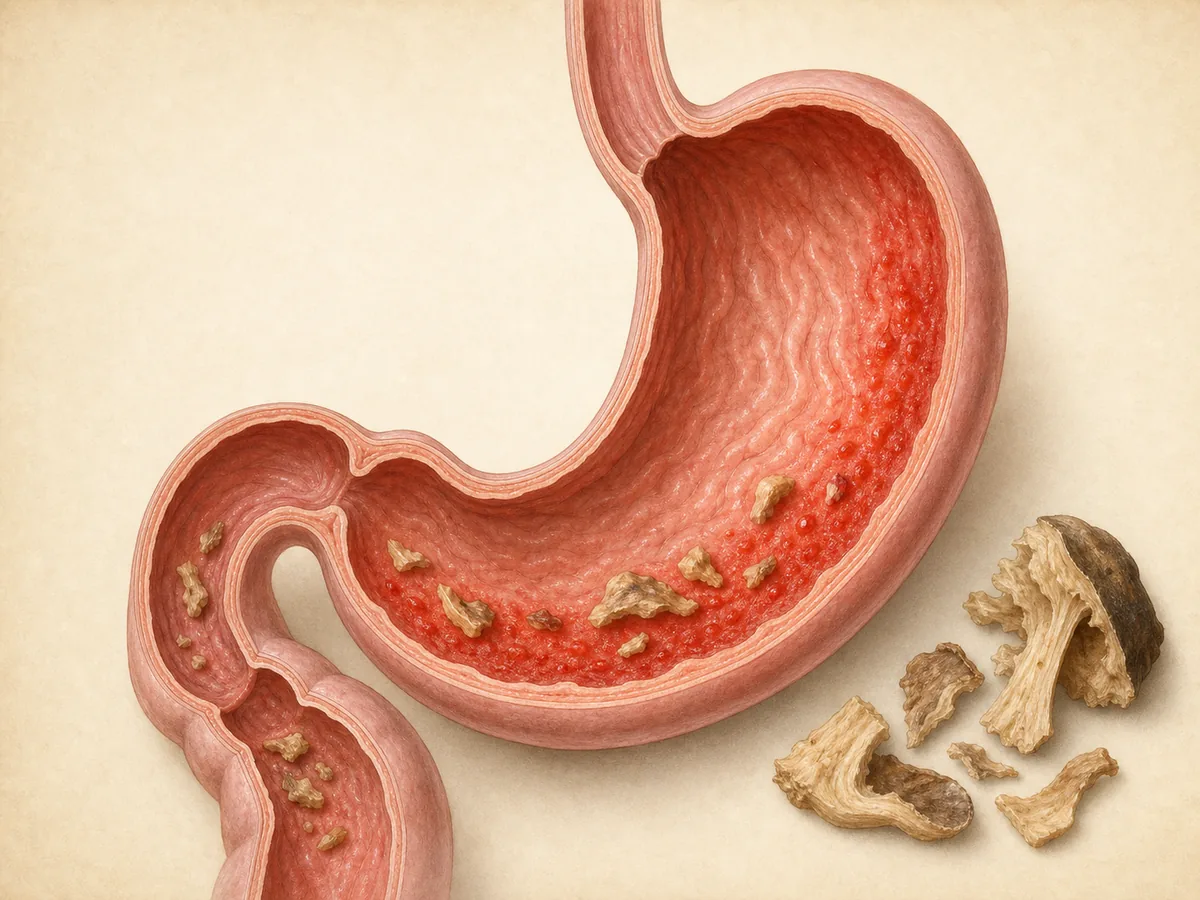
What the stomach and intestine are reacting to
Gastrointestinal irritant syndrome is a clinical group, not the name of one universal toxin.
Several unrelated mushrooms contain compounds that irritate the digestive tract, and many of those compounds remain incompletely characterized. The shared outcome is inflammation or stimulation that produces nausea, cramping, vomiting, and diarrhea without the defining liver, kidney, cholinergic, or neurological pattern of another syndrome.
- Main site
- Stomach and intestinal symptoms dominate the early illness
- Chemistry
- Different species may act through different or poorly defined irritants
- Typical course
- Many cases improve after fluid and electrolyte losses are corrected
- Diagnostic limit
- The label remains provisional until delayed and mixed-species risks are addressed
Mushroom illness can also occur without a classic wild-mushroom toxin.
Edible species eaten raw, undercooked, spoiled, or in unusually large amounts can be difficult to digest or contaminated with microbes. Individual intolerance and allergy can add vomiting, abdominal pain, hives, swelling, wheeze, or breathing difficulty.
Those alternatives change treatment and public-health follow-up.
Several diners becoming ill after the same stored dish can point toward contamination, while only one diner reacting after repeated tolerance may raise an individual susceptibility question. Neither pattern safely rules a mushroom toxin in or out because portions and species can differ across plates.
Cooking cannot universally correct mushroom toxin or contamination risk.
Heat can improve digestibility for ordinary edible mushrooms, yet it does not turn an unidentified species into food or neutralize every toxin. Reheating spoiled leftovers also cannot reverse toxins already produced by microbes.
After cooking, the gastrointestinal syndrome label remains narrow for clinicians.
It tells clinicians that the digestive tract dominates the current picture and that supportive care often works. It does not certify the species, predict the duration, or give permission to eat the remaining mushrooms.
SafetyCan Inkcap Mushrooms Make Alcohol Dangerous?The species list cannot diagnose the meal
Green-spored parasol, Chlorophyllum molybdites, is a frequent cause of gastrointestinal mushroom exposures in North America. It fruits in lawns and grassy areas, often in rings, where a pale cap can be mistaken for an edible parasol.
Jack o'lantern mushrooms add a different identification trap.
Their orange clusters grow from wood or buried roots and can be confused with chanterelles by an inexperienced collector. True gills, clustered growth, and substrate help an identifier separate them, but severe vomiting is not an identification feature.
Yellow-staining Agaricus, Agaricus xanthodermus, often develops a strong phenolic odor and bright yellow staining near the stem base. Livid pinkgill, Entoloma sinuatum, and tiger knight, Tricholoma pardinum, are recognized causes in Europe, while bitter or red-pored boletes and acrid milkcaps account for other regional cases.
A species list cannot cover every geography or resolve poorly preserved specimens.
Common names shift between regions, young specimens lack mature traits, weather changes color, and cooking removes surfaces that an identifier needs. Internet photographs also flatten size, texture, odor, bruising, gill attachment, and stem-base structure.
This is why the specimen and habitat outrank a symptom match.
An intact mushroom with the full base, underside, cap surface, nearby substrate, and a spore deposit can support a qualified identification. Vomiting after an orange mushroom only establishes an exposure pattern, because allergy, contamination, another toxin, or an unrelated illness can look similar.
Treat the list as a way to explain plausibility, not as a home diagnostic key.
Dehydration is the main immediate complication
Repeated vomiting and diarrhea remove water, sodium, potassium, and other electrolytes faster than many people can replace them. The resulting drop in circulating volume can cause thirst, dry mouth, weakness, dizziness, rapid pulse, low blood pressure, and reduced urine.
Small children can deteriorate after fewer fluid losses.
Older adults, pregnant patients, and people with kidney disease, heart disease, diabetes, or medicines that affect fluid balance also have less reserve for fluid loss. Their treatment must balance replacement against conditions in which too much or too little fluid creates harm.
A vulnerable person who cannot keep down small sips needs evaluated care.
Persistent retching, marked sleepiness, confusion, fainting, severe weakness, very dark or absent urine, a racing or irregular heartbeat, and worsening abdominal pain are reasons to escalate. Blood in vomit or stool, fever, jaundice, seizure, or breathing trouble broadens the emergency beyond uncomplicated dehydration.
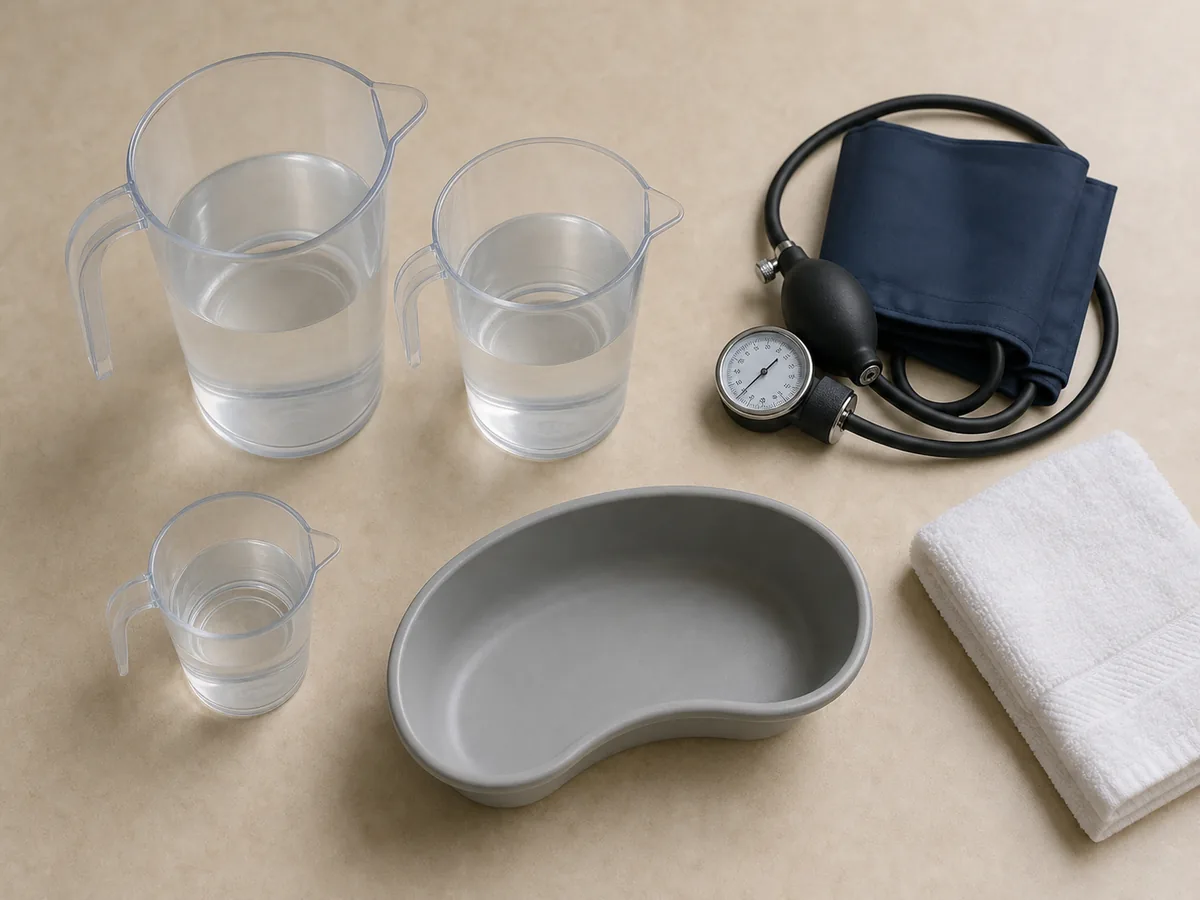
The amount of fluid lost through vomiting and reduced urine is difficult to estimate at home.
An emesis basin, number of episodes, urine frequency, and change in body weight can help clinicians, but visual estimates are imprecise. Serial pulse, blood pressure, alertness, urine output, and laboratory results show whether circulation is recovering.
Plain water does not correct every problem.
Large amounts swallowed quickly can provoke more vomiting, and electrolyte replacement has to match the person's condition. Poison Control or a clinician can give instructions based on age, symptoms, medical history, and the time since exposure.
The safest threshold is functional.
If the person cannot remain alert, stand safely, urinate normally, or retain directed fluids, the illness has exceeded routine home observation.
SafetyGyromitrin Poisoning: Why False Morels Can Trigger SeizuresClinical care follows fluid loss and uncertainty
Clinical assessment begins with airway, breathing, circulation, temperature, alertness, pulse, blood pressure, and hydration. The team also reconstructs the meal because the timing and specimen can change the workup before any laboratory value becomes abnormal.
Blood tests are selected for the presentation.
Electrolytes, glucose, kidney function, liver enzymes, and clotting studies can reveal dehydration or a delayed toxic syndrome. An electrocardiogram may be useful when weakness, fainting, electrolyte loss, chest symptoms, or an irregular pulse raises concern.
Supportive care is matched to the person rather than the mushroom name.
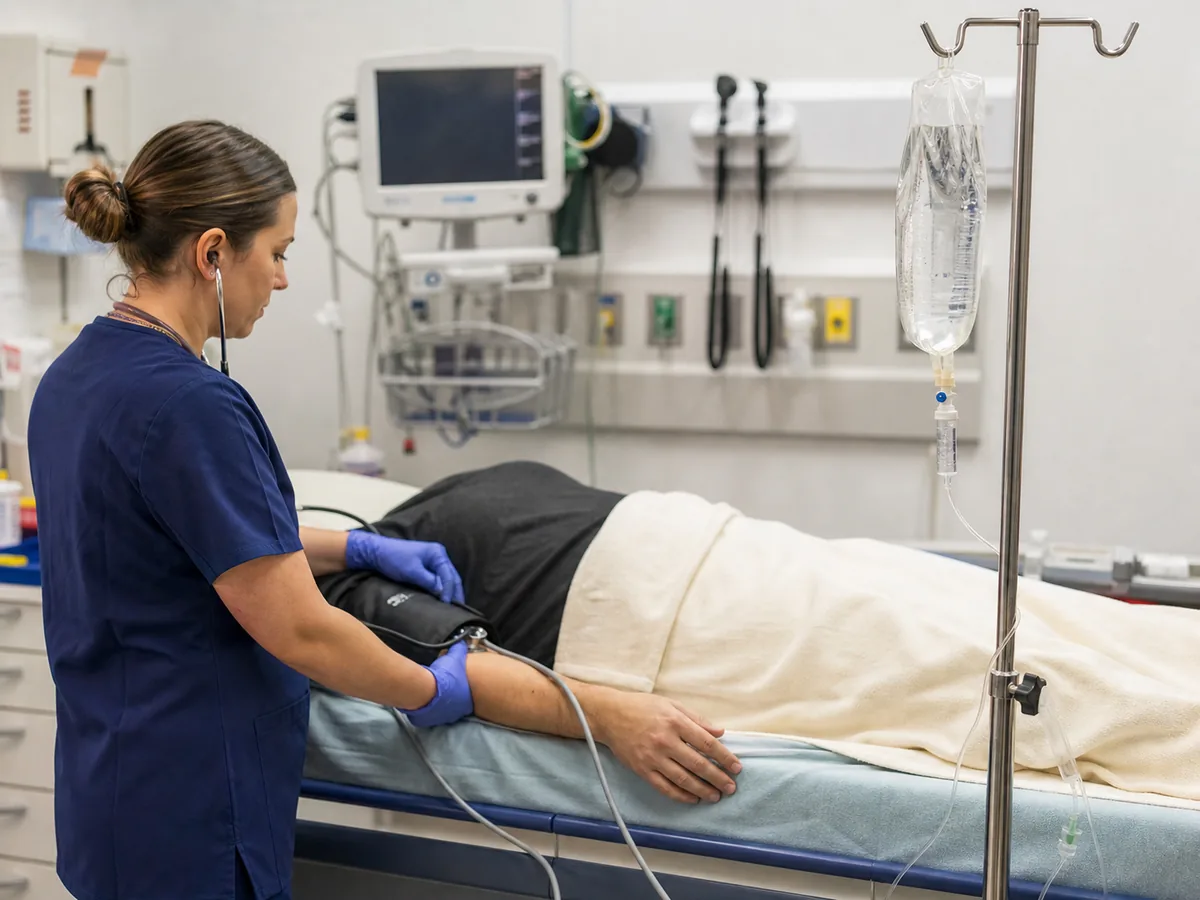
Monitored fluids replace losses when needed, antiemetic treatment can control persistent vomiting, and electrolyte abnormalities are corrected according to measured values. Oxygen, airway support, seizure care, or organ-specific treatment becomes relevant when the presentation no longer fits an isolated gastrointestinal illness.
Activated charcoal is a timing and airway decision.
It may be considered after some ingestions, but repeated vomiting, reduced alertness, a late presentation, or aspiration risk can outweigh a theoretical benefit. Drinking household charcoal or forcing it on a sick person can add lung injury to the poisoning.
Observation is active work.
Clinicians repeat vital signs, abdominal and neurological examinations, urine assessment, and selected laboratory tests to see whether the curve is improving. New jaundice, confusion, low glucose, worsening kidney values, or persistent hypotension moves the case out of the simple irritant category.
Most confirmed short-latency irritant cases recover with appropriate support.
That favorable course is established by stable circulation, controlled symptoms, adequate hydration, and no evidence of another syndrome, not by reaching a particular hour after the meal.
Evidence from the meal matters more than a symptom label
Save one complete uncooked mushroom whenever this can be done without delaying care.
Keep the complete mushroom specimen intact from cap to stem base, then photograph it from several angles beside a ruler. Add a wider habitat image that shows grass, soil, mulch, wood, nearby trees, and whether mushrooms grew singly, in a ring, or in a cluster.
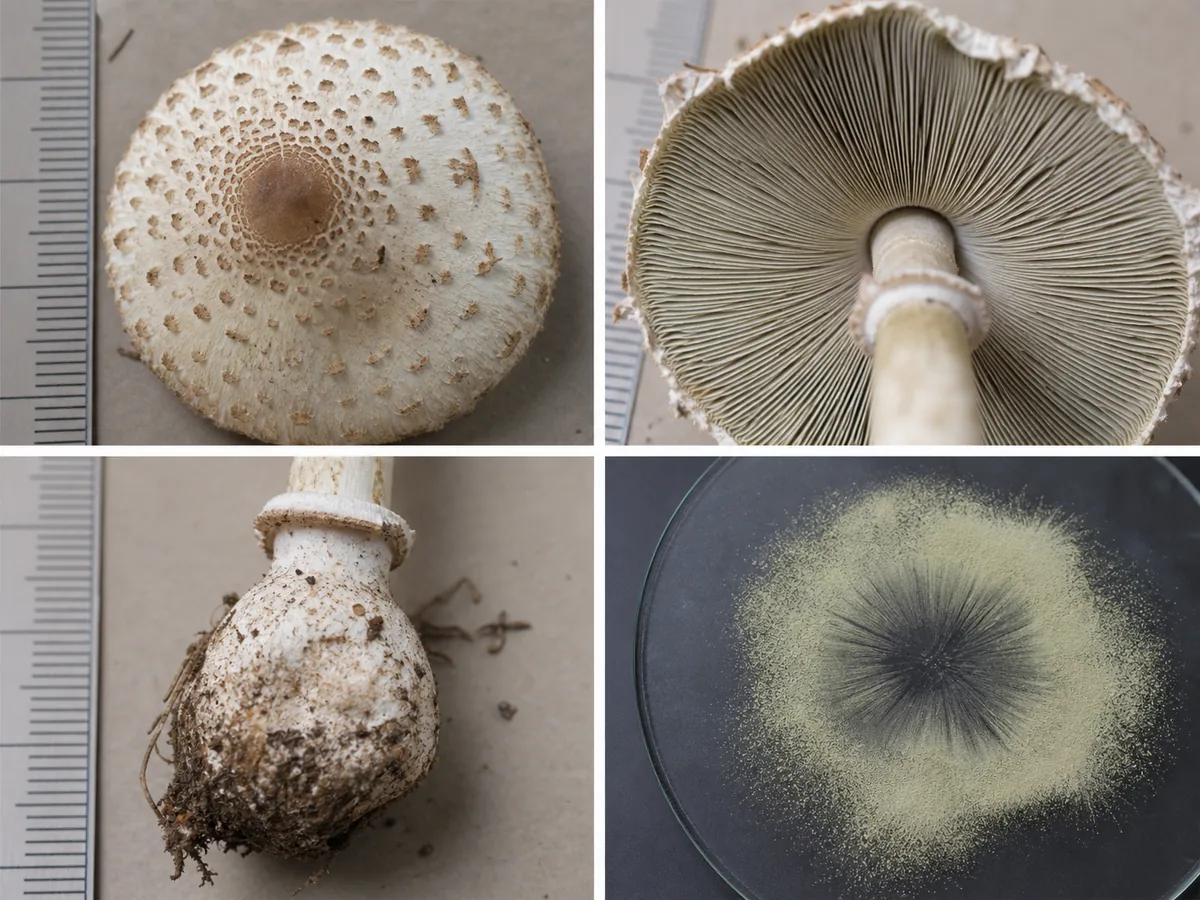
A spore print can support later identification when the remaining mushroom is mature enough, but it should never delay the medical call. Greenish spores support a green-spored parasol hypothesis, while brown, white, or other colors direct an identifier elsewhere without proving edibility.
Cooked evidence belongs in a separate sealed container.
Do not rinse the leftovers or combine them with raw specimens, since sauces and heat already make structures difficult to interpret. Save the pan, serving bowl, ingredient packaging, and any photographs taken before cooking.
Write one record per diner.
Include portion, earliest bite, symptom onset, number of vomiting and diarrheal episodes, other foods, alcohol, medicines, current condition, and treatment. Note who ate the same dish and remained well, while remembering that unequal portions and a mixed basket prevent an unaffected diner from clearing the meal.
Food handling is part of the evidence.
Record the food collection time, refrigeration, cleaning, cooking temperature, time at room temperature, and reheating as handling evidence. Those details help separate a mushroom irritant from bacterial contamination or spoilage when the clinical pattern overlaps.
That food-handling evidence supports mushroom decisions even when the species remains unresolved.
A qualified identifier may narrow the mushroom, a poison specialist may classify the syndrome, and clinicians may follow organ function at the same time. None of those tasks should wait for the others to become perfect.
Preventing another gastrointestinal poisoning
The strongest control is to eat only a single species that has been identified from complete, fresh specimens by someone competent with that mushroom in the local region. A photograph, phone application, common name, or resemblance to a market mushroom does not meet that standard.
A mixed-species basket creates avoidable specimen uncertainty.
Keep each species in a separate container from collection through cleaning, and discard any specimen that is old, waterlogged, insect-damaged, incomplete, or inconsistent with the identified group. Never let an unknown cap enter a dish where it cannot be recovered.
Cook edible wild mushrooms thoroughly because heat improves digestibility and reduces ordinary microbial risk. Proper cooking still cannot rescue a mistaken identification or guarantee removal of an unknown toxin.
Introduce one new wild species at a time.
That choice makes an intolerance easier to recognize and keeps the exposure history interpretable if somebody becomes ill. Children, pregnant people, older adults, and people with significant medical conditions need an especially conservative decision because dehydration carries more consequence.
Past tolerance is weak evidence.
A different species can share the same common name, one specimen can be misidentified, a batch can contain contamination, and individual reactions can change. The safe conclusion after unexplained illness is to stop serving that collection and preserve the evidence for expert review.
The meal is complete only when every specimen is accounted for before it reaches the pan.
Sources & References
- https://namyco.org/interests/toxicology/mushroom-poisoning-syndromes/
- https://pmc.ncbi.nlm.nih.gov/articles/PMC7868946/
- https://pmc.ncbi.nlm.nih.gov/articles/PMC11774429/