
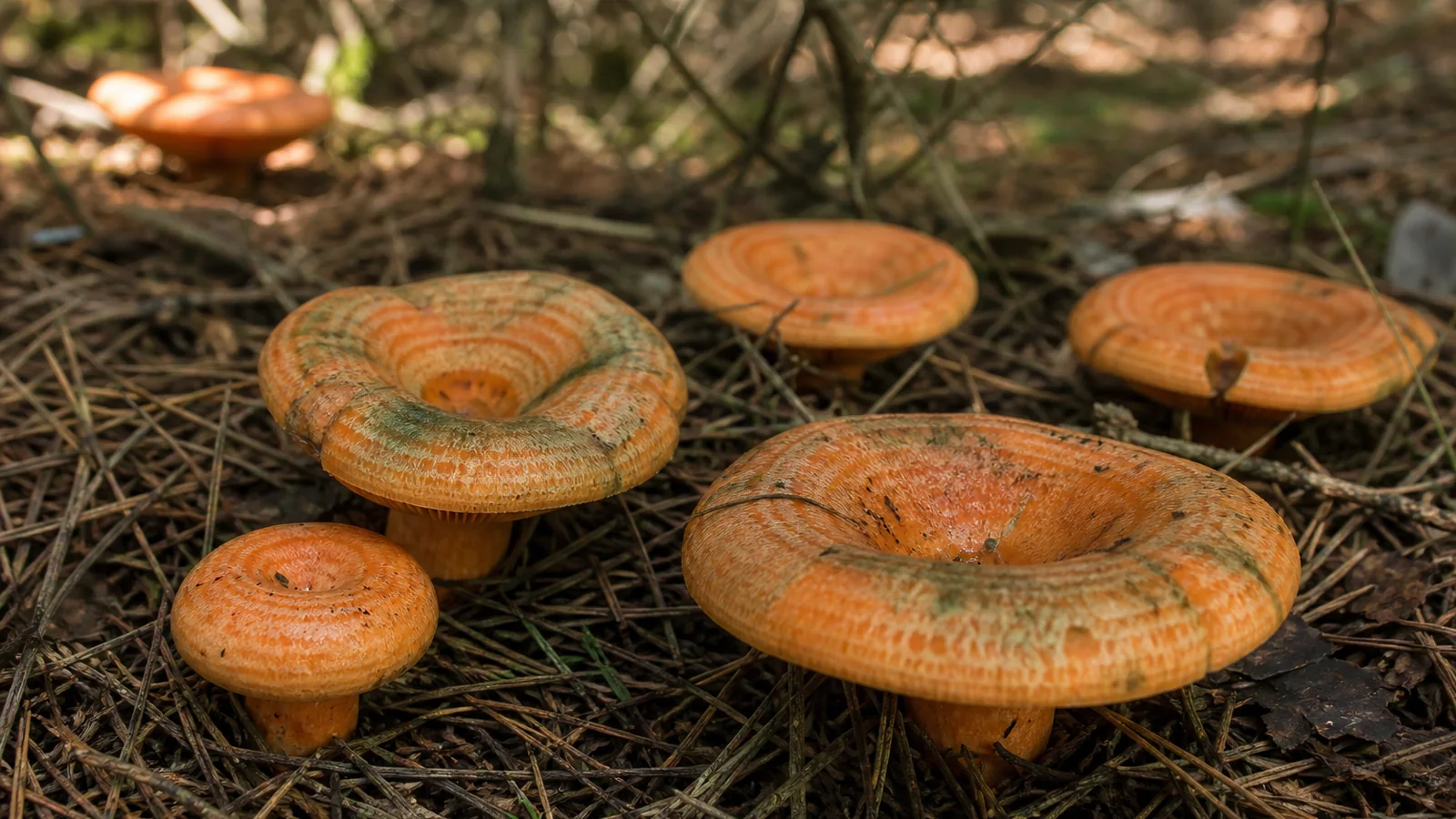
A saffron milk cap does three alarming things and none of them is a problem.
All three happen without warning. It bleeds bright orange when you cut it, it turns dull green wherever you handle it, and the morning after you eat it your urine comes out orange.
The species is named deliciosus, and all three of those behaviors are reasons to be more confident about it rather than less.
Can you eat saffron milk cap raw?
No, and it is the smallest no in this whole series of pages.
Raw saffron milk cap is reported to cause gastrointestinal discomfort in people who are sensitive to it. That is the entire hazard, and it applies to some people rather than all of them.
- The verdict
- No, but the reason is comfort rather than danger
- What raw does
- Stomach upset in sensitive individuals
- Why cooking works
- The compounds involved are heat sensitive
- The other reason
- The flesh is firm and slightly fibrous until it has been cooked slowly
- Track record
- An edible mushroom with centuries of use behind it
The proportion of that risk is worth stating plainly, because these raw pages contain genuine dangers and the saffron milk cap is not one of them.
Nothing here involves a lethal lookalike, an organ toxin or a delayed onset. A person who ate a raw slice of correctly identified saffron milk cap would most likely notice nothing at all, and the worst realistic outcome is an uncomfortable few hours.
That balance is unusual enough in this series to be worth pointing at.
On most of these pages the cooking instruction is the safety instruction. Here the cooking is about comfort and texture, and the safety sits entirely in knowing which orange mushroom is in the basket.
That is why the identification section below matters more than the toxicology.
It is not the only species in the genus with a flattering name either.
The nearest relative in the genus is called deterrimus, which translates as the worst of them, and the two grow in the same kind of woodland. Whoever named the pair was making a comparison rather than a warning.
The risk in this mushroom is not what it does to you. It is the small chance of it being a different milkcap, and milkcaps are a large genus with some members that are genuinely unpleasant.
The name of the mushroom is doing some work in the confusion as well.
Deliciosus was assigned centuries ago and it refers to the mushroom's reputation rather than to any judgment about raw slices. A species carrying that epithet invites exactly the question this page is answering.
SafetyCan You Eat Bay Bolete Raw? The Blue Stain Is Not the ReasonWhat raw does and what cooking fixes
Two separate problems get solved by the same pan, and only one of them is chemical.
The compounds responsible for the gut upset are thermolabile, which means heat breaks them down. Cooking neutralizes them, which is why every source that mentions raw at all says to cook thoroughly and then stops explaining.
Thermolabile is worth translating, because it is doing real work in that sentence.
It means the molecule falls apart when it is heated, which is the same category of fix that works on several other species answered in these pages. Where those mushrooms carry compounds that break down red blood cells or release cyanide, this one carries something that irritates a gut lining, and the same pan handles all of them.
The second problem is texture, and it is the one people actually complain about.
Saffron milk cap flesh is firm and slightly fibrous, closer to a mushroom that has been dried and rehydrated than to a field mushroom. Slow cooking is what turns that from a defect into the pleasant firmness people go out looking for.
Bitterness is a third thing that cooking slowly deals with, and it arrives late.
The latex tastes mild at first and turns slightly bitter after a while, which means a raw taste test gives a misleading answer and a raw plateful does not. Cooking slowly removes it along with everything else.
A reaction to a raw portion, if it happened at all, would arrive on the usual schedule for a gut irritant.
That means somewhere in the first few hours rather than the next day, and it means nausea and cramps rather than anything that needs a hospital. The small first portion is still the sensible habit, because tolerance varies between people in a way cooking does not change.
SafetyCan You Eat Beech Mushrooms Raw? Not Poisonous, Just BitterThe orange milk is the identification
This is one of the cleanest identifications in wild foraging, and it takes about four seconds.
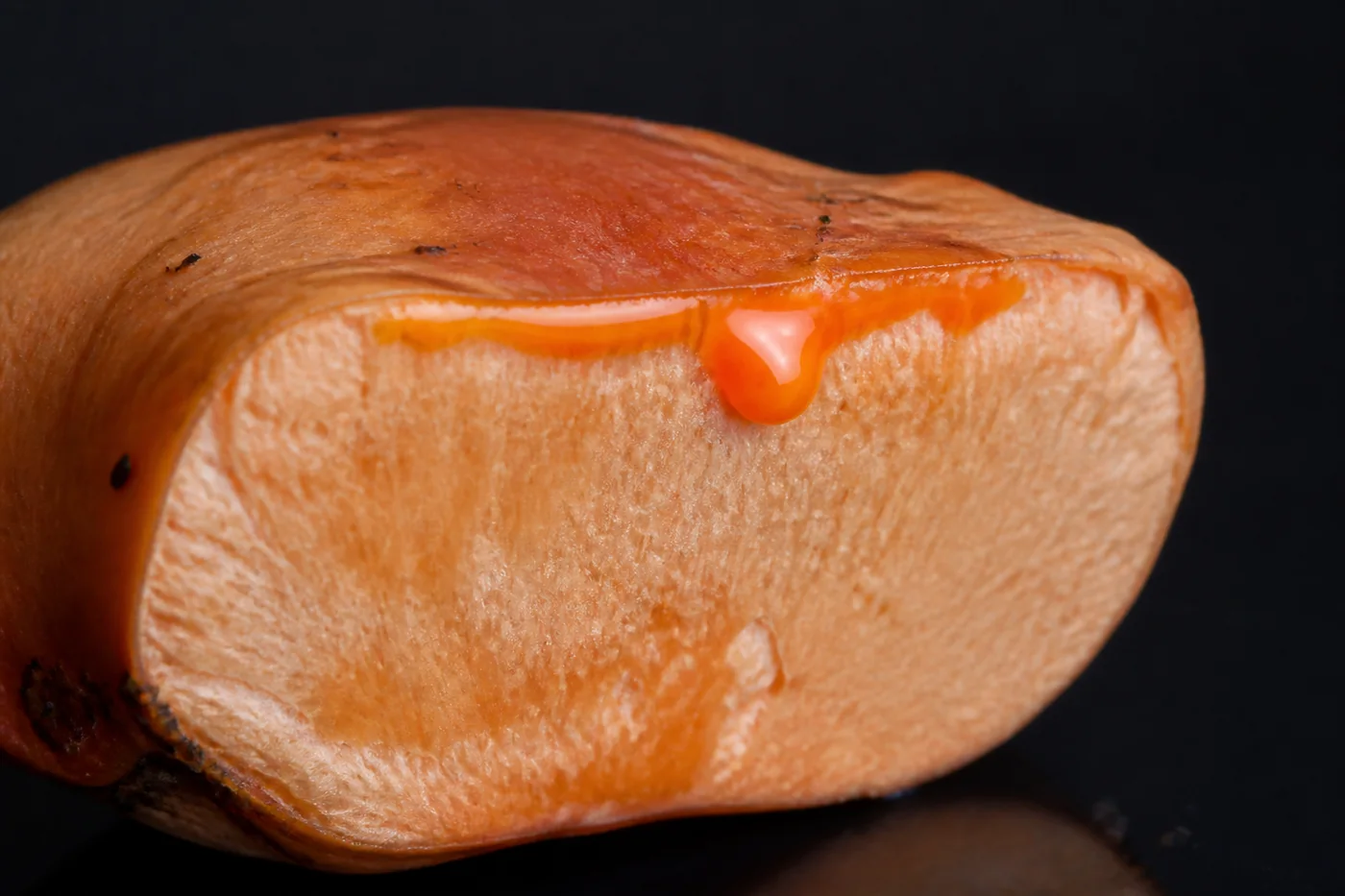
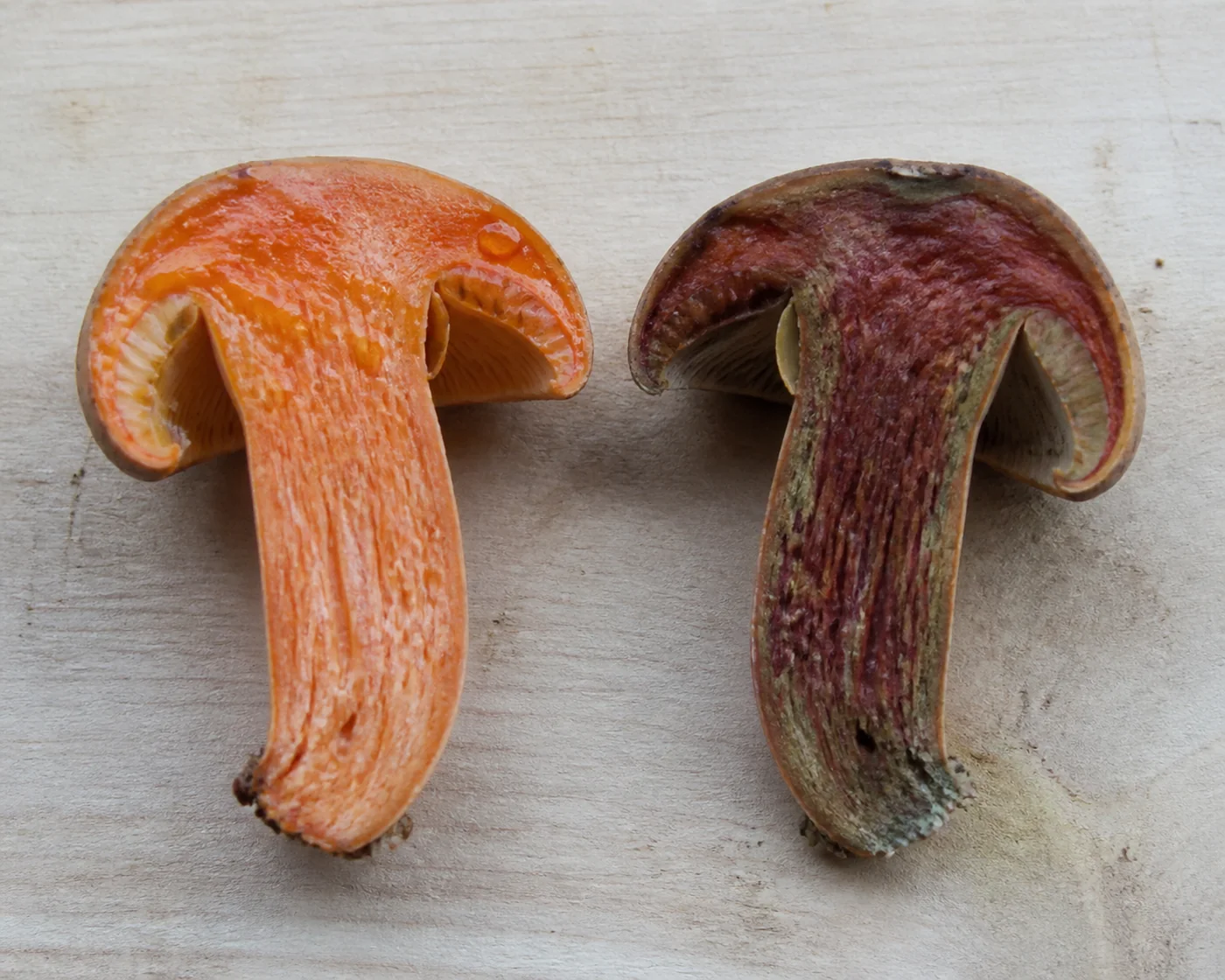
Cut the mushroom and watch what comes out. Saffron milk cap bleeds bright carrot-orange latex that slowly turns wine red as it stands, and no dangerous milkcap does that.
White latex is the thing that should stop you.
A great many milkcaps bleed white, and that group contains the ones with a hot peppery taste and the ones worth leaving alone. If the milk is white, this is not the mushroom on this page, whatever color the cap is.
The cap of a saffron milk cap changes shape enough over its life to confuse people who have only seen one photograph.
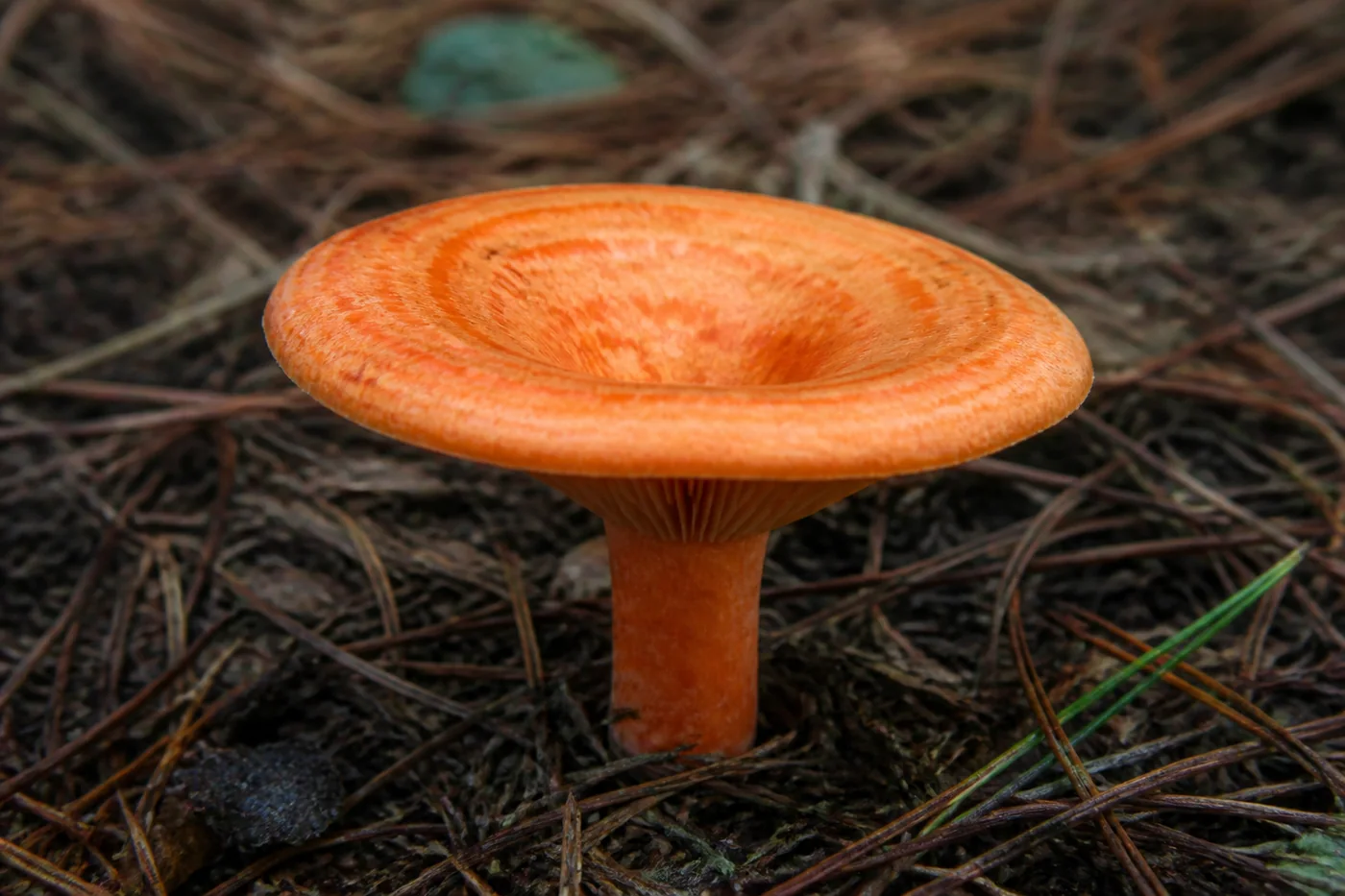
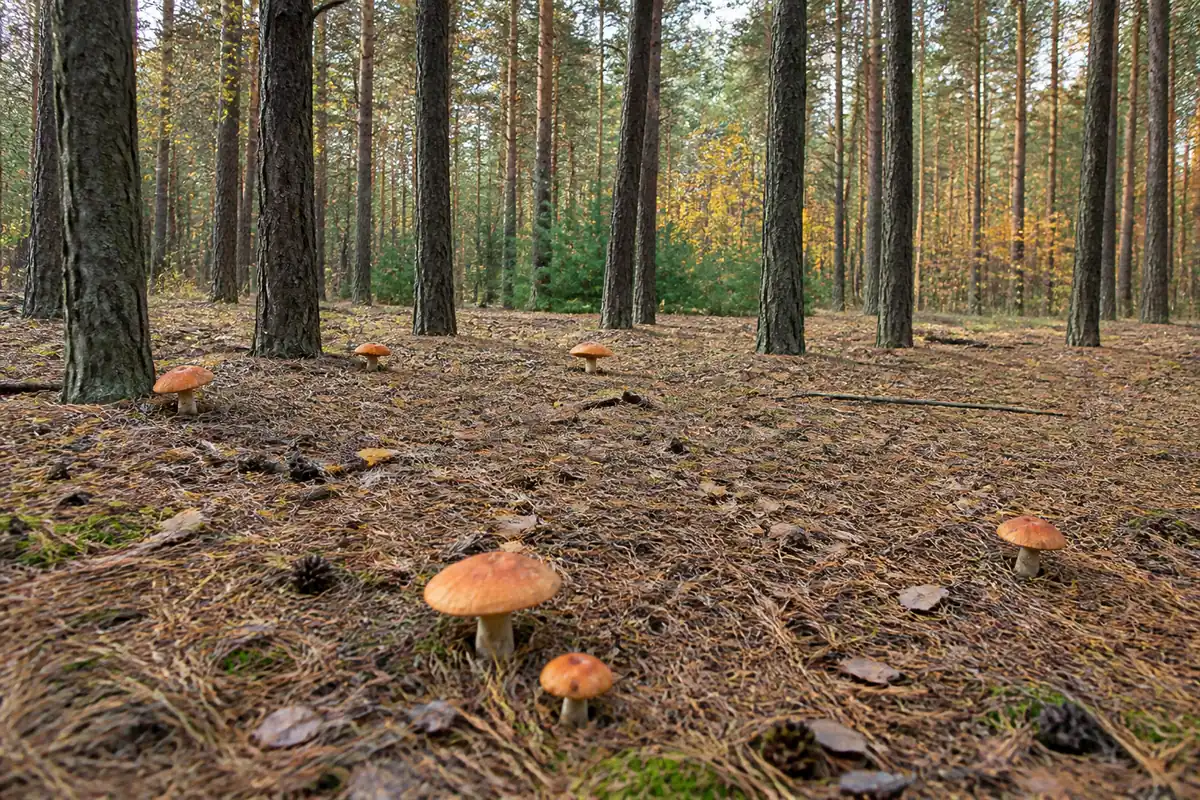
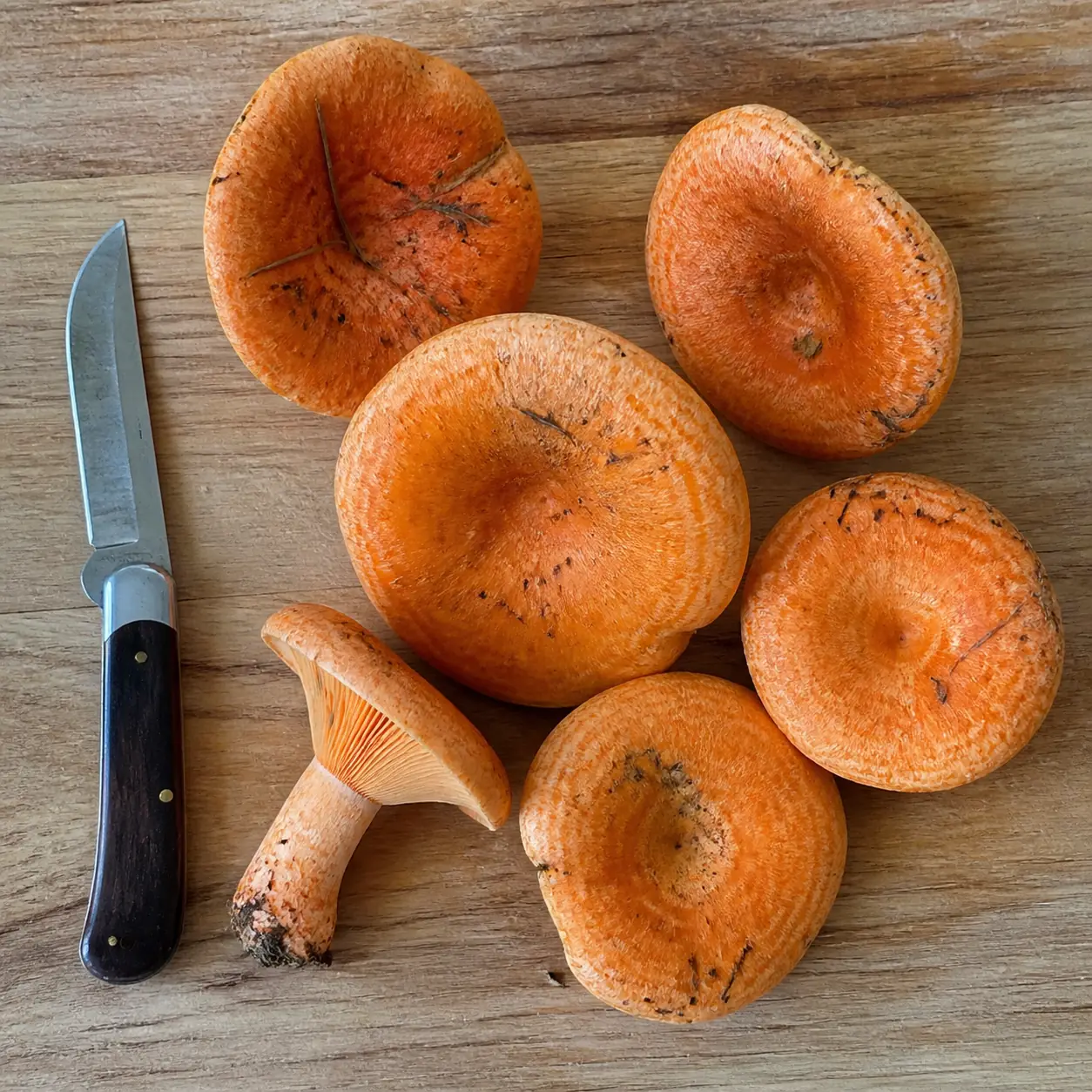
A young saffron milk cap is pinkish-orange with the margin rolled under, a mature one flattens and then sinks into a shallow funnel, and an old one is genuinely vase-shaped. The concentric banding stays visible through all of that, and the surface goes from granular to sticky in wet weather.
The gills carry the same green reaction as the rest of it.
They are crowded, bright orange, and they run a little way down the stem rather than stopping at it, and a fingernail drawn across them leaves a green line within a minute or two.
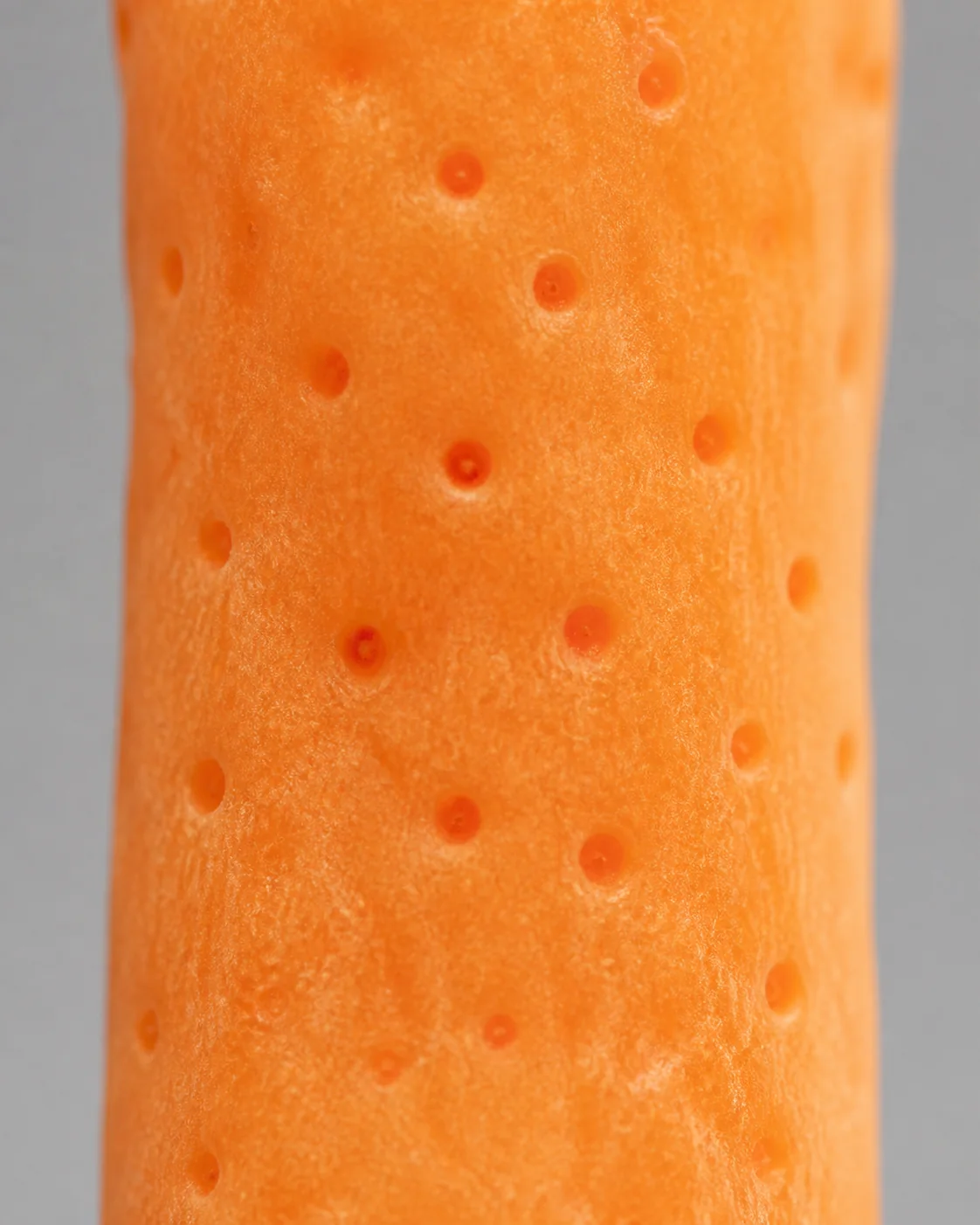
The stem pits are the confirmation and they have a proper name.
They are called scrobiculations, they are shallow, they are a slightly deeper orange than the stem around them, and they cluster toward the base. Nothing else about the stem needs checking once they are there.
The print is worth taking once, early on, for the sake of knowing.
A spore print from this species comes out pale pinkish buff rather than white, which is a shade most people have not looked at closely. Setting it beside a cream print once is how that becomes a color you recognize instead of a word.
The tree a species grows with is not background information here.
This species is one of the mycorrhizal mushrooms, which means it lives in partnership with the roots of conifers and cannot exist without them. An orange milkcap under birch is a different mushroom, and the nearest lookalike, a pinker one with a woolly cap margin, is a birch species.
There is a second near relative worth knowing by name.
Lactarius deterrimus has a smooth stem with no pits and its milk is pinkish-orange rather than carrot-orange. It is not dangerous and it is not as good, which is roughly what its name says about it.
Green is staining, not spoilage
More saffron milk caps get thrown away for going green than for any other reason, and every one of them was fine.
Warning
Green patches on a saffron milk cap are oxidation, not rot. The mushroom stains green wherever it has been bruised, cut, handled or simply left standing, and identification guides use that green staining as a positive indicator of the species. A cap that has gone green in the basket on the way home is behaving exactly as it should.
One identification page states the green position about as flatly as it can be stated.
Green-staining is an indicator of Lactarius deliciosus species.
An identification guide, on the feature people throw the mushroom away for
The green and the orange are the same pigment at different stages.
The compounds that make the mushroom that startling color react with air, which is why the cut latex goes from carrot to wine red and why the flesh around a bruise goes dull green. It is the same process that turns a cut apple brown, and it means as little.
That said, there are real reasons to leave a milkcap where it is.
White latex is the first of them, as above. Purple or yellow bruising is the second, because some of the milkcaps worth avoiding show those colors rather than green.
A hot peppery taste is the third of the reasons worth knowing, and it explains an old habit.
Touching a drop of latex to the tongue and spitting it out is how experienced foragers sort the genus, because the unpleasant milkcaps announce themselves as heat within a second or two. It is a technique worth knowing about and not worth using until somebody has shown you.
Age is a separate question from green color, and it has a different answer.
An old saffron milk cap is often riddled with insect larvae, because a great many things eat this species before people get to it. That is a reason to reject a mushroom, and it looks nothing like the even green staining that worries people.
Checking for larvae takes one cut and it is the cut you were making anyway.
Slice the stem across near the base and look at the face. Clean white or pale orange flesh means the mushroom is worth carrying, and a scatter of small tunnels means it goes back on the ground where it can still drop spores.
One last rejection is worth naming, because it applies to a mushroom that passed every other test.
A saffron milk cap growing on a roadside verge or a sprayed plantation edge is still a saffron milk cap and still comes out of the ground it grew in. Pine plantations get managed, and the ones near roads get the same treatment as any other verge.
SafetyCan You Eat Beefsteak Polypore Raw? Yes, If You Slice It ThinYour urine will turn orange, and that is fine
This is the part nobody warns you about, and it is the part most likely to frighten somebody into an emergency room.
Eating saffron milk caps turns urine orange-red for up to twenty four hours afterward. It happens to some people and not others, it has nothing to do with how much was eaten, and it is completely harmless.
The mechanism behind the orange is the same pigment story as everything else on this page.
The compounds that make the mushroom orange survive digestion and pass through the kidneys intact, and they color what comes out. Nothing is being damaged and nothing is bleeding.
It does not track how much was eaten, which surprises people.
A single cap in an omelette can produce it and a large plateful can produce nothing, because the variation is between people rather than between meals. There is no dose to stay under and no reason to look for one.
The effect was written up a long time ago, and for a specific reason.
A report in the clinical literature in 1953 described the urine discoloration after eating this species, and the point of publishing it was to stop doctors from investigating perfectly healthy patients for blood in the urine. Seventy years later the effect is still absent from every consumer page about the mushroom.
The practical version of that report is one sentence.
If your urine is orange the morning after a meal of saffron milk caps and you feel entirely well, that is the mushroom. If you feel unwell, or if it persists past a day, then the mushroom is no longer the explanation and a phone call is the right response.
There is a way to be sure it is the mushroom rather than something else.
The color arrives within a day of the meal and it is gone within a day of stopping, so a person who eats them on a Saturday and is clear again by Monday has their answer. Anything that persists through a week of not eating mushrooms was never about the mushrooms.
The meal is also worth mentioning to a doctor rather than hiding.
Somebody presenting with orange urine who says nothing about a mushroom meal gets a set of tests that the sentence would have prevented, which is exactly the outcome the 1953 report was written to avoid.
People still throw them out, which is worth one more sentence.
A basket of saffron milk caps carried home in the sun will be greener at the bottom than the top, and that is compression and warmth rather than decay. Cook them and the color question disappears entirely, because everything in the pan browns anyway.
Cooking something this firm
The method follows from the texture rather than from any safety requirement.
Slow cooking is the whole instruction. It removes the last of the bitterness and it softens the fibrous flesh into something firm rather than tough, and neither of those happens in a quick fry.
| Grilled in strips | Cooked slowly | Boiled and drained | |
|---|---|---|---|
| What it is for | Eating that day | Eating that day | Salting or pickling |
| Texture result | Crisp edges, firm center | Yielding throughout | Soft |
| Bitterness | Mostly gone | Gone | Gone |
| Traditional pairing | Steak and onions | Stews and rice | Kept in jars |
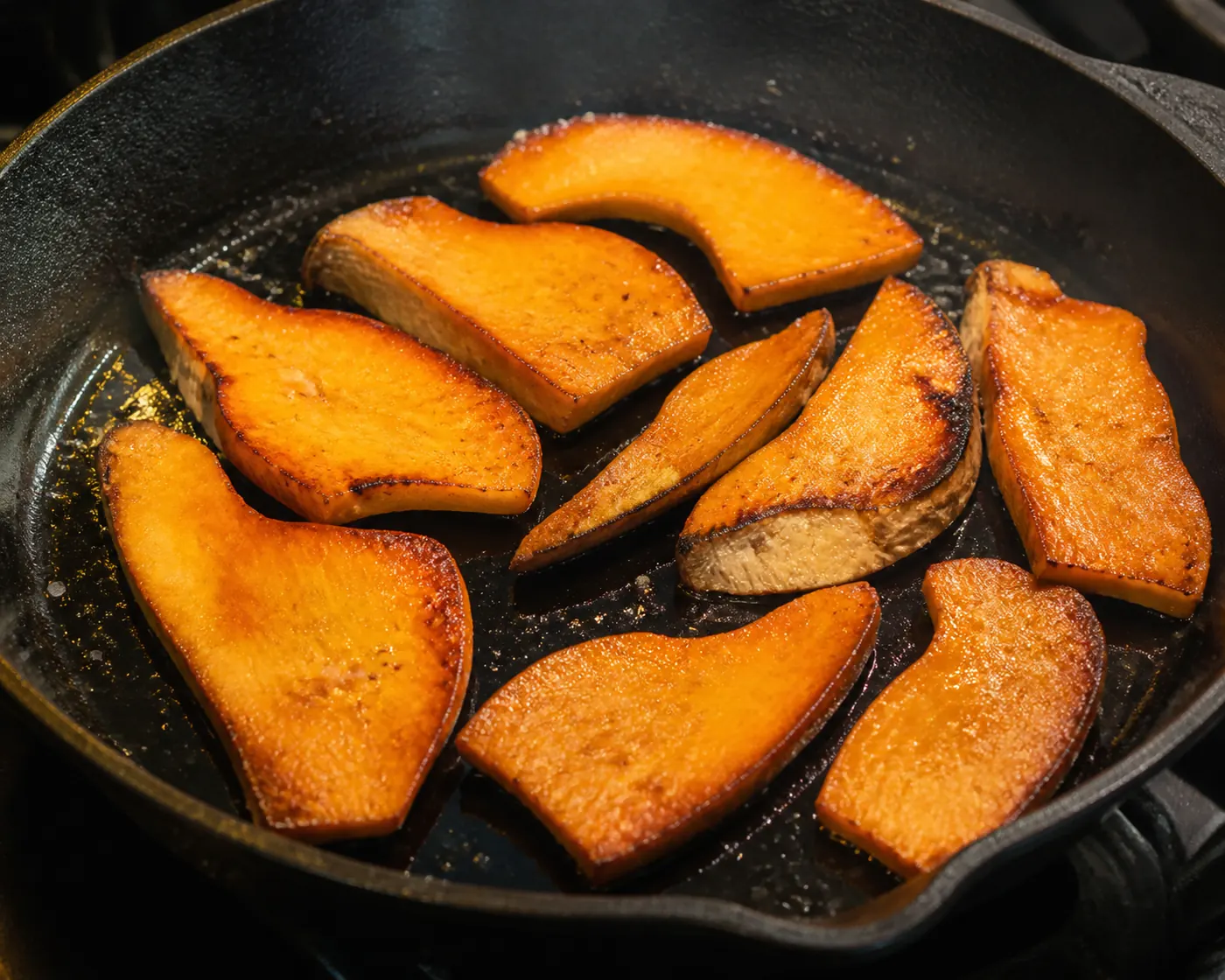
Thin strips grilled hard is the traditional treatment and it suits the mushroom.
The flesh is firm enough to take direct heat without collapsing, which is not true of most wild mushrooms, and the classic European preparation is exactly that, cut into thin strips and grilled alongside meat and onions.
The boiling advice found on some pages is for a different purpose.
One source recommends boiling twice for ten to fifteen minutes with two changes of water, which sounds like a detoxification step and is not. That is a preserving preparation, done before salting or pickling, and applying it to mushrooms you are about to grill would throw away most of what you picked them for.
That preserving tradition is worth understanding rather than dismissing.
Boiling and draining strips out the bitterness and most of the water, which is exactly what you want before packing mushrooms into salt or vinegar for the winter. It produces a soft mushroom that keeps for months, and judging it against a grilled one misses what it is for.
Young caps beat old ones by a wide margin here.
The younger ones are firmer, less bitter and far less likely to be full of larvae, and since the mushroom is easy to find in quantity there is rarely a reason to keep the tired ones. That is unusually actionable advice for a wild species.
There is a reason this mushroom is never on a supermarket shelf fresh.
A species that lives on the roots of living pines cannot be grown on a bed of straw in a shed the way oyster mushrooms and buttons are. Everything anybody eats has been picked from under a real tree, which is why saffron milk caps show up in season in markets near pine forests and nowhere else at any price.
That partnership also explains why a productive spot stays productive.
The fungus is not passing through, it is part of the wood, so a stand of pines that produced last October will very likely produce this October. Marking the place is worth more here than remembering what a good year looked like.
The season is short and it is tied to the same pines.
August into October is the window in most of the range, which is worth checking against the seasonal calendar before spending a day looking. Outside it, an orange mushroom under a pine deserves the same four second latex test as everything else, and the answer is just as quick.
Sources & References
- Lactarius deliciosus, Saffron Milkcap, First Nature The identification reference used here. Gives the 6 to 20 cm cap, convex then depressed, reddish orange and bruising green, granular becoming sticky when wet, the shortly decurrent crowded bright orange gills staining green when bruised, the bright red-orange carrot colored latex that eventually turns wine red, the hollow stem with a random sprinkling of shallow bright-orange pits known as scrobiculations especially near the base, the pale pinkish buff spore print, the mild latex taste becoming slightly bitter after a while, the August to October season, and the mycorrhizal habit in coniferous woodland particularly under pines. Separates Lactarius torminosus as pinker with a woolly cap margin and always close to birch, and Lactarius deterrimus as having a smooth stem and pinkish-orange milk.
- Foraging Saffron Milk Caps, Practical Self Reliance Gives the orange to red latex that slowly oxidizes to green, the tendency to stain green, the concentric rings of darker color near the margin, and the darker circular dimples on the stem. Its entire treatment of the raw question is that you should cook these well and not eat them raw, and it advises against large portions the first time.
- Delicious Milk Cap, Oregon Discovery The source for the preserving preparation and the rejection criteria. States that all wild edible mushrooms must be thoroughly cooked, that milky caps need to be boiled or blanched in salted water before preserving with a double boil of 10 to 15 minutes and two changes of water, that green-staining is an indicator of the species, and that mushrooms staining purple or yellow when bruised should be avoided because some of them are poisonous.
- Temporary report on urine discoloration and antibiotic effect after eating Lactarius deliciosus, 1953 The clinical record behind the urine section. A 1953 report in the medical literature describing urine discoloration after eating this species. The effect is inert and the reason it was published is so that clinicians seeing orange-red urine in an otherwise well patient do not investigate it as hematuria.