
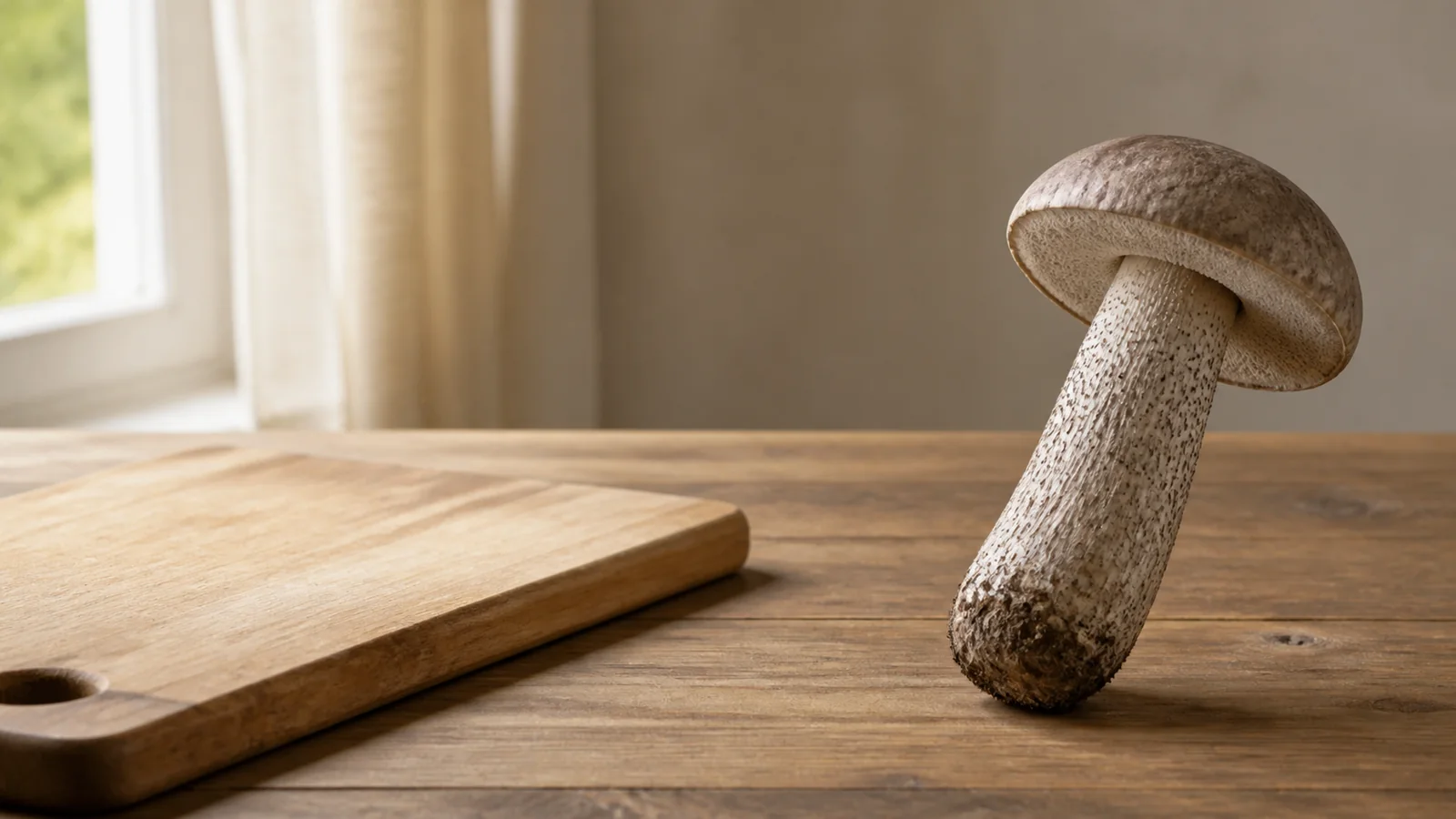
Birch bolete is a traditional wild food, but pregnancy changes how much uncertainty is reasonable to accept for one ingredient. No controlled human pregnancy study specific to Leccinum scabrum was identified, while illness reports filed under Leccinum include both raw and cooked meals.
Our safety-first recommendation is to leave it out during pregnancy. This does not mean a correctly identified brown birch bolete has been proved harmful to a fetus, because the evidence does not establish that claim.
The decision rests on a simpler trade because a cultivated mushroom can provide the same savory role without depending on a field identification, a complete collection record, and evidence that pregnancy research has never supplied.
The safest pregnancy answer is to skip birch bolete
Skip birch bolete during pregnancy and choose a labeled cultivated mushroom for this meal. The recommendation is precautionary, specific to an avoidable wild food, and stronger than the ordinary advice to cook an edible species thoroughly.
- Practical verdict
- Leave birch bolete off the pregnancy menu
- Direct pregnancy evidence
- No species-specific human study was identified
- Ordinary food status
- Traditionally eaten after cooking in parts of Europe
- Evidence of illness
- Case reports include gastrointestinal symptoms after Leccinum meals
- Lower-uncertainty choice
- Labeled cultivated white button, cremini, portobello, oyster, or shiitake
An edible label answers whether a correctly named species has an accepted food history, but it does not show whether that food was studied in pregnancy, whether this specimen carries the right name, or whether every person tolerates it.
| Question | What the available evidence can answer | What remains unresolved |
|---|---|---|
| Is Leccinum scabrum eaten as food? | Yes, field and food sources describe a traditional cooked use | Tradition does not measure pregnancy outcomes |
| Has birch bolete been tested during pregnancy? | No controlled species-specific human study was located | Fetal and maternal risk from a verified serving cannot be quantified |
| Do illness reports exist? | Yes, reports filed under Leccinum include digestive illness | Reports do not provide an attack rate or prove one species caused every case |
| Does cooking matter? | Yes, raw birch bolete should be avoided and any accepted specimen requires thorough cooking | Heat cannot verify identity or create missing pregnancy evidence |
| Is there an easy alternative? | Yes, several cultivated culinary mushrooms fill a similar meal role | Personal allergy and ordinary food hygiene still matter |
The missing study is important, but absence of research is not evidence that damage occurs. It means nobody can give a pregnancy-specific serving size, preparation threshold, or risk estimate backed by human data.
Birch bolete supplies no unique nutrient or medical benefit that would justify accepting this avoidable uncertainty during pregnancy.
Cultivated mushrooms still require washing, clean utensils, thorough cooking, and prompt refrigeration. Those controls address ordinary foodborne illness without adding the separate problem of deciding which wild bolete entered the basket.
- Choose a package with a named cultivated species and an intact date or lot record.
- Reject mushrooms that are slimy, moldy, badly bruised, or held at an unknown temperature.
- Wash hands and utensils, keep raw produce away from ready-to-eat food, and cook the mushrooms before serving.
- Refrigerate leftovers promptly in a shallow covered container.
This approach follows the clean, separate, cook, and chill principles used in pregnancy food safety guidance while removing the problem those controls cannot solve, which is the identity of a wild specimen.
SafetyAre Golden Oyster Mushrooms Safe During Pregnancy?What the evidence supports, and what it does not
The most relevant named evidence is a surveillance report, not a pregnancy trial. The North American Mycological Association's 2014 report lists one adult who developed diarrhea, salivation, intestinal cramps, vomiting, drowsiness, nausea, and weakness six to ten hours after one raw bite identified by the victim as Leccinum alaskanum or Leccinum scabrum.
That entry reaches the species group in question, but the diner supplied the identification, two possible names remained, the exposure was raw, and no laboratory test established a causal compound.
The same report lists two people who vomited and had diarrhea after eating 12 to 15 small cooked Leccinum buttons. Another family became ill after eating dried Leccinum with two gilled mushroom species in a stew, which makes the mixed meal impossible to assign to one mushroom.
These records show that digestive illness has followed meals called Leccinum, including cooked meals, but they cannot show how often illness occurs without a count of uneventful dinners.
| Record | Useful signal | Limit that changes the conclusion |
|---|---|---|
| Raw bite called L. alaskanum or L. scabrum | A suspected brown scaber stalk exposure produced substantial symptoms | Victim identification, two possible species, no pregnancy, and no controlled confirmation |
| Cooked Leccinum buttons | Cooking did not prevent vomiting and diarrhea in that reported meal | Species and preparation details were incomplete |
| Dried Leccinum in a mixed stew | Several diners became ill after the shared dish | Two gilled species were also present, so the cause cannot be assigned |
| Long food tradition | Many cooked servings have plainly occurred without a published case | Tradition does not supply a denominator, pregnancy cohort, or individual tolerance test |
The evidence therefore supports caution without supporting a claim that brown birch bolete is a proven poison. The honest conclusion is limited because genus-level case records and a food tradition pull in different directions and neither directly studies pregnancy.
A published series of 22 women treated after poisonous mushroom intoxication during pregnancy does not close this gap because most exposures involved Amanita species whose outcomes cannot be transferred to Leccinum scabrum.
It does establish why a pregnancy article must keep species and exposure evidence exact. A dramatic outcome from one toxin group cannot be used to make a claim about another mushroom, just as a reassuring cultivated-mushroom study cannot clear a wild species it never tested.
Digestive symptoms deserve attention during pregnancy because repeated vomiting and diarrhea can cause dehydration, while an uncertain wild mushroom exposure may need specialist assessment before anyone knows which syndrome is involved.
SafetyAre Hedgehog Mushrooms Safe During Pregnancy?Which mushroom does the name birch bolete identify?
Brown birch bolete usually means Leccinum scabrum, an accepted species name in the family Boletaceae. Older books may call it Boletus scaber, which is a historical name rather than a different food.
The words on a menu or gift bag are only a starting point because a safe assessment needs the complete specimen, its underside, the full stem and base, the cut flesh, nearby trees, collection place, and a regional expert who understands similar local boletes.
Together, those observations give a regional identifier a complete specimen question rather than one memorable shortcut.
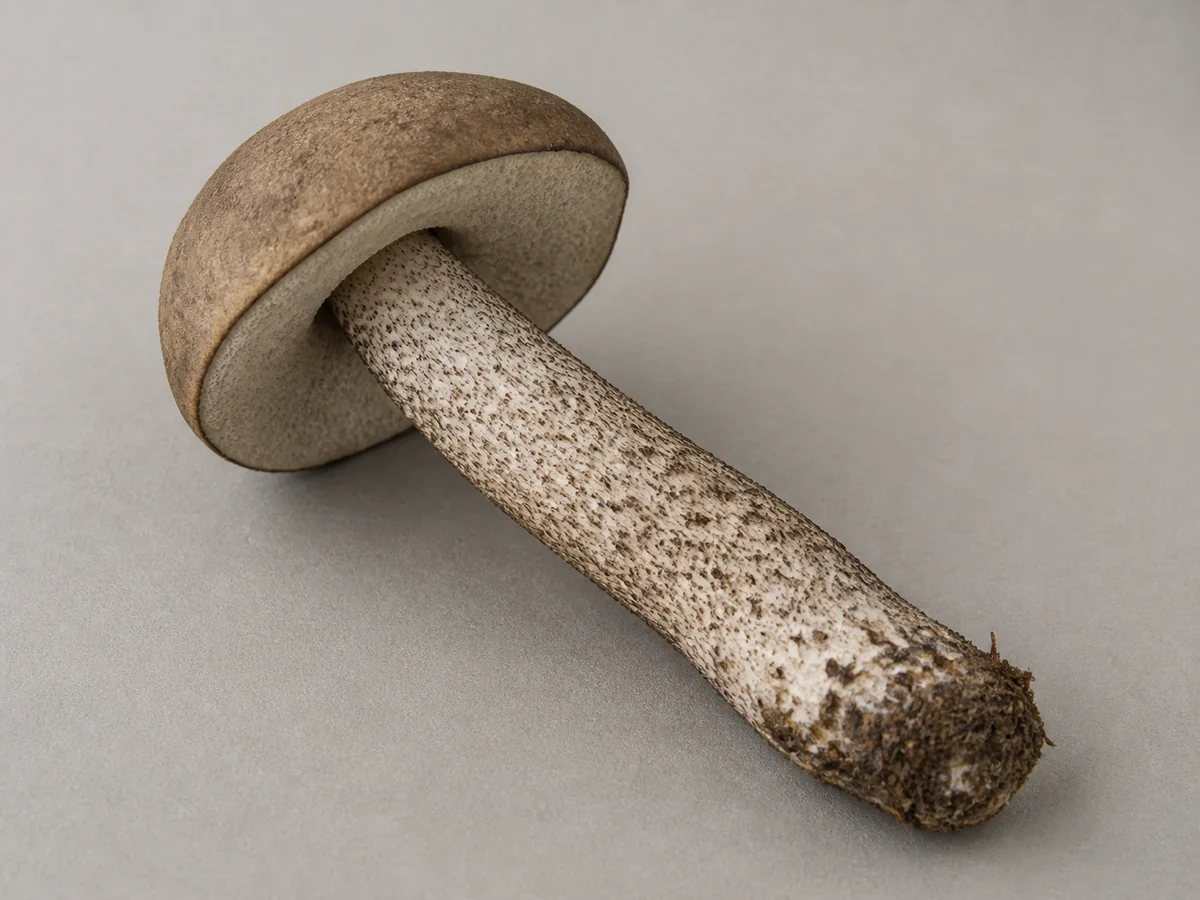
The stem texture explains the name scaber stalk. Small coarse scales stand out against the pale surface, but scabers establish a genus clue rather than permission to eat.
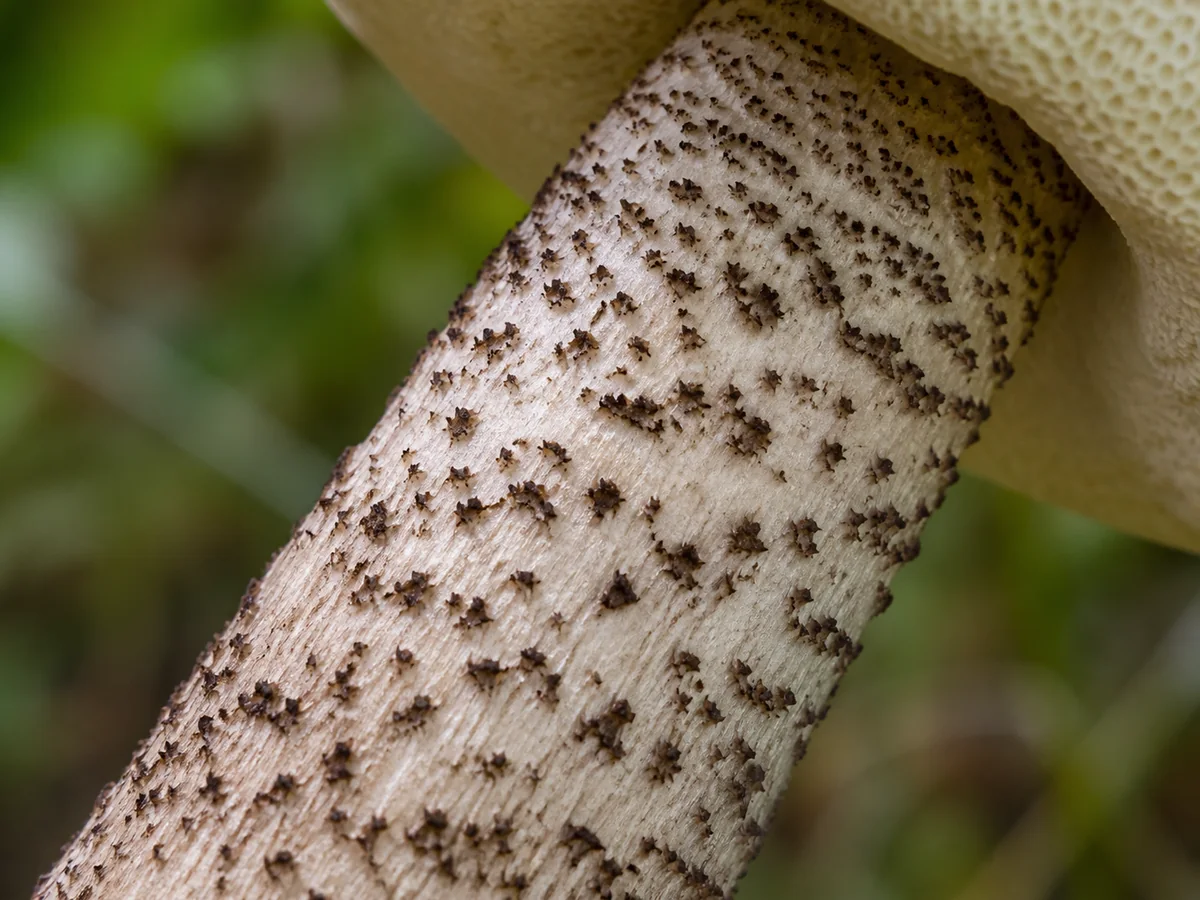
Pores rather than gills separate boletes from many familiar mushrooms, yet this feature still covers a large group whose cap colors shift with age, moisture, and light.
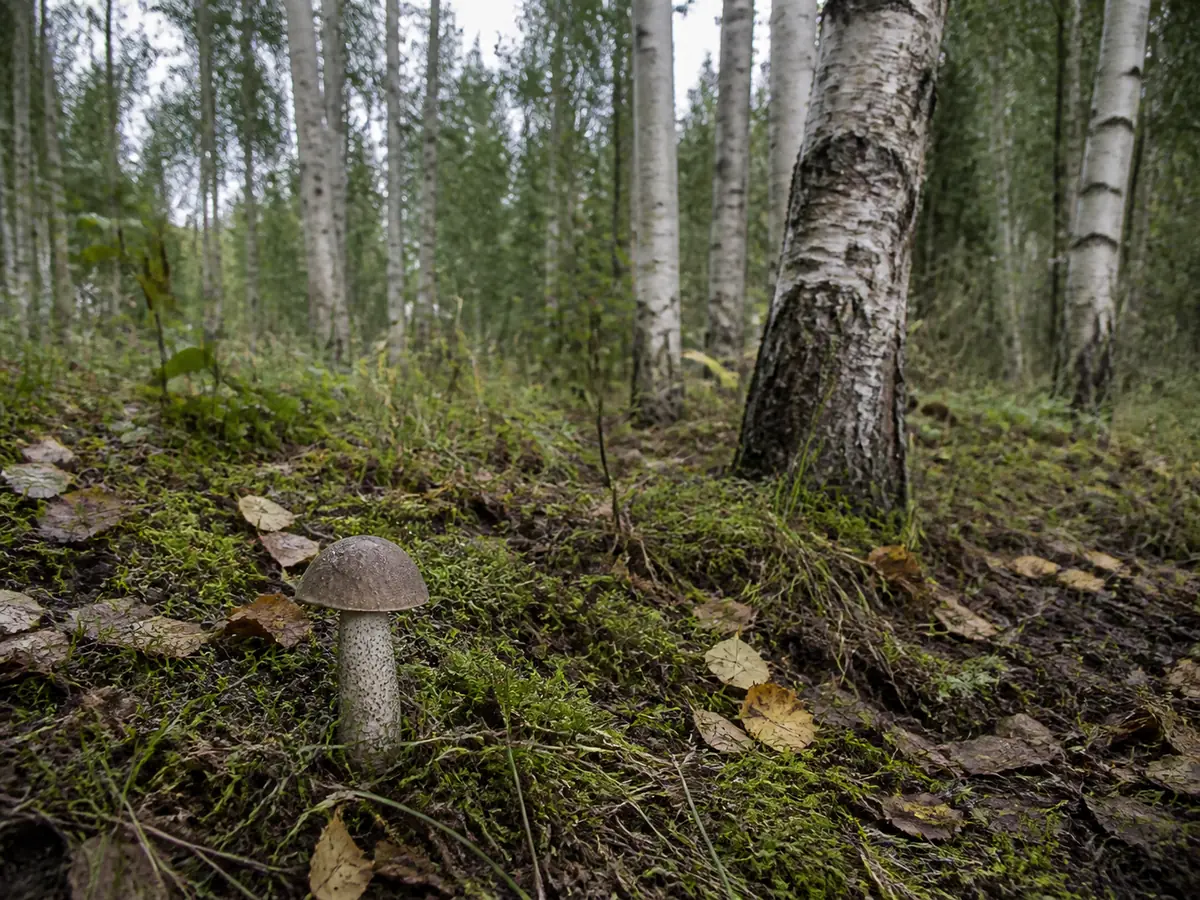
Birch association carries more weight because Leccinum scabrum forms a mycorrhizal partnership with birch roots. Keep a photograph of the mushroom where it grew, the nearby bark and leaves, and the ground connection before lifting the specimen.
Orange birch bolete, Leccinum versipelle, is a separate orange-capped species whose identity and pregnancy decision should not be folded into a brown birch bolete answer merely because both grow with birch and carry scabers.
First Nature also notes that microscopic characters may be needed to identify Leccinum scabrum conclusively. That limit matters when a photograph is being asked to support a meal rather than a casual field observation.
Do not use an app result, cap photograph, taste test, or the seller's confidence as the final check because mushroom foraging safety depends on feature agreement and accountable local expertise.
Cooking cannot close the pregnancy evidence gap
Raw birch bolete is off the table. The separate raw-safety question is already clear, and any person who chooses this species outside pregnancy still needs a correct identification, sound specimens, and thorough cooking.
Warning
Cooking is necessary, but it is not a pregnancy safety test. Heat cannot correct a wrong species, reconstruct a mixed batch, or provide the human pregnancy data that is missing for Leccinum scabrum.
Cooking controls several visible kitchen problems because trimming removes soil and damaged tissue, even slices expose hidden insect channels, and sustained heat is more reliable than a quick surface sear.
It also reduces ordinary microbial risk when clean handling and prompt chilling surround the cooking step. CDC guidance notes that washed and then cooked produce is the safer pregnancy choice, but that broad guidance does not name or clear wild birch bolete.

- Keep each mushroom whole until the identification is complete.
- Discard old, waterlogged, moldy, slimy, sour-smelling, or heavily tunneled specimens.
- Rinse accepted produce under running water and never use soap or detergent on it.
- Slice evenly, keep utensils clean, and apply sustained heat through every piece.
- Serve hot and chill leftovers promptly rather than holding them at room temperature.
No official source used for this article publishes a universal safe time or internal temperature for brown birch bolete because thickness, moisture, pan crowding, and cooking method change how fast heat reaches the center.
The case reports also prevent cooking from becoming a blanket reassurance. Some reported Leccinum meals were cooked, although the records do not tell us enough about species, duration, temperature, storage, or other ingredients to say why illness followed.
During pregnancy, a well-cooked wild mushroom can still be the wrong species or one that lacks pregnancy evidence, while the cultivated alternative remains easy to obtain.
SafetyAre Oyster Mushrooms Safe to Eat During Pregnancy?A gift or restaurant dish still needs a source decision
A confident friend can lose the details that make a field identification reviewable. Once caps are sliced, dried, frozen, or mixed, an expert may no longer be able to connect each piece to a stem base, habitat, host tree, or original specimen.
The same problem appears at a restaurant when the menu says wild mushrooms or birch bolete but staff cannot name the scientific species and supplier, since a common name cannot distinguish brown birch bolete from orange birch bolete, another Leccinum, or a mixed basket.
Because any missing answer leaves the batch too poorly documented for a pregnancy meal, decline it when the record is incomplete.
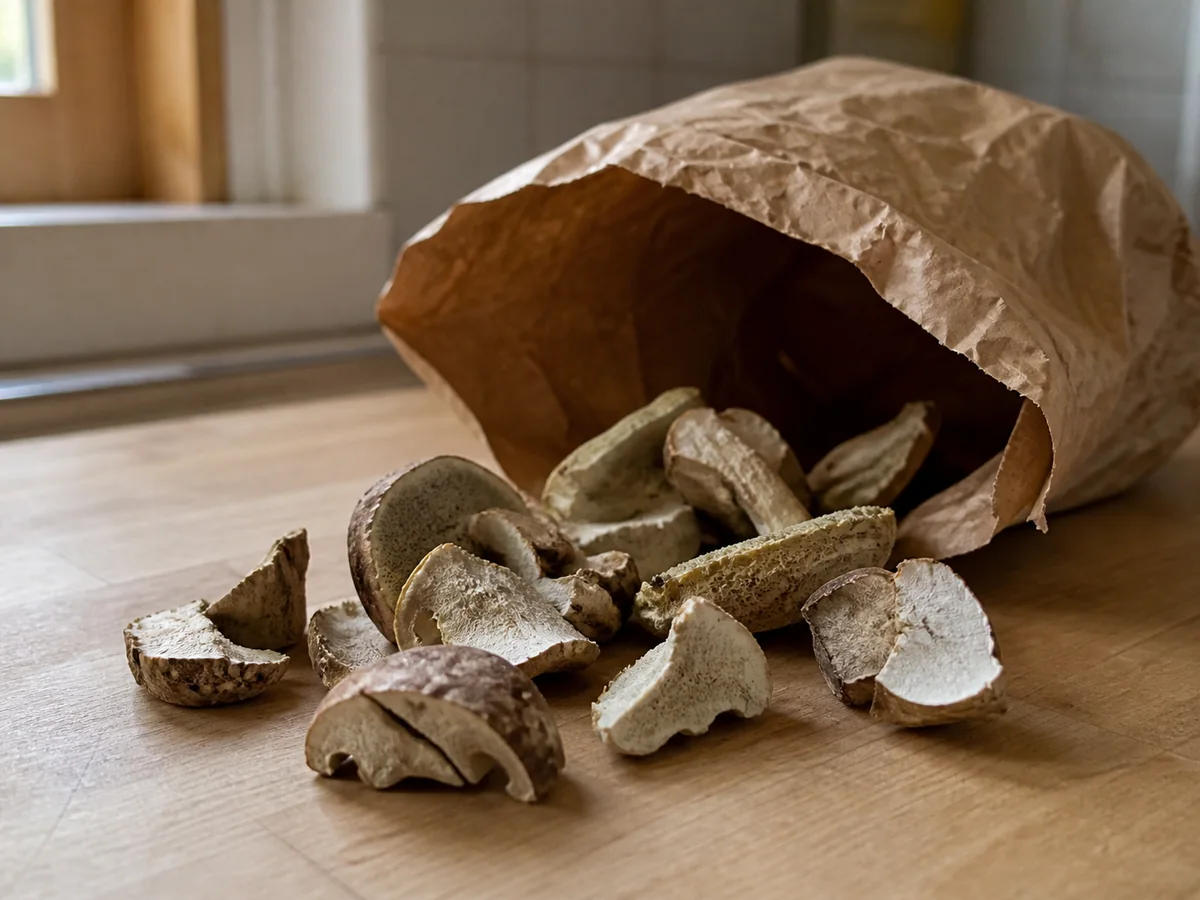
Drying changes the storage state rather than the evidence standard. It can darken tissue, flatten caps, separate stems, and make fragments from several mushrooms look similar, so a hand-labeled bag is weaker than traceable commercial packaging.
Commercial traceability helps specialists follow a product back to a supplier or lot, but it does not turn Leccinum scabrum into a pregnancy-studied food.
Restaurant cooking does not move the decision to the kitchen alone. The chef can control heat and handling, but cannot repair an identification record the supplier never provided.
If the mushroom is central to a special meal, ask for a cultivated substitute such as cremini, oyster, shiitake, or portobello because a kitchen can usually make that change without altering the dish's basic structure.
Choose a lower-uncertainty mushroom for this meal
The useful alternative is ordinary rather than exotic. Labeled cultivated mushrooms have a defined product identity and supply chain, and pregnancy food-safety guidance already gives practical handling controls for produce.
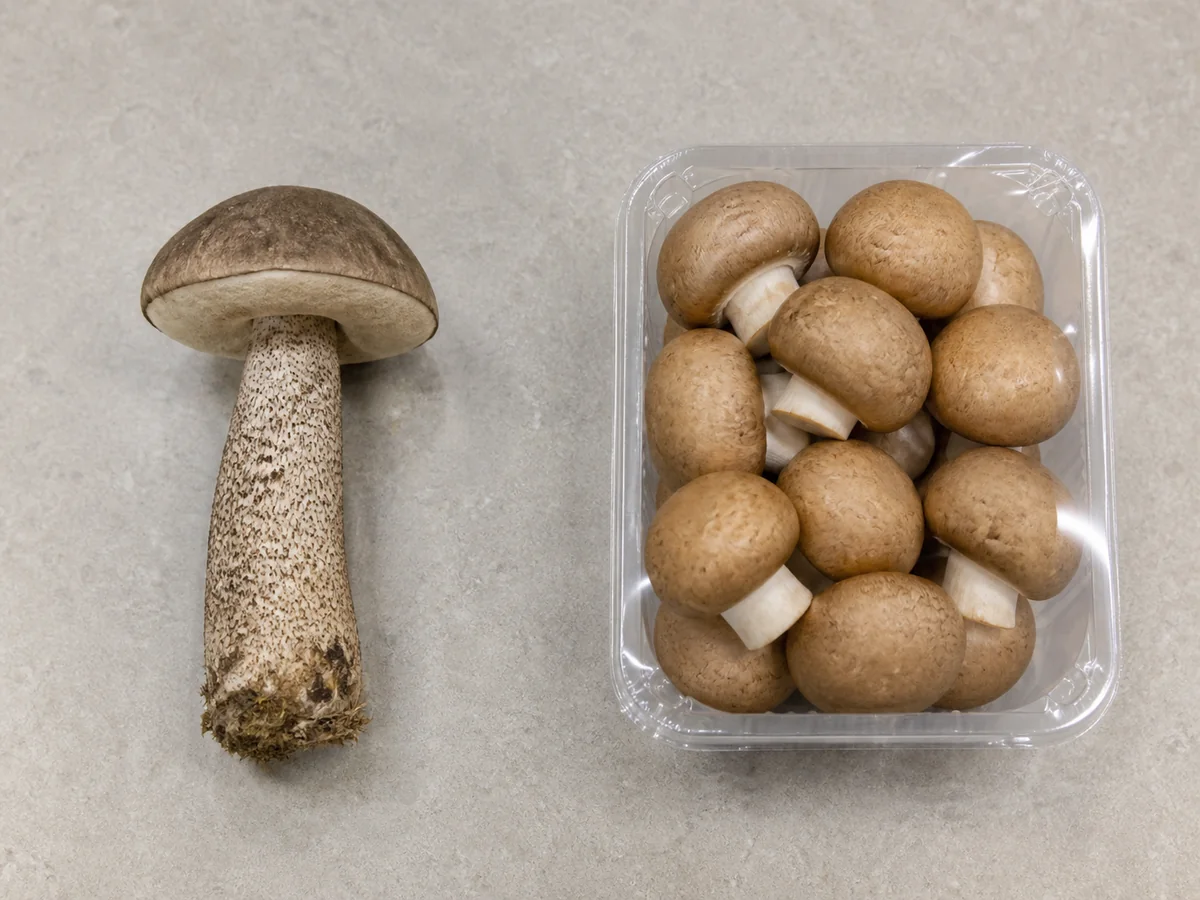
Choose the cultivated species by what the dish needs. White button and cremini suit sauces, soups, stews, omelets, and pasta, while portobello supplies larger slices and oyster and shiitake bring firmer texture or stronger aroma.
Use the named product before its use-by date, inspect its condition, rinse away soil under running water, and cook it thoroughly while keeping raw mushrooms and their utensils away from foods that will be served without further cooking.
If birch bolete has already been eaten, do not use this article to decide that the dose was safe. Contact Poison Control in the United States at 1-800-222-1222 or your local poison service, state the pregnancy during the first call, and follow the specialist's instructions.
This evidence can narrow the assessment when every available detail is saved.
- Save uncooked specimens, trimmings, cooked leftovers, packaging, and the receipt.
- Keep photographs of the cap, underside, full stem, base, cut flesh, and collection habitat.
- Record the meal time, estimated portion, cooking method, collector or seller, and time any symptom began.
- Do not induce vomiting or take a home remedy unless a clinician or poison specialist directs it.
- Use emergency services for collapse, seizure, breathing trouble, severe confusion, inability to wake, or signs of severe dehydration.
Those symptoms may include nausea, vomiting, abdominal pain, or diarrhea, but a list of gastrointestinal mushroom poisoning symptoms cannot identify the mushroom or predict the full course. Poison Control warns that some dangerous mushroom effects begin only after a delay, so waiting for symptoms is not a reliable home test.
This remains true when one person feels well because different plates can contain different fragments, portions, or species.
Choose a cultivated mushroom now, and save birch bolete for a time when pregnancy-specific uncertainty is no longer part of the plate.
Sources & References
- 2014 Toxicology Committee Report, North American Mycological Association
- Leccinum scabrum Taxonomy Browser, NCBI
- Brown birch bolete, New Forest National Park Authority
- Leccinum scabrum identification, First Nature
- Safer Food Choices for Pregnant Women, CDC
- Wild Mushroom Warning, Poison Control
- Birth weight and congenital anomalies after poisonous mushroom intoxication during pregnancy, PubMed