
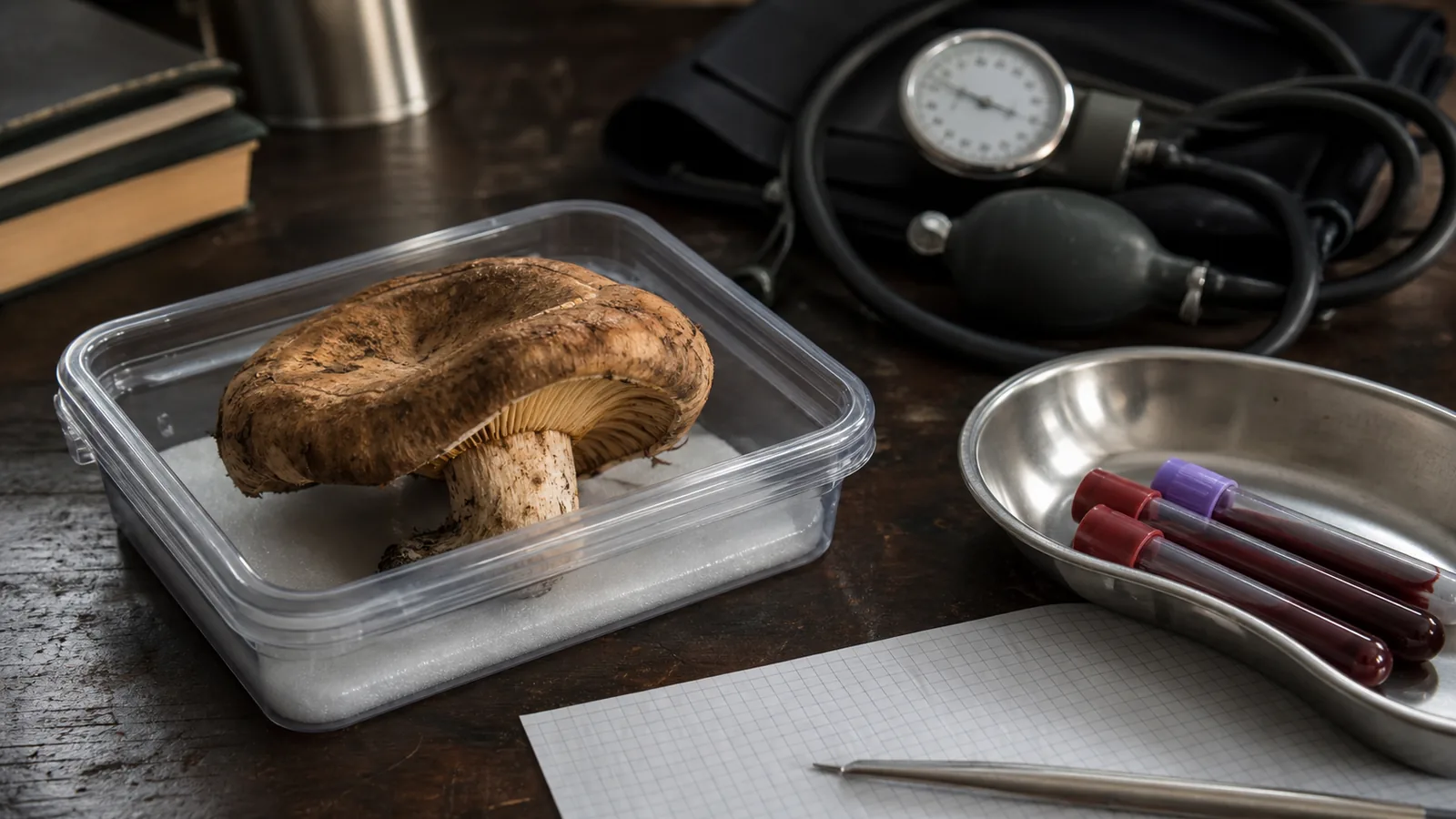
Paxillus syndrome is a rare, potentially fatal reaction associated most clearly with the brown roll-rim, Paxillus involutus. A person may have eaten the mushroom before without illness, then develop vomiting, intravascular hemolysis, shock, clotting failure, and acute kidney injury after a later meal.
First signs that require emergency care
Call Poison Control at 1-800-222-1222 in the United States and seek emergency care when illness follows a suspected brown roll-rim meal. Call 911 for collapse, breathing trouble, confusion, seizure, severe weakness, chest pain, very dark urine, inability to wake the person, or signs of shock.
The first Paxillus symptoms can look like gastrointestinal illness.
Nausea, vomiting, abdominal pain, and diarrhea may begin within hours, but Paxillus syndrome can progress beyond the digestive tract as red blood cells break apart inside the circulation. A person who seems to have an ordinary stomach reaction can become pale, jaundiced, breathless, weak, dizzy, or confused.
Urine color belongs in the emergency report.
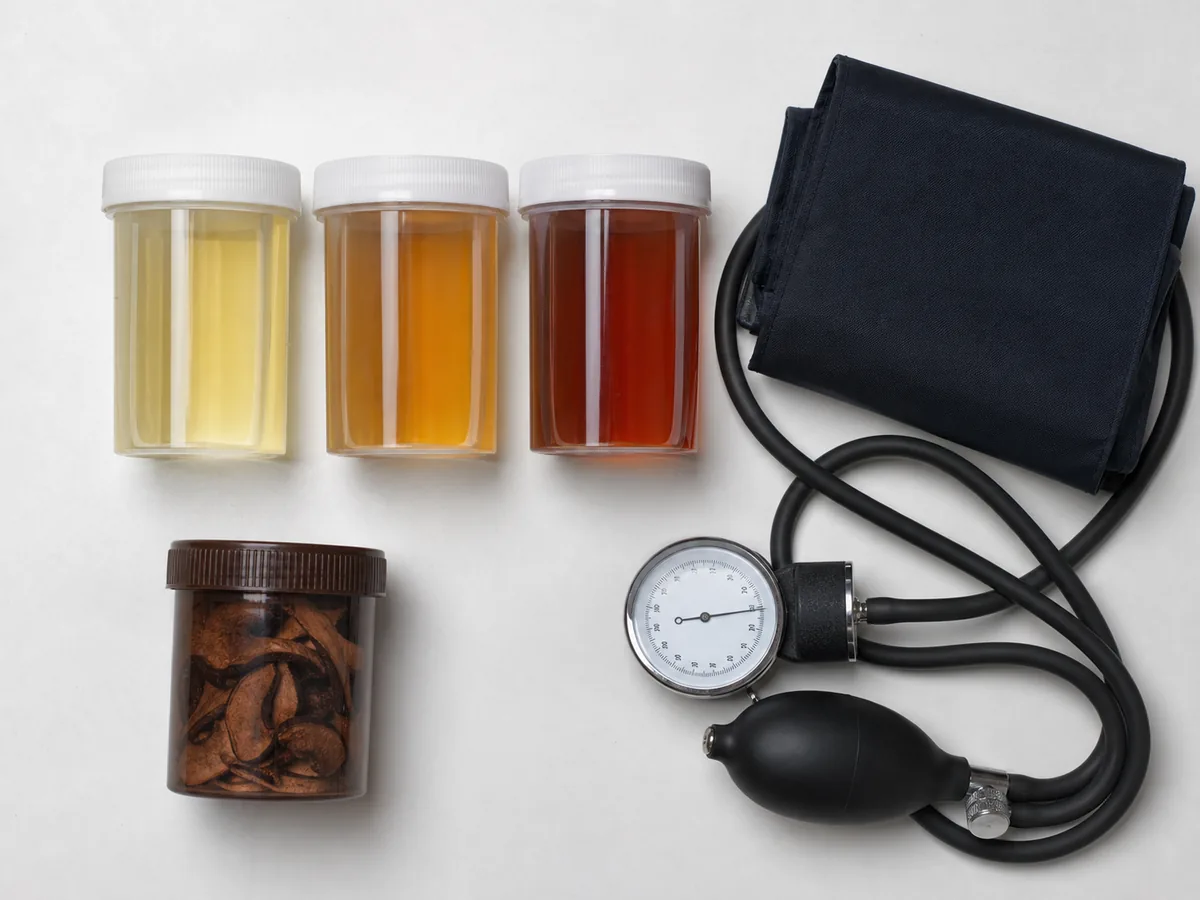
Red, tea-colored, cola-colored, or unusually dark urine can reflect blood, free hemoglobin, dehydration, muscle injury, or another process that needs testing. Reduced urine or no urine adds concern for kidney injury and poor circulation.
Do not induce vomiting or force fluids.
Repeated vomiting creates aspiration risk, while shock, kidney injury, or reduced consciousness changes what can be given safely. Preserve the meal evidence, record the first bite and first symptom, and follow the transport instructions from emergency and poison specialists.
Every minute spent proving the mushroom name at home delays assessment of circulation and hemolysis.
SafetyAmatoxin Poisoning: Why Symptoms Can Fade Before Liver FailureWhy past tolerance can precede a severe reaction
Past tolerance is not reassuring in Paxillus syndrome because earlier meals may be part of the sensitization history. Published severe cases describe people who had eaten Paxillus involutus repeatedly before a later exposure triggered abrupt immune-mediated hemolysis.
- Prior exposure
- Earlier meals may prime an immune response without obvious illness
- Antibody evidence
- IgG reacting with Paxillus extract was demonstrated in a fatal case
- Proposed injury
- Immune complexes can attach to red-cell surfaces and activate complement
- Result
- Intravascular red-cell destruction can produce anemia, shock, and organ injury
The best-described mechanism remains an immune hypothesis built from case evidence.
In a fatal 1982 report, a previously healthy 49-year-old man became gravely ill after repeatedly eating Paxillus involutus. Investigators found an IgG antibody against mushroom extract and proposed that immune complexes attached to red cells, activated complement, and caused intravascular hemolysis.
One fatal case cannot measure how often Paxillus syndrome occurs.
It does establish that previous symptom-free consumption failed as a safety test and that the biological sequence can be catastrophic. Later reviews continue to classify Paxillus poisoning as immune-mediated hemolytic anemia associated with repeated ingestion.
The immune history should include years, not only the current week.
Tell clinicians whether the person's immune history includes brown roll-rim eaten in childhood, as a seasonal food, after boiling or pickling, or during earlier trips. Approximate dates, preparation methods, and previous symptoms can help reconstruct exposure even when no prior medical record exists.
Different diners may have different immune histories.
One person can collapse while another remains well after sharing the same dish, and unequal outcomes do not clear the mushroom. Portion size, prior meals, health, and individual immune response can all differ.
This reversal of ordinary tolerance logic is the central safety lesson.
A poisonous mushroom does not become safe because it was eaten ten times before, and traditional preparation cannot turn an unpredictable immune response into a controlled one.
The brown roll-rim evidence
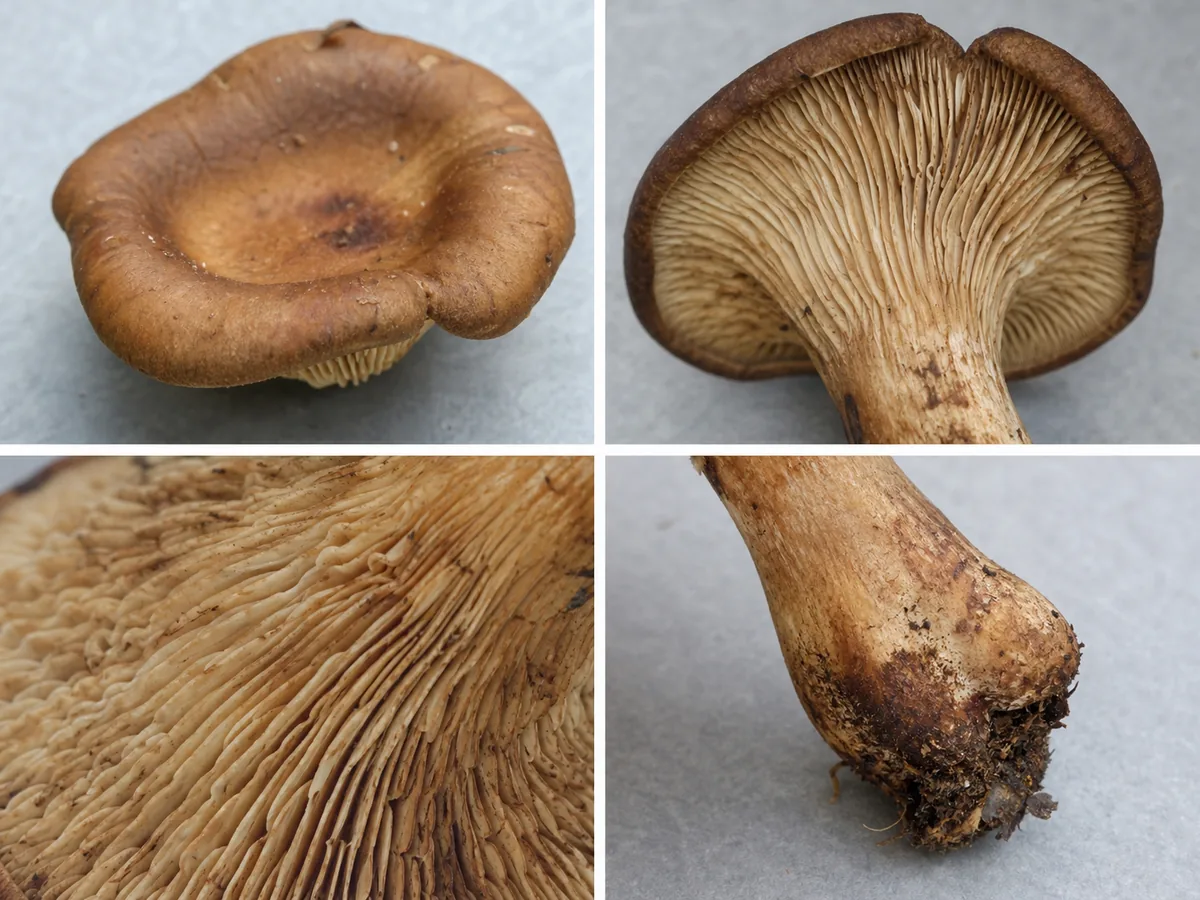
Brown roll-rim usually has a brown to olive-brown cap whose margin remains strongly rolled inward when young. The center often becomes depressed with age, and the surface can feel velvety or become sticky in wet weather.
| Feature | Useful observation | Identification limit |
|---|---|---|
| Cap margin | Thick and rolled inward on young specimens | Older caps flatten and lose the strongest roll |
| Gills | Crowded, forked, and running down the stem | Damage and cooking obscure attachment |
| Bruising | Gills and flesh may stain brown when handled | Brown staining occurs in other mushrooms |
| Spore deposit | Brown to ochre-brown | Spore color supports a genus-level hypothesis, not edibility |
| Habitat | Ground beneath birch, pine, and other trees | Tree association is shared by many mycorrhizal fungi |
The gills are especially useful when fresh.
The fresh gills run down the stem, may fork and cross-connect, and can often be peeled from the cap flesh in a layer. Pressure can produce brown discoloration that becomes less informative once the mushroom is old, soaked, or cooked.
The whole habitat adds context.
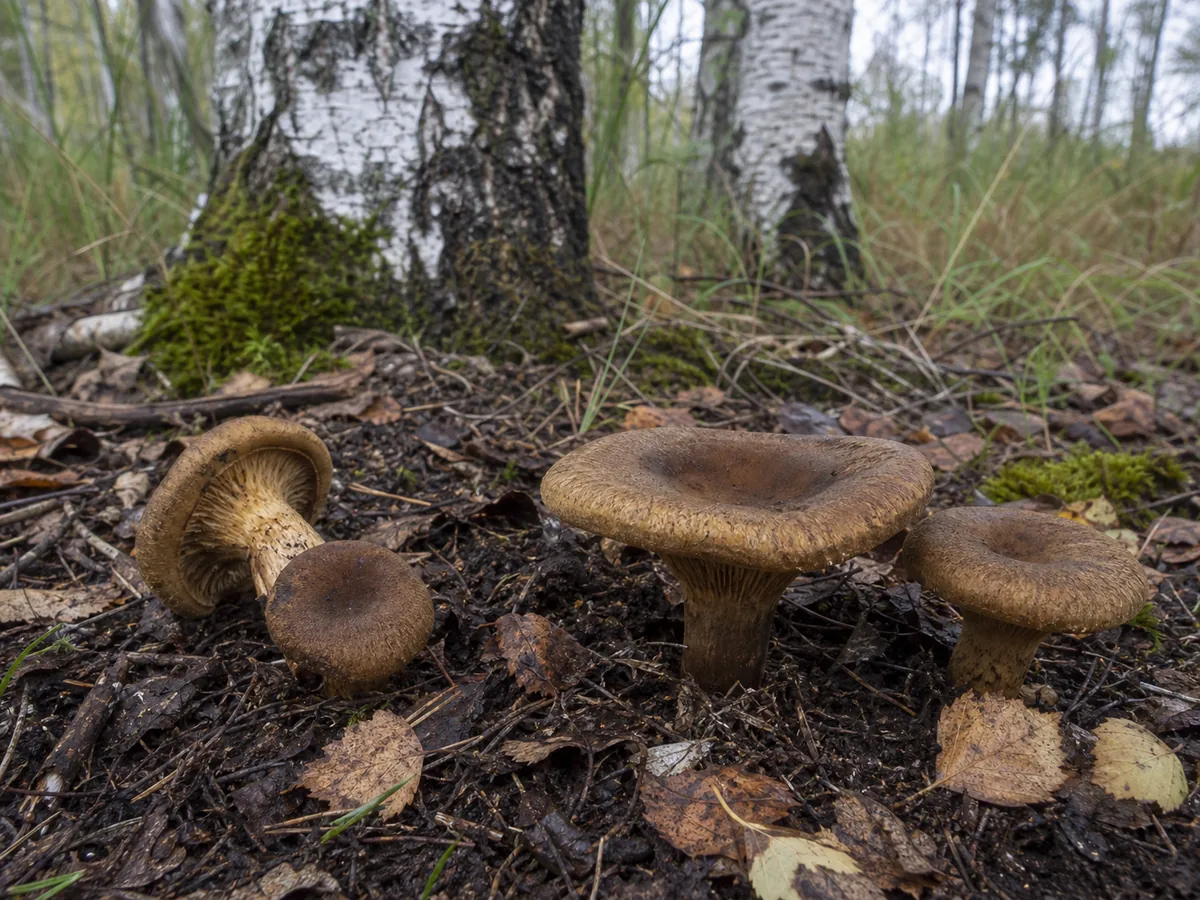
Paxillus involutus forms mycorrhizal relationships with trees and fruits on soil near roots, commonly with birch and conifers across broad northern regions. A cap may appear beside a path, garden tree, heath, or woodland edge rather than deep in a forest.
Common names for Paxillus species create extra uncertainty.
Brown roll-rim, poison pax, and brown pax may refer to the same species in different books, while other Paxillus species can look similar. Preserve complete specimens and use the scientific name only after qualified identification.
The specimen evidence supports medical history without delaying treatment.
How red-cell destruction reaches the kidneys
Intravascular hemolysis means red blood cells rupture inside blood vessels rather than being removed gradually by the spleen. That rapid destruction reduces oxygen-carrying capacity and releases hemoglobin directly into plasma.
The circulation carries the consequences of hemolysis to several organs.
Falling red-cell mass can cause pallor, weakness, breathlessness, rapid pulse, and cardiac strain. Free hemoglobin can darken plasma and urine, while the immune reaction and cell destruction can intensify inflammation and circulatory instability.
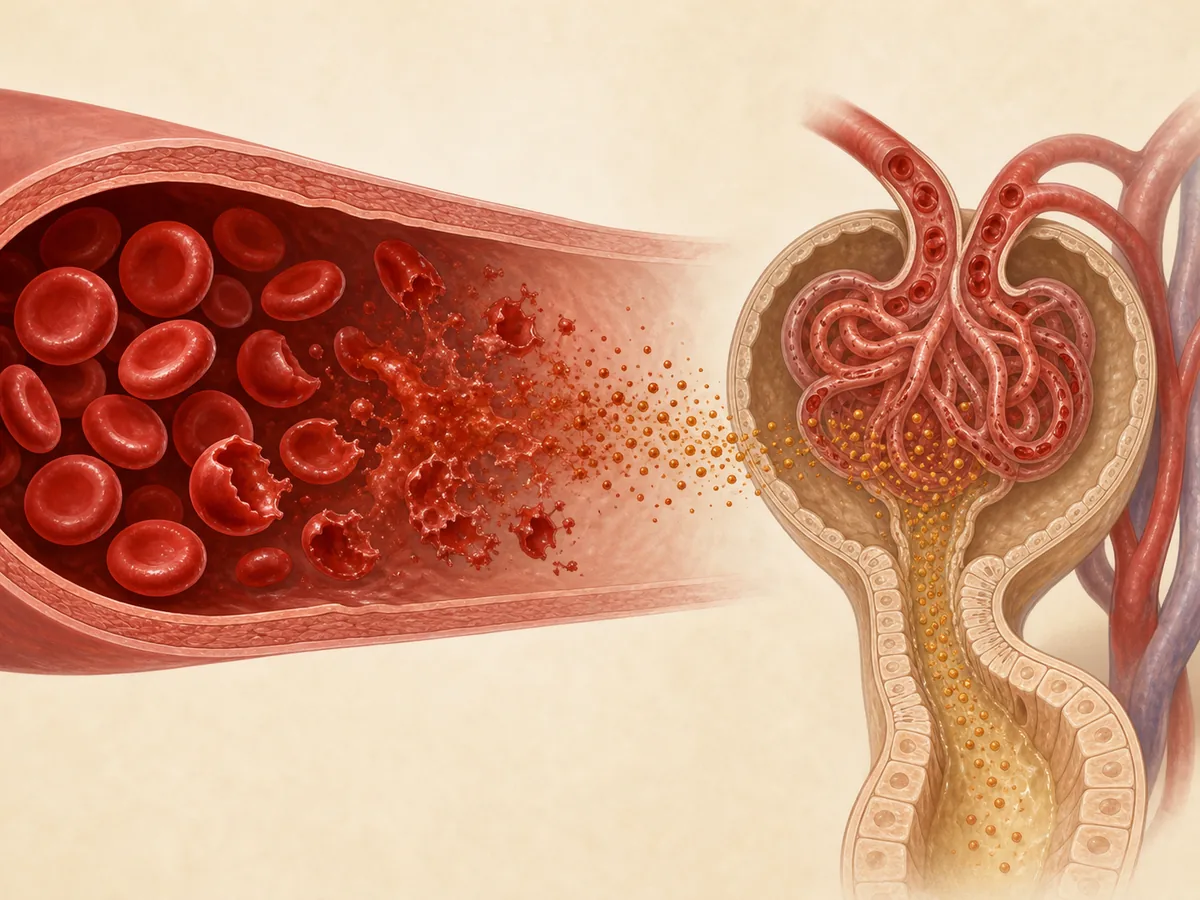
The kidneys face linked hemoglobin and circulation stresses.
Filtered hemoglobin can injure renal tubules, especially when dehydration and acidic urine are present. Shock also reduces renal blood flow, so pigment injury and poor perfusion can combine in acute kidney injury.
Clotting can fail during a severe systemic reaction.
The fatal case reported disseminated intravascular coagulation along with acute renal and respiratory failure. In that state, widespread clotting activation consumes platelets and clotting factors while small vessels and organs are injured.
This is why dark urine is not the endpoint of the explanation.
Clinicians must determine whether it reflects hemoglobin, blood, muscle pigment, or concentrated urine, then follow anemia, circulation, clotting, and kidney function together.
SafetyCan Inkcap Mushrooms Make Alcohol Dangerous?The syndrome can resemble other poisonings
Early vomiting after a wild mushroom meal is nonspecific. Gastrointestinal irritants, food contamination, allergy, amatoxin, kidney toxins, gyromitrin, and several non-mushroom illnesses can begin with the same complaint.
Key takeaway
Paxillus syndrome enters the differential when the mushroom evidence and prior exposure fit, especially when hemolysis, shock, dark urine, or kidney injury appears. No single symptom proves the diagnosis.
Short latency can support an irritant syndrome, but it does not exclude Paxillus poisoning. The brown roll-rim reaction itself may begin within hours, and a mixed basket can add another toxin with a different timeline.
Delayed gastrointestinal illness raises a different set of concerns.
Amatoxin poisoning can produce severe vomiting after a quiet interval and apparent improvement before liver failure. Orellanine and other kidney-toxic syndromes may delay renal symptoms for days, often without the abrupt hemolytic picture described in Paxillus cases.
Other mushroom-poisoning differentials include allergy, which can bring hives, swelling, wheeze, throat tightness, and low blood pressure.
Anaphylaxis follows an emergency pathway even when a brown mushroom was eaten, while isolated red-cell destruction requires a different laboratory workup. Infection or contaminated food becomes more plausible when several diners share fever and gastrointestinal illness without hemolysis, although mixed portions still complicate the comparison.
Dark urine after the mushroom meal has a broad laboratory differential.
Blood from the urinary tract, myoglobin after muscle injury, bilirubin from liver disease, dehydration, medicines, and foods can alter color. Laboratory urinalysis and blood testing determine which pigment and organ process is present.
The safest diagnosis remains provisional until the trend and evidence agree.
Clinical care targets shock, hemolysis, and kidney injury
Emergency care begins with airway, breathing, circulation, alertness, temperature, oxygenation, pulse, and blood pressure. Clinicians establish intravenous access, assess shock, and ask for the current meal, earlier brown roll-rim exposures, other diners, medicines, and medical conditions.
Blood testing follows the suspected injury.
A complete blood count tracks falling hemoglobin, while bilirubin, lactate dehydrogenase, haptoglobin, reticulocytes, and a blood smear can help characterize hemolysis. Electrolytes, creatinine, acid-base status, liver tests, glucose, coagulation studies, urinalysis, and urine output show organ consequences and competing diagnoses.
The hemolysis pattern is assembled from several results rather than one definitive Paxillus test.
Red-cell destruction can raise indirect bilirubin and lactate dehydrogenase while consuming haptoglobin, and the bone marrow may respond with more reticulocytes. The timing of sampling, transfusion, liver function, and the speed of destruction can change that pattern, so clinicians interpret trends beside the examination.
An immune test can add evidence without proving the mushroom source.
A direct antiglobulin test assesses whether immunoglobulin or complement is attached to red cells, while specialized antibody testing described in case reports is not a routine rapid confirmation for field exposures. A negative or unavailable Paxillus-specific result does not erase the species history and organ findings.
Urine testing separates several causes of dark color.
A dipstick can react to heme from intact red cells, free hemoglobin, or myoglobin, while microscopy shows whether red cells are actually present. Creatine kinase, plasma appearance, bilirubin, hemolysis markers, kidney values, and the exposure story help clinicians decide which pigment and injury process fits.
Supportive care for hemolysis and kidney injury changes with the measurements.
Fluids and circulatory support must account for shock and kidney function. Blood products, respiratory support, treatment of dangerous electrolyte or clotting abnormalities, and intensive monitoring may be required in severe illness.
No household antidote can replace those hospital supports.
Reviews describe plasma exchange, hemodialysis, transfusion, and other advanced measures in selected severe cases, but the evidence comes largely from case reports and specialist practice. These interventions require hospital assessment because timing, complications, and risks differ between patients.
Dialysis supports kidney and metabolic function when injury becomes severe.
It does not undo the immune event or guarantee recovery, so clinicians continue following hemolysis and other organs. Nephrology, hematology, toxicology, critical care, and a mycologist may all contribute different parts of the case.
The mushroom name never replaces stabilization.
A photograph can support identification later, while shock, breathing failure, hyperkalemia, severe anemia, or clotting failure needs treatment as soon as it is recognized.
SafetyGyromitrin Poisoning: Why False Morels Can Trigger SeizuresEvidence to preserve from the meal
Save complete raw specimens with the cap, gills, stem, and base intact. Keep cooked leftovers, cleaning scraps, photographs, collection containers, and any notes separate from food that someone might eat.
A spore print can preserve useful color when a mature cap remains, but it should never delay emergency care. Photograph the deposit, cap surface, underside, bruising, and habitat in neutral light without editing the colors.
Write the current meal as a timeline.
Record the first bite, portion, preparation, first symptom, urine change, fainting, treatment, and every change during transport. Add each diner's portion and symptoms on a separate line because group averages hide individual exposure.
The diner's lifetime mushroom and preparation history is unusually important to the exposure record.
Complete that mushroom and preparation history by asking about brown roll-rim, poison pax, brown pax, collections made under birch or pine, and preserved meals eaten in earlier years. A person may remember the dish by a regional name or preparation rather than the scientific species.
Cooking and preservation details complete the mushroom history and strengthen identification.
For the mushroom meal, record boiling, discarded water, pickling, drying, frying, freezing, and any change in appearance, yet none of these methods provides reliable safety clearance for an immune-mediated syndrome. Save jars, labels, freezer bags, and dates when preserved mushrooms were involved.
An unaffected diner from the same mushroom meal remains useful but limited evidence.
That person may have received fewer mushrooms, eaten a different cap, or lacked the same prior exposure and immune response. Report the difference without using it to reassure the ill person.
Evidence should travel with care rather than hold it up.
Recovery is measured across several organs
Vomiting can stop before hemolysis, anemia, or kidney injury has stabilized. Symptom relief therefore begins a monitoring phase rather than proving that the crisis has passed.
Clinicians follow the recovery direction across repeated hemolysis and kidney measurements.
Hemoglobin, hemolysis markers, blood pressure, pulse, oxygen needs, urine output, creatinine, potassium, acid-base status, platelets, and clotting tests can improve on different schedules. A single better result has meaning only beside the preceding and following values.

Kidney recovery may lag behind circulatory and hemolysis recovery.
Some patients with severe acute injury need temporary dialysis while urine production and filtration recover, while others can sustain lasting damage. Anemia, fatigue, and exercise tolerance may follow another timeline even after the immune destruction has stopped.
Discharge planning for kidney and anemia recovery includes return precautions and repeat testing when clinicians require it.
New dark urine, reduced urine, fainting, breathlessness, jaundice, bleeding, fever, severe weakness, or recurrent vomiting needs prompt reassessment because organ complications can change after the first improvement.
Brown roll-rim should stay off the menu
Brown roll-rim should be treated as poisonous and excluded from food. Historical use, family tradition, boiling, pickling, and previous symptom-free meals cannot control the immune risk described in severe cases.
The food decision is unambiguous even though incidence is uncertain.
Rare case reports cannot tell an individual how likely a reaction is, but a syndrome that can cause hemolysis, shock, kidney failure, and death has no acceptable home test. Eating a small portion to check tolerance repeats the exposure rather than resolving uncertainty.
Keep brown roll-rim out of mixed baskets.
Collectors should not transport brown roll-rim in the same container as edible mushrooms, because broken gills and cap fragments can become impossible to sort later. Wash the collecting container and tools before they return to food use.
Teach other mushroom collectors the brown roll-rim tolerance paradox directly.
Tell other collectors that a past meal without symptoms is part of the warning history, not proof that a later meal will be safe. Use the scientific name Paxillus involutus alongside regional common names so the warning survives travel and translation.
The safest future exposure is none.
Sources & References
- https://pubmed.ncbi.nlm.nih.gov/7105997/
- https://pmc.ncbi.nlm.nih.gov/articles/PMC7868946/
- https://pmc.ncbi.nlm.nih.gov/articles/PMC11774429/