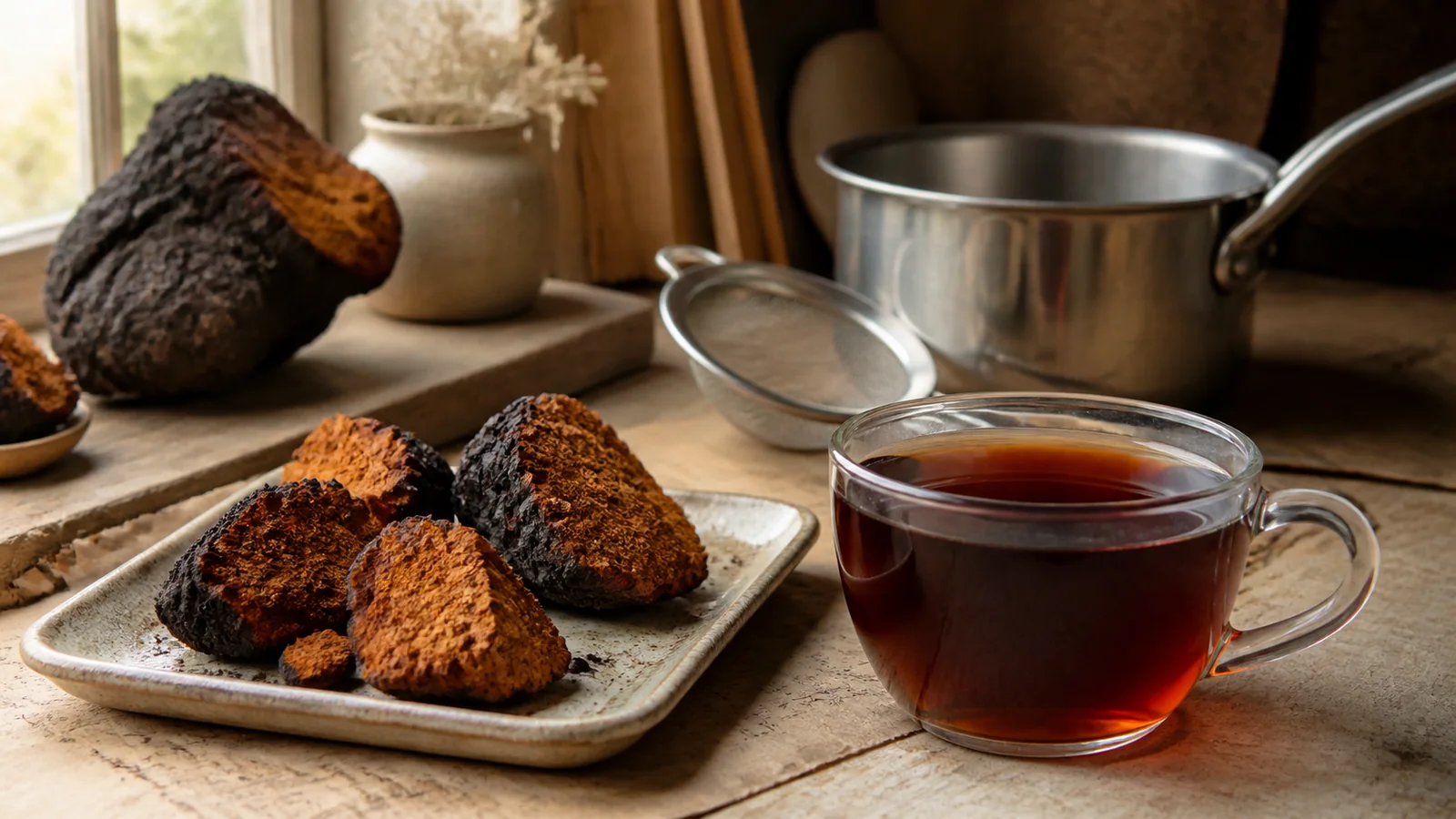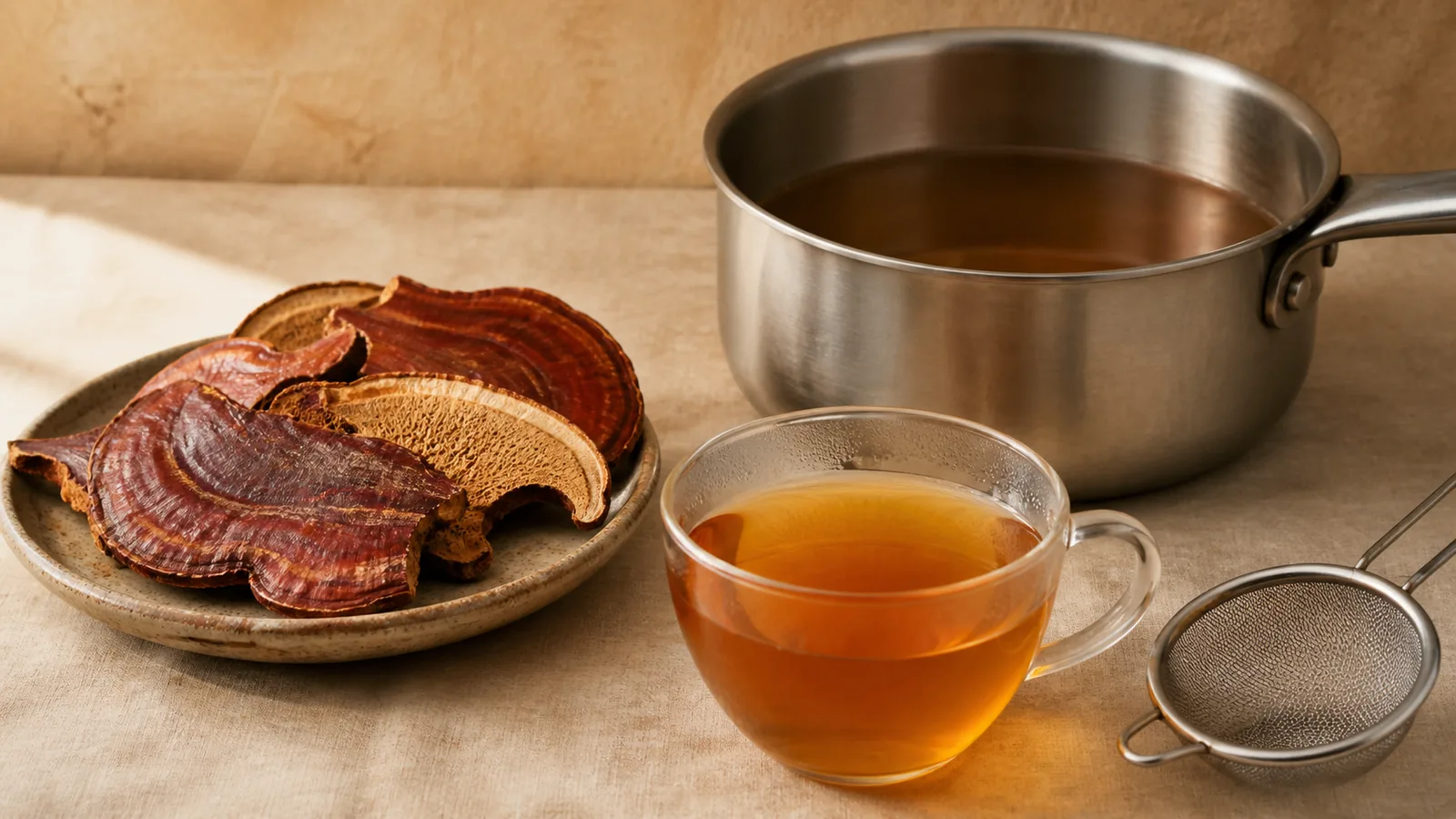
Use whole reishi as a water-extraction ingredient rather than a sauteed mushroom. Simmer 3 to 5 grams of thin dried slices in 500 milliliters of water for 30 to 60 minutes, control evaporation, taste after cooling, strain out the woody solids, and dilute the liquid for tea or food.
Reishi does not soften into a mushroom you can saute and chew. Its glossy fruiting body is corky when fresh and woody when dry, so the practical method is to slice it, simmer it in water, strain out the solids, and use the bitter liquid.
For a mild first batch, simmer 3 to 5 grams of thin dried slices in 500 milliliters of water for 30 to 60 minutes.
Keep the heat gentle, watch how much water remains, and dilute the finished liquid before trying to cover excessive bitterness with sweetener.
What can you actually cook when the label says reishi?
The whole fruiting body and thin dried slices work with this method. Loose powder, standardized extract, capsules, tinctures, and mixed supplements do not automatically follow the same quantities or cooking time.
| Package form | What it contains | Kitchen action |
|---|---|---|
| Fresh whole conk | Corky fruiting body with a shiny cap and pore surface | Clean, slice thinly, and simmer |
| Dried slices | Hard pieces cut from the fruiting body | Rinse, weigh, and simmer in water |
| Whole-fruiting-body powder | Ground solid that cannot be strained like slices | Use only when the label gives culinary directions |
| Standardized extract or capsule | Concentrated processed material | Follow the product directions rather than this method |
Read the ingredient panel before looking at the front label. The words reishi or lingzhi can sit on products made from fruiting body, mycelium, spores, extracts, or blends, and those materials differ in concentration and handling.
Whole fruiting body is the useful kitchen identity. It gives you a physical material whose amount, slice thickness, and condition you can inspect before heat.
A package should give you three useful checks before heat.
- The ingredient line should name the species or source material.
- The package should state the net weight and intended use.
- An extract ratio such as 8:1, a capsule serving, or several added herbs signals that label directions take priority over a saucepan.
Powder creates a separate problem because grinding removes the visual evidence that distinguishes a clean slice from an unknown blend.
It also stays suspended or settles as grit, so adding one spoonful to water does not reproduce a strained whole-slice decoction.
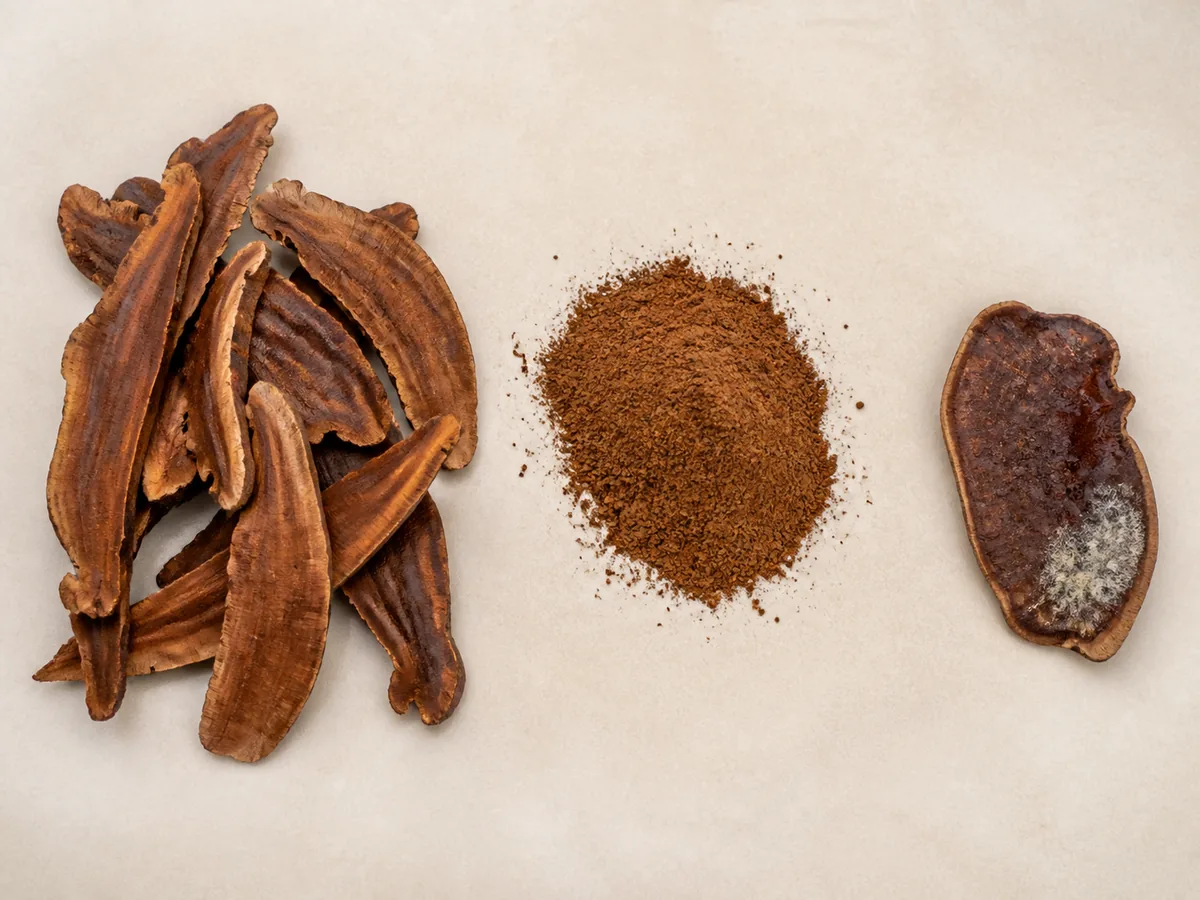
Reject dried material that smells sour or musty, feels damp, contains insects, or shows fuzzy growth that was not present when packed. The woody texture is normal, but softness caused by moisture and decay is not.
Cut the fruiting body before it hardens
Fresh cultivated reishi can feel like dense cork at the pale growing margin. As it matures and dries, the same fruiting body becomes hard enough to make an ordinary chef's knife slip or wedge.
Clean a fresh conk with a soft brush, then wipe the lacquered surface and pore side with a damp cloth.
Use a brief rinse only when debris remains, and dry the surface so the mushroom does not slide under the knife.
The pale underside is a field of tiny pores rather than gills. Check those pores for packed debris, insects, dark wet patches, or an abnormal odor before cutting.
Put the conk flat on a stable board and keep your free hand out of the blade's path. A sturdy serrated knife can saw through corky tissue with less downward force than a smooth blade, but a fully dried conk may be safer to buy already sliced.
Slice reishi while it still yields to the knife. Pieces about 2 to 4 millimeters thick expose more cut surface, stay under the water more easily, and extract more evenly than large wedges.
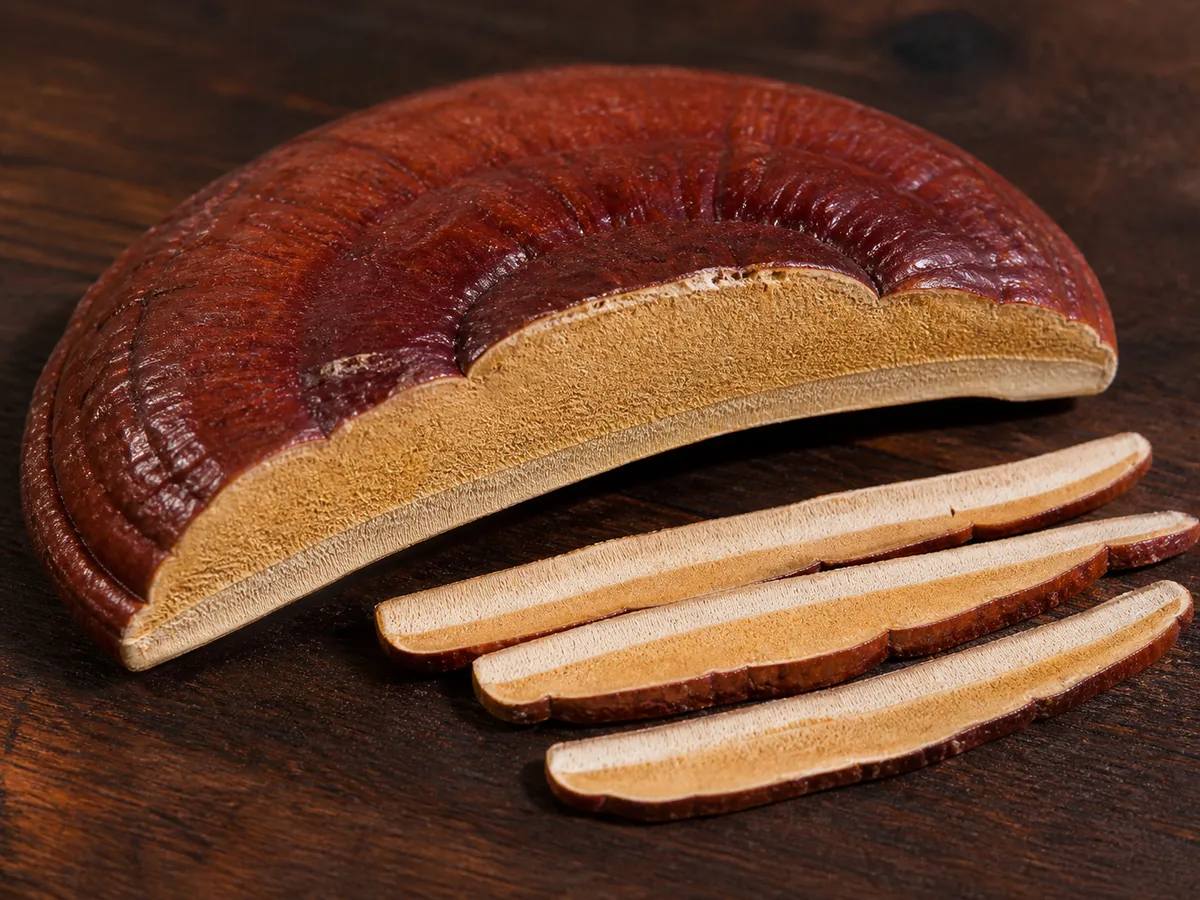
Fresh and dried pieces need the same final method but different handling.
Fresh slices bend and can go directly into the pot, while dried retail slices are rigid and should be checked for clean broken edges and dry storage condition.
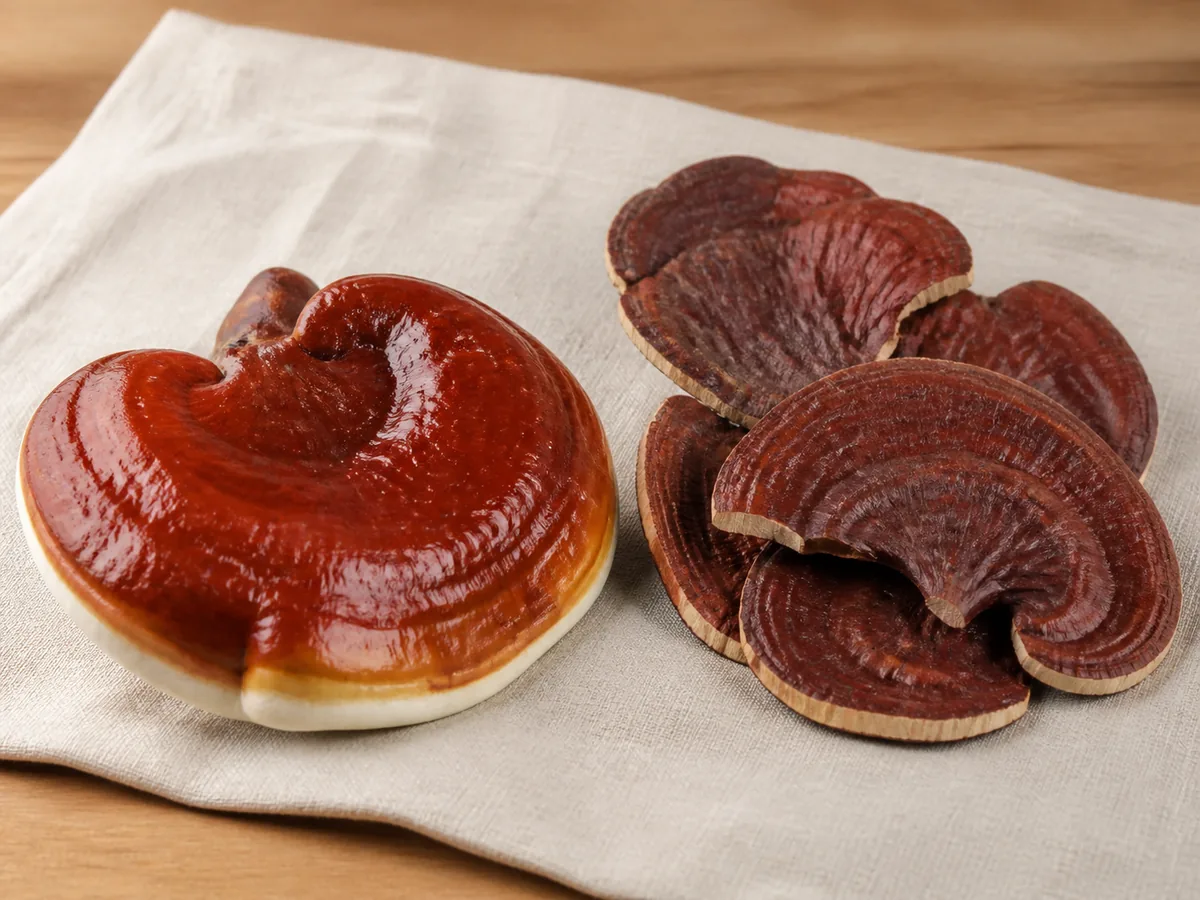
Cultivators often harvest reishi while the fruiting body is still workable, which is one reason home-grown conks may be easier to portion than an old retail specimen. Once the pieces are cut, long-term drying and storage become a separate job from cooking tonight.
Note
Do not force a knife through a rocking, fully dried conk. Buy clean pre-sliced reishi or ask the grower to cut it before drying.
Build the decoction around water loss
A useful starting batch is 3 to 5 grams of thin dried slices with 500 milliliters of water.
This ratio is intentionally mild enough to adjust after tasting, and it is a culinary range rather than a medicinal dose.
Put the slices and cool water in a stainless steel or other nonreactive saucepan. Starting together gives the hard material time to wet through as the temperature rises.
A rolling boil does not solve the texture problem because the slices never become tender dinner pieces. It mainly drives water away faster, which can turn the same amount of reishi into a much more concentrated and bitter cup.
Judge the batch by time and remaining volume together. Five grams simmered for 45 minutes in a covered pot is not equivalent to five grams boiled uncovered until only half the water remains.
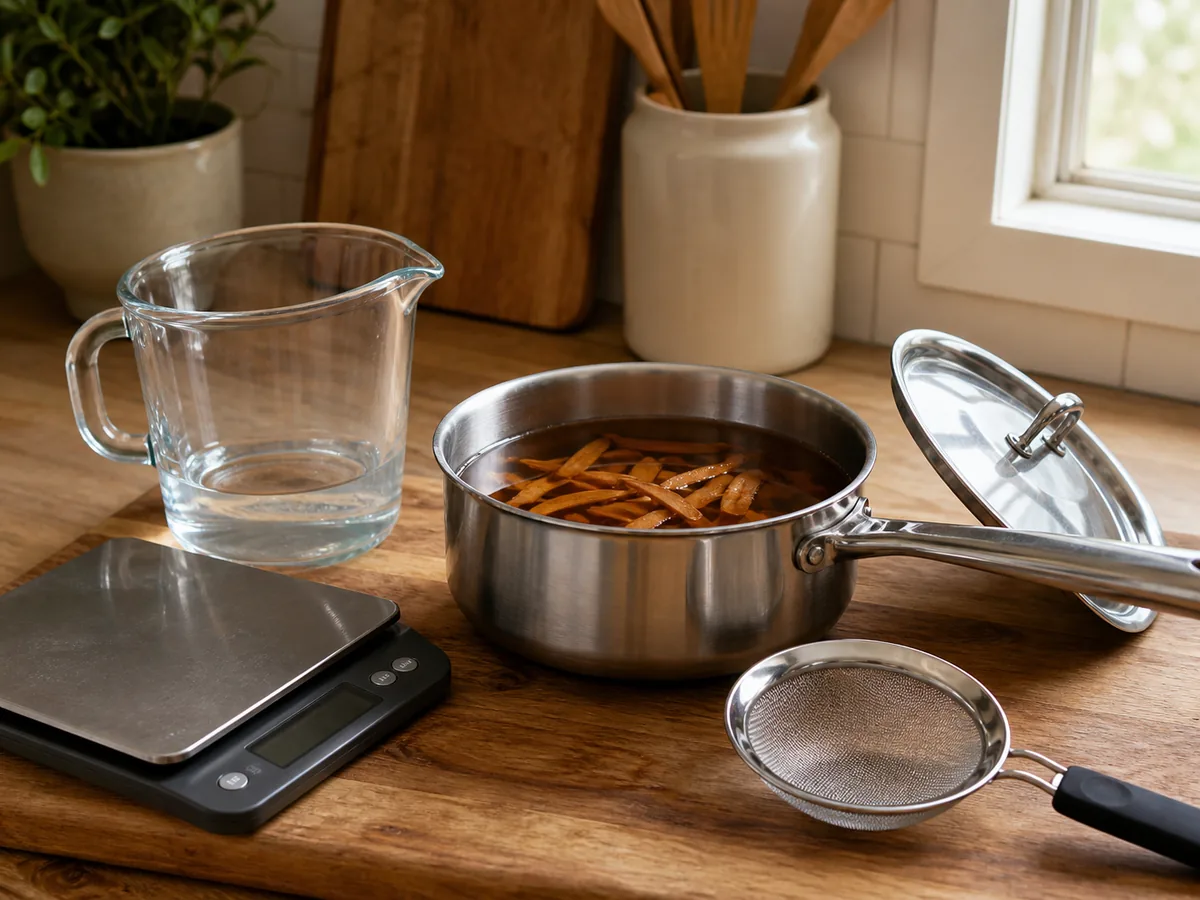
Keep the slices submerged and add hot water if the level falls far below the starting mark before the flavor is ready.
A lid slows evaporation, but an offset lid makes it easier to watch the simmer and prevent boilover.
Thirty minutes gives a lighter liquid that can disappear into stock or rice. Moving toward 60 minutes deepens color and bitterness, but longer is not automatically better when the purpose is a drink you can finish or a broth that still tastes like dinner.
Fresh slices contain their own water, so equal weights of fresh and dried reishi are not interchangeable. When a grower supplies fresh reishi, follow that grower's preparation guidance or begin lighter and use taste as the limit.
Cooking MushroomsHow to Cook Black Morels: Halve Them, Never Slice ThemBitterness tells you when to dilute
Reishi is naturally bitter, and a clean batch can taste woody, earthy, and drying. The goal is not to erase that character, but to keep it below the point where it smothers everything else in the cup or dish.
Cool a teaspoon before judging because near-boiling liquid hides flavor detail and can burn your mouth.
Taste first at 30 minutes, note the remaining water, then decide whether the brew needs more time or already needs dilution.
Water is the first correction for an over-concentrated batch. It lowers bitterness without loading the drink with enough sugar or honey to create a second problem.
Ginger can add warmth, while lemon peel or a small strip of orange peel brings aroma that lifts the dark flavor.
Jujube or a modest amount of honey rounds the finish, and a pinch of salt can make a savory broth feel less severe.
Add those ingredients for flavor, not to prove that the decoction is stronger or more effective. A spoiled or unidentified product cannot be rescued by ginger, citrus, salt, or sweetness.
The intended use should decide the final strength. A small tea cup can carry more bitterness than a pot of congee, while a delicate vegetable stock needs a lighter addition than a dark mushroom broth.
Taste the strained liquid before pouring it into a finished dish. Once an overly bitter decoction is reduced into a sauce or absorbed by rice, there is little room to correct it without changing the whole meal.
Keep the liquid and remove the slices
The useful result is the liquid.
Simmered reishi slices remain leathery or woody, so strain them through fine mesh instead of serving them alongside vegetables, noodles, or rice.
A fine strainer also catches small fibers shed from thin or broken pieces. Let any fine sediment settle for a minute, then pour the clear portion slowly if the package contained especially brittle slices.
Do not treat a longer simmer as a tenderizing step. Reishi is a polypore with dense tissue, and hours in water do not turn a mature dry slice into the texture of shiitake or oyster mushroom.
Use the strained liquid in places that can absorb its bitter edge:
- Drink a small portion warm with ginger, citrus peel, or honey.
- Replace part of the water in a mushroom or chicken stock.
- Add a lighter batch to rice or congee, then adjust salt after the grain cooks.
- Blend a small amount into a braising liquid that already has savory depth.
Yes, reishi slices can be brewed again for a lighter second batch.
Cover them with fresh water and stop when the liquid has enough color and aroma for broth, because the second simmer does not need to copy the first one's time.
Color alone is an imperfect guide. If the second liquid is nearly flavorless and the slices have lost most aroma and bitterness, discard or compost them rather than extending the boil for another weak cup.
Finished dishes need their own proportions because a tea method does not automatically fit a liter of soup or a pot of rice. Use a dedicated recipe when you need ingredient quantities beyond the strained reishi liquid itself.
Cooking MushroomsHow to Cook Black Truffle Without Losing Its AromaA longer simmer does not prove a stronger health effect
Hot water can remove soluble material from Ganoderma tissue, and laboratory experiments find that temperature and time change what an extract contains.
They do not produce one universal kitchen time that maximizes every compound or establishes a health outcome.
One extraction experiment compared water at several temperatures and found different chemical and measured activity profiles. Another optimization study produced different preferred conditions depending on whether researchers measured antioxidant activity, ganoderic acids, polysaccharides, or other laboratory outcomes.
The extraction vessel, particle size, temperature control, laboratory processing, and analytical endpoint differ from a saucepan on a home stove. A result measured after filtration or concentration cannot be transferred directly to one cup made from retail slices.
Treat more bitter as a flavor signal, not proof of more benefit. Bitterness can tell you that the liquid is concentrated enough to adjust, but it cannot reveal which compounds are present or what they will do in a person.
NCBI LiverTox notes that the broad benefits attributed to reishi have not been demonstrated in adequately sized controlled human trials.
That evidence limit matters because a cooking instruction should not inherit treatment claims from a supplement advertisement.
A whole-slice brew is also not interchangeable with a standardized extract. Extraction methods and concentrations vary, so the mass of dry slices in a pot cannot tell you the amount delivered by a capsule or bottled product.
Use simmer time to make a liquid with the flavor and concentration needed for tea, stock, or grain. Questions about clinical effects and nutrient composition require evidence designed for those questions, not a darker color in the saucepan.
A common name cannot identify a wild conk
Reishi and lingzhi are market names used across a complex group of varnished Ganoderma species.
A shiny red-brown cap on wood is therefore a starting observation, not a safe species identification.
Research on North American Ganoderma found multiple distinct shiny species that had long been grouped under the name Ganoderma lucidum. True G. lucidum has a more restricted North American distribution than the old common usage suggests, while commercial East Asian reishi is often Ganoderma lingzhi.
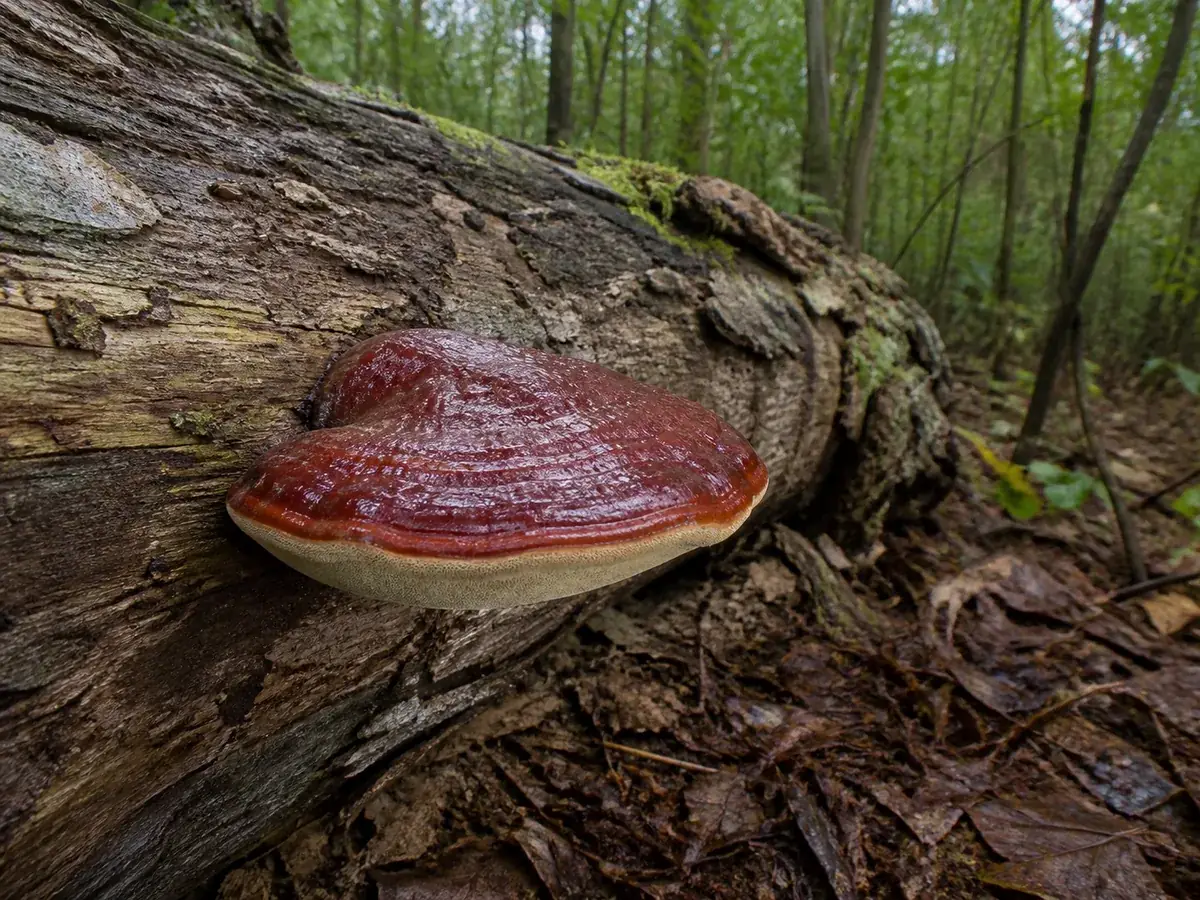
Do not use this cooking method as permission to consume a wild bracket. Host tree, region, tissue color, pore characters, spores, and sometimes DNA all help distinguish species that a glossy surface cannot settle.
Powder makes authentication harder because the fruiting body's visible characters have been destroyed.
This is another reason a traceable cultivated product with a species and fungal-part label is a better kitchen choice than loose powder or an unknown conk.
An experienced local identifier can assess a complete fresh specimen and its habitat, but a photograph or common name may omit decisive evidence. Keep an unknown collection out of food even when it resembles commercial reishi slices after drying.
Buy cultivated reishi sold for culinary or tea preparation, and reserve wild findings for documented identification rather than dinner.
Stop before the pot when the risk is personal
Cooking does not remove several personal risk factors.
- Memorial Sloan Kettering advises caution with anticoagulant or antiplatelet medicines because of possible bleeding risk.
- Immunosuppressant therapy is another reason for clinical review.
- Liver disease or a previous reaction makes a kitchen trial unsafe.
Reported adverse effects include nausea and insomnia. NCBI LiverTox also describes rare cases of possible acute liver injury.
Ask a clinician or pharmacist before use when medicines, pregnancy, breastfeeding, liver disease, or planned surgery are involved. Bring the package or a clear label photo because whole slices and concentrated extracts do not represent the same exposure.
If yellowing skin or eyes, dark urine, severe abdominal pain, unusual bleeding, facial swelling, breathing difficulty, or another significant reaction appears, stop using the product and seek medical help. Mild bitterness is expected, but physical symptoms are not a flavor problem.
Whole reishi sold for tea still deserves the same caution when the person has one of these risk factors.
A longer boil does not neutralize an interaction, make pregnancy evidence appear, or turn an ambiguous supplement into ordinary food.
Warning
Keep reishi out of the pot until a clinician or pharmacist has reviewed it if you take blood thinners, antiplatelet medicine, or immunosuppressants, or if you are pregnant, breastfeeding, preparing for surgery, or living with liver disease.
Sources & References
- Lingzhi and Reishi, NCBI LiverTox Clinical reference used for evidence limits, reported adverse effects, rare possible liver injury, and the distinction between variable commercial preparations.
- Reishi Mushroom, Memorial Sloan Kettering Cancer Center Clinical reference used for medication interaction cautions involving blood thinners and immunosuppressants.
- Lingzhi Texture and Sensory Study Food-science reference used for the woody texture, use of cut dried material in tea, bitterness, and a measured dried-tea preparation.
- Water Extraction Temperature Study Laboratory reference used only to explain that water temperature changes measured extract composition and activity.
- Ganoderma Extraction Optimization Study Laboratory reference used to explain why different endpoints produce different preferred extraction conditions.
- Ganoderma Species of the United States Taxonomic reference used to prevent the common name reishi from becoming a shortcut for wild identification.
- DNA Identification of Commercial Reishi Products Commercial authentication reference used to distinguish product labeling from species confirmation.