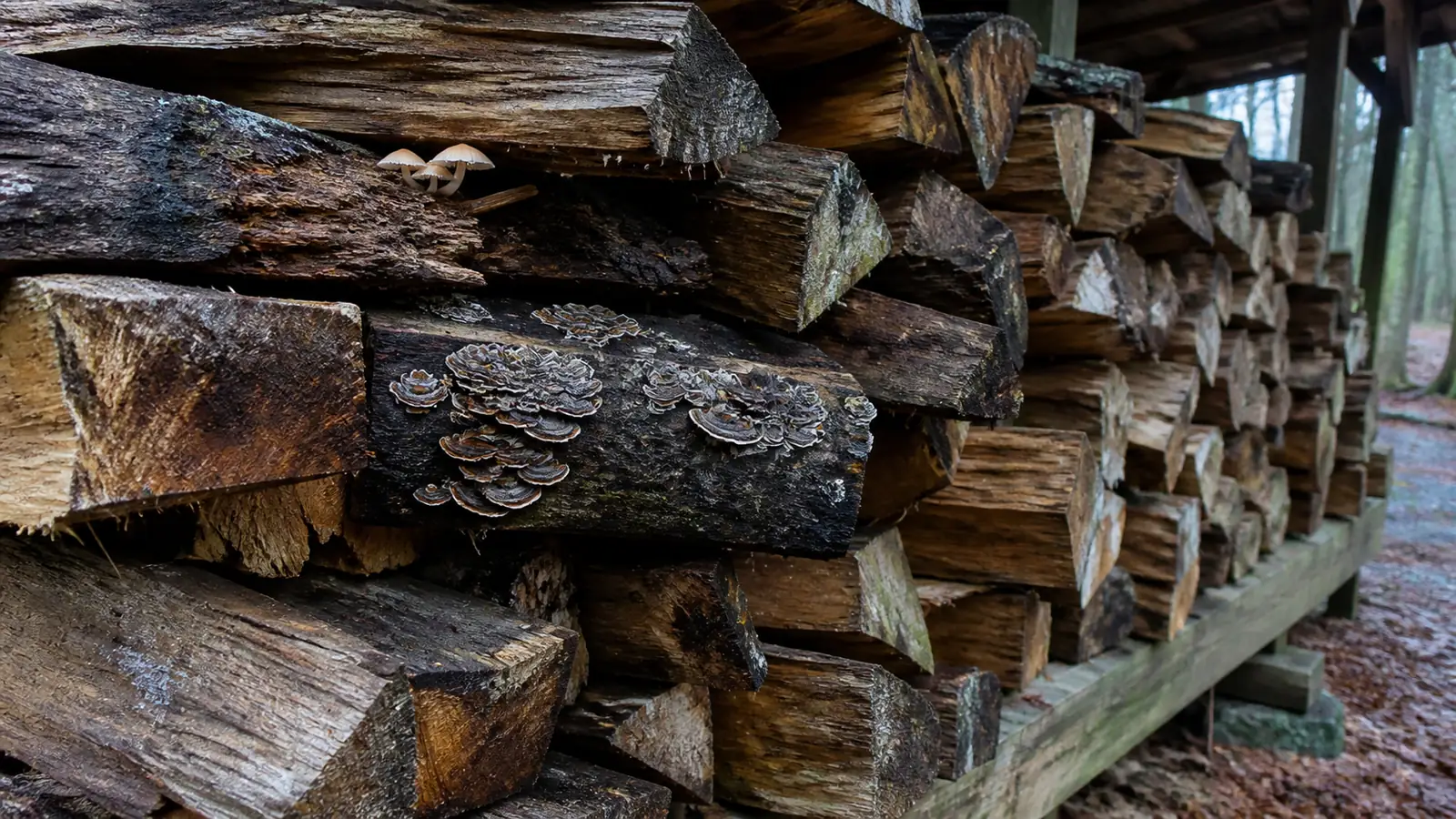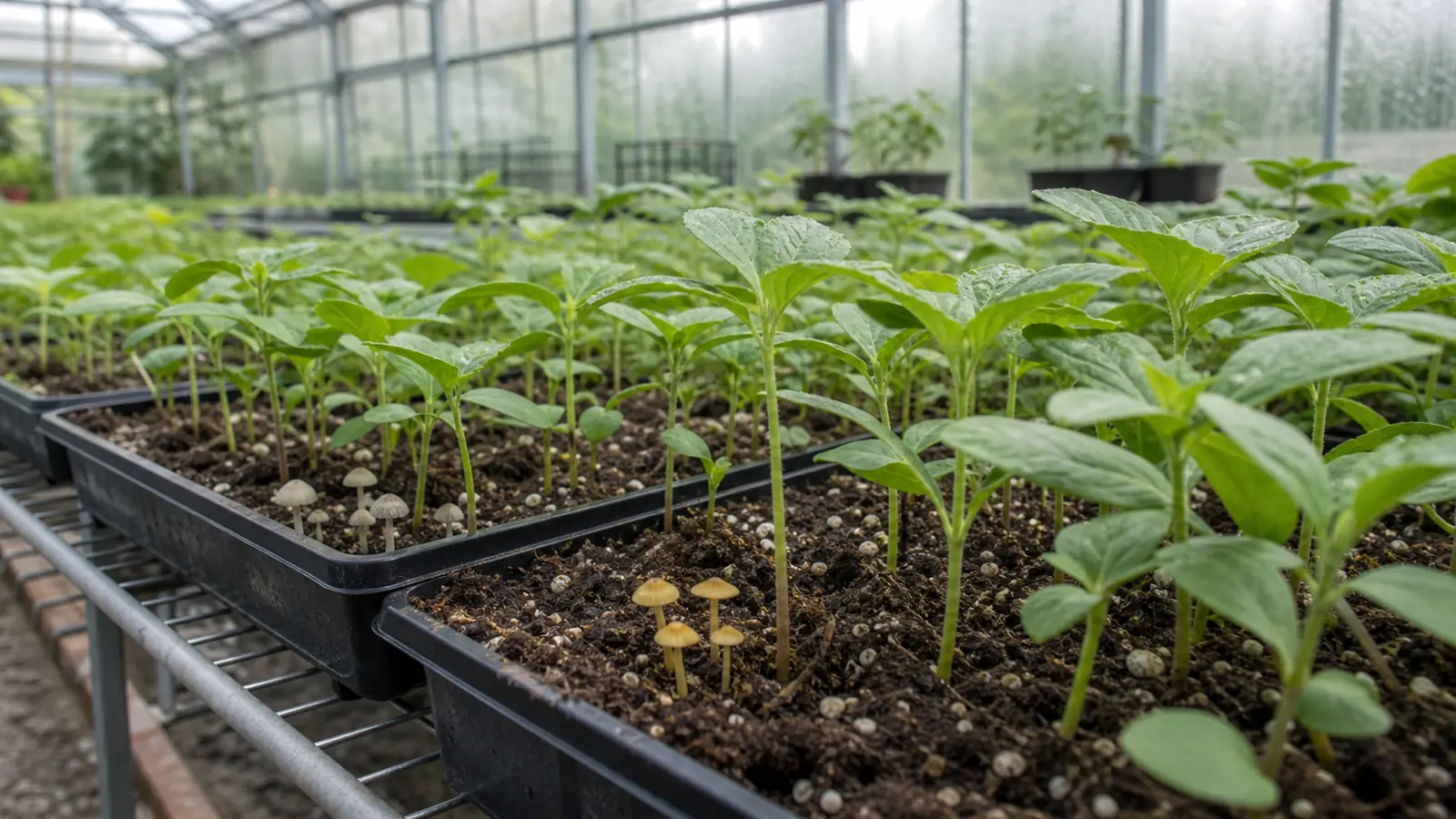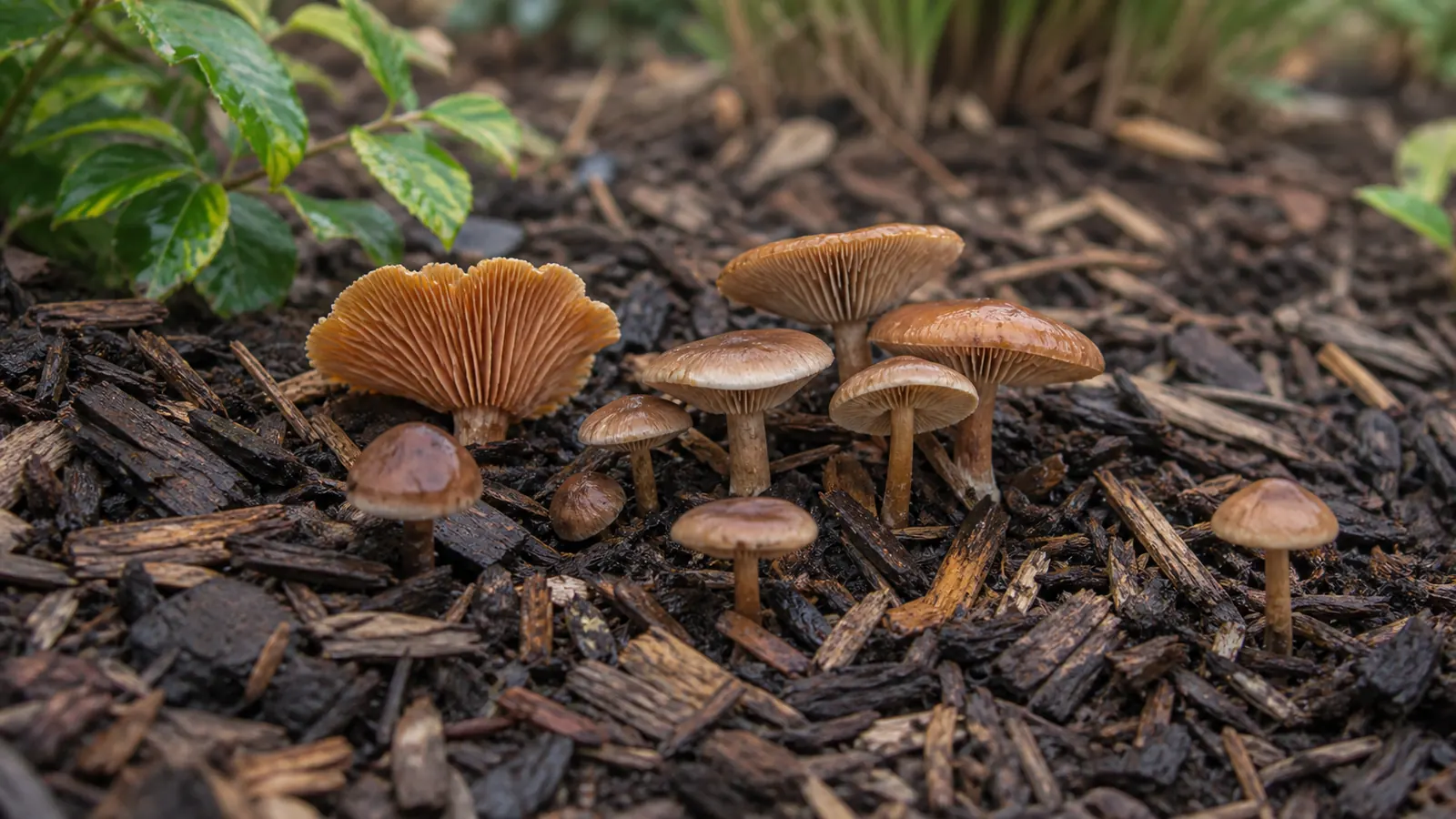
Wood chips identify the substrate, not the mushroom. Record the bed, inspect a complete fresh specimen, and never use habitat or cap color as permission to eat it.
Mushrooms growing in wood chips are usually decomposers using the mulch as food. The chips tell you where to look, but they do not name the species or tell you whether it is edible.
Start with the age and makeup of the bed, then examine a fresh mushroom from cap to stem base. Arrangement, gills, veil tissue, color change, bruising, and a spore deposit are useful only when they agree.
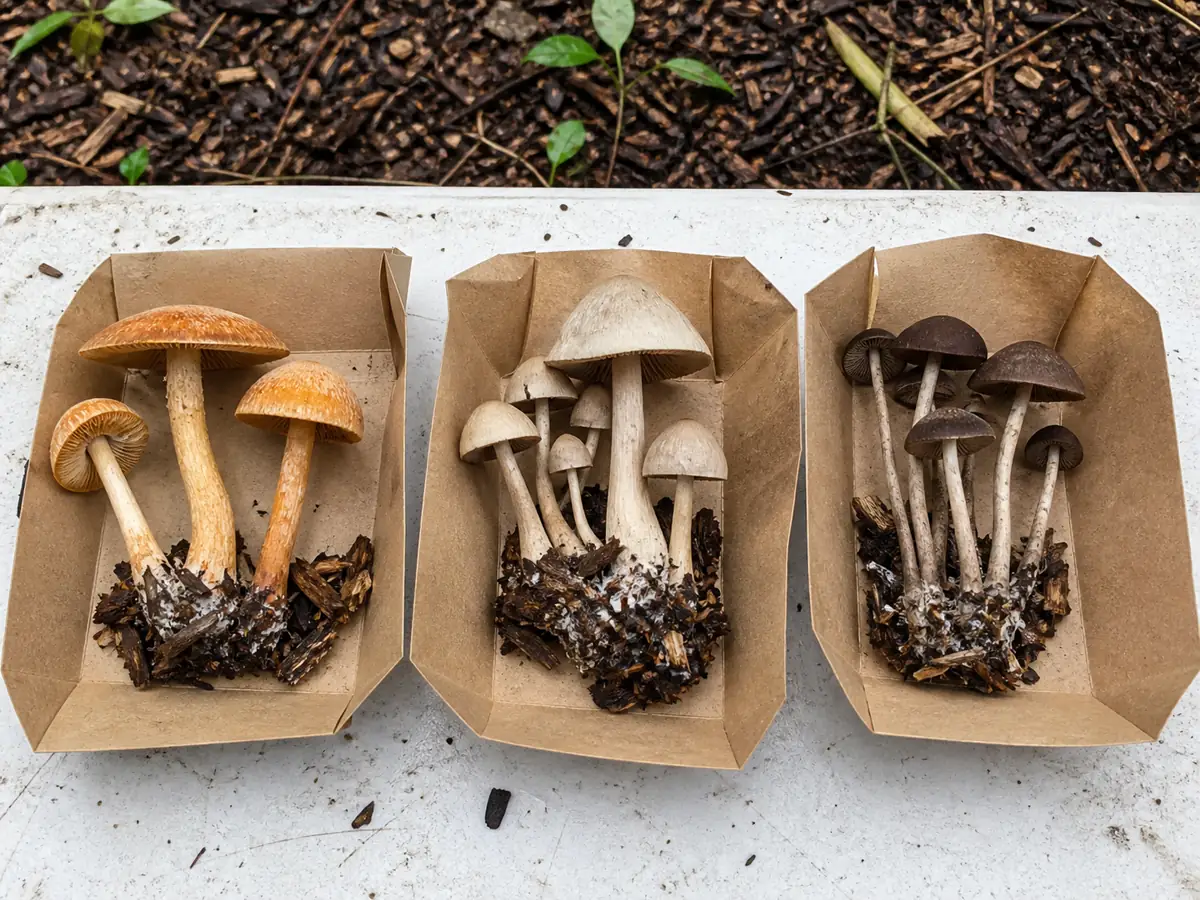
A familiar burgundy cap may suggest wine cap, while an orange cluster or a small brown ringed mushroom leads somewhere else.
Whatever it resembles, do not taste a mulch mushroom to test an identification.
Read the Mulch Before You Name the Mushroom
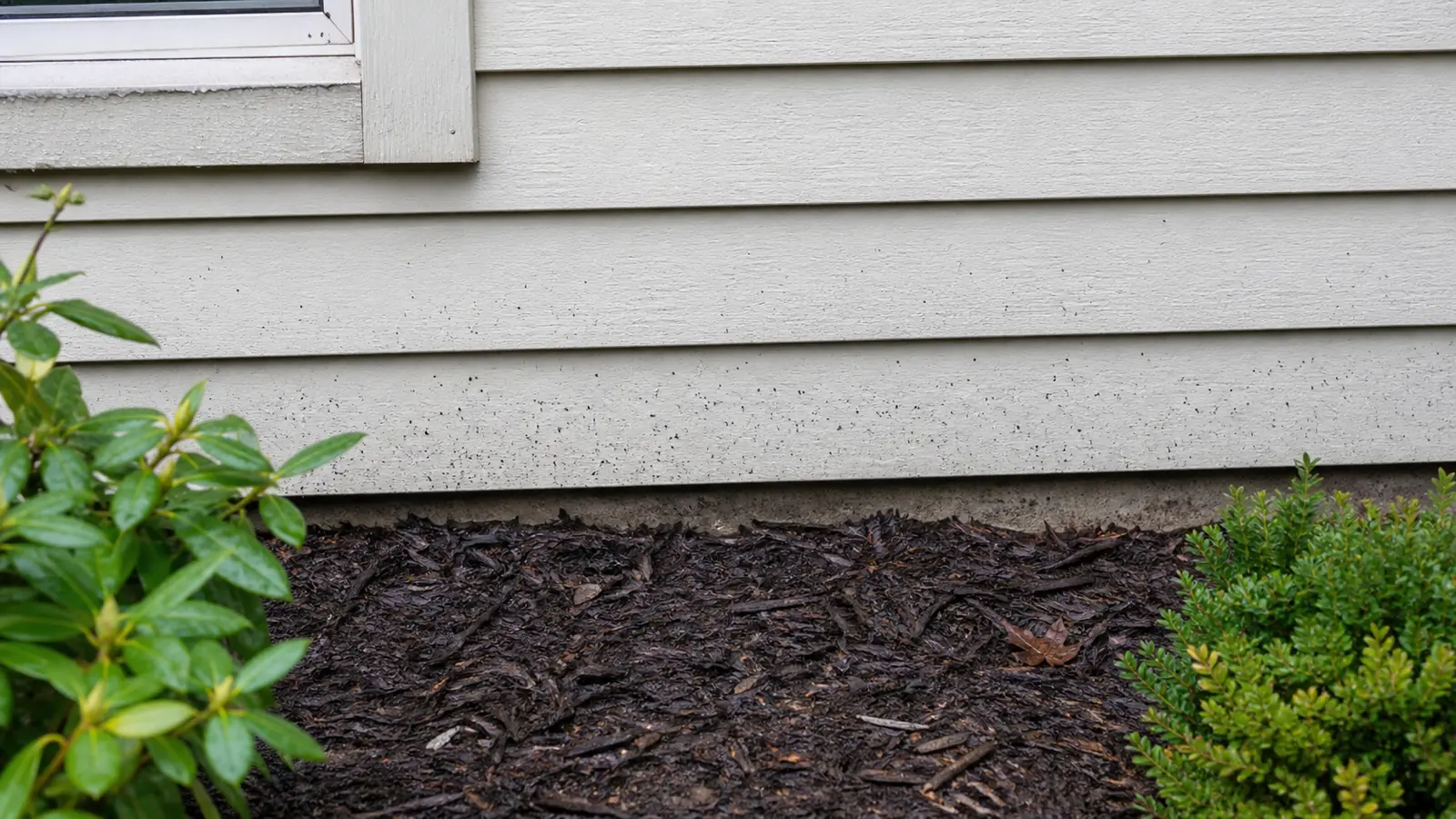
Fresh arborist chips form a pale, angular layer with open spaces between pieces. As fungi, bacteria, weather, and foot traffic work on that layer, it darkens, softens, compacts, and gradually mixes with leaves and soil.
That change alters the food and moisture available to fungi.
A two-year survey of ornamental wood chips found diverse but short-lived mushroom communities. At one roadside site, most species fruited heavily during the first season after the chips were laid and declined sharply in the second, while a formal garden showed almost no repeat fruiting from one year to the next.
The result makes chip age useful context, but it does not create a calendar key. Climate, tree species in the load, chip size, bark content, irrigation, soil contact, bed depth, and later top-ups can all shift what fruits and when.

Rain often explains why mushrooms seem to arrive overnight. The buried mycelium may have occupied the chips for weeks or months before moisture and temperature allowed it to build visible fruiting bodies.
Intentional wine-cap beds make that delay especially clear. Cornell Small Farms reports that an inoculated outdoor bed can fruit in roughly two to six months under suitable temperatures, then persist for several seasons when the patch remains productive and receives appropriate material.
Spontaneous fruiting follows no such installation record.
A first flush in newly spread municipal chips may have traveled with the load, emerged from nearby soil, or developed from airborne spores that reached a suitable substrate.
The useful rule is to record the bed before disturbing it. These observations still matter after a delicate cap collapses or the patch disappears in dry weather.
Do not assume mushrooms beside a tree are feeding on that living tree.
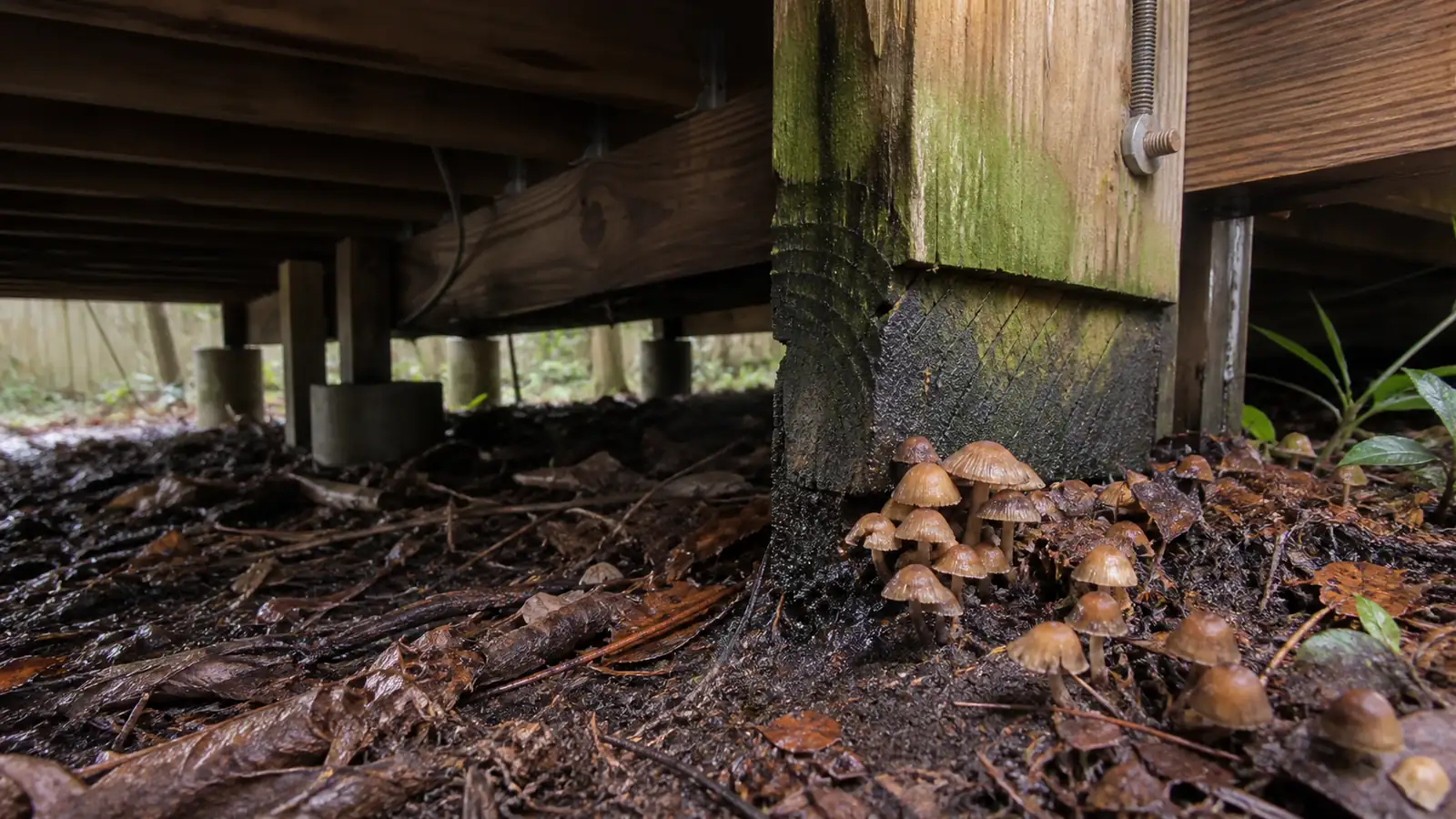
Follow several stems to their actual base because a thin chip layer can hide buried roots, old edging, construction wood, or a decaying stump that belongs to a different identification path.
IdentificationWhat Are the Tiny Bird's Nest Fungi in Your Mulch?Which Wood-Chip Mushrooms Fit the Evidence?
Wood-chip beds support many unrelated gilled mushrooms, along with cups, brackets, stinkhorns, puffballs, and slime molds. The groups below are useful starting points for a fresh gilled specimen, not a closed list for every region.
| Visible pattern | Evidence that supports the group | What keeps the name provisional |
|---|---|---|
| Large wine-red to tan cap | Substantial size, thick grooved ring, attached gills becoming gray-purple, purple-black spore deposit | Old caps fade dramatically, white forms exist, and habitat alone does not prove wine cap |
| Small orange-red caps in mulch | Bright red-orange cap, whitish veil remnants near the margin, pale stem, dark purple-brown deposit | Redlead roundhead can overlap other Strophariaceae and regional confirmation still matters |
| Tan to ocher clustered fieldcaps | Dry or velvety cap, crowded pale gills becoming brown, brown deposit, growth from chips | Similar Agrocybe can differ by ring, cap texture, odor, and microscopic characters |
| Caramel caps that bruise blue | Woody substrate, wavy or changing cap margin, dark deposit, blue color change after handling | Several wood-rotting Psilocybe require regional and microscopic separation, and bruising alone proves nothing |
| Small brown ringed mushrooms | Brown to yellow-brown hygrophanous cap, rusty-brown deposit, growth from decaying wood | Deadly Galerina and other small brown species overlap too closely for casual photo identification |
| Fragile clustered caps that blacken or dissolve | Crowded young fruiting, darkening gills, thin stems, caps that split or liquefy with age | Inkcap relatives change quickly and older collapsed specimens lose decisive features |
Large Burgundy Caps Need More Than Burgundy
Wine cap, Stropharia rugosoannulata, is deliberately cultivated in wood chips and straw, so it is a reasonable possibility in gardens.
A fresh cap may be wine-red, purple-brown, or reddish brown, then fade through ocher and tan as it expands and weathers.
Look for a stout mushroom that can become much larger than the small lawn and mulch species around it. The stem usually carries a thick ring with grooves or segmented, tooth-like divisions on its upper surface.
The gills begin pale gray and mature toward gray-purple or purple-brown, producing a very dark purple-brown to nearly black deposit. Cap color without that ring, underside, and spore evidence is only resemblance.
An inoculation receipt raises the probability that wine cap will fruit from the bed. It does not guarantee that every later mushroom belongs to the introduced culture because airborne and chip-borne fungi can share the same patch.
Orange, Tan, and Brown Clusters Split Several Ways
Redlead roundhead, Leratiomyces ceres, is strongly associated with wood-chip mulch in temperate landscapes. Its smaller red to orange caps and dark purplish-brown spores can separate it from a faded wine cap, but wet weather, age, and camera color make a full specimen necessary.
Mulch fieldcap, Agrocybe putaminum, produces tan to ocher-brown mushrooms in chips, gardens, parks, and roadsides.
Brown spores, a dry or velvety cap, and the absence or form of a ring help move the specimen toward Agrocybe, although similar species may require microscopy.
Some crowded mulch mushrooms are inkcap relatives. Watch several ages in the same patch because pale young gills can darken rapidly, while thin caps may split, blacken, or dissolve into an inky edge.
That transformation is useful evidence. A single collapsed cap is much less informative than young, mature, and aging specimens photographed together.
When the Find Has No Cap and Gills
Not every conspicuous growth in wood chips is a cap-and-gill mushroom.
Sort the visible form before trying to match a species name.
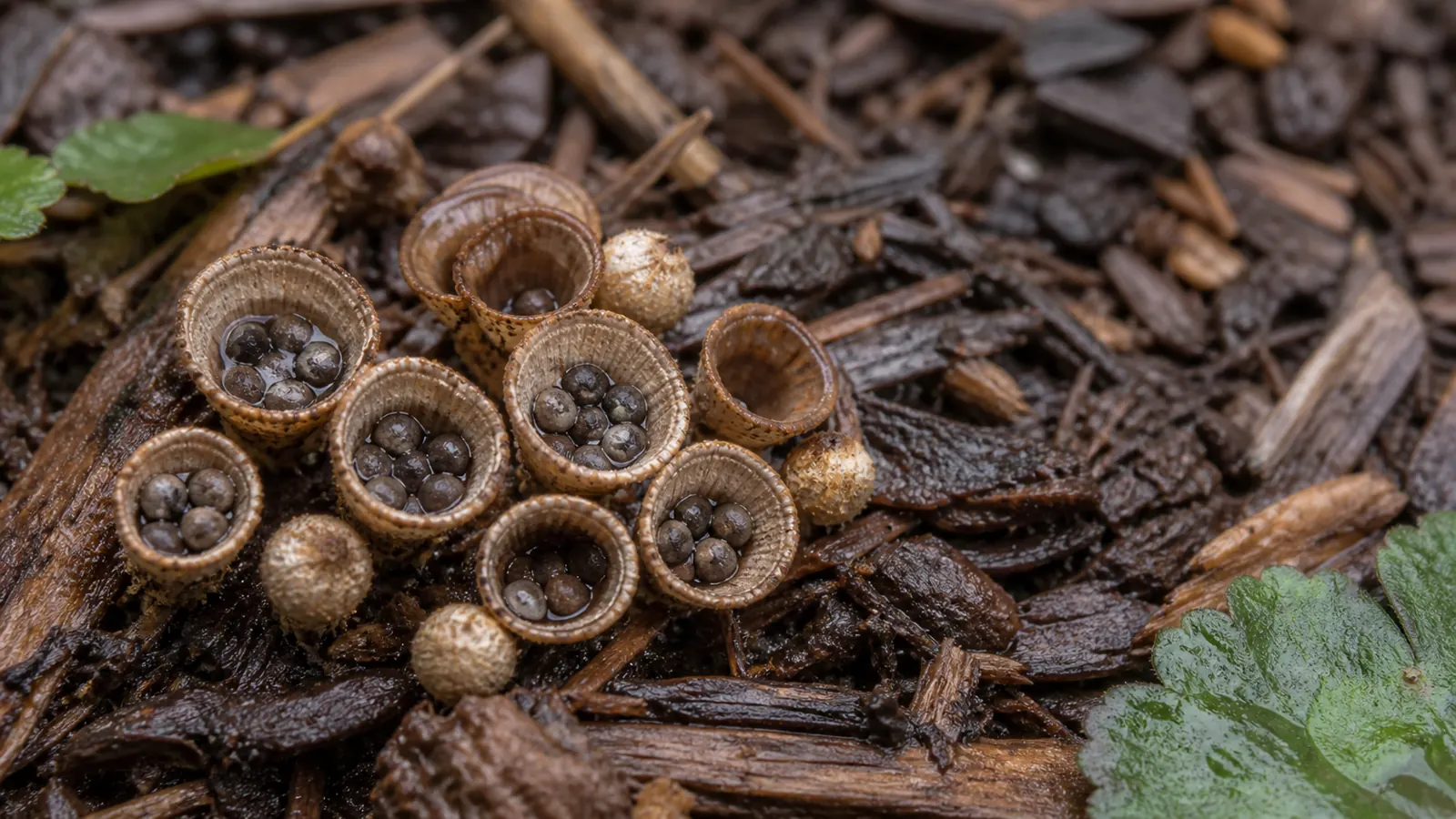
- Bird's-nest fungi form tiny gray or brown splash cups that hold egg-like spore packets
- Stinkhorns carry foul-smelling spore slime that attracts insects, often making odor as useful as shape
- Slime molds can begin as a bright foamy mass and mature into a dry powdery structure without producing a mushroom cap
These forms need their own identification path. A gilled-mushroom table cannot resolve them, and none of the three appearances establishes edibility.
Small Brown Mushrooms Are a Safety Stop
Small brown mushrooms growing from woody material demand restraint because deadly Galerina, Galerina marginata, belongs in that habitat. It can have a moist brown to yellow-brown cap, a ring or ring zone, and a rusty-brown spore deposit.
Those traits overlap ordinary-looking wood decomposers.
Deadly Galerina contains amatoxins that can cause severe liver and kidney injury. No simple rule about cap size, pleasant smell, animal feeding, or a brown spore print clears a specimen for eating.
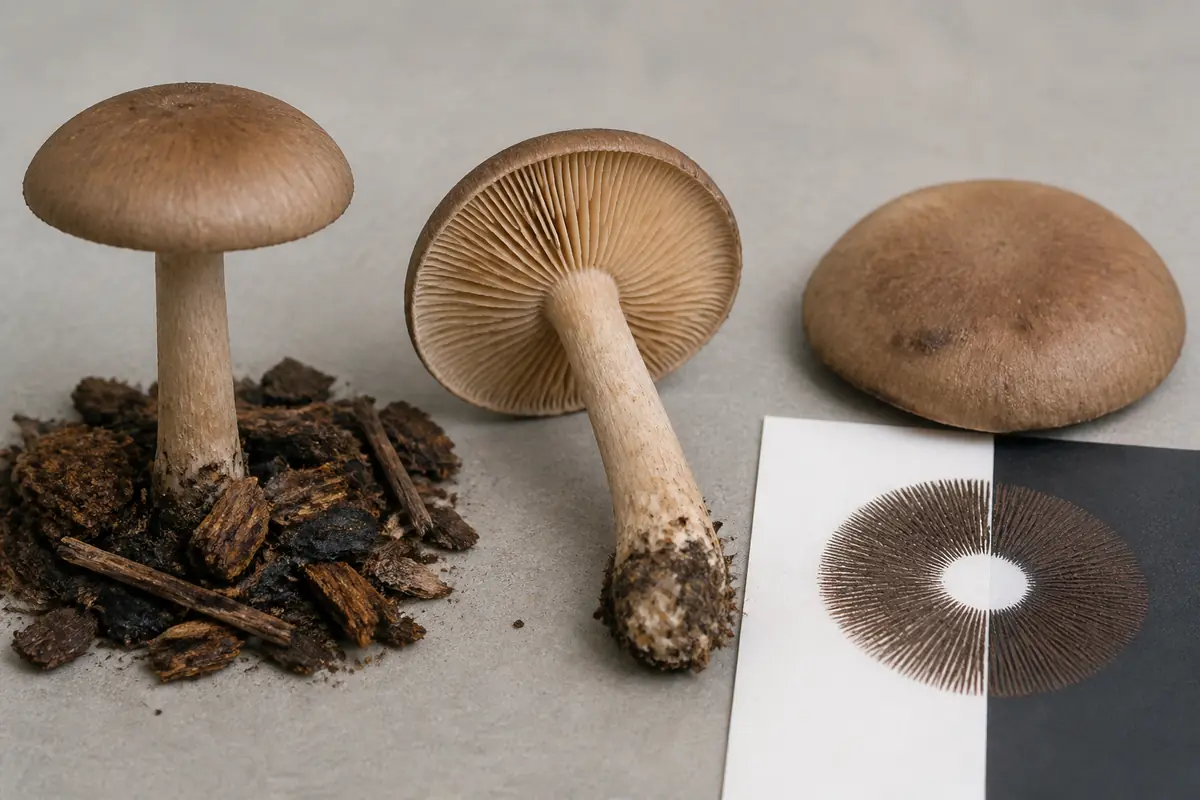
Photograph where the gills meet the stem and whether veil tissue forms a ring, fibers, or patches.
Dig around one stem and lift the whole base because snapping it at ground level can remove a cup, bulb, rooting extension, or mycelial attachment that changes the identification.
Make a deposit from a mature cap on divided black and white paper or another two-tone nonabsorbent surface. A spore print color can separate broad groups, but the complete character combination carries the identification.
IdentificationWhat Should You Do About Mushrooms in a Horse Pasture?Can You Eat a Mushroom Found in Wood Chips?
Do not eat an unknown mushroom because it grew from clean hardwood chips, appeared in a vegetable bed, or resembles a cultivated wine cap. Different species can fruit inches apart through one mulch layer.
Even a deliberately inoculated bed needs every collected mushroom checked independently. A pale old wine cap, a mulch fieldcap, a psychoactive wood-chip Psilocybe, and a toxic small brown mushroom can defeat a quick cap-only comparison.
Photo resemblance alone is not an edibility clearance. An experienced local identifier needs the fresh specimen, underside, entire stem, spore deposit, location, substrate, and maturity range, and some groups still need microscopy.
Warning
Never taste an unidentified wood-chip mushroom. If a person in the United States may have swallowed any part, call Poison Control at 1-800-222-1222 immediately rather than waiting for symptoms.
Amatoxin poisoning can begin with vomiting and diarrhea six to 24 hours after ingestion. A temporary improvement can follow while liver injury continues, so a symptom-free interval does not make the exposure safe.
Cooking is not a rescue test for a poisonous species.
Heat, drying, soaking, peeling, or discarding the cooking water cannot turn an uncertain identification into food.
For a dog or cat, contact a veterinarian, emergency animal hospital, or animal poison-control service promptly. Do not force vomiting or give a home remedy unless the professional handling the case directs it.
Save clear photographs and one matching fresh specimen when doing so will not delay the call. Keep the mushroom in paper or waxed paper away from food, record the time and estimated amount, and follow the specialist's storage instructions.
Preserve the Evidence Before the Patch Changes
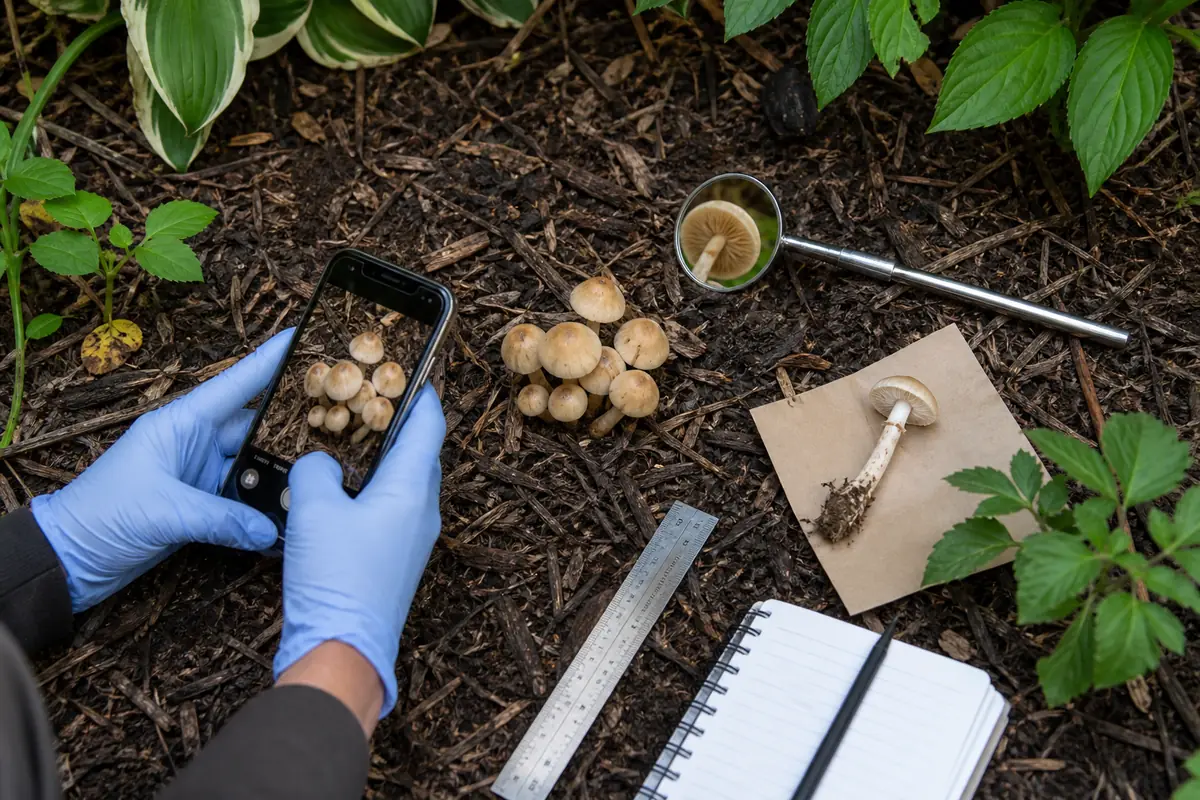
Mowing, kicking, washing, or pulling every cap first can destroy the details needed for a useful identification. Document the undisturbed patch before you choose whether the fruiting bodies need removal.
Photograph the whole patch first
Capture the growth pattern, surrounding plants, chip layer, and several maturity stages in natural light
Expose the underside and complete base
Photograph gills or pores, veil tissue, stem surface, and one carefully excavated base without cutting it off
Record scale, place, and timing
Include a ruler, location, date, recent weather, bed age, chip source, and any inoculation history
Make a spore deposit when useful
Place a mature cap over a two-tone surface under a bowl and record the deposit color without treating it as a safety test
Keep specimens separated
Place a few fresh examples at different ages in paper packets, never a sealed plastic bag that accelerates decay
One side photograph should show the cap profile and entire stem. Add an underside view straight enough to reveal gill attachment, then photograph any bruising or color change once immediately and again after several minutes.
Do not manufacture bruising by crushing the whole specimen.
A gentle nick at the cap edge or stem can preserve the remaining anatomy for examination.
If children or pets can reach the bed, lift visible caps promptly after the evidence is recorded and place them in a closed trash container. Wear gloves if the mulch is dirty or the mushrooms are decaying, then wash your hands before handling food.
Picking caps reduces immediate access and mess, but it leaves the feeding mycelium threaded through the chips. New fruiting bodies can appear after another wet spell, and that recurrence does not mean the mulch is infecting healthy plants.
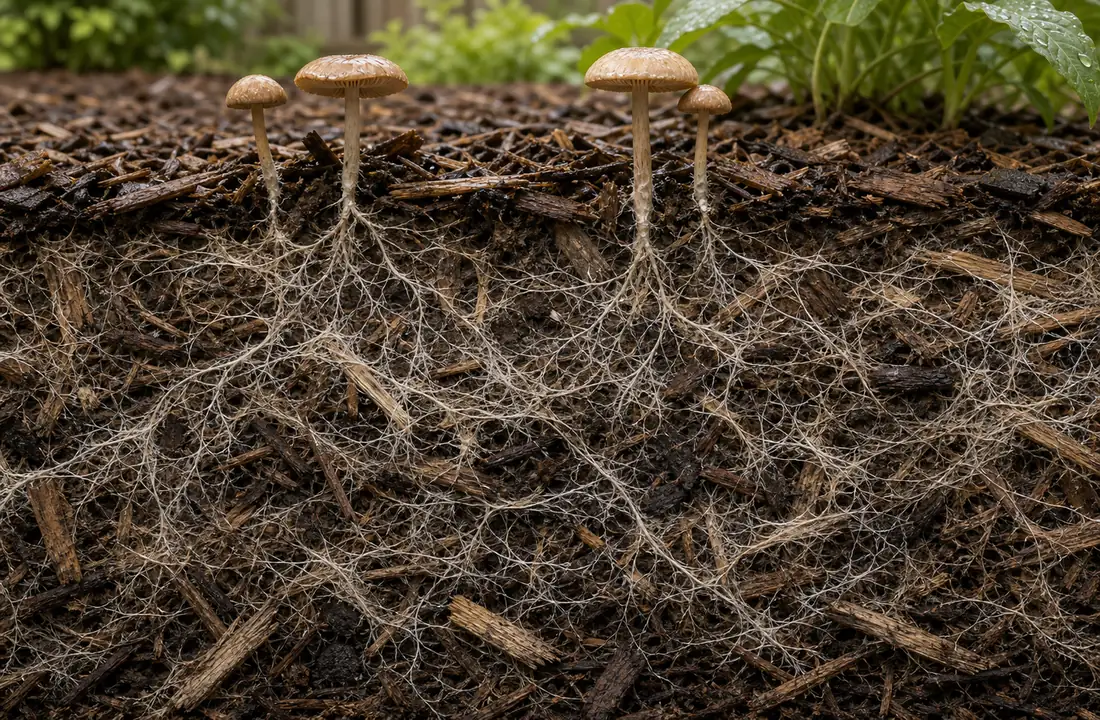
Most mulch decomposers consume dead material rather than living roots.
Check the plants separately for wilt, crown damage, root decay, or a pathogen-specific sign before blaming a harmless fruiting body for an unrelated plant problem.
Fungicide sprayed on the caps does little against mycelium distributed through a deep organic layer.
Leave the decomposer in place when access is controlled and the plants are healthy, then direct irrigation toward root zones rather than keeping the entire mulch surface continuously wet.
When fruiting remains excessive, rake compacted wet chips to improve drying and correct leaking irrigation. Replacing the whole bed is rarely necessary unless the mulch is sour, contaminated, matted against vulnerable stems, or hiding a separate drainage problem.