
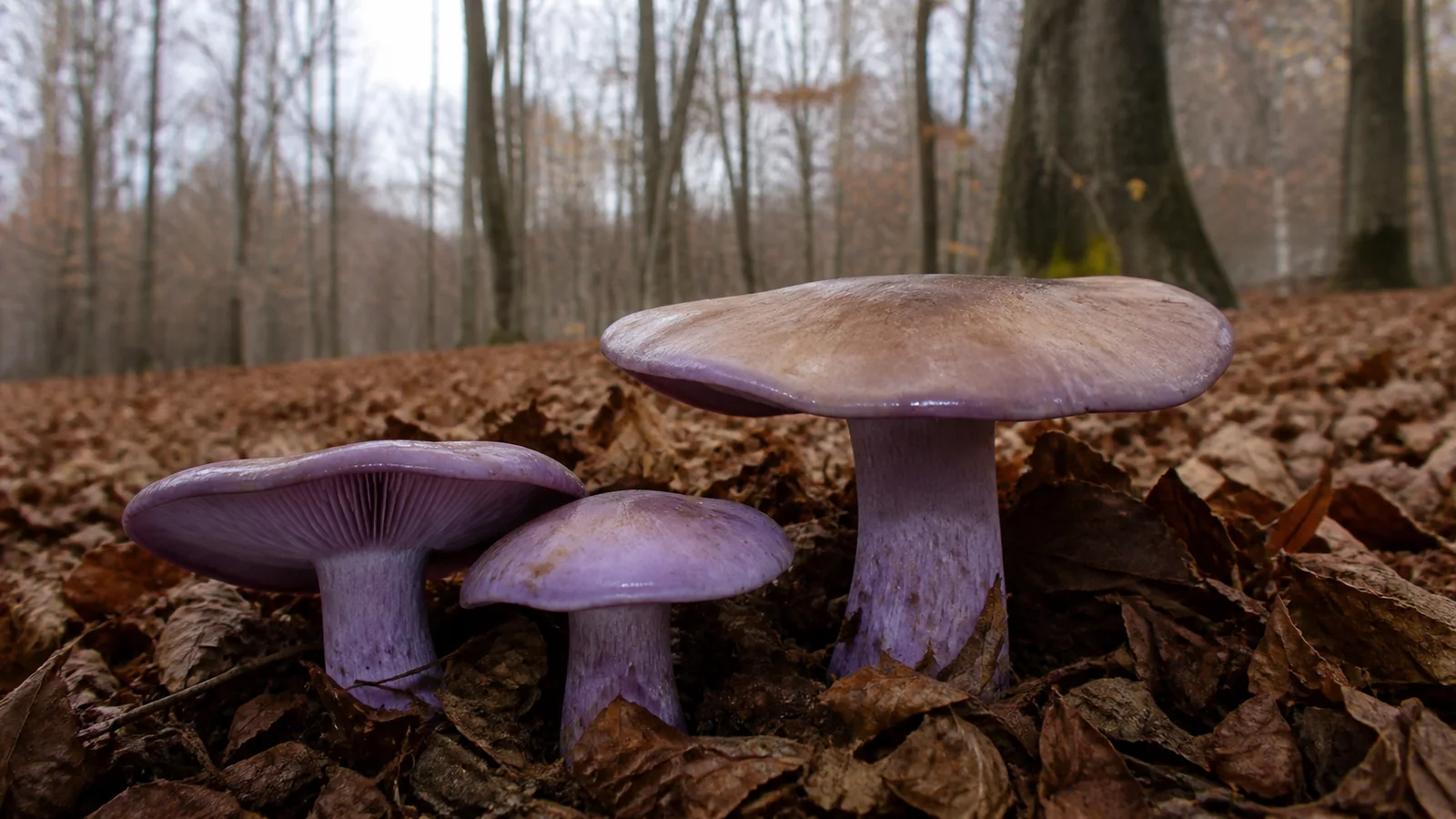
Most pages in this series argue their way to a recommendation. This one is quoting an instruction.
The sources on wood blewits do not hedge, which is unusual enough to be worth leading with.
Can you eat blewit raw?
No, and the wording in the references is unusually flat about it.
| Raw or undercooked | Properly cooked | |
|---|---|---|
| Safety | Reported to cause intense stomach upset | Widely eaten and not toxic |
| The compounds | Present and active | Broken down by heat |
| The instruction | Never | Ten to fifteen minutes |
| Even then | Try a very small portion the first time |
Most safety pages have to reason their way from an absence of evidence to a recommendation. Here the recommendation is already written down.
Wood Blewits must be cooked; never eat them raw.
A field reference, stated as an instruction rather than a preference
Pay attention to the cooking requirement as well as identification. Almost every other mushroom here is finished once it has been cooked, and this one carries a caution attached to the cooked version as well.
Blewits have a reputation for disagreeing with a minority of people.
That is a separate thing from the raw problem and more cooking does not solve it. It is the reason to eat a small amount the first time and then leave it a day, which the sources advise directly rather than something anybody inferred.
It is worth saying why anybody bothers, given all of that.
A blewit is a solid, heavy, genuinely good mushroom that turns up in quantity when the woods have gone quiet, and it is one of the few wild species that a person can find in a hedgerow bottom in December. The instruction on this page is strict because the mushroom is worth following it for.
There is a second species the same rules cover.
The field blewit is a close relative that lacks the violet cap and keeps the lilac in the stem, and everything on this page applies to it unchanged. People who learn one usually meet the other within a season.
What raw blewits actually do
The raw reaction is attested well enough to state plainly.
Warning
Eating blewits raw or undercooked is reported to cause intense gastrointestinal upset, severe enough that medical care can be needed. The compounds responsible are heat sensitive, so this is a cooking failure rather than a property of the species. Undercooked counts as raw for this purpose, which is why the timing further down matters more here than it does on most of these pages.
Undercooked is the word doing the work in that block. Nobody sets out to eat a raw blewit, and plenty of people take them off the heat while the pan is still wet.
Do not mistake the first release of water for the end of cooking.
A blewit releases a great deal of water, and the stretch where it sits simmering in its own liquid looks like cooking without being nearly enough of it. The heat has to carry on well past that point.
Heat sensitive is a more useful description than it sounds.
It means the compounds are destroyed rather than diluted or driven off, so there is no residue building up and no cumulative effect from eating them often. A properly cooked blewit is not a slightly safer raw blewit, it is a different thing.
The reaction, when it happens, is not subtle, and it means trouble in hours rather than days.
It behaves like a bad case of food poisoning and it arrives in hours rather than days, which at least means people connect it to the meal. That is the opposite of the problem in the next section.
The purple mushroom that is not a blewit
There is a second problem here and it is a different size entirely. The color that makes a blewit easy to recognize is a color it shares.
The delay is what makes that genus dangerous rather than merely unpleasant.
A reaction arriving a week later does not get connected to a mushroom by the person who ate it, and by the time anybody makes the connection the damage is done. That is a completely different shape of risk from the stomach upset in the section above.
Purple is rarer in fungi than people assume.
That is precisely why it works as a search image, and precisely why it fails as an identification. A color distinctive enough to spot from a path is not automatically a color that only one species wears.
None of this makes blewits a mushroom to avoid.
It makes color an unusable identification for this species, which is awkward, because color is exactly what the common name and every photograph of it lead with. The two checks below do not depend on color at all.
Cortinarius is not a small genus with one awkward member.
It is one of the largest genera of gilled fungi there is, its species turn up in exactly the woodland litter blewits like, and purple ones are not rare within it. This is not a freak coincidence of color, it is two common things that happen to look alike.
Cooking and identification address different risks.
Only one other article in this series describes a mistake that outlasts the meal, and both of them involve a delay long enough that the person affected stops thinking about mushrooms. Everything else here fails within the evening.

How to separate them
Two features settle it and neither of them is a shade of purple.
- Blewit spore print
- Pale pinkish-buff, faint on white paper
- Webcap spore print
- Rusty brown, and unmistakable
- The cobwebby veil
- Webcaps carry one from cap edge to stem, blewits never do
- On a mature webcap
- Rusty spores stain the stem where that veil used to be
- Blewit gills
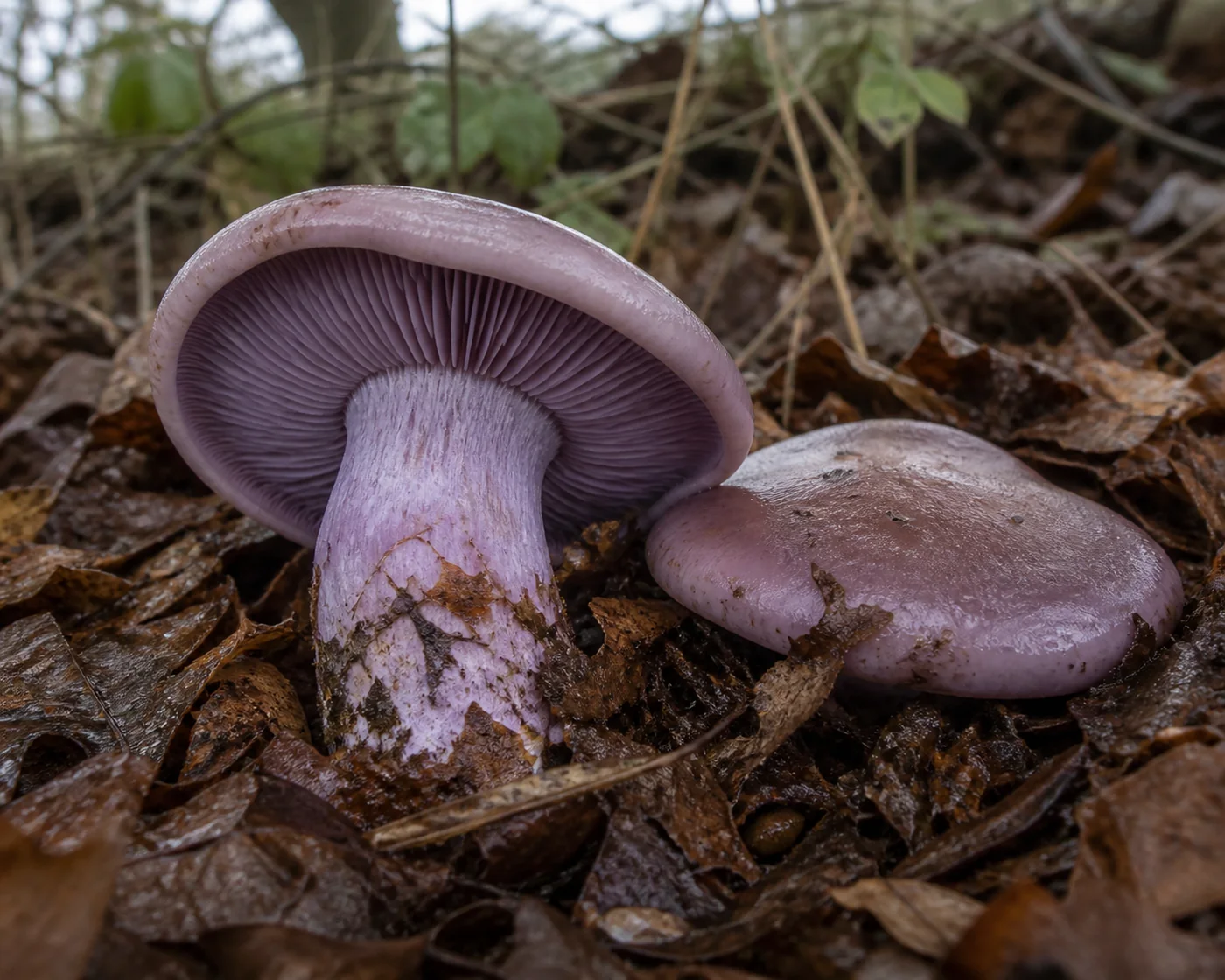
- Crowded and notched at the stem, with a clean junction
The spore print is decisive and it is worth the wait. Pale pinkish-buff against rusty brown is not a judgement call, and on a two-tone sheet neither result has anywhere to hide.
The cobweb is the check you can make out in the field, before any rusty spores appear.
A young webcap carries a fine cobwebby veil running from the edge of the cap to the stem, and a blewit has nothing there at all. On an older one the veil has gone and left rusty spores staining the stem, which is the same information arriving in a different form.

A print takes a few hours and the paper matters.
A pale pinkish-buff deposit is faint enough to miss on white alone, so half white and half black under the cap gives you somewhere for either answer to show. A rusty brown print will announce itself on either half.
An old specimen with no visible veil is the awkward case, and the print is the only answer left.
The cobweb is gone by then on a webcap, so the check that would have settled it in the field is no longer available and the print becomes the only answer. That is a reason to pick young ones rather than a reason to guess.
Do both the field check and the print on a patch you have not picked before, every time until that ground has proved itself.
Blewits are worth that small amount of ceremony on new ground.
They come up in quantity, they keep coming back to the same litter year after year, and a patch that has been printed once is a patch you can work with confidence for as long as it produces.
The field check gets the basket home and the print settles what actually goes into the pan. On ground you pick every year the field check alone is reasonable, once that ground has been printed at least once.
SafetyCan You Eat Beefsteak Polypore Raw? Yes, If You Slice It ThinWhere and when they come up
Blewits fruit when most of the season is already over.
The late season is a large part of why people know this mushroom at all. It comes up when the woods have mostly finished, so it lands in baskets that would otherwise be empty and it gets picked by people who are out of practice.
The stuck leaves are a small tell that comes with the habitat.
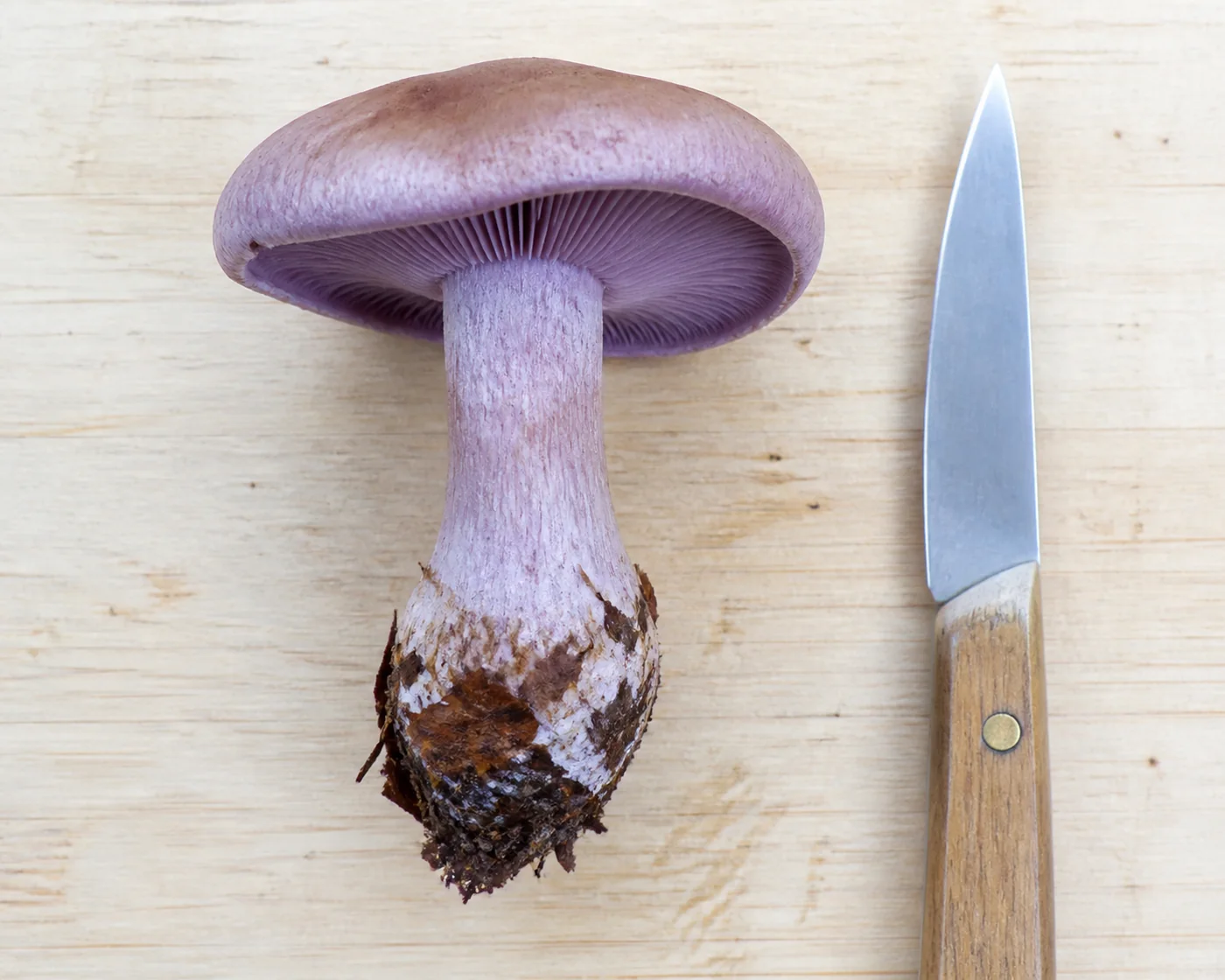
A blewit grows out of deep litter and comes up with fragments of it glued to the swollen base, which is a habit rather than a diagnostic, and it does help you find the base at all. The base is where the checks happen.
The smell is a supporting check rather than a decisive one.
A blewit has a faint aniseed or floral smell that people describe as pleasant and slightly perfumed, and it is worth knowing because it is unlike the plain mushroom smell most of the litter species carry. It confirms an identification and it does not make one.
A lot of people meet this species without going looking for it.
Blewits fruit in garden compost heaps, in mulched borders and along hedgerows, so they turn up in gardens as often as in woodland. That is worth saying because a mushroom found in your own garden feels safer than one found in a wood, and it is exactly the same mushroom with exactly the same neighbors.
Not every blewit in the litter is worth taking.
They go soft and waterlogged after heavy rain and slugs find them early, so a patch that looks generous often yields fewer than it first appears. Firm caps with the margin still inrolled are the ones worth carrying home.
Cooking them properly
The cooking is straightforward and the only thing that matters is not stopping early.
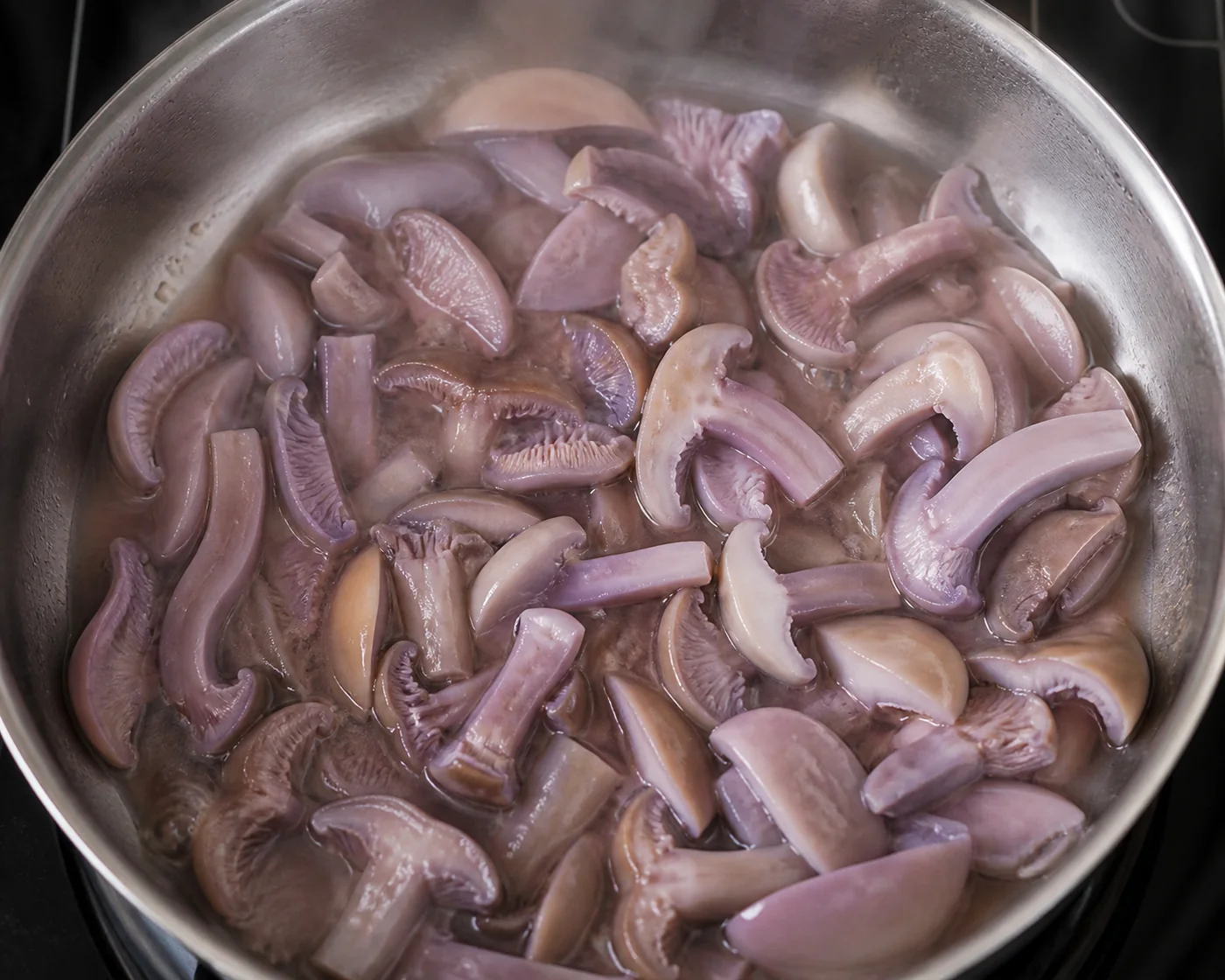
Dry sauteing means putting them into a hot pan with nothing in it and letting the water come out and leave. Only once the pan is dry does butter or oil go in, and that is the point at which browning and flavor start.
Ten to fifteen minutes sounds long for a mushroom, and it is the figure the sources give.
Most of that time is spent driving off liquid rather than cooking flesh, so it is less arduous than it reads. What it rules out is the three minute saute that leaves a pan of pale wet slices and a bad evening.

Dry first rather than fat first is worth explaining.
Fat added at the start coats the slices and slows the water leaving, so the pan takes longer to dry and the mushrooms spend that time stewing. Going in dry gets the liquid out fast, and the fat then does what fat is for.
A big pick keeps far better cooked than raw.
Blewits arrive in quantity and go soft in a fridge within a few days, where the same mushrooms cooked through and cooled will sit for the best part of a week and freeze properly as well. Cooking is the instruction anyway, so doing it on the day of the pick costs nothing.
The color going is normal in a properly cooked one, and it worries people.
A cooked blewit is brown rather than violet, and the lilac that made it worth picking has largely gone by the time it is safe to eat. Nothing has failed when that happens.
It is worth putting the two risks side by side before finishing.
The cooking one is common, mild by comparison, and entirely within your control at the stove. The identification one is rare, serious, and settled in a few hours with a sheet of paper.
Neither of them is a reason to leave blewits alone, and both of them are reasons to be deliberate.

There is a sensible response if a meal of blewits goes wrong.
A stomach upset a few hours after a blewit dinner is almost certainly undercooking rather than misidentification, and it passes. What changes the picture is symptoms that arrive days later or that involve anything other than the stomach, because that is not the pattern undercooked blewits produce and it is worth medical advice rather than waiting.
Keeping a raw specimen back from any new patch costs nothing.
One uncooked mushroom in the fridge is the difference between a doctor guessing and a doctor knowing, and on a species with a lookalike this serious it is a cheap habit for the first few picks from somewhere new.
So the answer is no, more firmly than anywhere else in this series.
The instruction is flat, the reaction behind it is real, and the fix is ten minutes in a hot pan. Take a small portion the first time, and the rest of it is simply a very good mushroom that fruits when almost nothing else does.
Sources & References
- Lepista nuda, Wood Blewit, First Nature States that wood blewits must be cooked and never eaten raw, that they are edible if well cooked but it is a wise precaution to try a very small portion at first, and that inadequate cooking can cause indigestion. Gives the 6 to 15 cm violet-tinged cap fading to buff with mid-brown centers, the lilac gills turning buff then brown, the pale pinkish-buff spore print, the faint aniseed smell, the August to December season, and the leaf litter, hedgerow, compost heap and dune slack habitats.
- Blewit Mushroom, Foraging, Identification and Cooking Tips, Foraging Guru States that blewit mushrooms should never be eaten raw and that doing so, while not deadly, can lead to intense gastrointestinal upset and the need for medical care. Recommends dry sauteing until the mushrooms have released their water and the pan is starting to look dry.
- Identifying Wood Blewits from Cortinarius Look-a-likes, Central Texas Mycological Society Gives the separation from the webcaps: a blewit spore print running light pink to white against the rust color of Cortinarius, the cobwebby veil that only Cortinarius carries, the rusty staining that color leaves around a mature webcap stem, and the bulbous blewit stem base with leaves stuck to it.