
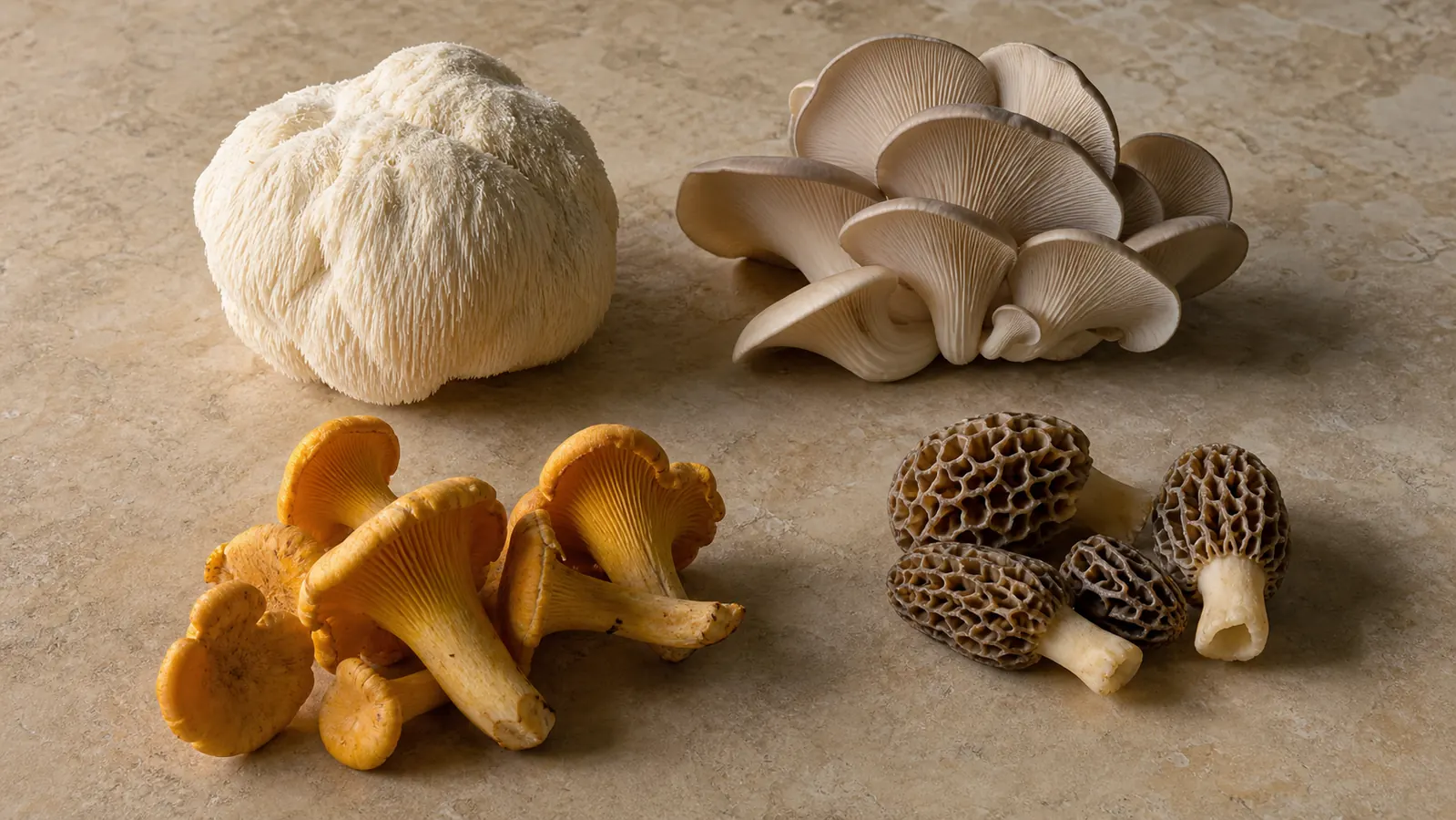
Lion?s mane ranks first for most beginners because its hanging teeth create a strong anatomy lesson and cultivated examples are easy to study. Oyster mushrooms place second for access and clear shelf growth, chanterelles place third because false gills require practice, and morels place fourth because the outside and inside must both be checked.
-
1
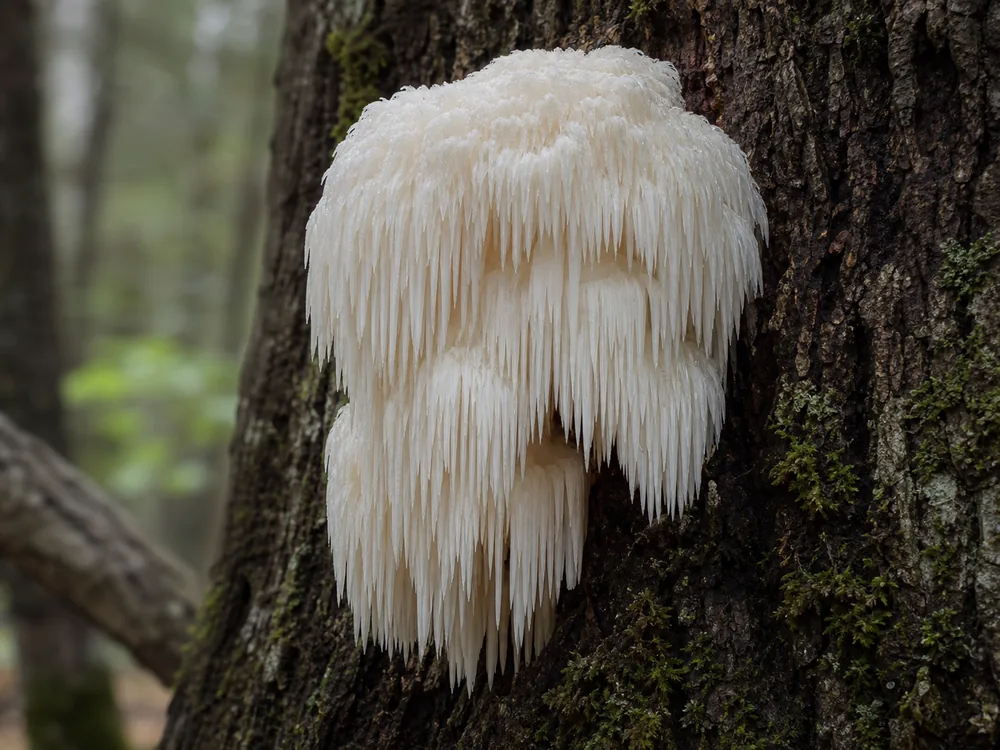 Hericium erinaceus
Lion's Mane
Safest to identifyAn unmistakable white pom-pom of spines with no [dangerous lookalikes](/guides/dangerous-lookalikes/). Also easy to grow.
-
2
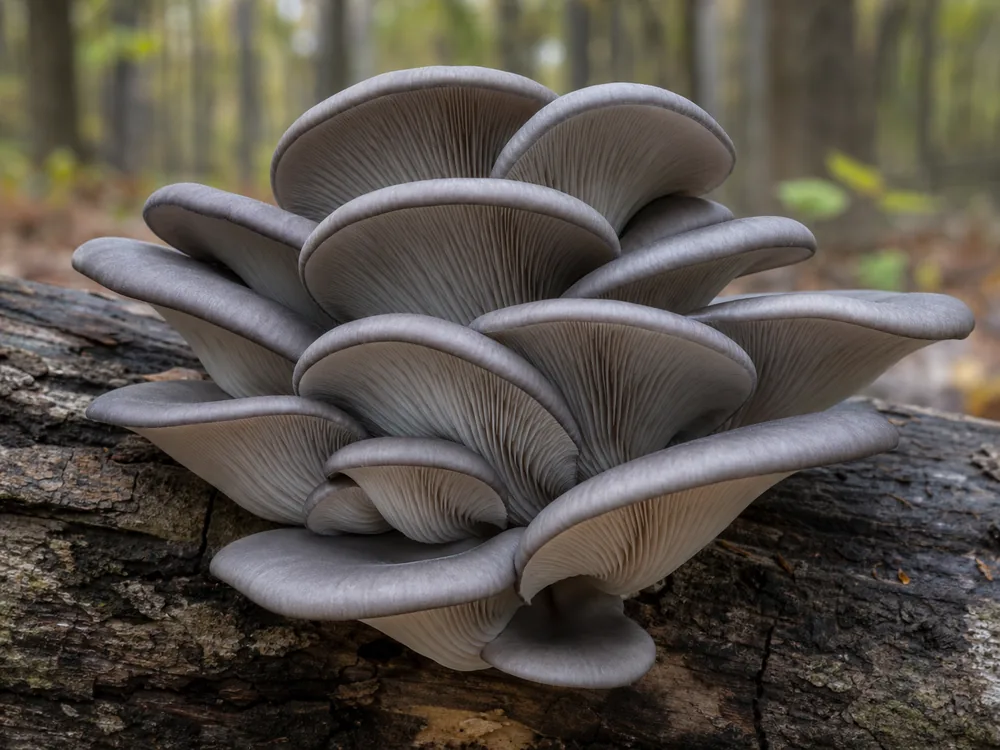 Pleurotus ostreatus
Oyster Mushroom
Easiest to growShelf-like clusters on hardwood, common in the wild and the simplest gourmet mushroom to cultivate.
-
3
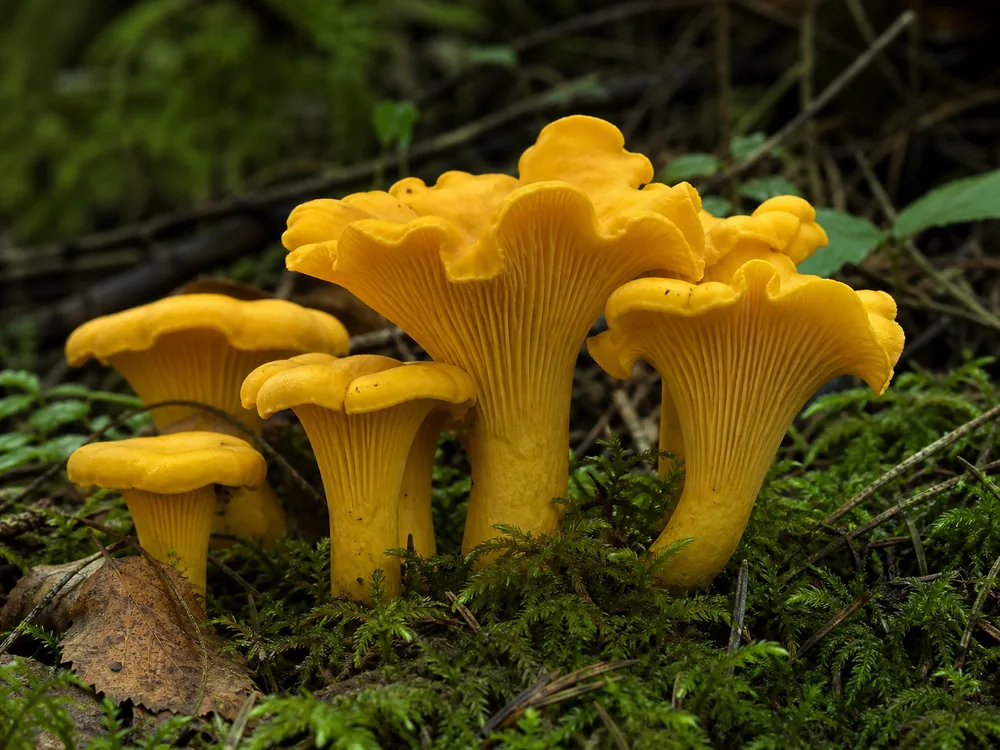 Cantharellus cibarius
Chanterelle
Best to forageGolden, with false gills and an apricot smell. Learn to separate it from the [Jack O'Lantern](/mushrooms/jack-o-lantern/) first.
-
4
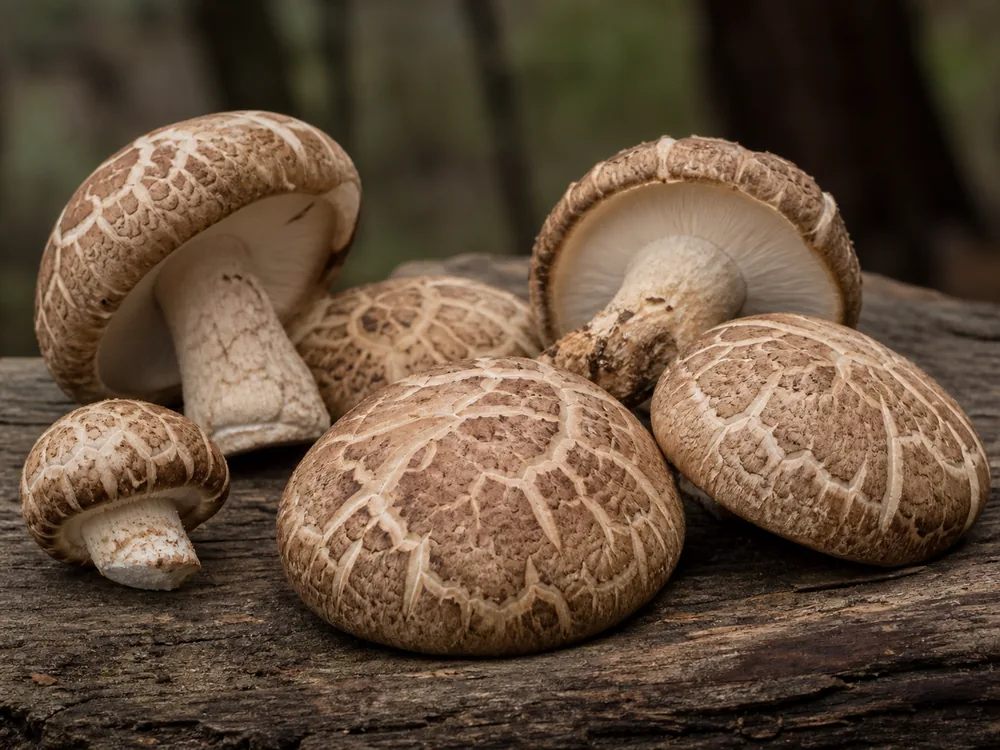 Lentinula edodes
Shiitake
Safest to buyCultivated and sold everywhere, so you can learn its flavor with zero identification risk.
- Best first anatomy lesson
- Lion's mane, because hanging teeth replace the usual cap-and-gill form.
- Best cultivated study species
- Oyster mushroom, sold fresh and available in home fruiting kits.
- Best underside lesson
- Chanterelle, once you can separate blunt ridges from sharp true gills.
- Best saved for later
- Morel, because false morels and raw toxicity add two separate safety checks.
- Ranking purpose
- Choose what to study first, never approve an unknown wild mushroom for eating.
The ranking rewards repeatable learning
A beginner needs correct examples that can be examined more than once because store-bought and cultivated mushrooms let you compare young and mature stages without making a meal depend on a wild identification.
The beginner ranking orders four learning criteria, including visible anatomy, access to known specimens, dangerous-lookalike severity, and preparation rules.
| Rank | Mushroom | Strongest beginner advantage | Main limitation |
|---|---|---|---|
| 1 | Lion's mane | Hanging teeth and no normal cap or gills | Several related Hericium species need separation |
| 2 | Oyster mushroom | Cultivated access and shelf clusters on wood | Wild shelf fungi require substrate and gill checks |
| 3 | Chanterelle | Distinctive blunt ridges and soil habitat | Toxic jack o'lanterns punish a color-only decision |
| 4 | Morel | Memorable pitted cap and hollow interior | False morels and raw toxicity raise the consequence |
This learning-value ranking never guarantees edibility because even a familiar study group becomes unsafe when substrate, age, geography, or structure contradicts its description.
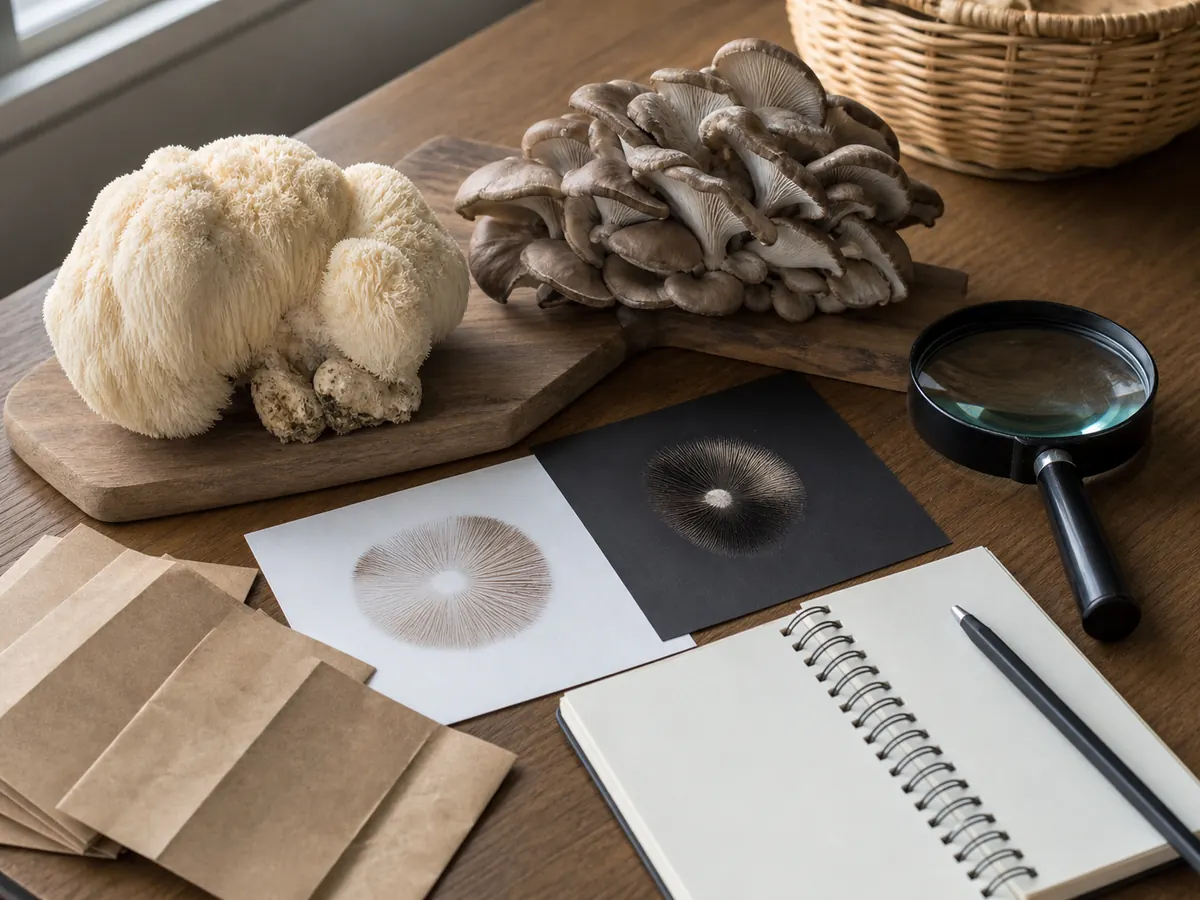
Known cultivated material has another advantage. You can cut it, print its spores, smell it, cook it, and watch it age, which builds a fuller reference than one perfect photograph.
Which beginner mushroom offers the clearest anatomy lesson?
Lion's mane forms a white rounded mass covered in hanging teeth with no ordinary cap, gills, or pores, so its basic structure stands apart from most mushrooms a beginner encounters.
The teeth are the important feature. They point downward from the fruiting body and become more visible as it matures, while a smooth white ball or a shelf with pores requires another identification.
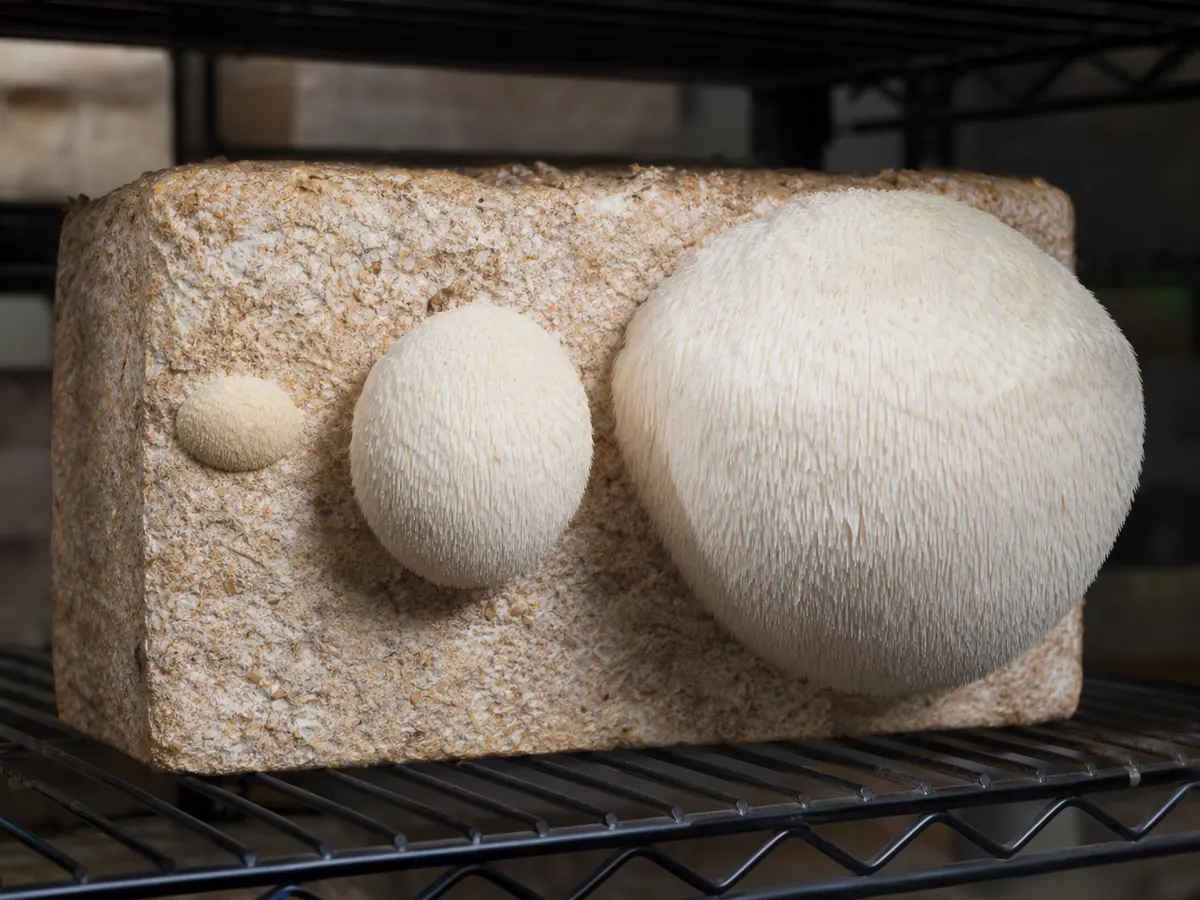
Habitat still matters. Hericium species grow from hardwood, often from a wound on a living tree, a standing dead trunk, or a fallen log, and the attachment should be photographed before the specimen is moved.
A toothed fungus growing from soil, conifer wood, or a buried root needs a different candidate list because the host and attachment can outweigh a familiar white shape. Photograph the wood surface and branching pattern together so a local identifier can separate compact lion's mane from coral-shaped relatives and unrelated toothed fungi.
Bear's head tooth and coral tooth branch differently from compact lion's mane, so the shared toothed anatomy teaches how several related edible species can occupy one genus.
Freshness is easier to judge on a known specimen than edibility is on an unknown one. Fresh lion's mane is white to cream and firm, while broad yellowing, browning, wet decay, insects, or a sour odor show that the mushroom is past its useful stage.
Cultivated lion's mane is increasingly sold at markets and in grow kits. Studying those correct examples teaches tooth length, texture, branching, and color change without asking a beginner to trust a first wild find.
The ranking does not make every white toothed fungus food. A wild specimen still needs local confirmation, a clean hardwood site, legal collection, and a complete check of the related species found in that region.
Best ofWhich Mushrooms Give Risotto the Best Texture and Depth?2. Oyster mushrooms are accessible but demand a wood check
Oyster mushrooms rank second because store specimens and grow kits reveal the full change from clustered pins to broad overlapping caps before any wild comparison.
Wild oysters usually fruit from dead or dying hardwood. The caps overlap like shelves, the stem is lateral or nearly absent, and the pale gills run down toward the attachment point.
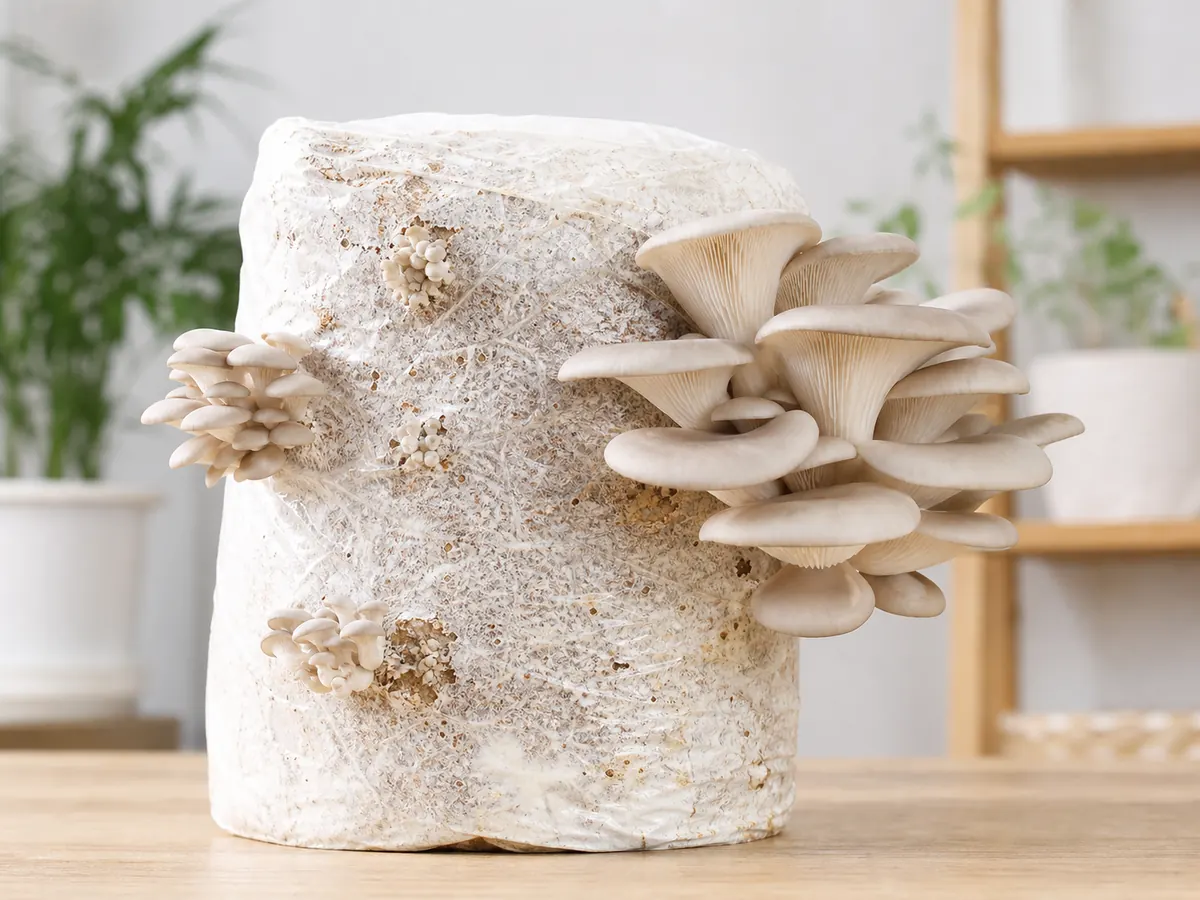
Cap color varies from white and gray to tan or brown, so color carries less weight than structure. A central stem, pores instead of gills, or growth from open soil breaks the expected pattern.
Orange color, a hairy cap, or a tough rubbery texture can point toward a different shelf fungus even when several caps overlap on wood, so the oyster decision needs pale downward-running gills, lateral attachment, suitable hardwood, and fresh flexible flesh to agree before color contributes anything.
A mature oyster usually leaves a pale spore print. The print supports the field marks, but it cannot overcome a contradictory substrate or an underside that does not match Pleurotus.
Accessibility drives the oyster ranking because a grocery cluster can be turned over, cut, printed, and cooked while a grow kit reveals how pins merge into shelves under adequate fresh air over several days, giving the learner a reliable sequence against which a later wild cluster can be compared without relying on memory.
Wild oyster collection carries more risk than market study because angel wings, other shelf fungi, and orange clusters require a regional comparison.
Oysters also teach why the attachment point belongs in every photograph. A mushroom appearing to grow from soil may be connected to buried wood, while a cluster on a stump makes the wood relationship obvious.
3. Chanterelles reward a trained underside check
Chanterelles rank third because the most useful feature is subtle until someone has compared it with true gills. The yellow or orange cap draws attention, but the underside decides whether the first impression deserves to continue.
True chanterelle ridges fork and merge as part of the cap flesh, unlike sharp independent gills that stand as thin blades.
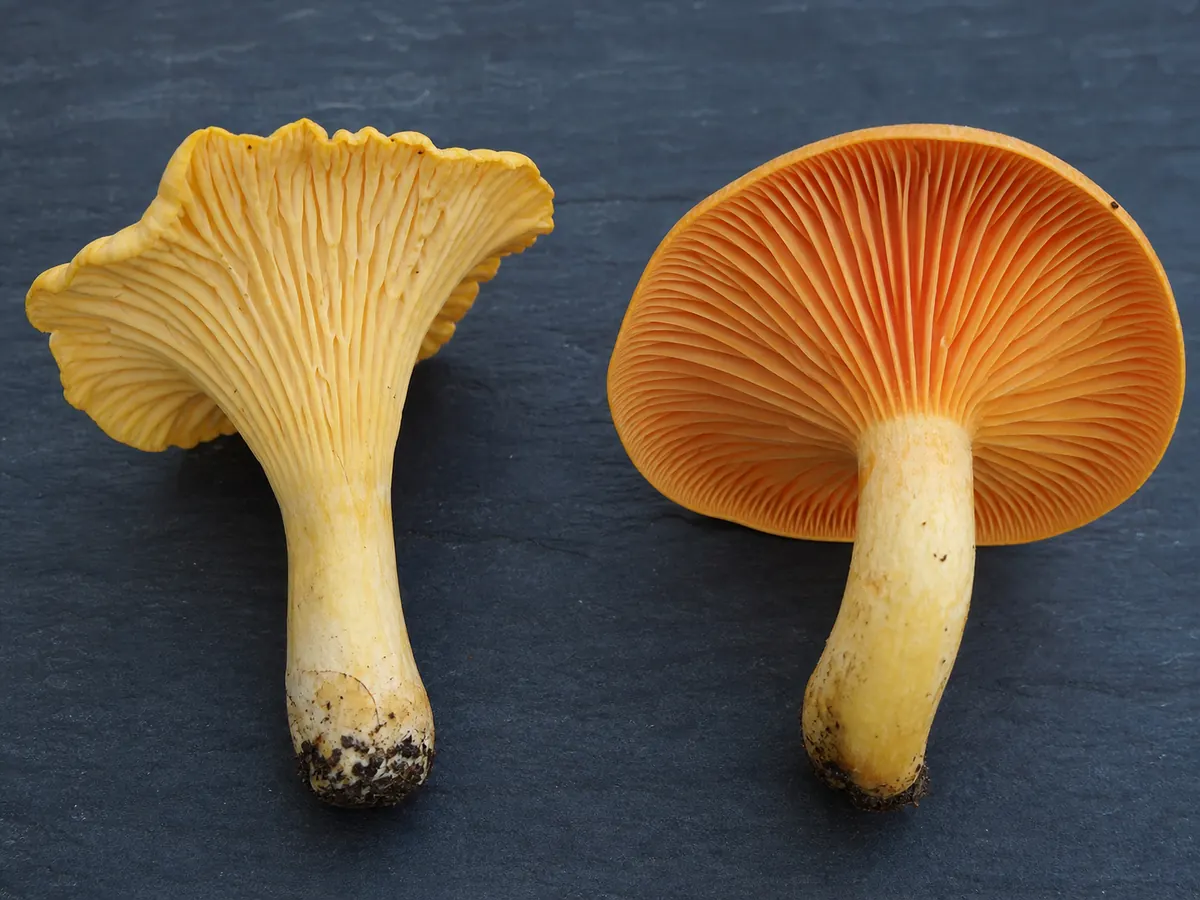
Habitat creates another useful separation. Chanterelles grow from soil with living trees and usually appear singly or in loose groups, while jack o'lantern mushrooms grow in dense clusters from wood or buried roots.
Warning
Orange color never identifies a chanterelle. Reject any specimen with thin true gills, a dense shared cluster, or direct wood growth until a knowledgeable local identifier has examined it.
The flesh and odor provide supporting evidence. Many chanterelles have solid pale flesh and a mild fruity smell, but scent changes with age and moisture and should never overrule the underside.
False chanterelles can show crowded orange gills that fork, so forking alone is not enough because true chanterelle ridges look like raised veins built from the cap tissue while separate gill blades can be lifted or broken away and send the specimen back to the comparison stage.
Chanterelles are rarely cultivated at ordinary retail scale because they form partnerships with living trees. Beginners therefore get fewer known examples than they do with lion's mane or oysters, which is one reason the group ranks lower.
A guided comparison of chanterelle ridges and jack o'lantern gills gives the word "ridge" a physical meaning that photographs often miss.
4. Morels are memorable but less forgiving
Morels place fourth because their pitted caps look distinctive yet the safety check must continue inside the mushroom. False morels can share the spring season and a wrinkled outline while carrying much more serious risk.
A true morel cap forms orderly pits and ridges rather than loose brain-like lobes. When cut from the top through the stem base, the mushroom should be continuously hollow.
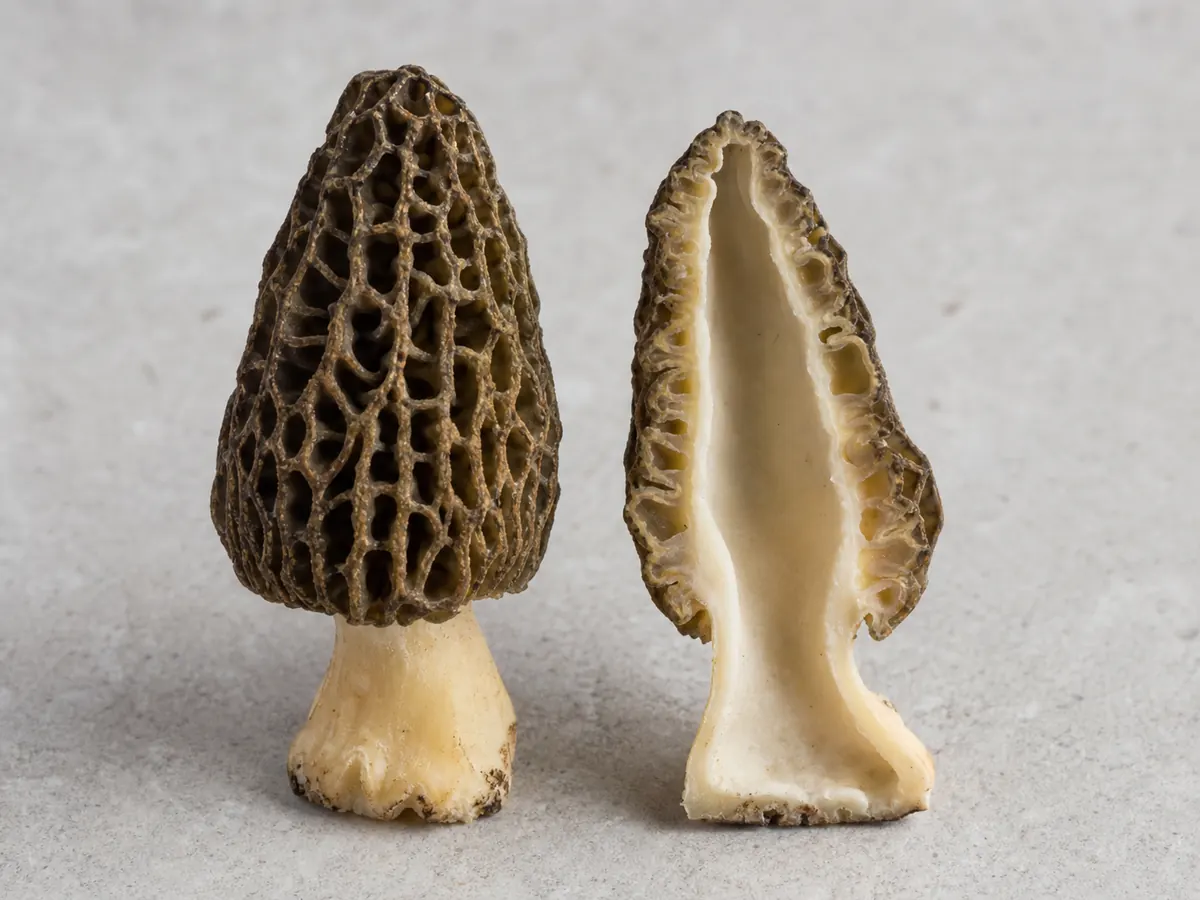
False morels vary. Some have chambered interiors or cottony tissue, and their caps can hang over the stem rather than joining it in the pattern expected for a true morel.
Verpa species add another spring comparison because the cap may attach only at the top of the stem and hang like a thimble, unlike a true morel cap attached along its lower edge, so a careful lengthwise cut must preserve that attachment and the entire stem interior because trimming either end removes the evidence that settles the comparison.
A morel cut must agree with cap attachment, stem texture, habitat, season, and the local Gyromitra and Verpa candidates.
True morels introduce a preparation hazard even after the name is correct. Raw and undercooked morels can cause gastrointestinal and neurological symptoms, so they need thorough cooking and a cautious first portion.
Morels are also highly prized, which creates pressure to decide quickly and keep a valuable find. That pressure makes them a poor first food species even though the honeycomb outline is easy to remember.
A supervised spring outing is the better entry point. An experienced identifier can show several true and false forms, make the lengthwise cut, and explain which local habitats produce each group.
Best ofThe Best Mushrooms to Grow at Home, Ranked by ForgivenessHow should you choose your first study mushroom?
Choose lion's mane for the clearest structural lesson, using a market specimen or grow kit to study teeth, branching, attachment, freshness, and cooking across several days.
Choose oyster mushrooms when you want to watch development. A fruiting kit reveals how pins form in clusters, how caps expand, and how fresh air affects stem length.
- Choose a known cultivated specimen when you need repeatable anatomy.
- Choose a supervised outing when the lesson depends on habitat.
- Keep every wild unknown separate and fully documented.
- Leave any specimen that contradicts one major field mark.
| Learning setting | Best fit | What the setting teaches | What it cannot prove |
|---|---|---|---|
| Grocery or farmers market | Lion's mane or oyster | Correct anatomy, cutting, spores, and cooking | Identity of a later wild specimen |
| Home grow kit | Oyster or lion's mane | Pinning, growth, harvest stage, and aging | Local wild lookalikes |
| Guided woodland walk | Chanterelle | Ridges, soil habitat, and tree association | Safety of an unsupervised future find |
| Guided spring walk | Morel | Cap attachment, hollow interior, false forms | That every pitted mushroom is a true morel |
Chanterelles fit a learner who has access to a local club or experienced forager. Their value is the side-by-side underside lesson, and that lesson is strongest when true ridges and sharp gills can be compared in the hand.
Morels fit a later supervised season. They reward a learner who already preserves the stem base, cuts specimens methodically, records habitat, and accepts that a valuable mushroom can still be left behind.
Repeated known specimens teach natural variation better than one exciting wild encounter that tests memory without a reliable reference.
Build a three-specimen reference set
One perfect specimen teaches an outline, but three specimens show which features persist through age and weather. Photograph a young, mature, and aging example from above, below, and at the complete attachment point, then keep the images together with habitat and date.
Use a spore print when color helps separate the candidate set, and compare every specimen with the full descriptions of its dangerous lookalikes. A contradiction in the base, underside, substrate, or interior outweighs several broad similarities.
Take the reference set to an experienced local identifier during a beginner foraging outing before treating the group as familiar. Repeated confirmation teaches natural variation without turning the study into a meal decision.
A useful reference set includes negative examples whose named rejection features train the eye to stop before resemblance becomes certainty.
Revisit the same group in another season or weather while preserving complete specimens and habitat records, because useful familiarity includes variation and repeated confirmation.
Label each reference photograph with the attachment point, substrate, underside, base, and the feature that ended competing identifications. This turns a gallery of attractive caps into a record another person can audit.
A useful study set contains the same group at more than one age because cap margins, color, firmness, and odor change as mushrooms mature. The underside, attachment, complete base, and substrate should still support the identification at each stage.
Ask the local identifier to name the feature that would have rejected the specimen, not only the feature that confirmed it. Record that answer with the original date and location because a loose photograph cannot recover the season, habitat, or regional context later.
A beginner label never settles edibility
Use this ranking to choose a study subject, never to put an unknown wild mushroom in a pan.
Photograph a wild find before moving it, keep the full base, record the substrate and nearby trees, and separate every unknown specimen. A regional field guide should match the whole description, including the dangerous alternatives.
In-person verification matters most for a first edible find. A local club or experienced identifier can inspect texture, odor, attachment, and subtle three-dimensional features that disappear in a phone photograph.
After verification, keep one uncooked specimen and try only a small cooked portion of the new species so intolerance or a preparation error is not confused with several unfamiliar mushrooms.
Key takeaway
Distinctive means easier to study. It does not mean safe from one photograph, safe in every region, or safe without checking the whole specimen.
Never pick and eat wild mushrooms unless they've been identified by an expert!
Poison Control
The final order
Lion's mane stays first because hanging teeth, hardwood growth, and cultivated access give the most repeatable evidence. Oyster mushrooms follow because they are widely available and teach a coherent combination of shelves, wood, lateral stems, and downward-running gills.
Chanterelles come third because a beginner must learn a tactile underside distinction and rule out a toxic orange cluster. Morels come fourth because a lengthwise cut, local false-morel knowledge, and thorough cooking are all required.
If you can study only one, start with the species you can examine repeatedly as a confirmed specimen because correct repetition builds a safer field eye than collecting the mushroom with the most memorable name.