Overview
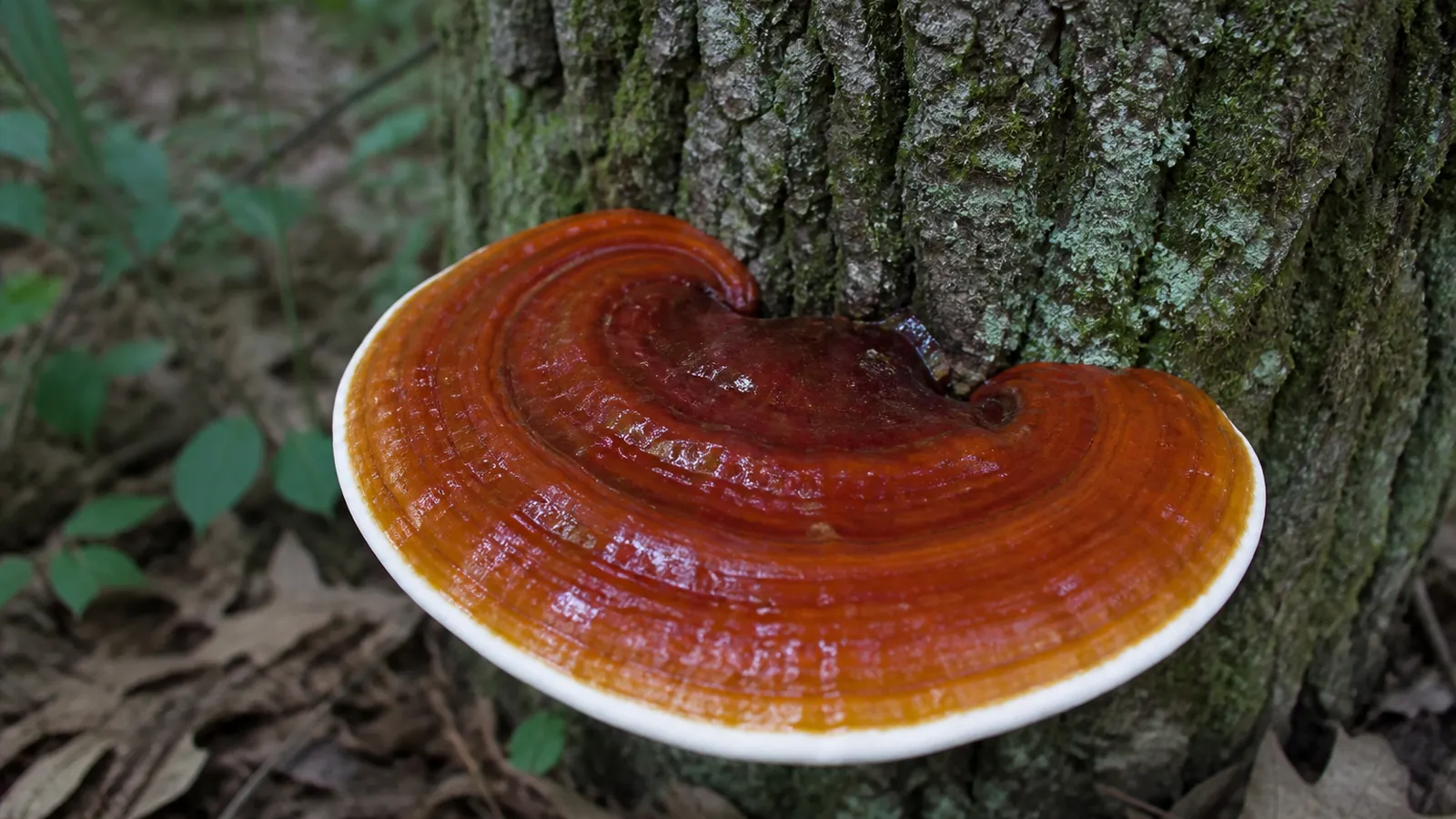
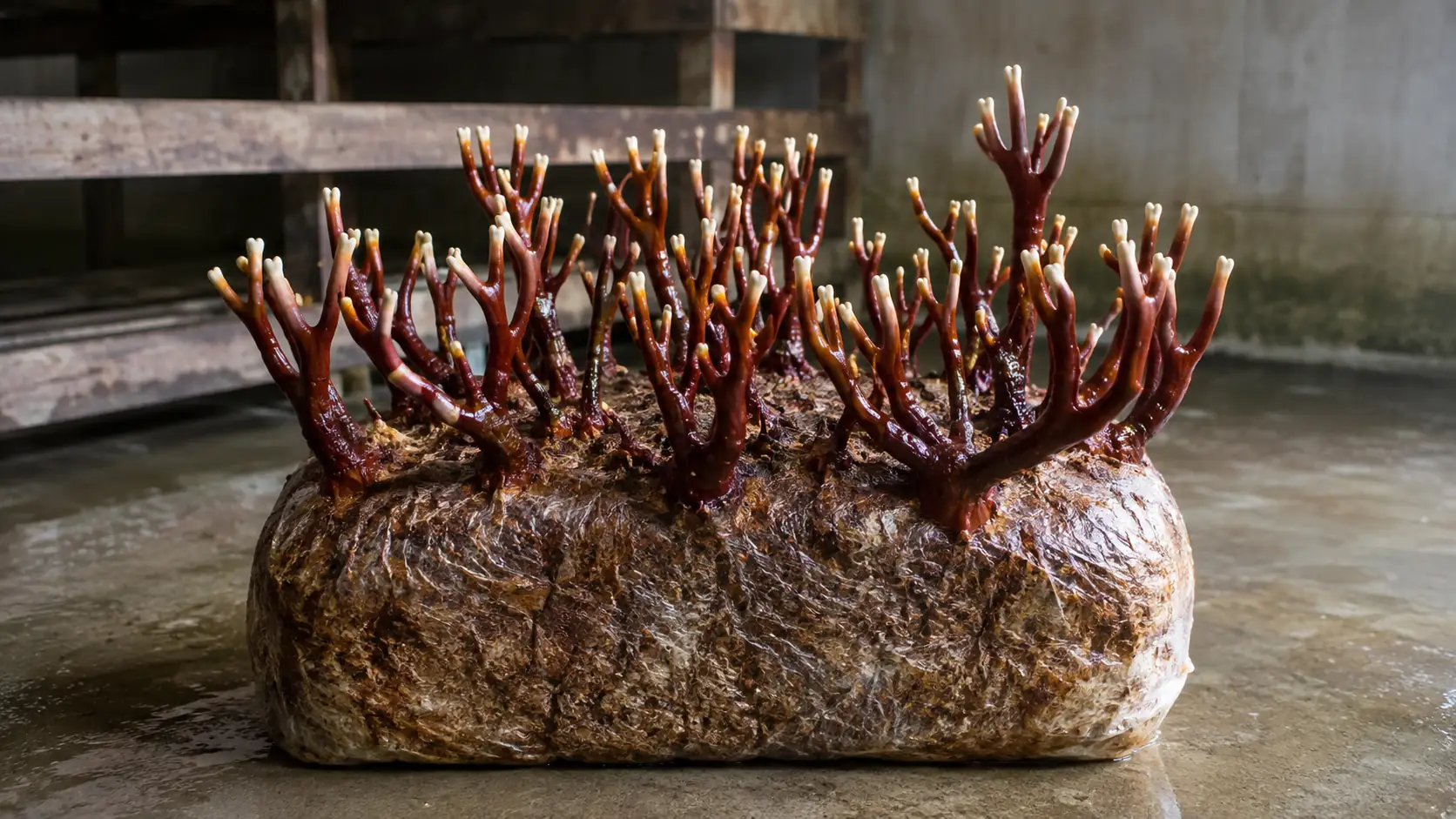
Antler reishi looks like polished branches because its growing tips continue moving outward without building the broad pore-bearing cap familiar from reishi. The cream tip marks active growth, followed by yellow-orange tissue and then the reddish lacquered crust.
This form is not a separate botanical variety, and it is not proof of a special wild species. Growers deliberately create it by limiting air exchange during a particular stage of fruiting.
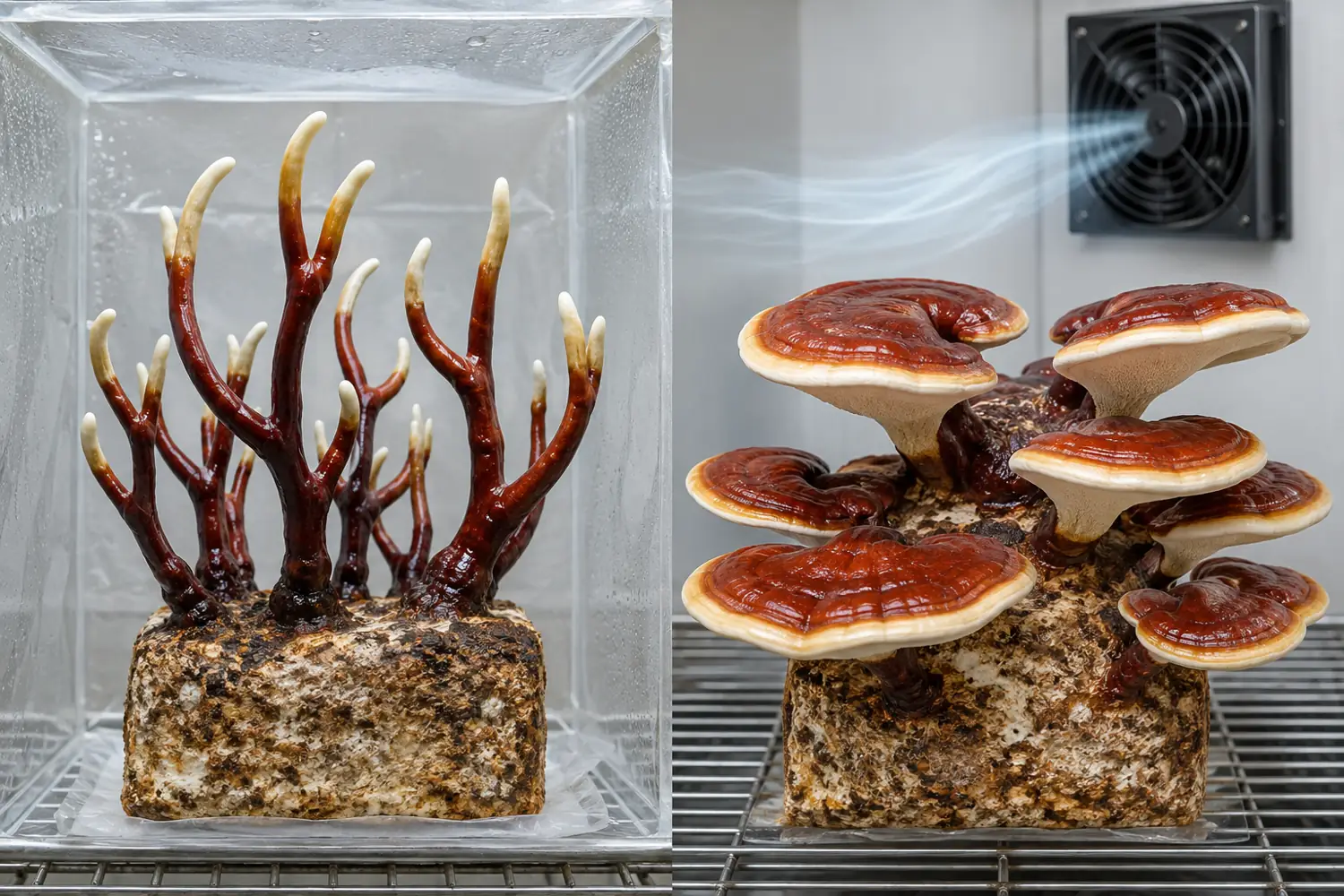
In published cultivation work, high carbon dioxide under minimal ventilation promoted antler-like fruit bodies. More ventilation allowed horizontal cap expansion, while light affected development and the chemical profile measured in the resulting tissue.
Morphology records the environment as well as the strain. A branched specimen therefore tells you how it grew, but it cannot authenticate the culture or predict the composition of an extract.
How do you recognize true antler reishi?
Antler form may remain as upright cylindrical or flattened branches with cream growing tips and lacquered yellow, orange, red-brown, or dark mature tissue. A fan-shaped cap develops only when environmental signals permit lateral expansion.
No gills. Antlers without expanded caps have little or no broad pore surface; shelf-form fruit bodies produce fine pale pores underneath.
The elongated sterile branches function as extended stipes and may divide repeatedly like antlers. They arise directly from colonized hardwood substrate.
The interior is dense, pale, and corky to woody when mature. Odor is mild and not diagnostic.
First decide whether the object is living antler-form tissue, a dried fruit body, or a manufactured imitation. Living antlers arise from colonized wood, have continuous branching tissue, and carry pale actively growing tips rather than glued joints or a painted surface.
The surface behind the tip becomes yellow to orange and then reddish brown, often with the lacquered sheen typical of laccate Ganoderma. Branches can be round, compressed, fused, or forked, and their proportions change with ventilation.
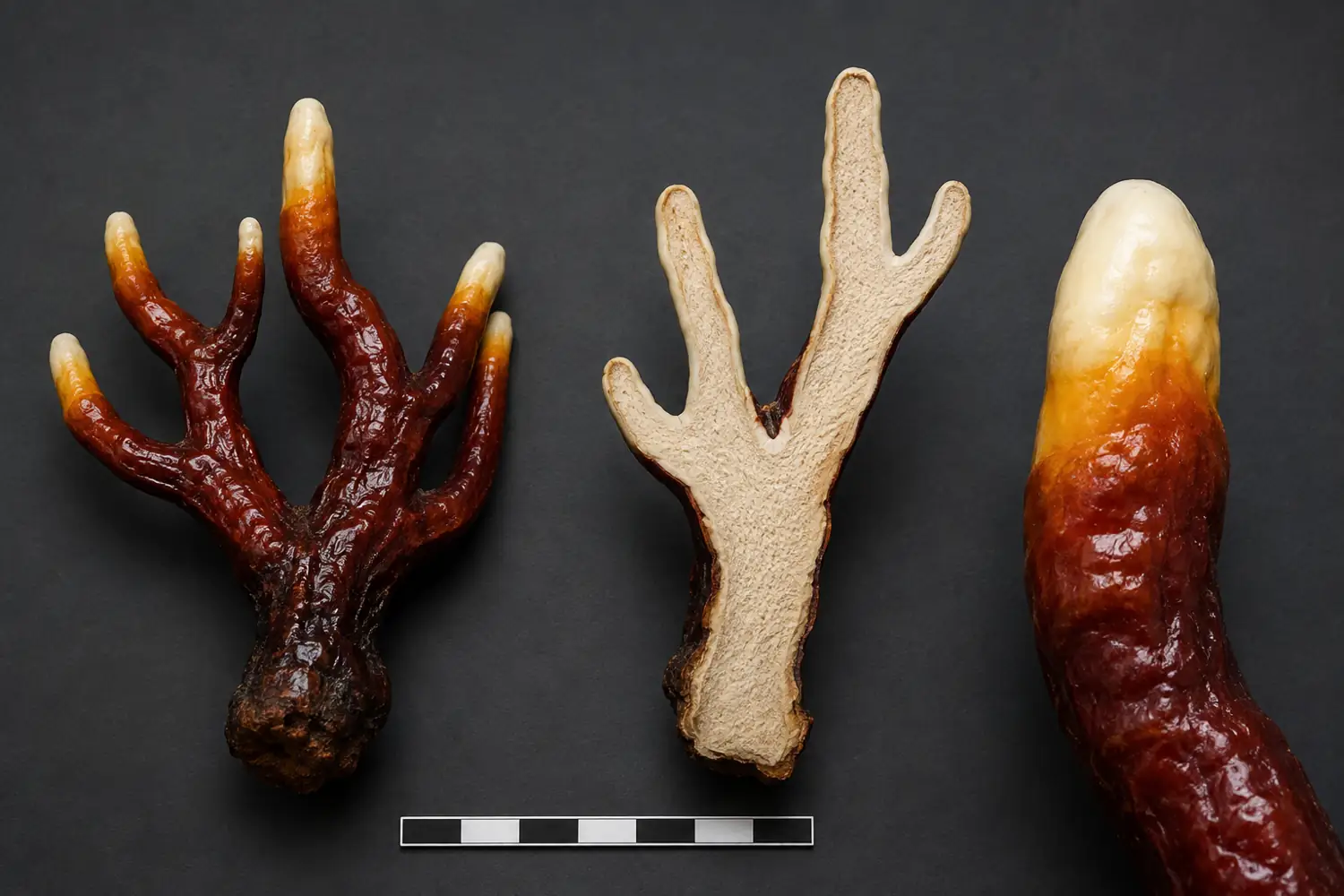
A clean lengthwise cut should show coherent pale fungal context rather than hollow plant pith, wood grain, or separate antlers fastened together. The absence of a cap is expected in this form, not evidence that the specimen is immature or defective.
Is antler reishi safe to take?
Reishi products can cause adverse effects and may interact with medicines, particularly when they affect bleeding, blood pressure, blood sugar, immune function, or liver monitoring. Product quality and reported reactions vary, so the exact preparation matters.
Do not use antler reishi to replace prescribed care or to treat a serious condition without clinical guidance. People who are pregnant, breastfeeding, preparing for surgery, taking anticoagulants, or managing liver disease should discuss the specific product with a qualified clinician.
If illness follows ingestion of an unidentified wild fungus, use the poison-response guide and keep the remaining material. A branched red-brown shape is not enough for emergency identification.
What can be mistaken for antler reishi?
Antler-form lion's mane can also branch, but it develops hanging teeth and stays white rather than forming a lacquered red crust. Coral fungi branch from soil or buried wood and have fleshy upright arms without reishi's varnished surface and dense woody context.
Young Xylaria and other club fungi may form dark fingers, although their brittle charcoal-like texture, smaller scale, and internal anatomy differ. Decorative roots, carved wood, and resin replicas are a commercial rather than biological lookalike.
The hardest distinction is among cultivated Ganoderma strains. *Shape alone cannot separate G. lucidum, G. lingzhi, and related laccate species*, especially when elevated carbon dioxide suppresses cap and pore development.
Do not identify a powder or extract as antler reishi from color. Milling removes tips, branching, crust, context, substrate, and every field character visible in the intact fruit body.
For a finished product, require the scientific name used by the producer, strain or supplier record, fungal part, extraction method, carrier ingredients, and lot-specific testing. Those records do more work than a branch silhouette on the label.
How do growers produce the antler form?
To grow antler reishi consistently, begin with a verified culture and a fully colonized hardwood substrate. Follow the reishi growing instructions for substrate preparation and cultivation conditions, then watch how fresh-air conditions affect the fruiting shape.
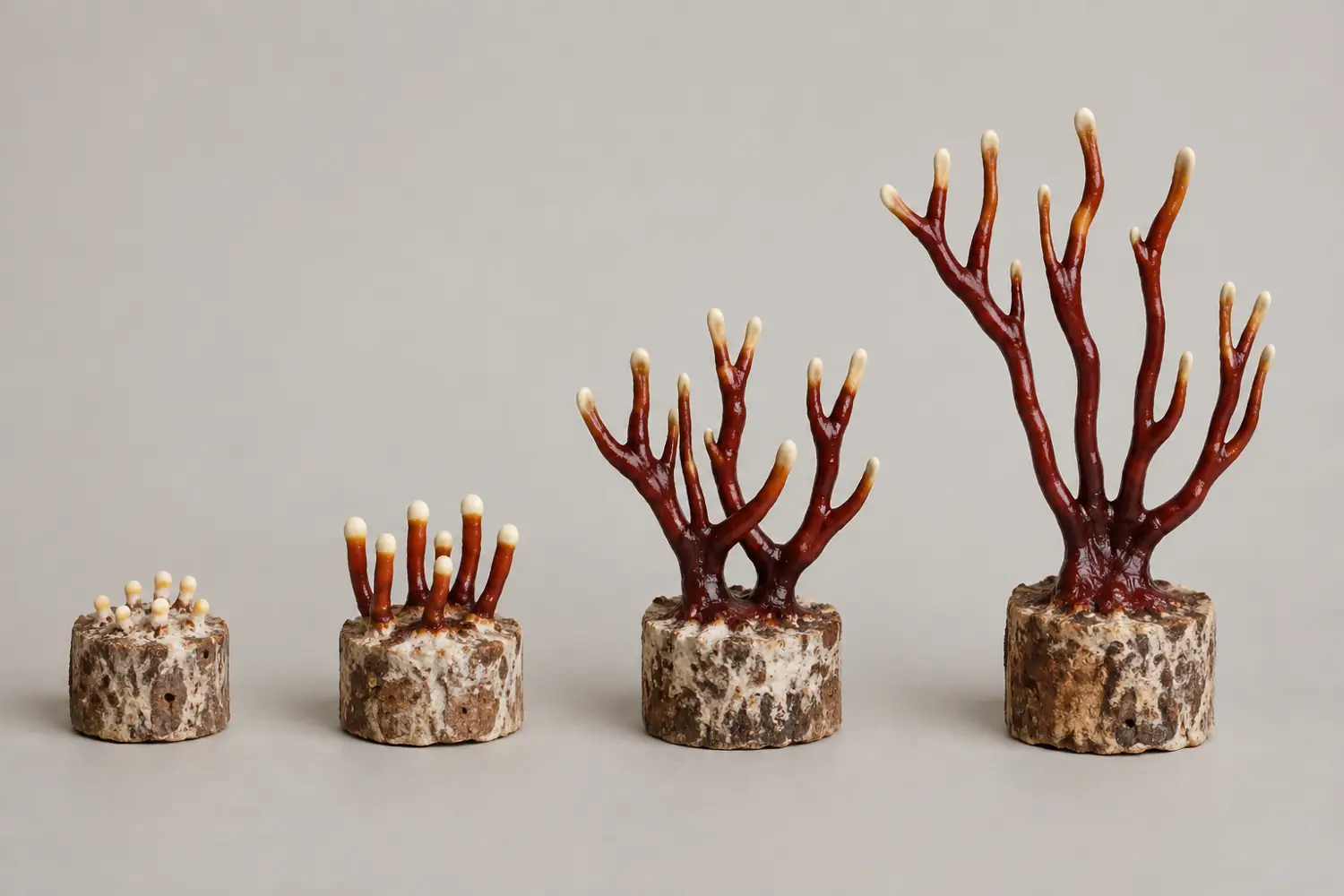
Restricted air is a production input with tradeoffs, not a vague instruction to seal the crop. Poor gas exchange can combine with heat, condensation, and contamination, so measure conditions and observe the blocks rather than copying a bag opening from a photograph.
Is antler reishi always Ganoderma lucidum?
The name Ganoderma lucidum was established from European material, but “reishi” and “lingzhi” products often use the name for cultivated Asian lineages now treated as Ganoderma lingzhi. Other regional laccate species also enter commerce.
Antler is a morphological term and can be produced by more than one strain or species under restricted ventilation. It should follow the organism name in a record rather than replace it.
Keep the label, culture identity, and growth form as three separate facts. This prevents an attractive antler shape from being used as evidence for a scientific name that was never verified.
Does antler shape change the medicinal evidence?
Research on reishi includes polysaccharides, triterpenoids, proteins, sterols, and other fractions, but antler shape does not guarantee a higher or clinically superior concentration. Cultivation conditions can change measured compounds while the same conditions also change morphology.

| Evidence question | What to verify |
|---|---|
| Which organism? | Voucher, culture accession, sequence, and naming authority |
| Which fungal material? | Antler fruit body, shelf fruit body, mycelium, spores, or mixture |
| Which preparation? | Water extract, alcohol extract, dual extract, powder, or purified fraction |
| Which outcome? | Laboratory marker, animal endpoint, symptom, or clinical event |
| Which dose? | Defined amount of the tested preparation, not a name borrowed by another product |
Most mechanistic findings come from laboratory or animal models, and human studies differ in preparation and quality. A chemical difference is not automatically a patient benefit, and it cannot establish a universal dose.
Treat product claims as specific propositions that need specific evidence. “Antler grown” describes morphology, while clinical usefulness depends on identity, preparation, trial design, outcome, and adverse-event reporting.
What do antler reishi labels actually measure?
Antler reishi is consumed as a small amount of dry powder or extract rather than a serving of fresh food. Standard mushroom nutrition panels therefore say little about a particular tea or capsule.
Total polysaccharide, beta-glucan, and triterpenoid measurements answer different analytical questions. Results also shift with fungal part, strain, substrate, harvest time, extraction solvent, carrier, and test method.
A label should be read as a batch specification, not a species description. Check the serving amount, extract ratio, declared carriers, allergens, microbial results, heavy metals, and whether each numerical claim names its method.
Can you cook antler reishi as food?
Mature antler reishi is too fibrous and bitter for normal mushroom cookery. Slices are simmered mainly to make a bitter decoction, then the woody solids are discarded rather than chewed.
A beverage made from a verified commercial ingredient still needs a declared amount and preparation method. Longer boiling changes extraction, but it does not solve a mistaken identity or remove every contaminant.
Do not add a wild branched fungus to soup because it resembles a product photo. Culinary handling begins only after the material has a traceable identity and suitable food-quality processing.
How does the growing environment shape each antler?
Wild reishi fruit bodies decompose hardwood, and cultivation recreates that carbon-rich substrate with sawdust blocks or logs. The fungus colonizes the interior before any antlers appear, so a clean white block can spend weeks building biomass out of view.
Once fruiting begins, the tip responds strongly to the air immediately around it. Carbon dioxide accumulates when a bag, bottle, or chamber has little fresh-air exchange, and continued tip growth produces narrow branches rather than a wide cap.
Light supplies developmental information rather than photosynthetic energy. Humidity protects tender tips from drying, but stagnant saturated surfaces can favor bacterial blotch or competitor molds.
The useful unit is the microclimate at the growing tip. A room reading cannot explain a malformed block when bags, shelving, fans, and crowding create different local conditions.