
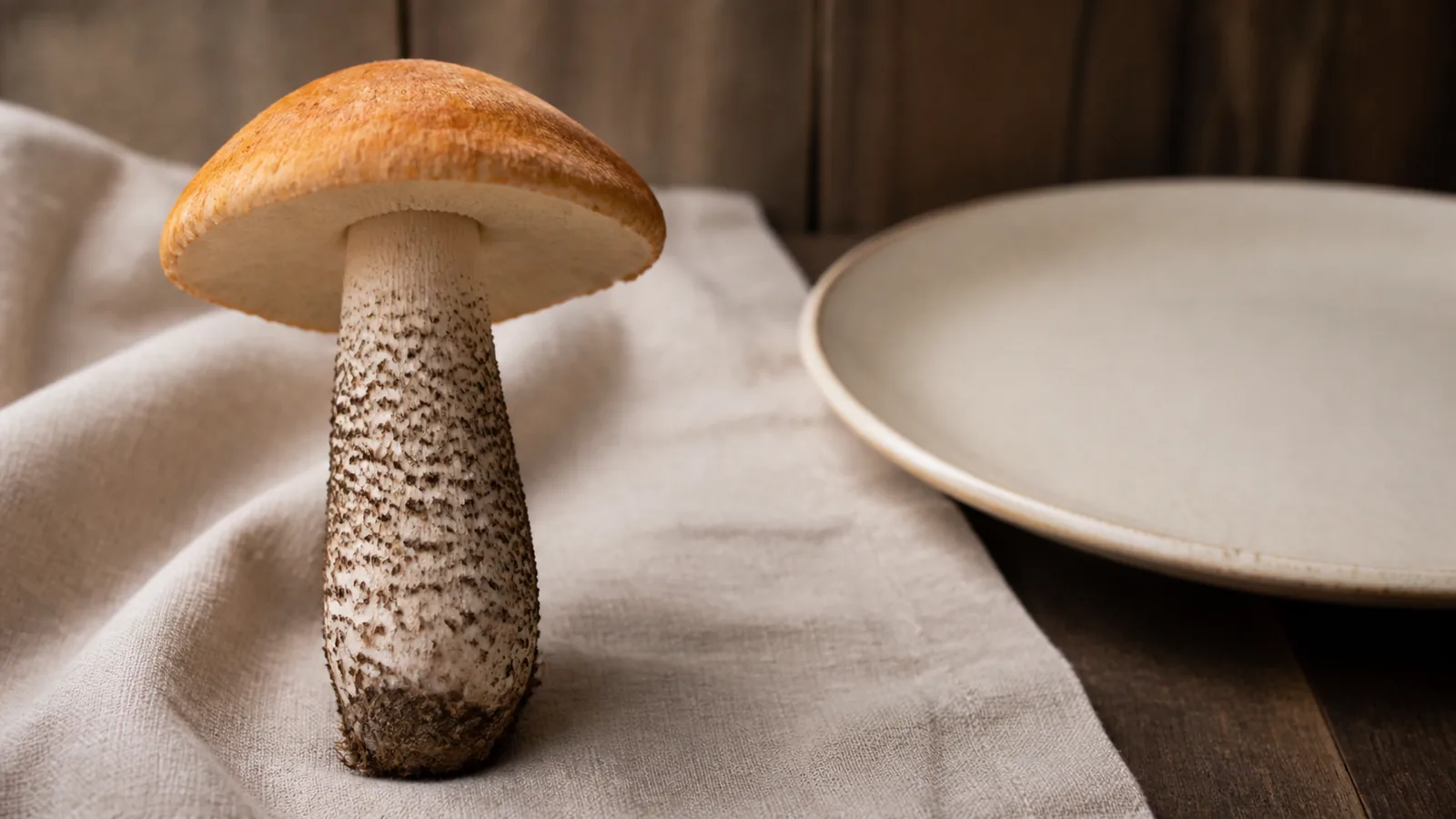
Orange birch bolete comes with a more specific warning than many wild mushrooms.
Norwegian Poison Information says Leccinum versipelle needs at least 15 minutes of heat treatment, yet no controlled pregnancy study establishes that a verified and fully cooked serving is safe.
Our recommendation is to leave it out during pregnancy. This is a precaution against three avoidable uncertainties involving species identity, complete heat treatment, and the collection site, rather than a claim that every orange birch bolete harms a pregnancy.
A labeled cultivated mushroom can fill the same place in a sauce, soup, or skillet without asking one meal to carry all three unknowns.
Should you eat orange birch bolete during pregnancy?
Skip orange birch bolete during pregnancy even when an experienced collector supplies it.
Its ordinary edible status depends on correct identification and prolonged heating, while pregnancy-specific outcomes have not been studied.
The heat rule matters because it is attached to this species by a national poison-information service. It still answers only how an accepted specimen should be prepared for ordinary consumption.
Pregnancy advice has to ask a different question. No source used here can supply a studied serving size, frequency, trimester, maternal outcome, or fetal outcome for Leccinum versipelle.

Correct identification would remove one uncertainty, and complete heating would reduce another. Neither step tells you the contaminant burden of an unknown woodland site or creates the missing pregnancy data.
CDC food-safety guidance advises pregnant people to choose safer foods and follow clean, separate, cook, and chill practices, which reduce common microbial risks but do not constitute an agency assessment of orange birch bolete as a pregnancy food.
WHO also advises eating wild mushrooms only when they have been definitively identified as nonpoisonous. That general boundary is relevant here because a common name, a seller's confidence, or one photograph cannot prove that every piece in a batch belongs to the same species.
- Choose a named cultivated mushroom in intact packaging.
- Check the date, condition, and cold storage before cooking.
- Keep unwashed mushrooms and their utensils away from ready-to-eat foods.
- Cook the cultivated mushrooms thoroughly and chill leftovers promptly.
This substitute does not make food safety automatic. It removes the field-identification and collection-site questions so normal kitchen controls can do the job they were designed to do.
SafetyAre Golden Oyster Mushrooms Safe During Pregnancy?Why does orange birch bolete need at least 15 minutes of heat?
Norwegian Poison Information states that orange birch bolete is edible after a minimum of 15 minutes of heat treatment.
The same guidance says insufficiently heated specimens probably cause more cases of stomach upset in Norway than any other mushroom.
- Minimum treatment
- At least 15 minutes under active heat
- Typical onset
- A few hours after eating
- Typical symptoms
- Nausea, vomiting, diarrhea, and abdominal pain
- Usual course
- Symptoms often pass within one to two days
- Severe exposure
- A large amount can cause gastric distress requiring hospital care
That wording gives the cooking threshold unusual weight. It comes from poison surveillance and public guidance, not from a culinary preference about browning or texture.
Timing needs a practical starting point because a crowded pan may spend several minutes warming and releasing water.
Count the interval only after all pieces are receiving active heat, and use even slices so thick centers do not lag behind browned edges.
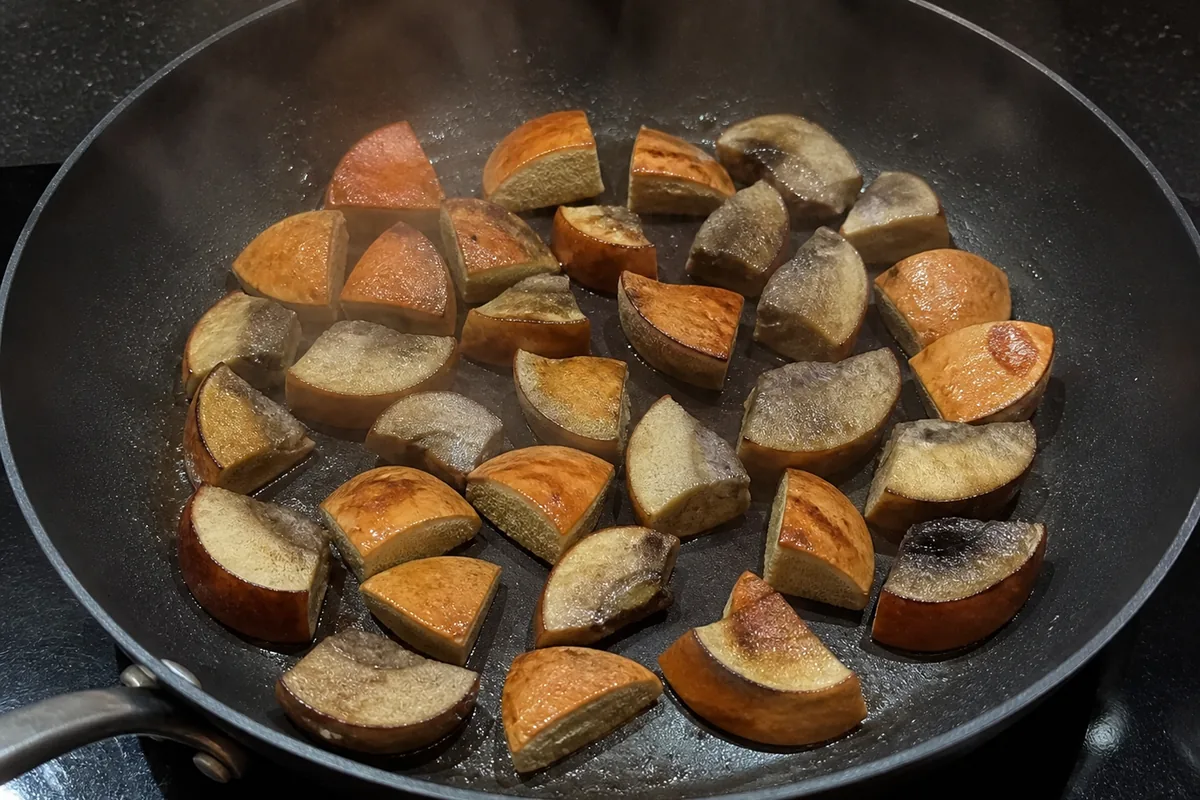
- Keep each mushroom whole until identification is complete.
- Trim soil and damaged tissue, then cut the accepted specimens evenly.
- Avoid crowding that steams some pieces while others barely warm.
- Maintain active cooking for the full minimum period.
- Serve promptly and refrigerate leftovers without a long room-temperature hold.
The public guidance does not publish a universal internal temperature for this mushroom. Slice thickness, starting temperature, water release, pan load, and cooking method all change how quickly heat reaches the center.
Pregnancy adds another limit. A 15-minute treatment can reduce the specific undercooking risk, but it cannot establish a safe pregnancy dose, correct a mistaken identity, or remove mercury that entered the mushroom while it grew.
Nausea and vomiting are also common in pregnancy, which makes home interpretation less reliable. After a wild mushroom meal, do not assume that new digestive symptoms are routine morning sickness simply because they began on a familiar day.
How can you confirm it is Leccinum versipelle?
Orange birch bolete is the common name used here for Leccinum versipelle, a member of the family Boletaceae.
NCBI lists that as the current name and Boletus versipellis as the older basionym, so either Latin name may appear in records.
The complete identification is a pattern of features and habitat. It is never an orange-cap shortcut because cap color shifts with age, moisture, and natural variation, while several Leccinum species can look close.
First Nature describes mature caps from about 8 to 20 cm across and stems reaching about 20 cm tall. Size supports a description, but it cannot rescue a specimen whose underside, full stem, host tree, or staining behavior was never recorded.
NatureSpot asks recorders to photograph a fresh specimen from above, the side, and underneath, while keeping the entire stem and noting habitat, substrate, associated trees, and staining. A meal decision deserves at least that much evidence plus confirmation from a regional expert.
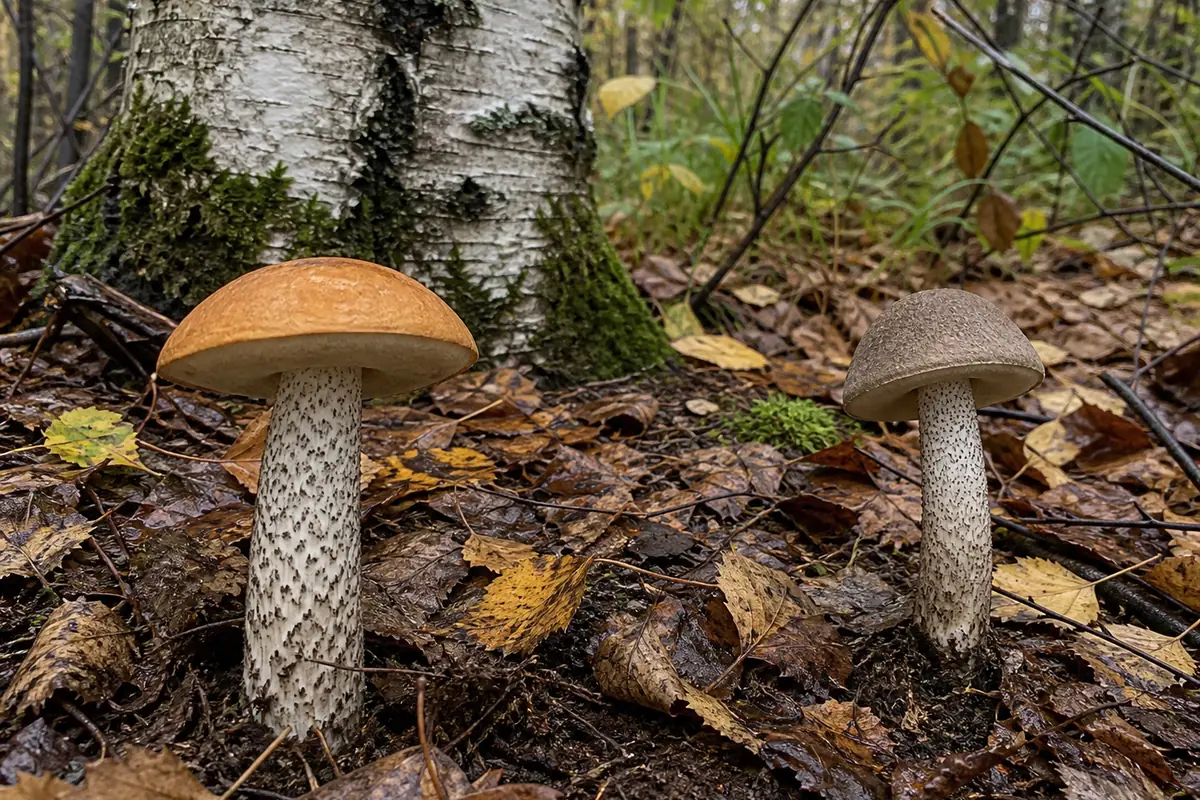
Brown birch bolete usually means Leccinum scabrum.
It has a brown cap and lacks the same marked cut-flesh color progression, so its pregnancy decision remains separate even though both mushrooms grow with birch.
Other orange-capped Leccinum can be associated with aspen, oak, pine, or other hosts depending on species and region. The nearby tree is evidence, but root systems overlap and an apparent host viewed from one angle can be wrong.
A loose cap, cropped phone image, or bag of sliced stems has already lost evidence. Do not taste an unknown specimen, and do not use an app match as permission to serve it.
SafetyAre Hedgehog Mushrooms Safe During Pregnancy?Does blackening mean orange birch bolete is spoiled?
Fresh, sound orange birch bolete flesh can darken dramatically after it is cut.
The pale tissue moves through gray or violet tones and may become almost black, while the stem base can show a blue-green stage.
This is an expected staining response in Leccinum versipelle. It can also appear during cooking or drying, so a dark finished dish is not automatically burnt, spoiled, or poisonous.

The color change has strict limits as evidence. It does not prove the species, show that a batch received 15 minutes of heat, measure mercury, or reveal whether the food is suitable during pregnancy.
Condition still matters before cooking. Reject mushrooms that are slimy, moldy, waterlogged, sour-smelling, collapsing, or extensively tunneled by insects, even when their staining looks typical.
Key takeaway
Normal darkening begins in otherwise firm tissue after cutting or handling. Decay changes texture, odor, surface condition, or structural integrity, and those defects are reasons to discard the specimen.
A firm cross-section can reveal hidden larvae, rot pockets, and uneven thickness before the pan is heated, but it cannot show a natural toxin or contaminant by sight, so visual inspection remains a condition check rather than a laboratory test.
Do not try to keep the flesh pale by shortening the cooking time. The dark color is a poor reason to compromise the only species-specific preparation threshold in the official guidance.
SafetyAre Oyster Mushrooms Safe to Eat During Pregnancy?Can the collection site change the food-safety decision?
Yes, a correctly identified orange birch bolete can carry a different contaminant burden depending on where it grew.
Fungi exchange materials with their environment, and a species name does not standardize the soil beneath every fruiting body.
A peer-reviewed Polish study tested 371 Leccinum versipelle fruiting bodies and 204 soil samples from 19 localities. Median mercury concentrations in caps varied by site from 0.20 to 2.0 mg per kg of dry mushroom, with a median of 0.65 mg per kg across the 19 locality medians.
The caps generally contained more mercury than the stems. That distribution means trimming the stem or choosing a young cap cannot be assumed to produce a predictable dose without testing the actual lot.
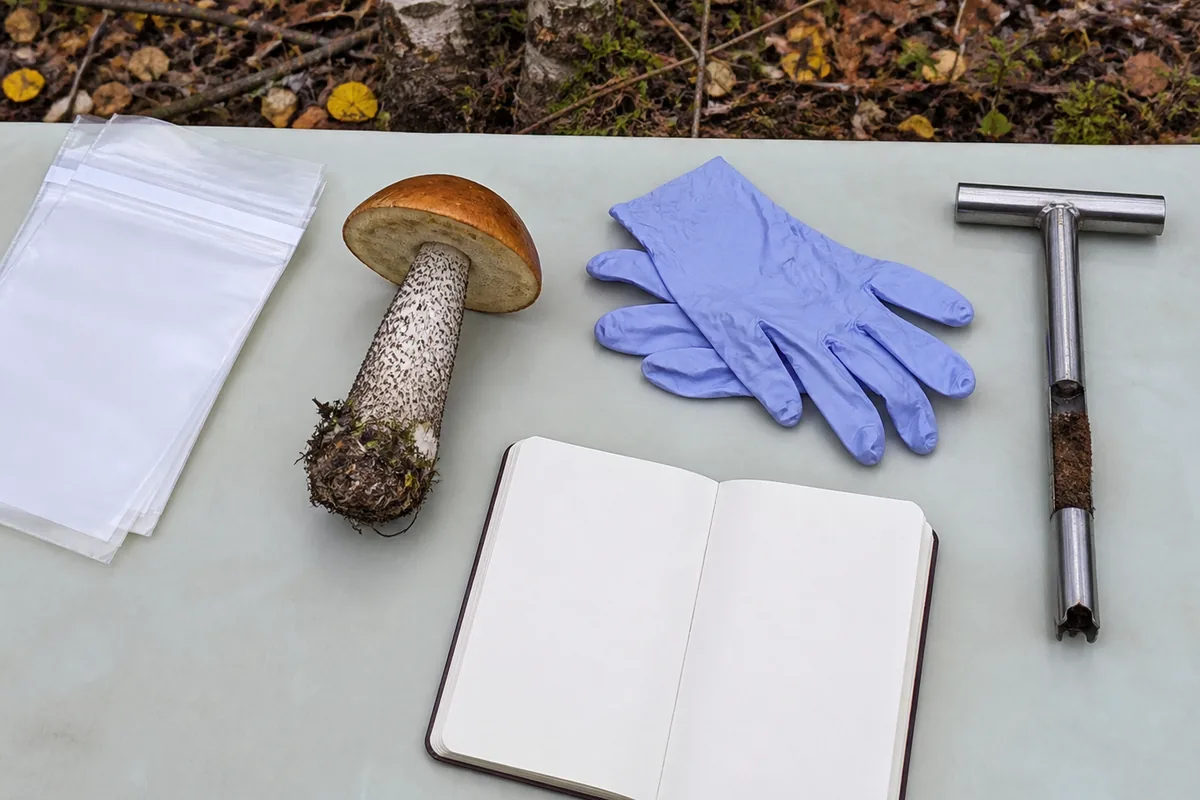
The researchers modeled a 300 g mushroom meal eaten once in a week. Specimens from some locations could exceed the provisional tolerable weekly mercury intake used in the paper, while most sampled locations remained below that level even under more frequent consumption assumptions.
Those calculations require careful interpretation because they use a large serving, dry-biomass measurements, a particular intake benchmark, and Polish sites, so they do not prove that one ordinary serving from another country is hazardous.
They also do not study pregnant participants or fetal outcomes. The useful finding is variation by locality, which turns collection site and lot identity into food-safety information rather than background trivia.
- Avoid mushrooms collected beside busy roads, mine waste, industrial ground, treated land, or unknown dumping areas.
- Keep the exact location, date, collector, and batch together.
- Do not mix mushrooms from several sites into one untraceable bag.
- Never describe an untested woodland as clean merely because it looks natural.
Home washing removes surface soil but does not pull mercury accumulated within the tissue back out. Cooking controls the underheating problem, yet it cannot be relied on to erase the site signal measured by the study.
During pregnancy, this variable adds no unique benefit to the meal. It provides another concrete reason to choose a traceable cultivated product whose supply chain does not depend on a personal judgment about woodland history.
How should you judge a gift, dried batch, or restaurant dish?
Start with whether the evidence still follows every piece.
A trustworthy batch should retain the scientific species name, collector or supplier, collection site, date, complete original specimens or photographs, and a verifiable cooking history.
Drying preserves mushrooms but removes field context and exaggerates the identification problem. Caps flatten, stems separate, colors darken, and fragments from several specimens can become difficult to match back to their host trees and original anatomy.
Warning
Decline an anonymous, mixed, or partly identified batch during pregnancy. One confirmed orange birch bolete cannot assign a safe identity to every dark fragment beside it.
This kind of commercial label improves traceability when it names Leccinum versipelle, the producer, lot, origin, storage instructions, and preparation directions.
It still cannot demonstrate pregnancy safety because no label replaces a clinical study.

At a restaurant, ask the kitchen for the scientific species, supplier, whether the mushrooms were wild or cultivated, and how long the whole batch was heated. A menu phrase such as forest mushrooms or birch bolete is too broad to answer those questions.
| Situation | Evidence worth having | Pregnancy decision when it is missing |
|---|---|---|
| Fresh gift | Whole specimens, habitat images, collector, site, date, and expert confirmation | Decline the batch |
| Dried package | Scientific name, producer, lot, origin, date, and preparation directions | Choose another ingredient |
| Restaurant dish | Species, supplier, wild status, and at least 15 minutes of active heating | Order a dish made with cultivated mushrooms |
| Mixed wild batch | Separate identity and source record for every specimen | Do not serve it |
White button, cremini, portobello, oyster, and shiitake mushrooms can provide browning, texture, or savory depth without the same field record. Pick the cultivated species that suits the dish, then use ordinary pregnancy food hygiene rather than trying to repair an incomplete wild batch.
What should you do after eating orange birch bolete?
Contact Poison Control in the United States at 1-800-222-1222 or your local poison service after a suspected wild mushroom exposure.
State that the person is pregnant during the first contact, even if no symptom has started, because timing can change triage. The Norwegian guidance places typical orange birch bolete stomach upset within a few hours, while other mistaken species can follow a different timetable, so do not wait for digestive symptoms to decide whether the batch was safe.
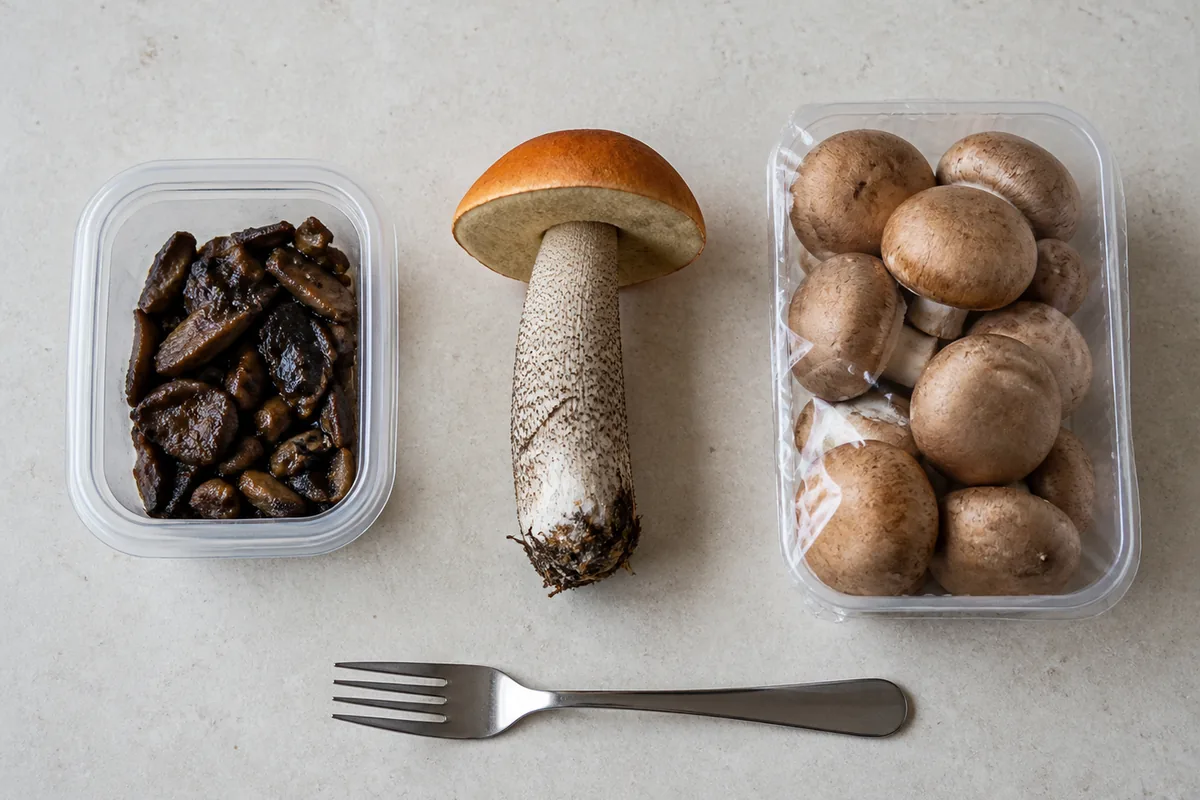
Preserve uncooked specimens, trimmings, cooked leftovers, packaging, receipts, and photographs of the mushroom where it grew. Record the meal time, estimated amount, cooking method, active heating duration, collector, location, and the time each symptom began.
- Do not induce vomiting or use a home remedy unless a poison specialist or clinician directs it.
- Keep each diner's details separate because portions and mushroom fragments may differ.
- Report nausea, vomiting, diarrhea, abdominal pain, weakness, unusual drowsiness, or confusion.
- Seek urgent care when repeated vomiting or diarrhea prevents fluid intake.
Pregnancy nausea does not rule out a food exposure, and feeling well shortly after the meal does not identify the mushroom. Expert triage uses the species evidence, dose, preparation, timing, and symptoms together.
| What is happening | What to do now |
|---|---|
| No symptoms after a suspected serving | Contact the poison service and preserve the batch |
| Nausea, vomiting, cramps, or diarrhea | Call promptly and report pregnancy, timing, amount, and heating duration |
| Worsening weakness, confusion, marked drowsiness, or dehydration | Seek urgent clinical assessment while the poison service reviews the exposure |
| Collapse, seizure, breathing difficulty, or inability to wake | Call emergency services immediately |
A previous adverse reaction is a strong reason not to test the mushroom again because surveillance reports suggest sensitivity to some edible mushrooms can intensify over repeated meals.
That observation is not specific pregnancy evidence, but it matters to the individual who has already reacted.
For the current meal, the practical answer stays simple. Use a labeled cultivated mushroom, and leave orange birch bolete for a time when pregnancy no longer adds another layer to its identification, heat-treatment, and provenance requirements.
Sources & References
- Mercury in Orange Birch Bolete Leccinum versipelle, Environmental Science and Pollution Research
- Leccinum versipelle Taxonomy Browser, NCBI
- Leccinum versipelle identification, First Nature
- Orange Birch Bolete recording guidance, NatureSpot
- Safer Food Choices for Pregnant Women, CDC
- Natural toxins in food, World Health Organization
- Mushroom exposure help, Poison Control
- 2018-2020 Summary of Mushroom Poisoning Reports, North American Mycological Association