
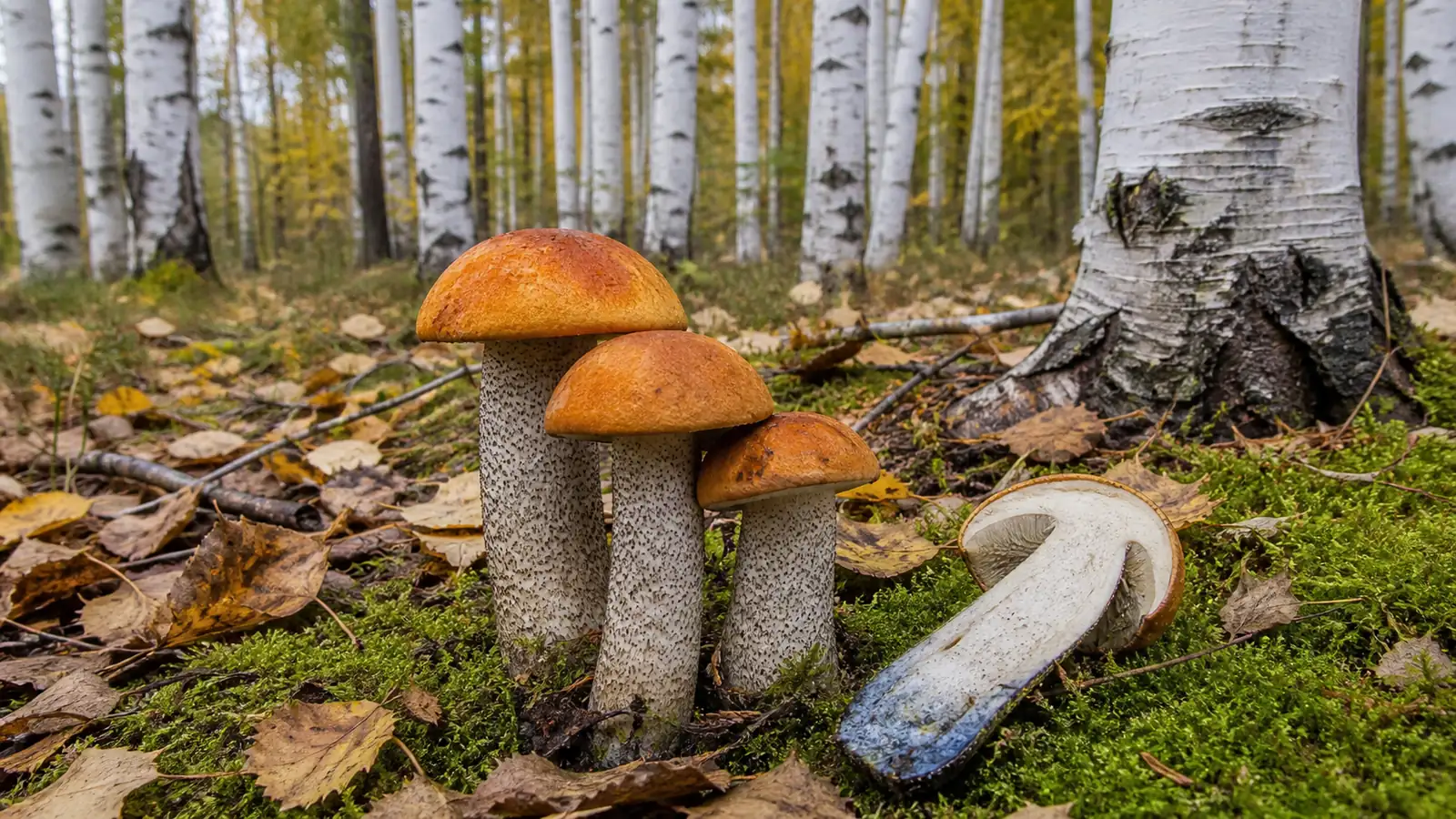
This mushroom will alarm you twice before you have eaten any of it.
The stem base goes blue when you cut it, and the pan goes near black when you cook it. Neither moment is the one that actually matters.
Can you eat orange birch bolete raw?
No. Raw and undercooked orange birch boletes are described as mildly toxic, causing nausea and vomiting, and the requirement given is fifteen to twenty minutes of frying or boiling rather than a quick pass in a hot pan.
Follow the cooking requirement even when other changes in appearance seem harmless.
Both color changes get their own section below, because a picker meets them in that order and both look like spoilage.
SafetyCan You Eat Bay Bolete Raw? The Blue Stain Is Not the ReasonWhich parts actually cause trouble
Not the species, and not really the caps either.
The digestive complaints attached to these mushrooms cluster on the stems, which become tough and hard to digest in older specimens, and on large caps that have gone spongy. A young firm one and a big soft one are close to different foods.
- The usual culprit
- Stems, especially on older specimens
- Second culprit
- Large caps that have turned spongy and waterlogged
- Rarely the problem
- A young firm cap, thoroughly cooked
- What this means
- Most of a basket is fine once the worst stems are cut away
- The exception
- Any specimen that smells sour or feels slimy, which is spoilage rather than age
The stem is built differently from the cap, which is why it behaves differently.
It is a dense column of vertical fiber holding a heavy cap up through wet leaf litter, and that structure keeps toughening as the mushroom grows. The cap never has that job and never develops that texture.
Cutting the stems short costs you very little that is worth keeping.
The cap carries most of what makes this species worth picking, and a fibrous stem contributes texture nobody wants. Trimming hard is the cheapest improvement available.

It turns blue when cut and black when cooked
Two moments, two different answers, and neither of them is spoilage.
| What you see | When | What it means |
|---|---|---|
| Blue-gray flush at the stem base | On cutting or handling | Normal oxidation for this species, and one of its identifying traits |
| Gray bruise rather than blue | On cutting | You are probably holding the common brown birch bolete instead |
| Flesh going gray to almost black | In the pan | Normal for Leccinum, and it happens early |
| Sour smell or slimy surface | At any point | Actual spoilage, and the only one of the four worth acting on |
The cut reaction is a feature rather than a fault. Blue at the stem base is one of the things that separates this species from the brown birch bolete beside it, so the reaction people worry about is the same one that confirms what they picked.

The pan color surprises people more, because a mushroom going black reads as burnt.
Leccinum flesh darkens to gray or almost black with heat, and it does this early, well before the mushroom is anywhere near cooked. A dish that looks alarming at four minutes is exactly on track.
The darkening is the same oxidation that gave you the blue base, finishing on the stove what the knife started on the mushroom.
Nothing about it changes the flavor, and a sauce made with these will simply be darker than one made with chanterelles. Cooks who mind the color tend to use them where the dish was going to be dark anyway, in a beef braise or a mushroom stock rather than a cream sauce.
Why this is the birch bolete worth carrying home
Under a birch tree in September you will usually find far more brown ones than orange ones, and the orange ones are the better mushroom by a wide margin.
Tip
Foraging references rate the orange birch bolete around four out of five and the common brown birch bolete around two, or three if it is really young and firm. If you have been unimpressed by birch boletes, there is a fair chance you have only been picking the abundant one.
Telling them apart takes one cut and one look. The orange cap is the obvious cue, but caps vary with age and wet weather, so the reliable check is the stem base, where this species goes blue and the brown one bruises gray instead.

Two other species are worth having in mind while you are down there.
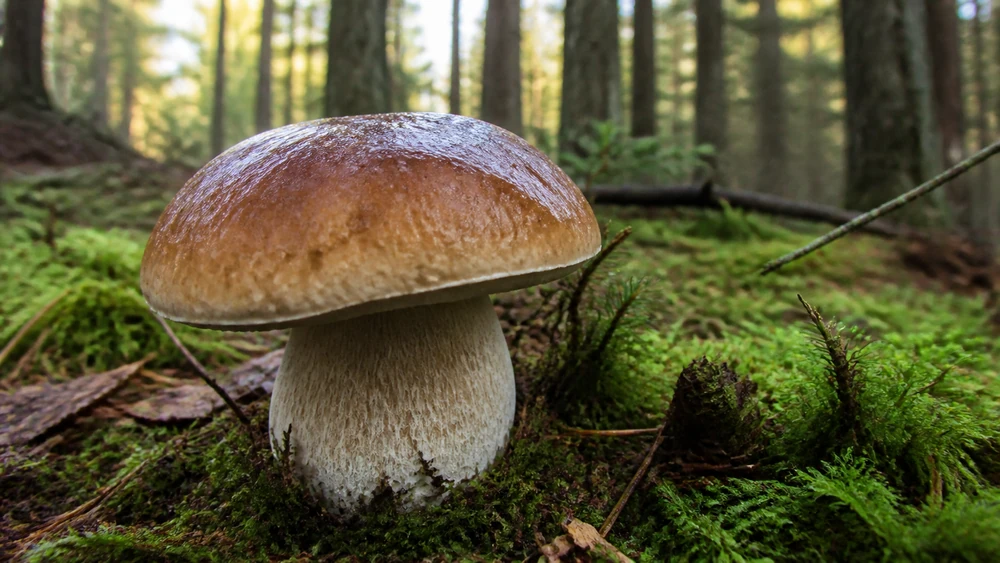 Late summer to autumnPorciniSmooth swollen stem, no scabers, no blue base
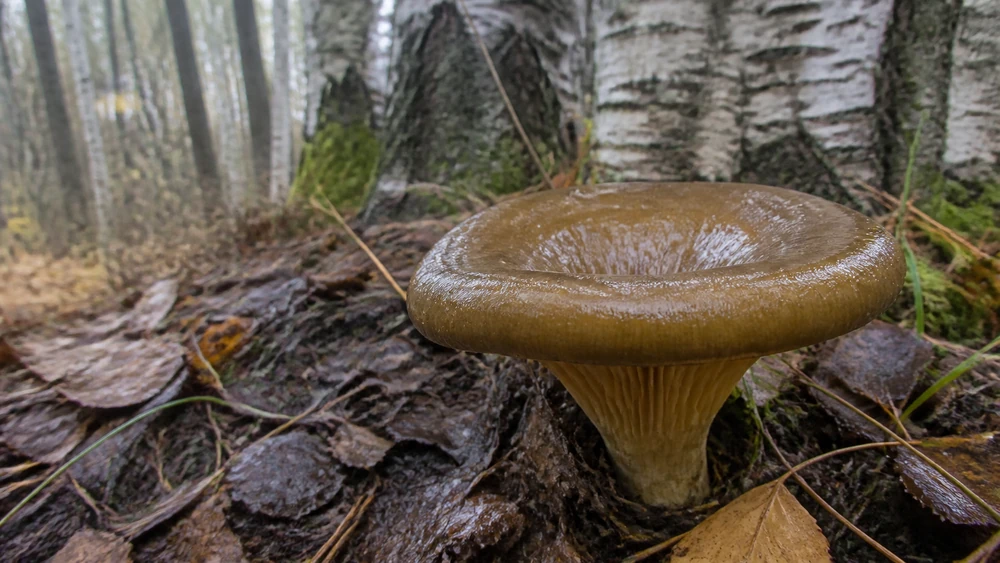 Summer to autumnBrown roll-rimAlso under birch, and deadly even cooked
The second card is not a lookalike so much as a reminder. Brown roll-rim shares the birch woodland and the brown tones, and no amount of cooking makes it safe.
Under birch trees and no other tree, August to November.
The habitat and season both species share
Keep that hazard separate from ordinary changes in appearance. Everything here about trimming, timing and color applies to a mushroom that is edible once handled properly, which brown roll-rim never is.
SafetyCan You Eat Beefsteak Polypore Raw? Yes, If You Slice It ThinWhat to do with a big spongy one
Most guides tell you to leave the large ones, and most baskets come home with some anyway. The advice is sound and the temptation is stronger.
Four months sounds generous until you count the weekends with the right weather in them, which is why the large ones come home anyway.
A large specimen is usually salvageable in parts rather than whole, and the decision gets easier once you stop treating it as one mushroom. The cap and the stem age at different rates and deserve separate verdicts.
- Keep the cap if it is still firm at the edge, even when the centre has softened
- Cut the stem away entirely once it feels fibrous rather than crisp
- Slice and dry the soft caps rather than trying to fry them
- Discard anything sour, slimy or already colonised by larvae
Drying is what rescues the spongy ones.
A cap too soft to hold up in a pan dries perfectly well, and it comes back into a stock or a braise with its flavor intact. Water is the thing making it useless fresh, and a dehydrator removes exactly that.
Slice them thinner than feels necessary.
A soft cap holds more water than a firm one, so the same tray takes longer and a thick slice can sour in the middle before its edges are dry.
How long it needs and what that looks like
Fifteen to twenty minutes of real heat, and the color tells you nothing about when you get there.
The crowded pan is worth naming because it is so easy to do, and it wastes the twenty minutes entirely. These shrink a great deal, so a basket that looks like two pans goes into one, and a full pan never gets past the steaming stage no matter how long you leave it.
There is a reason the time is stated as frying or boiling rather than simply heating, because both methods do something a quick sear does not.
Both methods hold the mushroom at temperature for a sustained stretch, where a quick sear only ever reaches the surface. What matters is how long the inside of a slice stays hot, which is not something the outside of it reports.
Cook in batches with room around the slices
Trim the stems before anything goes in the pan
Judge doneness by how dark the mushrooms have gone
Serve a wild bolete you have not eaten before as a full plateful
None of that is unique to this species, but the shrinkage makes the crowding mistake more likely here than with a denser bolete.
Note
This page assumes the identification is settled. Orange cap, dark scabers on a pale stem, growing under birch, and a blue flush at the cut base together make a confident name, and every question about raw or cooked comes after that.
Sources & References
- Orange Birch Bolete and Brown Birch Bolete, Galloway Wild Foods Rates the orange birch bolete four out of five against two for the brown one, records the blue bruising at the stem base against the brown one's gray bruise, gives the August to November season under birch and no other tree, and singles out stems and spongy large caps as the digestive problem.
- Leccinum versipelle Describes the species as mildly toxic without proper heat treatment, with frying or boiling for fifteen to twenty minutes given as the requirement, and records that the flesh turns black on cooking.