
Shaggy manes start destroying themselves the moment you pick them. By the time you are asking whether you can eat one raw, some of the ones in your bag have already begun answering the question for you.
That deadline turns out to matter more than the verdict does.
Can you eat shaggy mane raw?
No, and the reason is unusually thin compared with the rest of this series.
There is no compound here for this series to point at. One guide puts it about as plainly as anyone does, saying that although they may not poison you when eaten raw, some people have reported strange reactions.
That is a weaker objection than almost every other page in this series carries.
A raw morel has hydrazine compounds in it and a raw enoki has an outbreak record behind it, and a raw shaggy mane has some people reported strange reactions. The honest reading is that nobody has established what happens, and nobody has had much reason to find out.
There is also the ordinary point about where these grow.
They come up on mown grass, verges, path edges and parks, which is ground that gets walked over, driven past and sometimes sprayed. That is an argument for cooking them rather than an argument about the species.
None of this makes them marginal food.
References rate the shaggy mane a good edible and it is one of the easier wild mushrooms to be certain about, which is exactly why it is worth knowing the one thing that actually limits it.
The name gives away how recognizable it is.
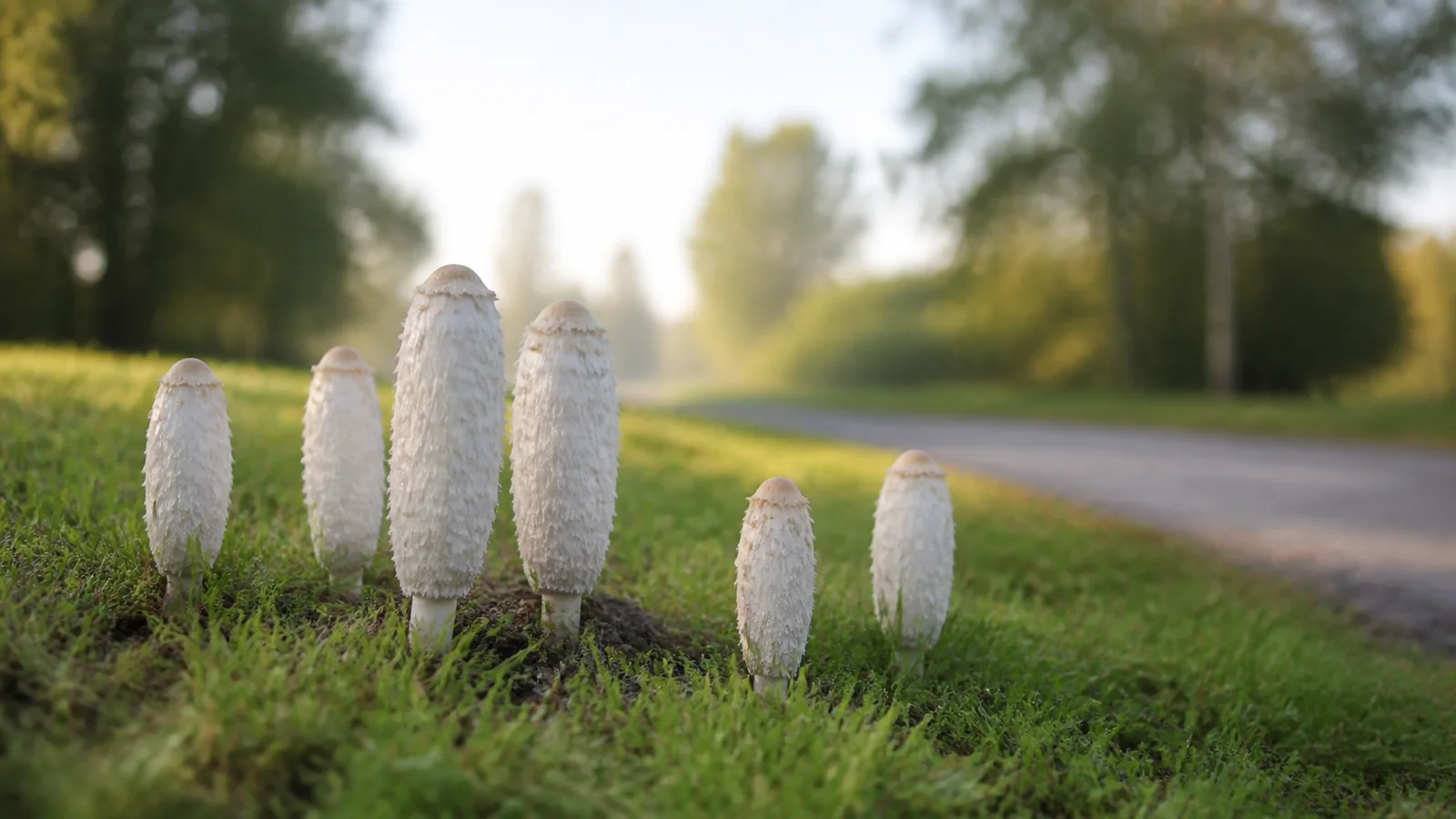
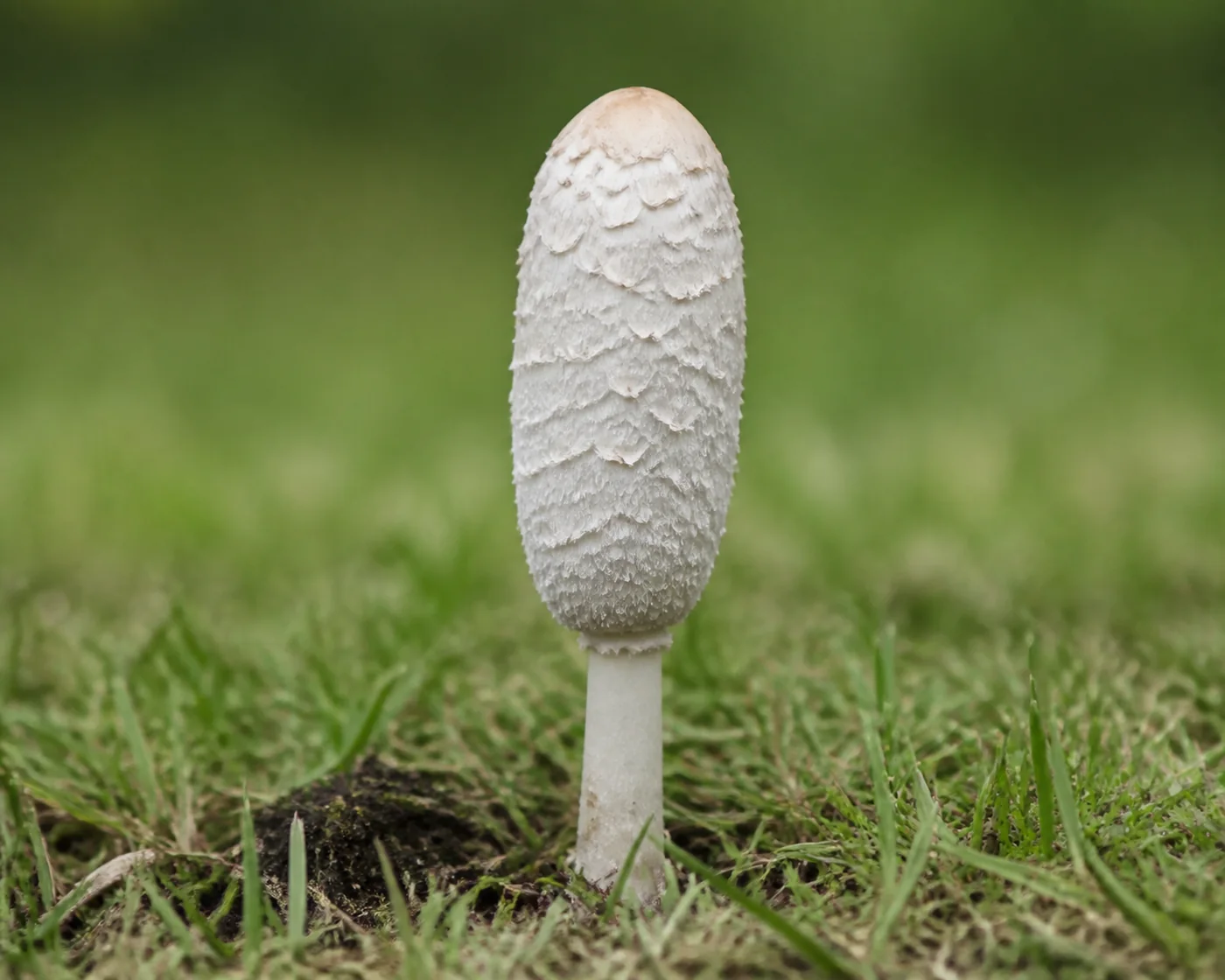
Lawyer's wig is the other common name and it describes the thing exactly, a tall white column of shaggy overlapping scales sitting where a barrister's wig would. Very few wild mushrooms can be described that precisely to somebody who has never seen one.
Certainty is the other thing this species has going for it.
Nothing dangerous in mown grass combines shaggy upturned scales, gills that run white to pink to black, and a ring that comes loose and slides down the stem. That is a shorter checklist than most wild edibles need before anyone will eat them.
The clock starts the moment you pick it
Everything else here is downstream of one fact. A shaggy mane digests itself on purpose, and picking it starts the process.
Warning
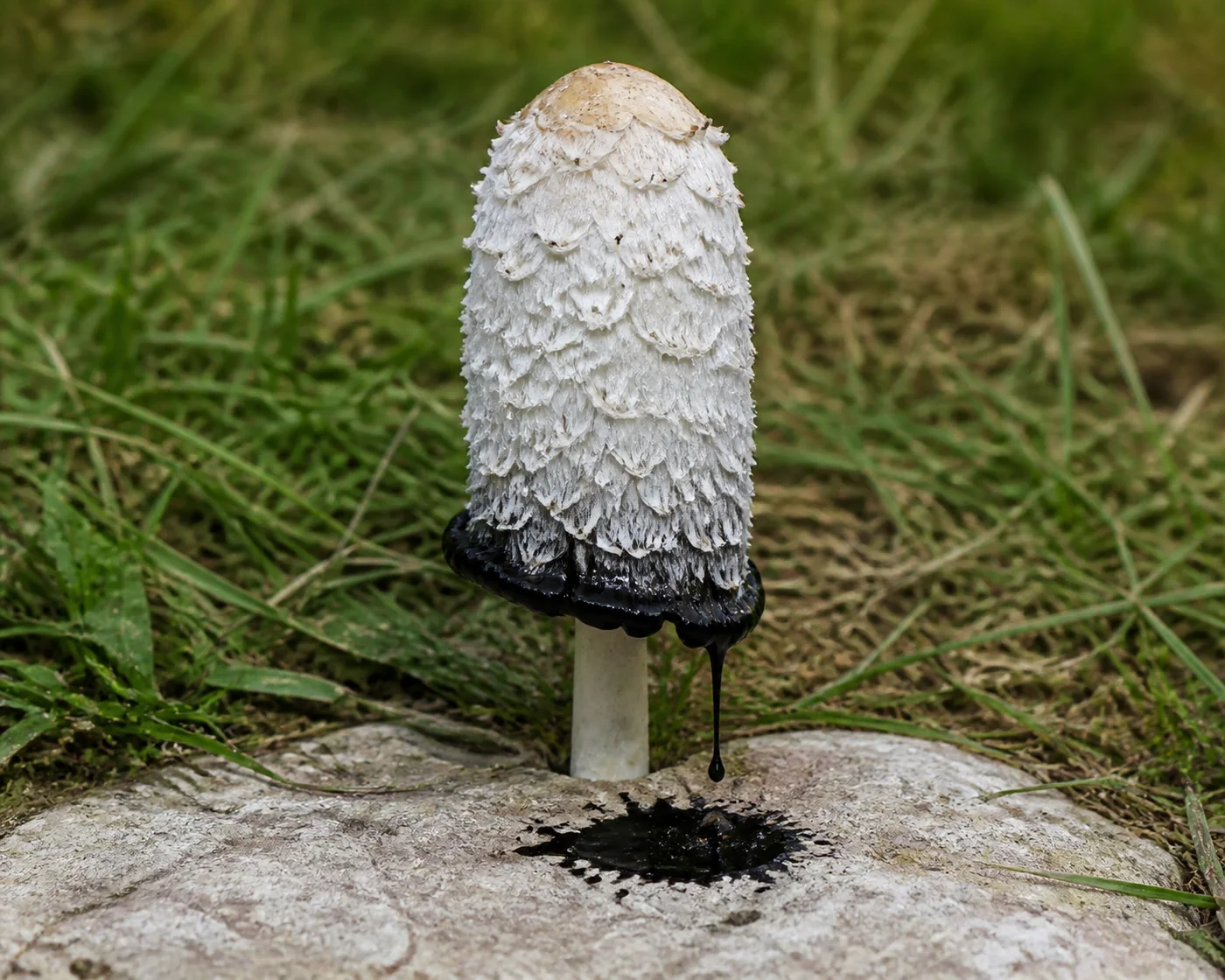
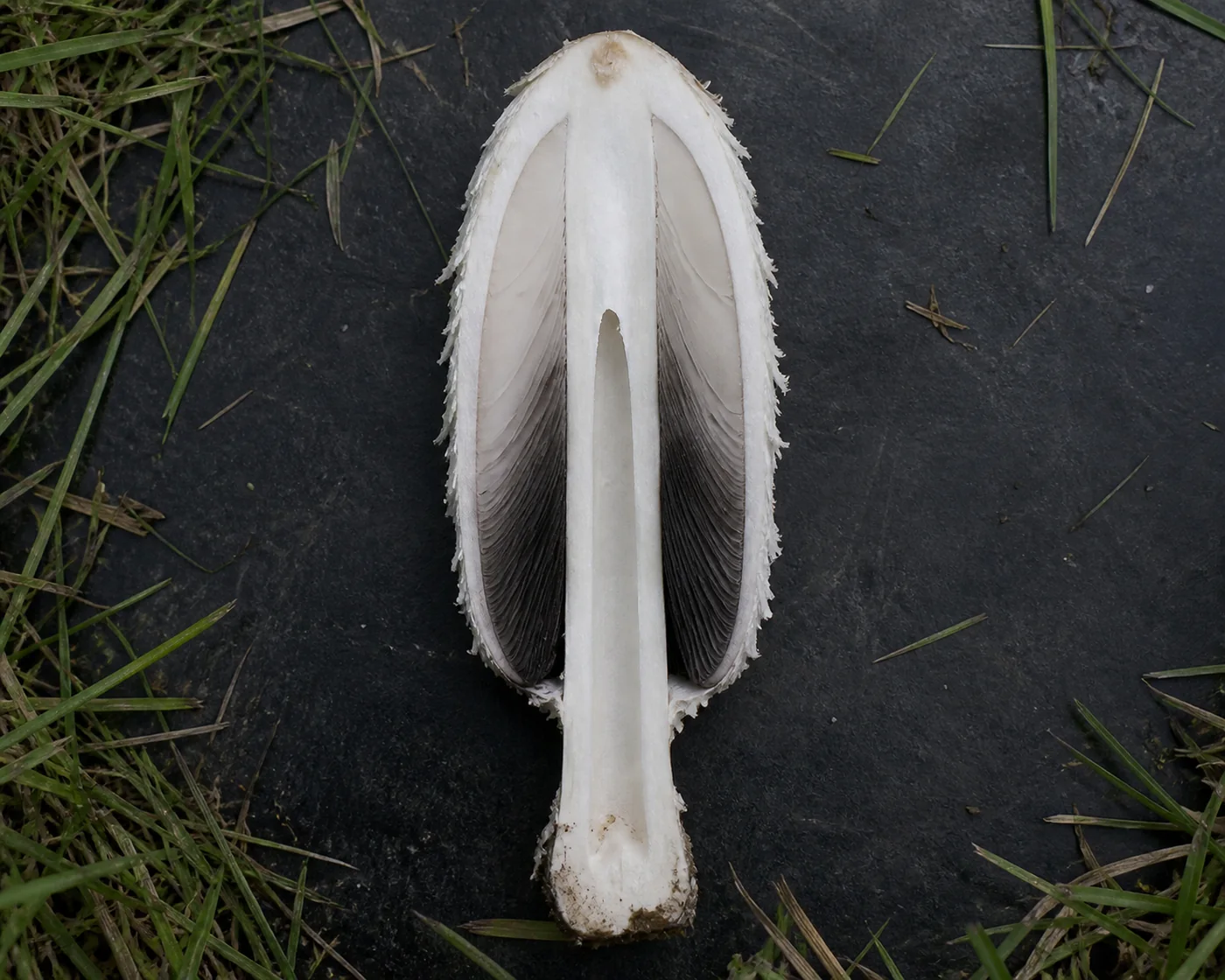
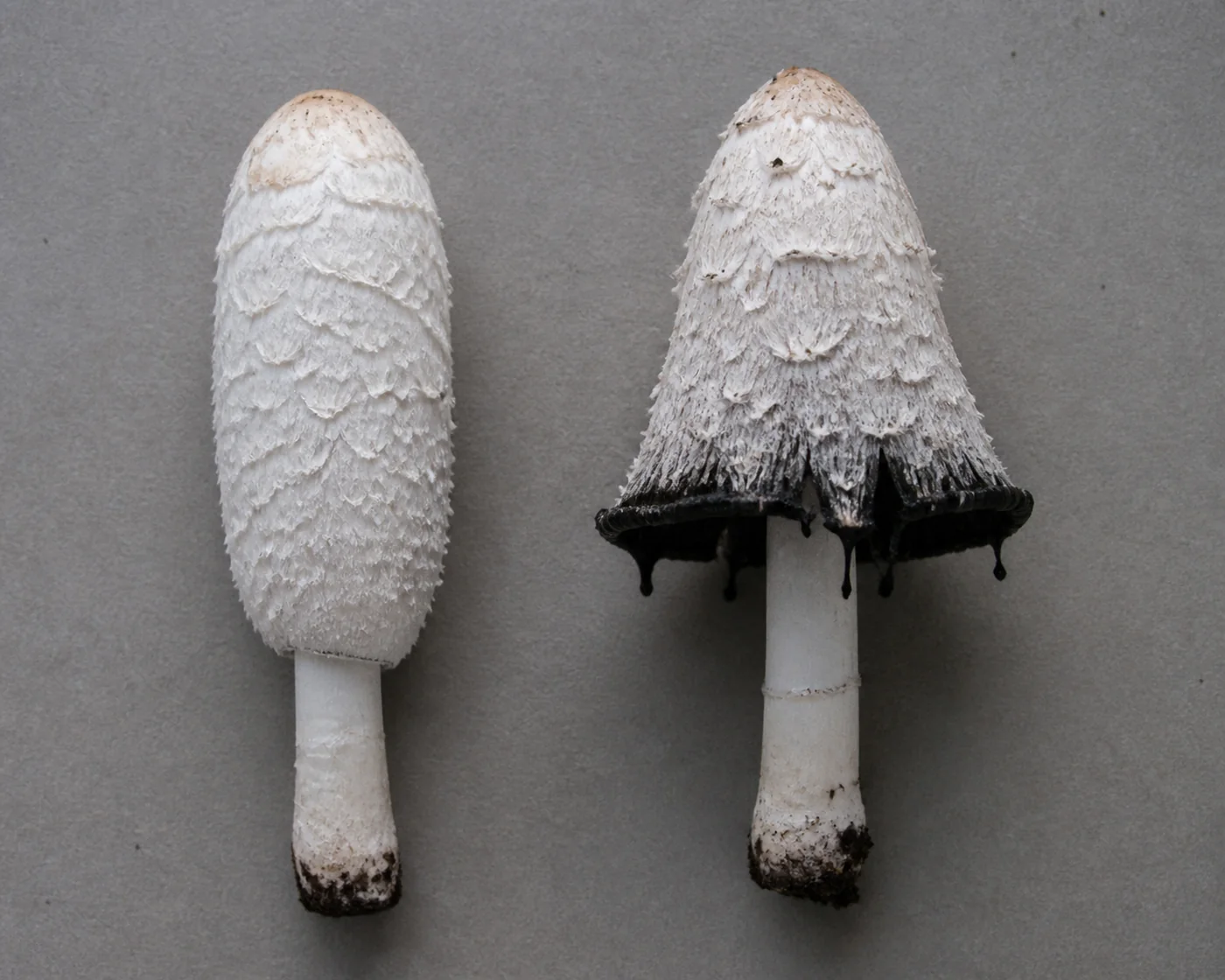
The cap dissolves into black ink from the rim upward. That is how the species releases its spores rather than a sign of spoilage, and it runs on its own schedule whatever you do about it. The gills go white, then pink, then black, and once the black has worked up into the cap there is nothing left worth cooking.
How long picking actually leaves you is where the references stop agreeing.
One says that picking triggers auto-digestion and that you usually have twenty four hours at most before they become an inedible black mess.
It is important to consume these mushrooms within an hour or two of gathering them, as they deteriorate very quickly even if kept in a refrigerator.
A second field reference, on the same species and the same question
Twenty four hours and an hour or two are not two versions of the same advice. They are different instructions, and following either one confidently will be wrong about half the baskets anybody picks.
That is a twelvefold difference inside the same instruction.
Both are describing real baskets, and the gap between them is mostly about the state the mushroom was in when it went in. A tightly closed white button has most of a day in it, and one that was already showing a gray rim out on the grass has about an hour.
So the deadline is not a property of the species at all.
It is a property of the specimen, which is the useful version of the rule and the reason the picking section below matters more than the cooking one. What goes into the bag decides how much time you get.
Refrigeration barely helps, which is the part that catches people out.
Cold buys most people a day or two on other mushrooms, and one of these references says outright that shaggy manes deteriorate quickly even in a fridge. This is the mushroom's own biology completing a job rather than bacteria working on it from outside, and chilling it does not call the job off.
The ink itself is worth a sentence, because people assume it means something has gone wrong.
It has not. The black liquid is spore-laden and the mushroom is doing precisely what it evolved to do, and the same ink was genuinely used for writing, which is where a good deal of the folklore around this species comes from.
It is not this mushroom that fights your drink
The other thing people arrive here carrying is an alcohol warning, and it belongs to a different mushroom.
The mechanism is the one a medication uses deliberately. Alcohol breaks down into acetaldehyde and the acetaldehyde is then supposed to break down in turn, and coprine blocks that second step so the acetaldehyde accumulates and makes a person feel genuinely awful.
None of that applies to a shaggy mane.
One guide states it as directly as it can be stated, that shaggy mane mushrooms do not contain coprine and can be safely consumed with alcohol. That is a claim about a named species rather than a general reassurance about inkcaps.
The window on the real one is longer than people expect, which is part of why the warning travels.
Coprine reactions are described as following alcohol taken within hours to days of the meal, so somebody who ate common inkcaps on Friday and drank on Saturday can still get the full effect. A warning with a tail that long gets repeated a lot, and it loses its species name on the way.
The timing is what identifies which mushroom somebody actually ate.
A coprine reaction is triggered by the drink rather than by the meal, so it can arrive days after the mushrooms and within minutes of the alcohol. That pattern is distinctive enough to point at the species on its own, and it is nothing like the course of an ordinary bad dinner.
The confusion between the two species is easy to explain and hard to shift.
Both species dissolve into black ink and both get called inkcaps in ordinary speech. Once a shaggy mane is a third of the way through deliquescing it does look like the thing the warning is about, which is exactly when somebody is most likely to look it up.
Telling the two apart
The two species are only hard to separate late. Fresh, they look nothing alike.
- Shaggy mane cap
- A tall closed cylinder, five to fifteen centimeters, wrapped down around the stem
- Its surface
- Broken into coarse upturned white shaggy scales, with a pale brown patch on top
- Common inkcap cap
- Squatter and bell-shaped, smooth to finely fibrous, and gray-brown
- Shaggy mane stem
- White, brittle and hollow, with a ring that comes loose and slides down it
- What they share
- Deliquescence to black ink, which is why late specimens converge
The shape is the fastest read of the three.
A shaggy mane in good condition stands like a closed white cylinder or a rifle bullet, tall and narrow, with the cap hugging the stem all the way down, which is a read you can make from across a lawn. A common inkcap reads as a gray bell that has already opened out.
The scales are the second read and the more reliable one.
Shaggy mane scales stand out from the surface and catch the light, and in dry weather the whole cap breaks into pale flaking scales that lift away from it. There is nothing shaggy about the other species at any point in its life.
The ring is a third check and it costs nothing to make.
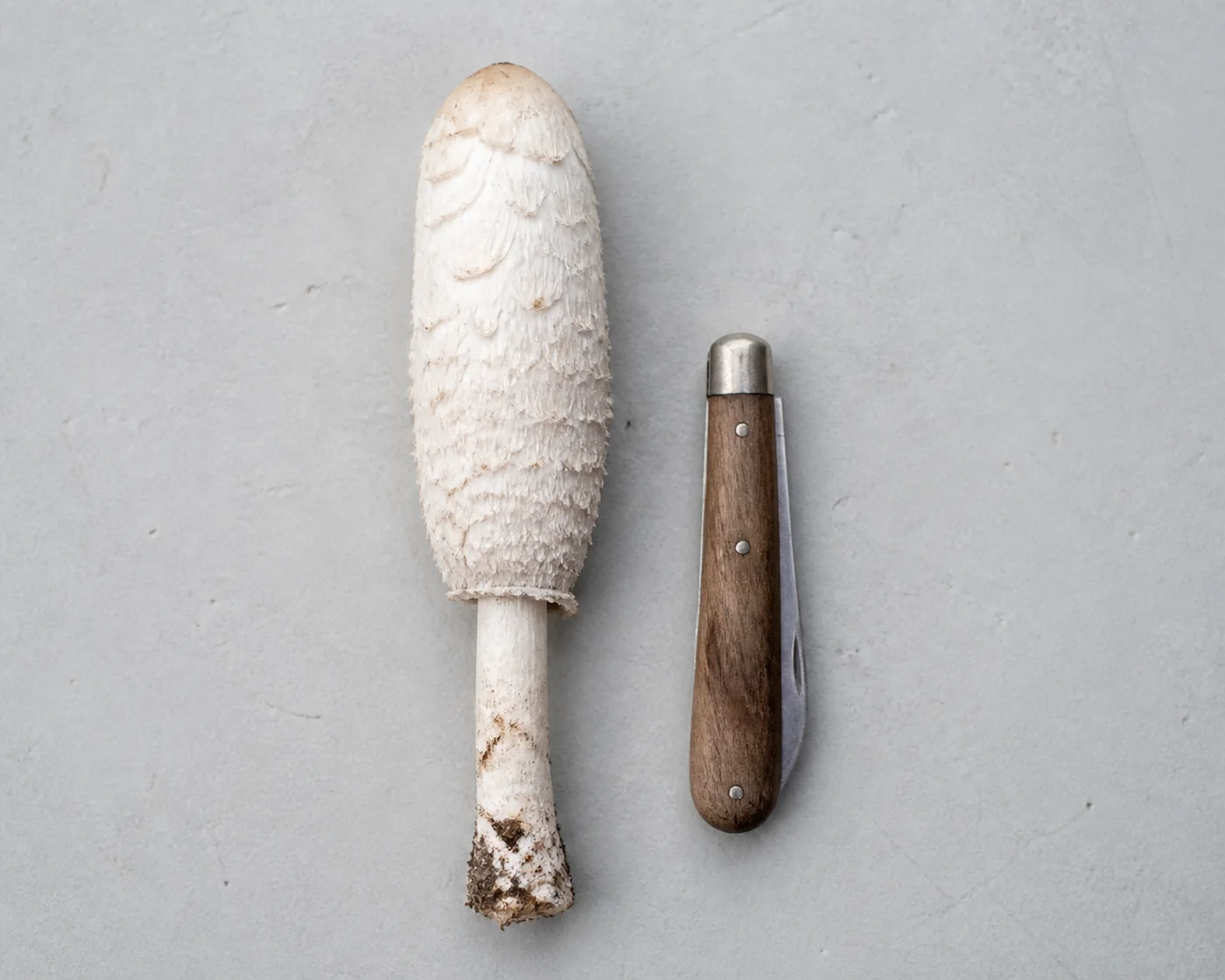
A shaggy mane carries a ring that goes loose early, slides down the stem, and frequently ends up sitting near the base stained black with its own spores. It is an odd little feature and nobody forgets it once they have seen it.
Size settles most of what a shaggy mane leaves open.
The cap runs five to ten centimeters and occasionally fifteen, on a brittle hollow stem that can reach thirty, so a good shaggy mane is a substantial thing to hold, and the weight of one settles most encounters. The common inkcap is a smaller mushroom that never presents as a tall white column.
A spore print settles whatever the field checks leave open.
Both species drop a black print, so it will not separate them from each other, and it does separate either of them from most of what else comes up in mown grass. It is the check worth making when the question is what this is rather than which inkcap it is.
Picking inside the window
Everything about picking this species comes down to buying yourself hours.
The rim is where to look, and it is easier than it sounds.
Run your eye along the bottom edge of the cap, which is where it shows first. If there is a line of gray there or a wet sheen coming through, that specimen has started and belongs in the first pan rather than the last.
Where they grow is the other half of the picking decision, and there is more to it than convenience.
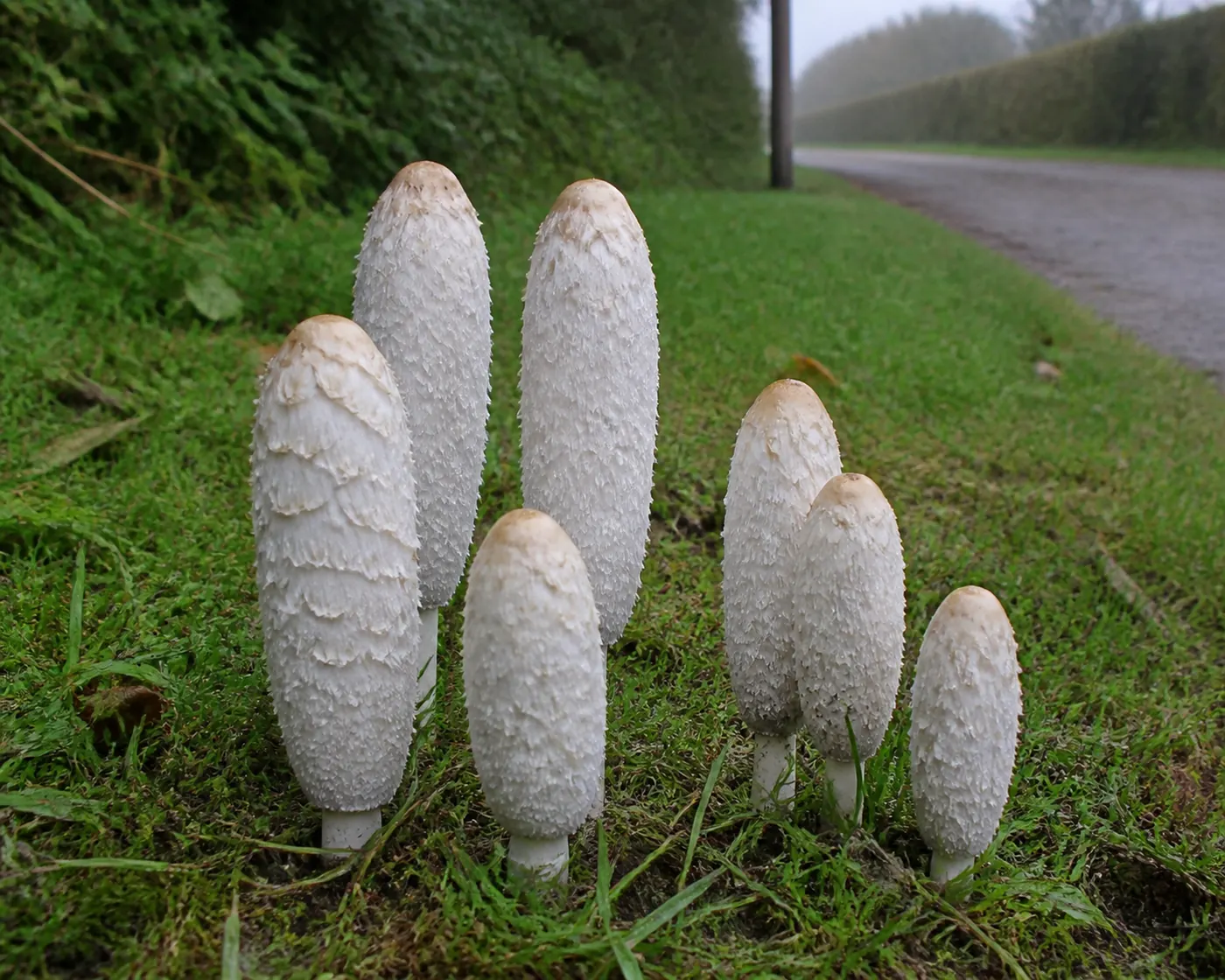
They fruit on mown grass, verges, path edges, parks and disturbed ground, from spring through to November and most heavily in late summer and autumn. That makes them one of the most available wild mushrooms there is, and it is also why the ground underneath is worth a thought before a bag gets filled.
The season runs longer into autumn than most people assume.
References give April through to November, with the heaviest fruiting in late summer and autumn, so a lawn that looked finished in September is often not. A mild wet October is usually the best week of the year for this species.
You can cut these at ground level without losing anything.
The stem base carries no feature that matters here, unlike the white grassland Agaricus where the base is the entire question, so a knife at the soil line is fine and keeps the dirt out of the bag.
Carry them upright and loose if there is any way to do it.
A paper bag with the mushrooms standing rather than lying gets far more of them home intact, and a plastic tub with twenty piled into it produces black soup. This species punishes the ordinary way people carry mushrooms harder than any other on this site.
This species also comes back to the same ground.
A verge or a lawn that produced them one autumn is worth walking again the next, because the mycelium stays in the soil and the fruiting is often heavy when it comes. Knowing one reliable patch is worth more than knowing the species.
Size is the last filter worth applying, and it is a generous one.
Small ones are worth taking as readily as large ones, and they are simply the specimens with the most time left on the clock. There is no stage at which a closed white shaggy mane is too small to bother with.
Cook them the day you pick them
The cooking is the easy part and it wants speed rather than skill. Nothing about this mushroom rewards a long slow treatment.
Tip
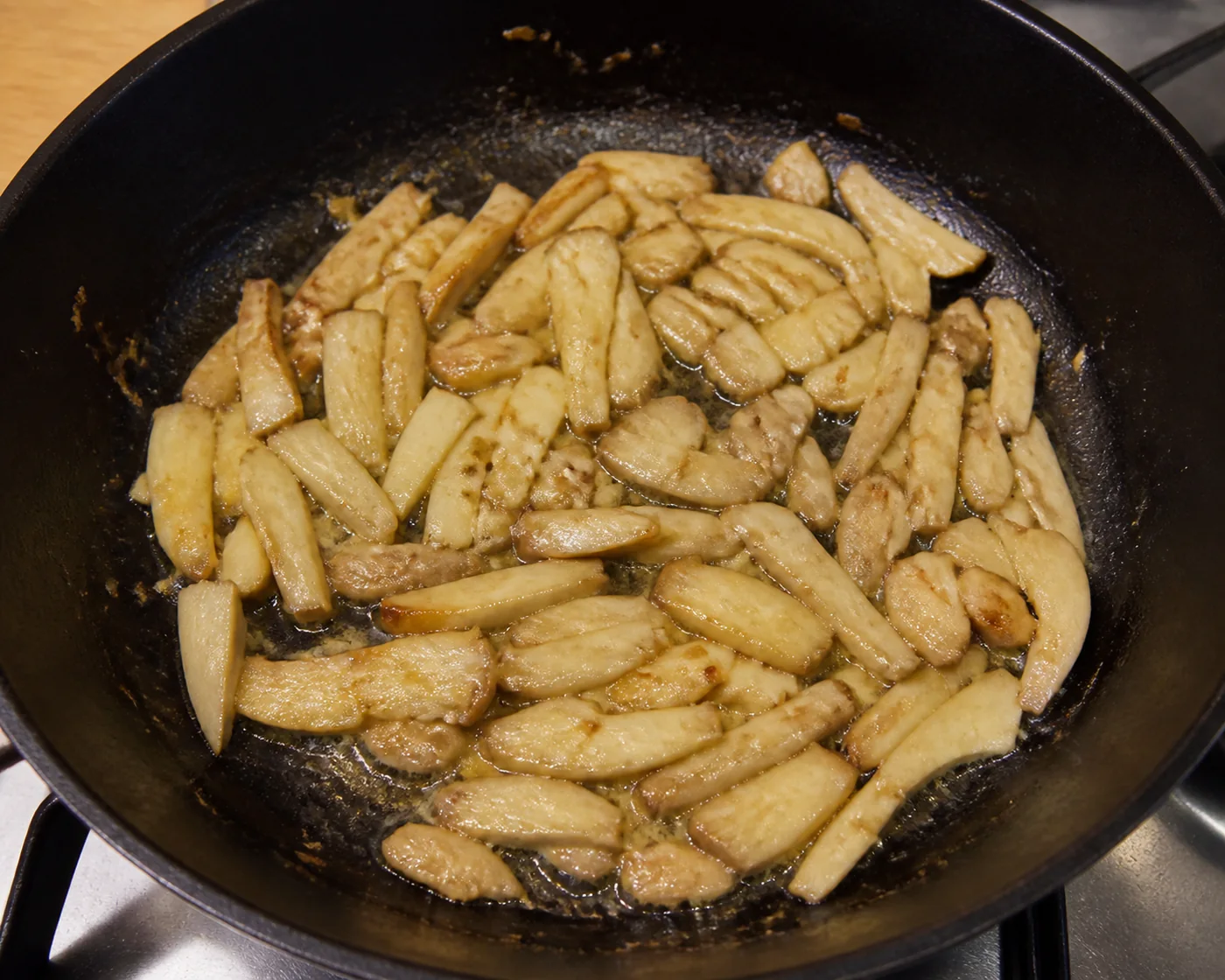
Slice them and get them into a hot pan with butter or oil within a few minutes of coming through the door. They give up a great deal of water and reduce dramatically, so start with far more than looks sensible. A few minutes of heat is enough, and sauteed shaggy manes keep in the fridge for three to five days even though the raw ones would not have survived the evening.
That last line is the trick worth carrying away.
The clock stops when they hit the heat. A basket you have no time to deal with properly tonight becomes a tub of cooked mushrooms that will sit happily until the weekend, which is a far better outcome than a bag of ink and a wasted walk.
Do not wash them and do not soak them.
A quick brush or a wipe takes off the grass and the grit, and water only gets absorbed into something that is already going to flood the pan on its own. If one is genuinely dirty, peel a scale or two off the cap rather than rinsing the whole thing.
They fry and they go into soup, and both uses suit them.
Sauteed in butter is the standard treatment and the one most people settle on, tempura is a real use for them because the batter holds the shape that heat would otherwise collapse, and in a soup the liquid they release stops being a problem and becomes the reason to use them.
The flavor is mild, and it is not the reason to pick them.
They are delicate rather than meaty, closer to a soft field mushroom than to anything woody, and they carry butter and cream better than they carry a strong sauce. The reason to pick them is that they are abundant, unmistakable and free.
Quantity is worth a thought before the pan goes on.
A dozen large shaggy manes cook down to roughly a bowlful, so the volume that looks absurd going into the pan is about right coming out of it. Underestimating that is how people end up disappointed by a species that is worth picking in quantity.
The one thing worth avoiding is treating them as a keeping mushroom.
They do not dry usefully and they do not sit in a fridge raw, so the choice is a pan tonight or nothing, which sounds harsh until you have done it once and found it takes about ten minutes.
Where it sits against the rest of the series
Some raw-mushroom concerns involve substances within the mushroom. Shaggy mane also requires close attention to its condition. This one answers a question about what time it is.
| Species | What limits it | Measured in |
|---|---|---|
| Shaggy mane | How long ago it was picked | Hours |
| Morel | Hydrazine compounds in the raw flesh | Chemistry |
| Enoki | Contamination in a cold supply chain | Batches |
| Chicken of the woods | A reaction in a share of eaters | People |
Only one row on that table is measured in time. That is what makes this species unusual, and it is also what makes it forgiving, because a deadline is something a person can simply meet.
The only way this goes wrong is loudly.
A shaggy mane that has gone too far announces itself by turning into black liquid in the bottom of your bag, which is an unmistakable signal and a completely harmless failure. Compare that with a mushroom whose problem only shows up hours after dinner.
That is a rare shape for a safety answer.
Most of the pages here end with a rule somebody has to carry indefinitely, and this one ends with a task they either do this evening or do not do at all. There is something restful about a mushroom whose only real demand is punctuality.
Pick them closed, cook them the same evening, and pour yourself a glass of wine while you do it, because this is the species where that is fine.
Sources & References
- The Complete Guide to Shaggy Mane Mushrooms, GroCycle Gives the 5 to 14 cm cap on a hollow stem with a partial veil, the cylindrical bullet shape with upturned scales, the white to pink to black gill sequence as they liquify, the statement that picking triggers auto-digestion and you usually have 24 hours at most, the instruction always to cook them with the note that although they may not poison you raw some people have reported strange reactions, the summer and fall season in parks, lawns and roadsides, the three to five day fridge life of sauteed ones, and the statement that shaggy manes do not contain coprine and can be safely consumed with alcohol.
- Coprinus comatus, Shaggy Inkcap, First Nature Gives the 5 to 10 cm and occasionally 15 cm cap up to 6 cm across, the large recurved scales that flake out in dry weather, the white then pink then black gills before deliquescing, the brittle hollow stem 10 to 15 mm across and up to 30 cm tall with a ring that becomes movable and falls to the base, the black spore print, the April to November season on grass verges and lawns, and the instruction to consume them within an hour or two of gathering because they deteriorate very quickly even in a refrigerator.
- Coprine, ScienceDirect Topics The source for the mechanism: coprine inhibits aldehyde dehydrogenase so acetaldehyde accumulates when ethanol is consumed, producing nausea, vomiting, headache and hemodynamic changes including tachycardia and hypotension, and for the point that the reaction follows alcohol taken within hours to days of the meal.