
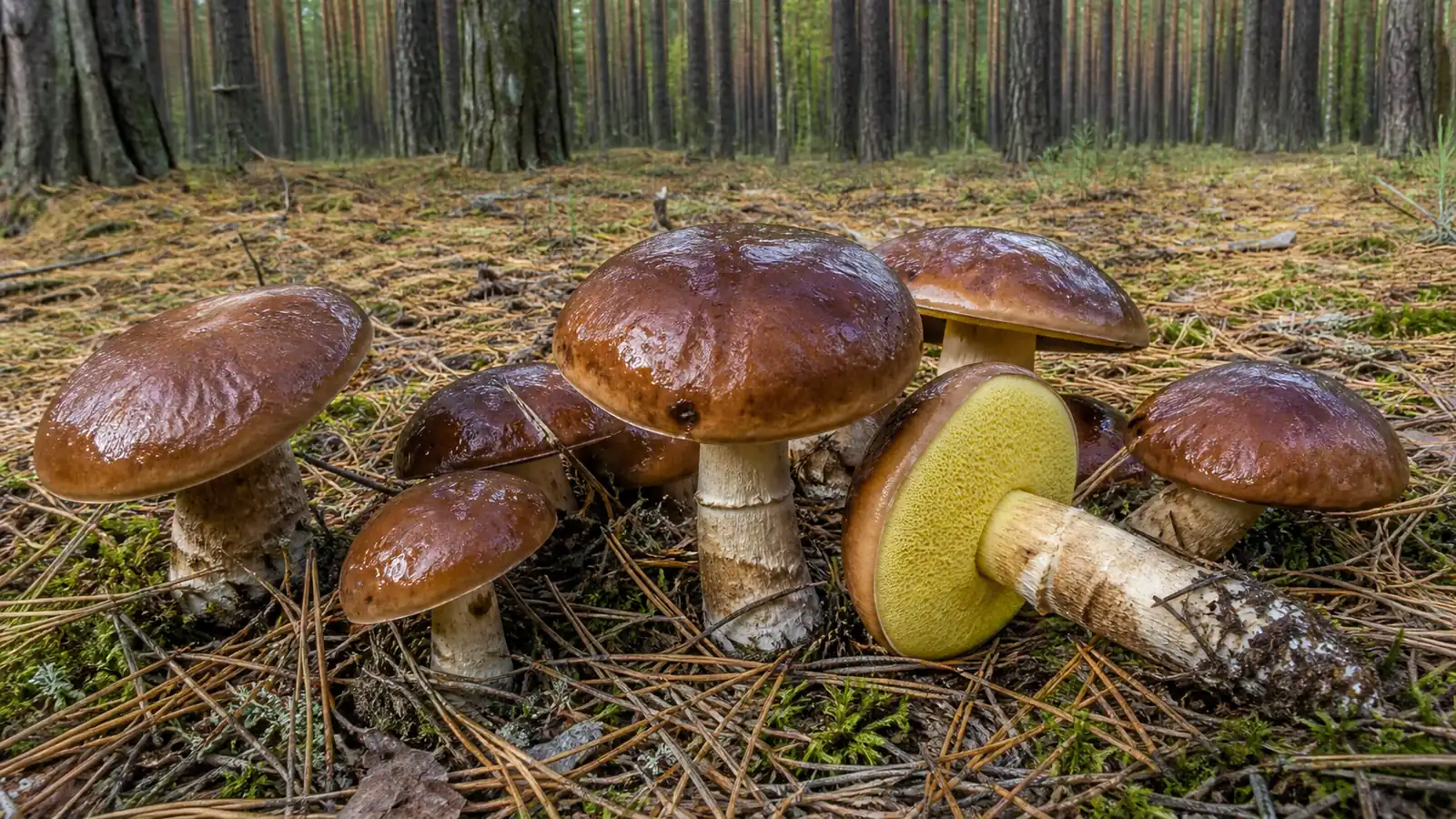
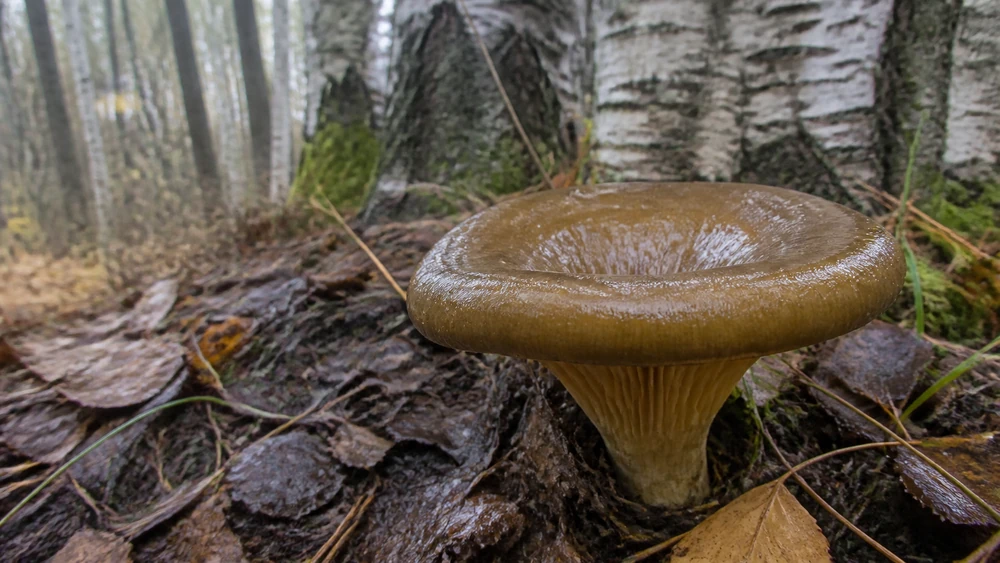
In wet weather, a slippery jack has a conspicuously sticky cap.
Every other mushroom in this series gets answered with heat. This one gets answered with a knife, before the pan is anywhere near hot.
Can you eat slippery jack raw?
No, and the raw question is not really where the interest lies.
That last distinction is the one worth carrying.
References do not tell you that heat neutralizes the skin. They tell you to take the skin off, which is a different instruction and points at a different step in the evening.
SafetyCan You Eat Bay Bolete Raw? The Blue Stain Is Not the ReasonThe cap skin is the part the advice is about
The recommendation is broader than this one mushroom. It is given for the whole Suillus genus, which is a useful signal about where the problem is thought to sit.
Tip
Foraging references put it as reducing the risk of an adverse reaction, and suggest discarding the cap skin of all species in the genus. That is deliberately softer than saying the skin is toxic, and the honest version of the advice keeps that softness.
What the sources say is narrower than what gets repeated.
Reactions are digestive, they affect some people and not others, and none of the references read for this page claim that cooking handles the cuticle. Peeling is recommended because it removes the layer rather than because heat fails to.
You can decide how much weight to put on those references. A person who has eaten unpeeled slippery jacks without trouble is not being contradicted by any of this, and a person who peels them is following the only instruction the sources actually give.
To reduce the risk of an adverse reaction, some people have found it beneficial to discard the cap skin of all species from the Suillus genus.
The guidance as the reference actually words it
Notice how much hedging survives into print there. Reduce the risk, some people, have found it beneficial, and a genus rather than a species, which is four qualifications in one sentence and a fair summary of how much anyone knows.
SafetyCan You Eat Beech Mushrooms Raw? Not Poisonous, Just BitterWhat you are actually holding
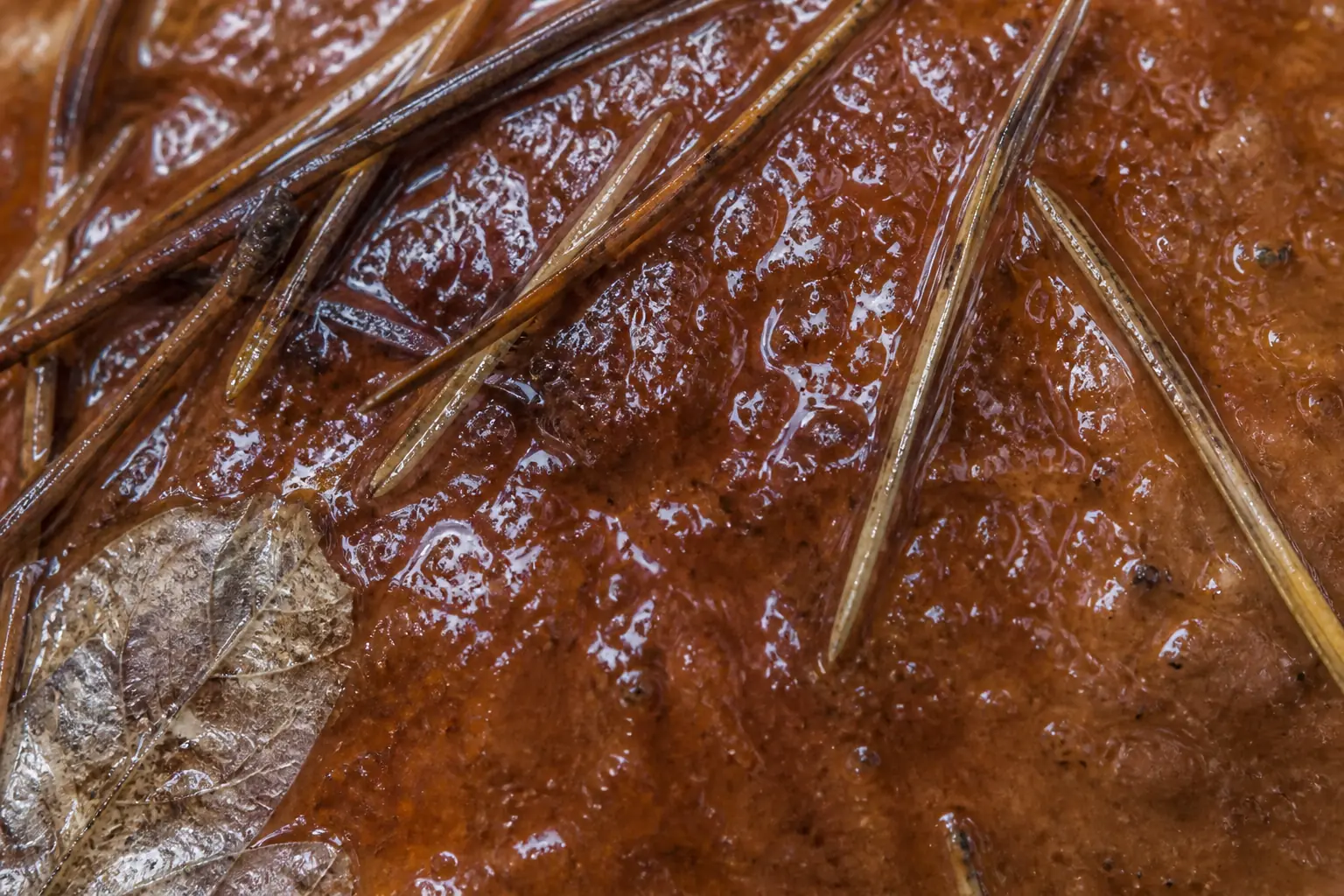
The slime itself is not a defect or a sign of age, which is worth knowing before you reject half a basket.
Suillus caps are glutinous by design, and the layer is thickest in wet weather and on young caps. A dry specimen picked in a rainless week can feel almost normal and still be the same mushroom, and it will still want exactly the same treatment once it goes on the board.
Sticky brown caps under pines could be several things, and the feature that settles this one is on the stem rather than the cap.
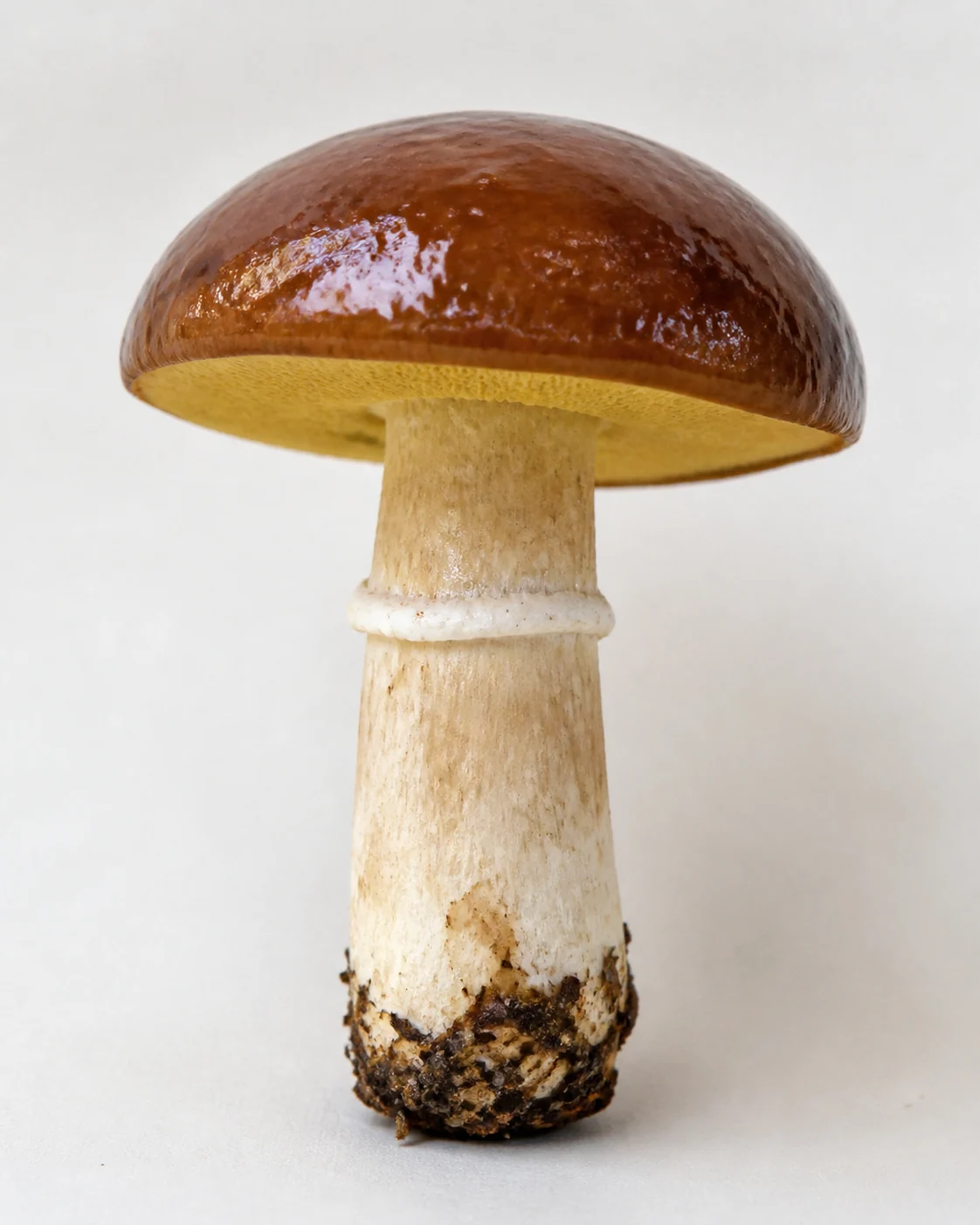
- The ring
- A white veil covers the pores when young and tears to leave a ring on the stem
- Ring detail
- The underside often develops a purplish tinge as the fruitbody matures
- Pores
- Small, round, tightly packed and lemon yellow, dulling with age
- Cap
- Chestnut to dark brown, glossy and genuinely slimy when wet
- The tree
- Conifers, and pine plantations in particular
Most sticky boletes in a pine wood have no ring at all. That single feature does more work than the cap color, which shifts with age and weather, and it is visible without cutting anything.
How it compares with the boletes worth more
Honestly, it is not the best mushroom in the wood, and it is often the only one there in quantity.
| Slippery jack | Porcini | Bay bolete | |
|---|---|---|---|
| Kitchen rating | Not rated highly | The benchmark | Close to porcini |
| Preparation | Peel the cap skin first | Trim and slice | Remove pores when older |
| Where it turns up | Pine plantations, often in numbers | Broadleaf and mixed woods | Ordinary mixed woodland |
| Best use | Dried, or cooked in bulk | Fresh, or dried | Dried |
Pine plantations are the point of it. They are unpromising ground for most of the boletes people actually want, so a species that fruits there in quantity has a value its flavor rating alone does not capture.
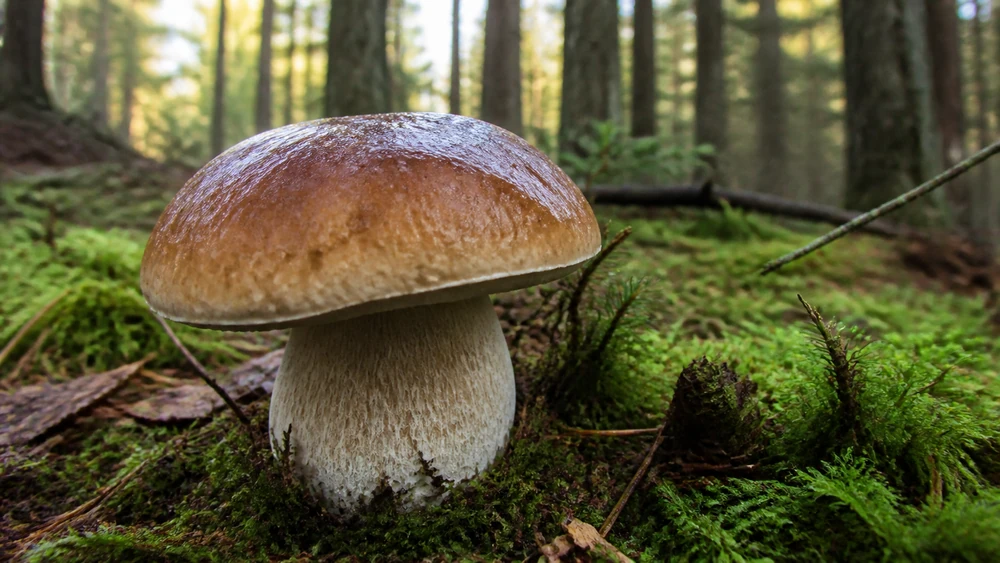 Late summer to autumnPorciniSmooth stem, no ring, no sticky cap
 Summer to autumnBrown roll-rimAlso near conifers, and deadly even cooked
Check the serious lookalikes before considering preparation. Brown roll-rim turns up in the same kind of ground, and nothing about preparation makes it safe, which is a different category from a mushroom that simply needs its skin removed.
SafetyCan You Eat Beefsteak Polypore Raw? Yes, If You Slice It ThinPeeling a mushroom that does not want to be peeled
The first three are entertaining and the next thirty are not, so it is worth knowing there are three routes rather than one.
Breaking rather than peeling is the trick most people arrive at eventually. A cap snapped gently apart gives you an edge where the skin is already separating, and from there it comes away in a sheet.
The salt soak is the route for a pick too large to hand-peel. An hour in heavily salted water breaks the gluten down enough that most of it rinses away, and what is left comes off with a thumb rather than a knife.
Trying to start the peel at the intact rim is what makes the job feel impossible.

None of it is difficult, and all of it is easier decided before you sit down with a full basket.
Leaving the skin on is not a disaster so much as a disappointment. Unpeeled caps go slick rather than browned in the pan, and the texture is closer to something poached than fried, which is a fair share of why the species is rated the way it is.
Break the cap and start the peel from the inside edge
Do a whole basket in one sitting rather than a few at a time
Try to peel them straight out of a rainy afternoon's picking
Skip the skin because the mushrooms look clean
Drying suits them for the same reason. A species that arrives thirty at a time is better dried than fought over fresh, and peeled caps dry into something worth having in a stock through the winter.
There is a threshold where the peeling arithmetic changes.
Below about a dozen mushrooms the peeling is a minor annoyance and the fresh pan is worth it. Above that it becomes an evening, and an evening is only worth spending on something you are going to store.
When to leave them where they are
Some of them are not worth the evening they will cost you.
- Any cap picked in heavy rain, which will be mostly water and peel badly
- Older caps where the pore layer has gone soft and spongy
- Anything already tunnelled, which is common in a warm autumn
- Specimens that have started to collapse, since the skin tears rather than lifts
The pore layer is worth a second look on the larger ones. It softens earlier than the flesh above it and turns to padding in the pan, so on an older cap it comes off along with the skin rather than going in the pan.
A short window in damp shaded ground under conifers is the whole season. That is not long, and it is one more reason to take the good ones and leave the waterlogged ones where they stand.
A wet week in the middle of it can cost you most of the season's usable picking, because sodden caps neither peel nor dry properly and there is no third option for them.
Note
This page assumes the identification is settled. A glossy brown cap, small lemon-yellow pores, a ring on the stem and a pine tree overhead together make a confident name, and every question about peeling or cooking comes after that.
Sources & References
- Slippery Jack, Wild Food UK States that the slimy skin on the cap can cause adverse reactions in some people and is best removed, describes the veil tearing to form the ring, gives the lemon-yellow pores and the pine association, and records the peeling, salted-water and brief-simmer routes.
- Suillus luteus, First Nature Rates it edible but not generally highly and requiring thorough cooking, gives the guidance that discarding the cap skin of all Suillus species reduces the risk of an adverse reaction, and records the August to November season beneath conifers in damp shaded places.