
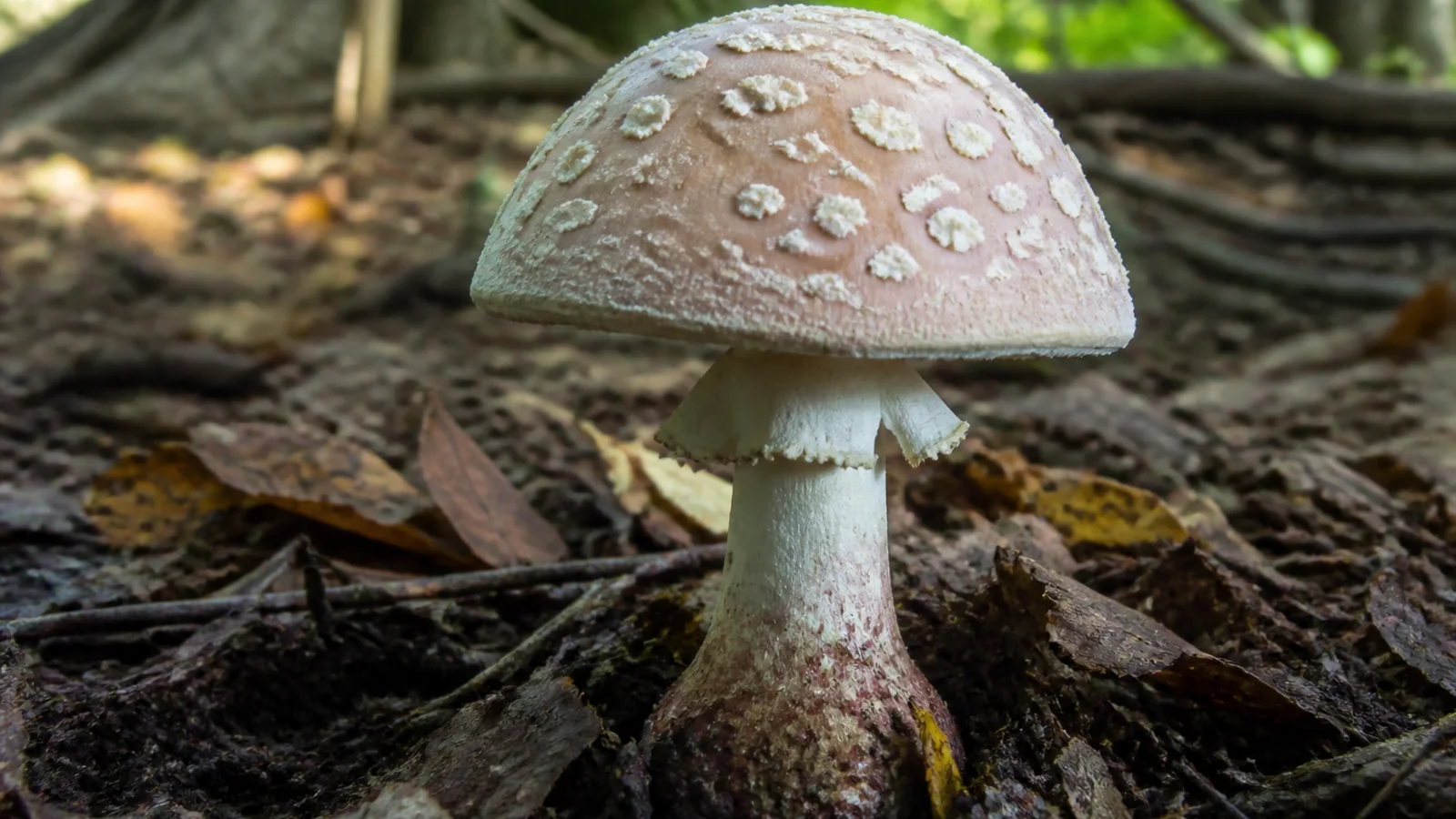
The blusher is an edible mushroom in the genus that kills people.
Both identification and preparation must be settled before eating.
Raw is a real problem here and it is the smaller of the two problems on this page.
Can you eat the blusher raw?
No. Raw blusher contains a hemolytic toxin, which breaks down red blood cells, and one identification reference states plainly that eating it raw causes anemia.
That is a step up from the mild gut irritants elsewhere in this series.
The sources do not describe raw blusher as unwise or unpleasant. One foraging school calls it poisonous if uncooked or undercooked, which is a category rather than a caution.
Hemolytic is worth translating before it gets waved past.
A hemolysin ruptures red blood cells. Doing that at scale is what the word anemia in that sentence refers to, which is a different kind of harm from a mushroom that upsets a stomach for an afternoon.
Proportion still matters for a mushroom people eat by the panful, and the honest version has two parts.
The cited sources do not report a death from raw blusher. That does not establish a safe raw amount. What they do describe is a compound with a mechanism, in a mushroom people eat in quantity, which is why every one of them uses the word poisonous rather than the word unwise.
The good news is that the fix every source names is complete and well attested.
The cited references describe thorough cooking as necessary to destroy the toxic compounds in a correctly identified blusher.
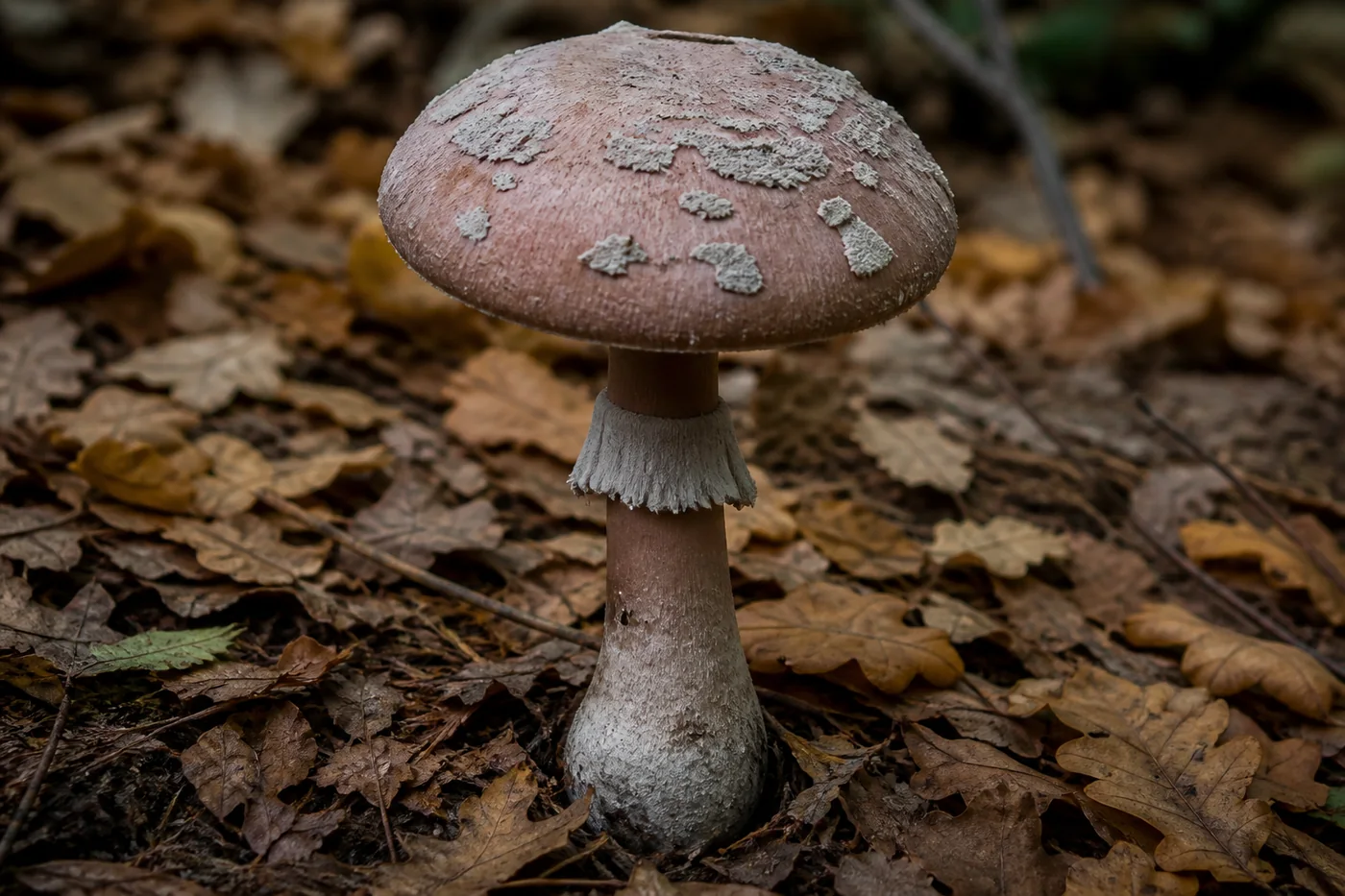
Identification creates a separate risk that cooking cannot solve.
The raw question has a clean answer and a clean fix. You must also establish whether the mushroom in your hand is a blusher at all.
SafetyCan You Eat Bay Bolete Raw? The Blue Stain Is Not the ReasonThis is an Amanita, and that comes first
Amanita rubescens shares a genus with the two or three mushrooms responsible for most fatal mushroom poisonings on earth.
Warning
The genus Amanita contains the death cap and the destroying angels, whose toxins are not destroyed by cooking, by drying or by anything else a kitchen can do. Nothing on this page about thorough cooking applies to them. The only protection against those species is not picking them.
That changes the standard rather than the answer.
On most pages in this series a mistake costs an unpleasant evening rather than anything worse. Here a mistake in the same direction, with the same confidence, in the same woodland, can cost a liver.
Young Amanitas make that worse rather than better.
Every species in the genus emerges as a pale egg wrapped in a universal veil, and at that stage the deadly ones and the edible ones look very much alike. Nobody should be picking any Amanita that has not opened, and that rule exists precisely because the blushing test cannot be run on something with no exposed flesh worth cutting.
The base of the stem is where the genus is won or lost.
A death cap and a destroying angel both sit in a distinct cup, a sac of tissue at the very bottom of the stem left behind by the universal veil. A mature blusher has a swollen base with no cup, no sac and no distinct rings around it, and that difference is the single most important thing on this page.
It only works if the base comes out of the ground.
A mushroom cut at soil level has left its most important feature behind, so any Amanita being identified has to be lifted whole, with the base intact and the dirt brushed off rather than sliced away. Foragers who cut everything at the stem out of habit are removing the one check that matters most in this genus.
Weather removes another check, because the universal veil does not always stay where it started.
The gray and off-white fragments scattered across a blusher cap are remains of the universal veil, and heavy rain washes them off completely. A rain-stripped cap has lost one of the three things it would normally be identified by, and it looks like a different mushroom from above.
The species itself is not rare or hard to find.
It is one of the mycorrhizal mushrooms, living in partnership with both hardwoods and conifers, and it is particularly abundant in conifer forests on poor acidic soils. Abundance is why people keep asking about it and it is not an argument for eating it.
SafetyCan You Eat Beech Mushrooms Raw? Not Poisonous, Just BitterBlushing is the test and it has conditions
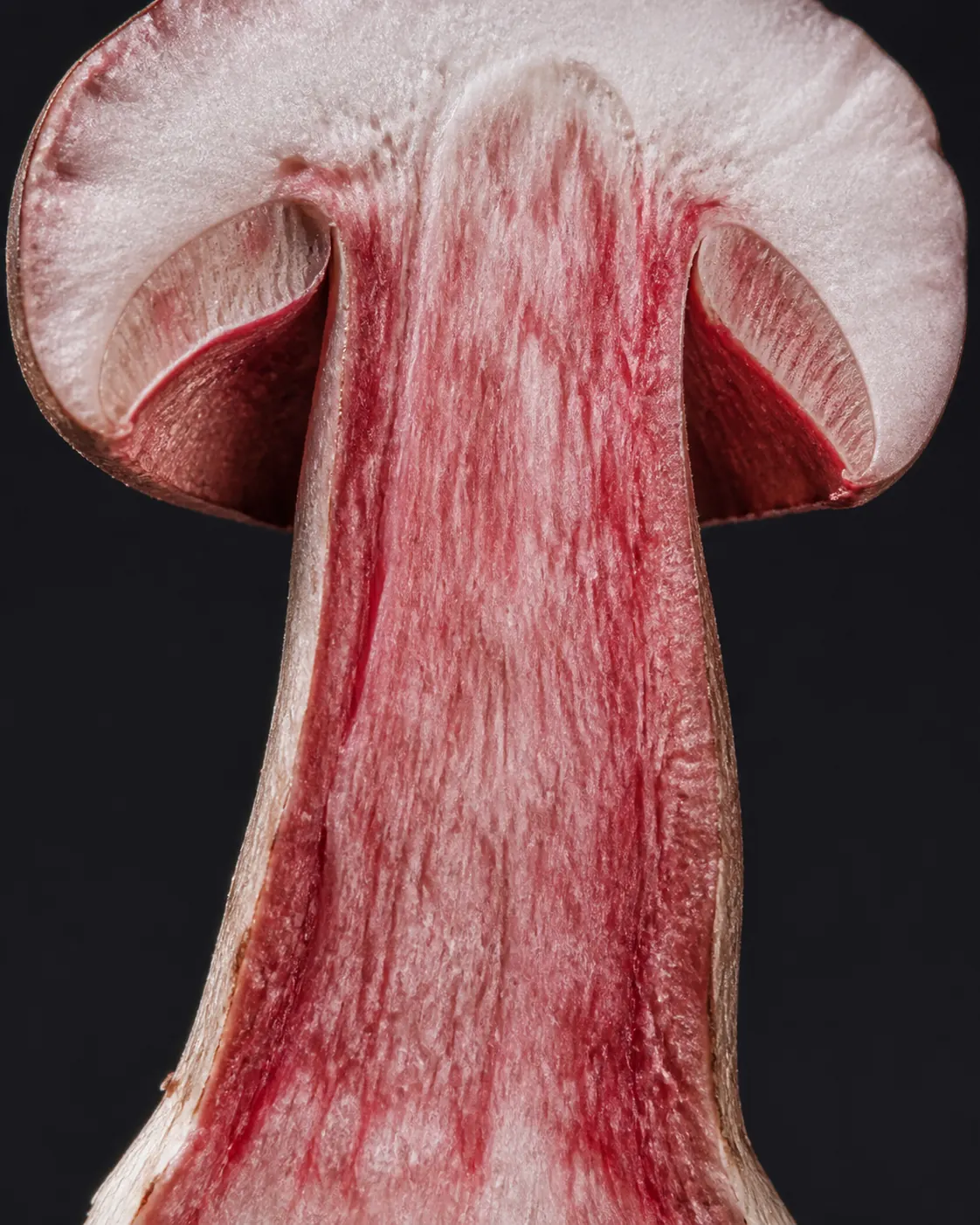
The name is the identification. Cut a blusher, or bruise it, or simply handle it, and the flesh turns deep pink or dull red.
The condition every source leaves out is that the flesh takes time to do it.
A fresh cut looks white. The color develops over the following minutes, so somebody who slices a stem, glances at it and sees white flesh has not disproved anything at all.
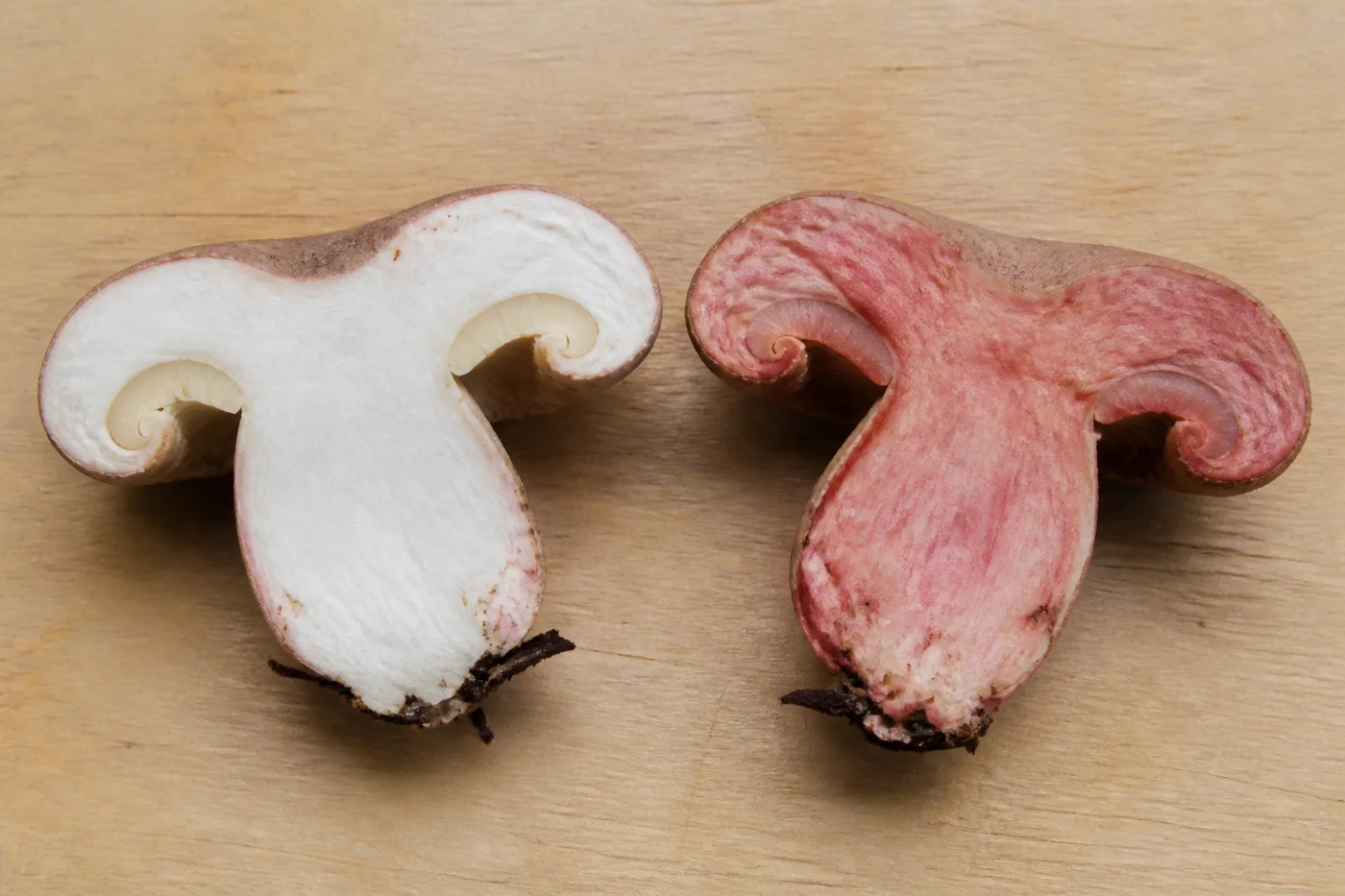
Give it twenty minutes before drawing a conclusion.
Allow enough time for the reaction before interpreting the result.
- Cut flesh
- Turns deep pink or dull red over minutes, not seconds
- Handled gills
- Blush pink or dull red very quickly when touched
- Mature gills
- Often already marked with pink or rusty red spots
- Stem
- White above the ring, reddish brown below it
- Base
- Swollen, with no cup, sac or distinct rings once mature
- White, which confirms the genus rather than the species
A blusher cap is close to useless as an identification feature, which is unusual.
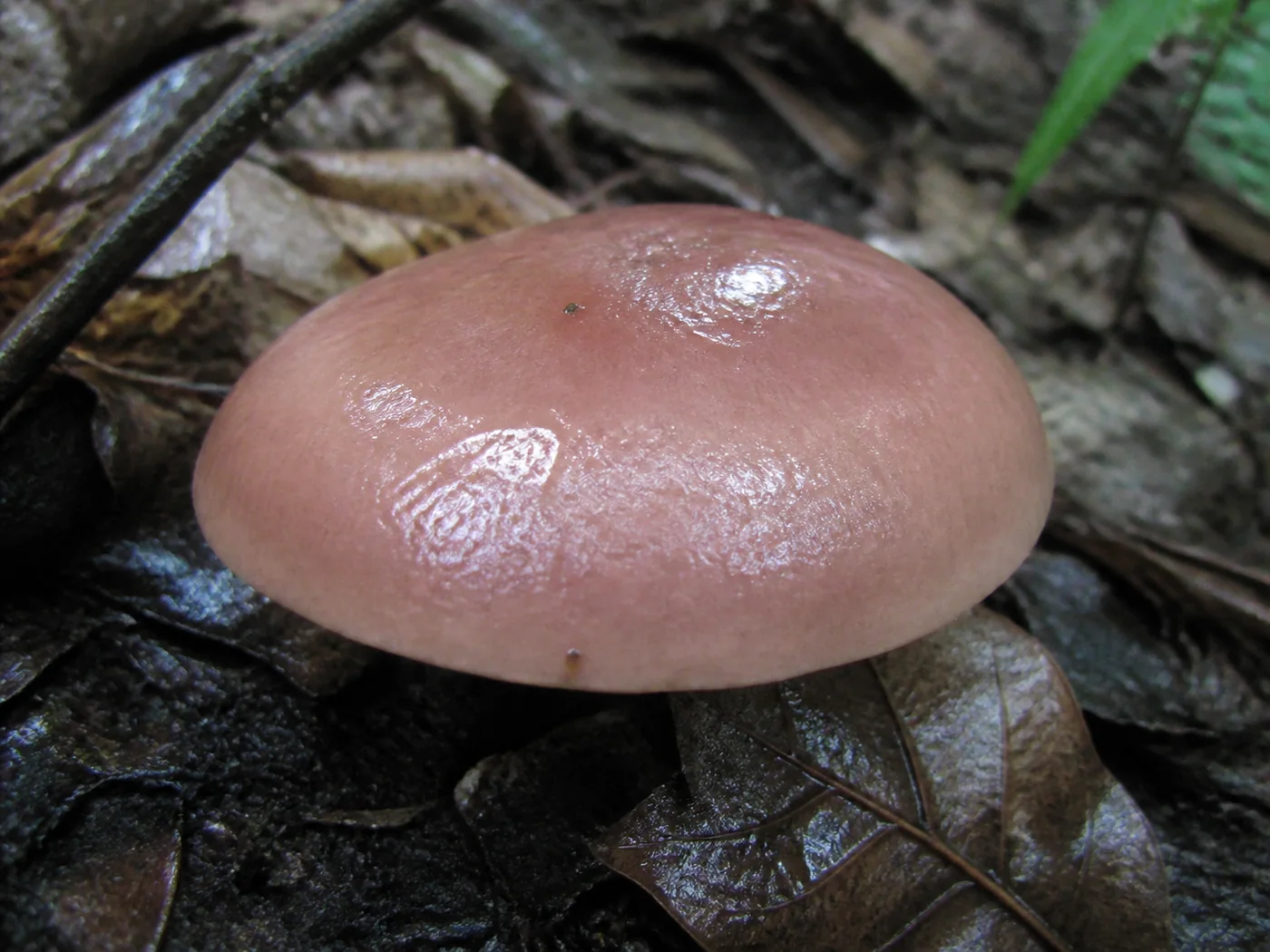
A blusher cap runs anywhere from five to twenty centimeters and the color ranges from almost white through pink and brown to almost black. A reader who has learned this mushroom from one photograph has learned one point on a very wide range.
That variability is exactly why the color change carries the identification.
What the mushroom looks like is unreliable, and what it does when you damage it is not. Any check that depends on matching an image is weaker here than a check that depends on the mushroom's behavior.
The gills react faster than the flesh does, which is worth knowing.
Running a thumb across the gills of a mature blusher produces a pink flush almost immediately, and older specimens often carry rusty red spotting before anybody touches them at all. That is a quicker version of the same test.
The stem base deserves a specific look every time.
On a mature blusher the base is swollen and bare, with no cup, no sac and no distinct rings around it, because the volval remains are only visible on very immature specimens. A cup or sac at the base is the feature that should stop the conversation entirely.
The print confirms the genus and settles nothing about the species.
A white spore print is what a blusher gives, and it is also what the death cap and the destroying angels give. Taking one tells you that you are in the genus you thought you were in, which is not the same as being safe.
Smell and taste are no help here at all.
Neither the odor nor the taste of a fresh blusher is distinctive, so a species that many people identify by smell offers nothing on that front. The color change is doing all the work.
The panther cap is the one that catches people
Amanita pantherina is the species that turns a blusher meal into a hospital visit, and it fails the blushing test.
| Blusher | Panther cap | |
|---|---|---|
| Cut flesh | Turns deep pink over minutes | Does not change color |
| The ring | Fine grooves on the upper surface | No grooves |
| Cap color | Pinkish brown, very variable | Brown |
| Effect of cooking | Destroys the toxins | Does not help |
The last row is the important one.
Everything this page says about thorough cooking is specific to the blusher's hemolysins. The panther cap carries ibotenic acid and muscimol, which act on the nervous system, and a hot pan does nothing about them.
It is worth knowing what that lookalike actually does to somebody.
Ibotenic acid and muscimol act on the central nervous system rather than the gut, producing confusion, agitation, drowsiness and sometimes seizures rather than the vomiting people expect from a bad mushroom. The picture is strange enough that it is not always recognized as a poisoning at all.
It also fruits alongside the blusher rather than at a different time of year.
Both species come up in the same summer and autumn window in the same kinds of woodland, so nothing about season or habitat separates them. The separation is entirely in the two checks below.
Two checks separate the blusher from the panther cap and both are quick.
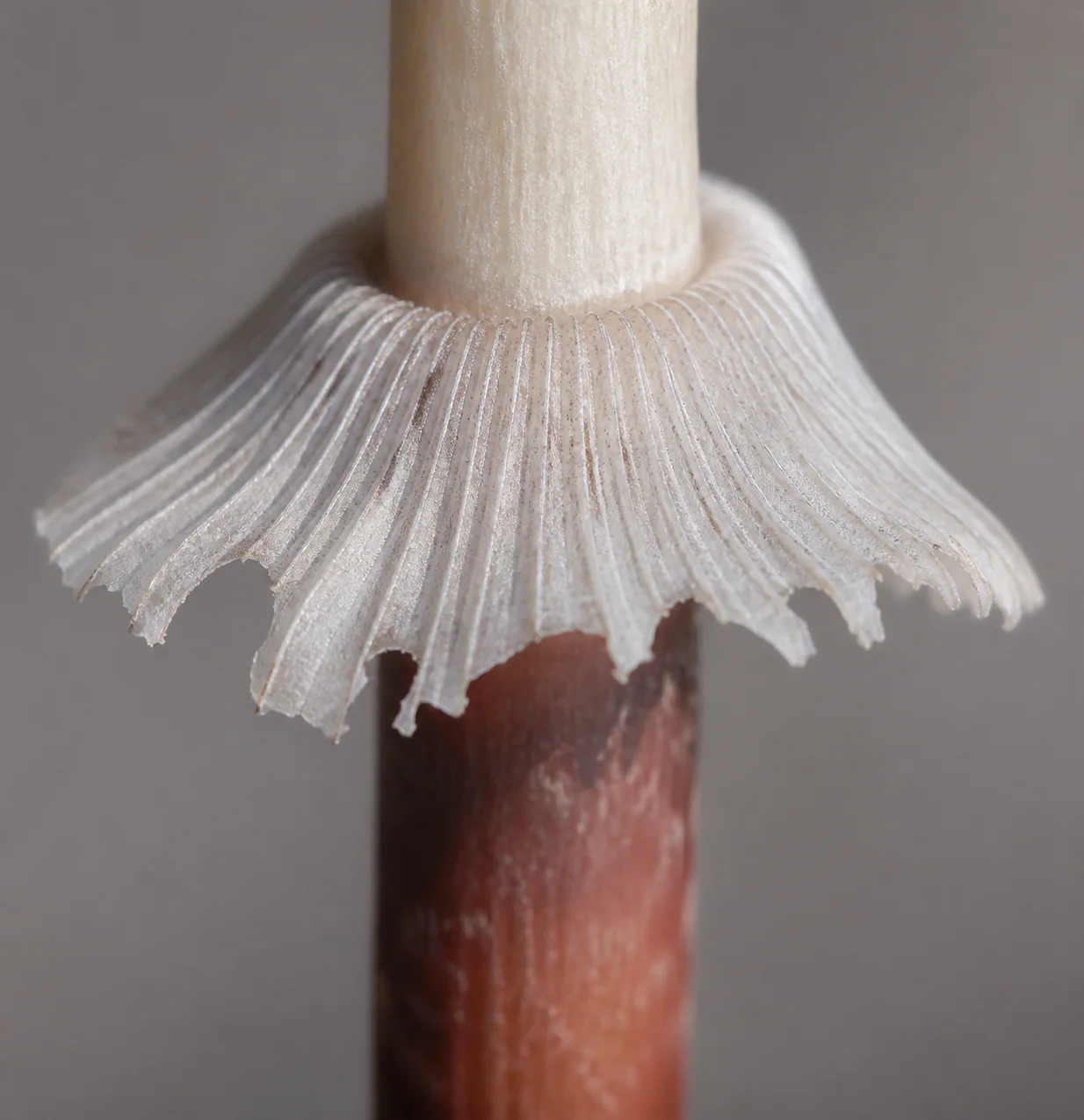
The flesh test is the primary one of the two, run with the twenty minute wait described above. The ring is the second, because a blusher ring is thin, fragile and marked with fine radiating grooves on its upper surface, and a panther cap ring is not.
Running both is the point rather than choosing between them.
A rain-washed cap has already cost you one feature, an immature specimen has already cost you another, and a mushroom that has lost two of its checks is a mushroom to leave standing.
Other mushrooms get confused with this one and matter a great deal less than the panther cap does.
The gray spotted amanita does not blush when cut, and it is the most common harmless mix-up. Caesar's mushroom has a brilliant orange cap with a striated margin and a yellow stem, and the fly agaric carries pure white veil fragments rather than gray or off-white ones.
One picking habit removes most of the remaining risk in this genus and costs nothing.
Picking one species at a time, into its own bag, means a doubtful mushroom never ends up in a pan with thirty confirmed ones. In a genus where a single wrong cap can matter, a mixed basket is the mistake that makes every other check pointless.
The same applies to somebody else giving you mushrooms.
A bag of blushers from a friend is a bag of mushrooms identified by somebody whose checks you did not watch, and this is the one genus where that distinction is worth being awkward about.
SafetyCan You Eat Beefsteak Polypore Raw? Yes, If You Slice It ThinWhat thorough cooking actually means
The cited references call the mushroom poisonous raw but do not establish a specific cooking time.
That gap is worth naming rather than filling with a number nobody published. It is a real hole in the published advice.
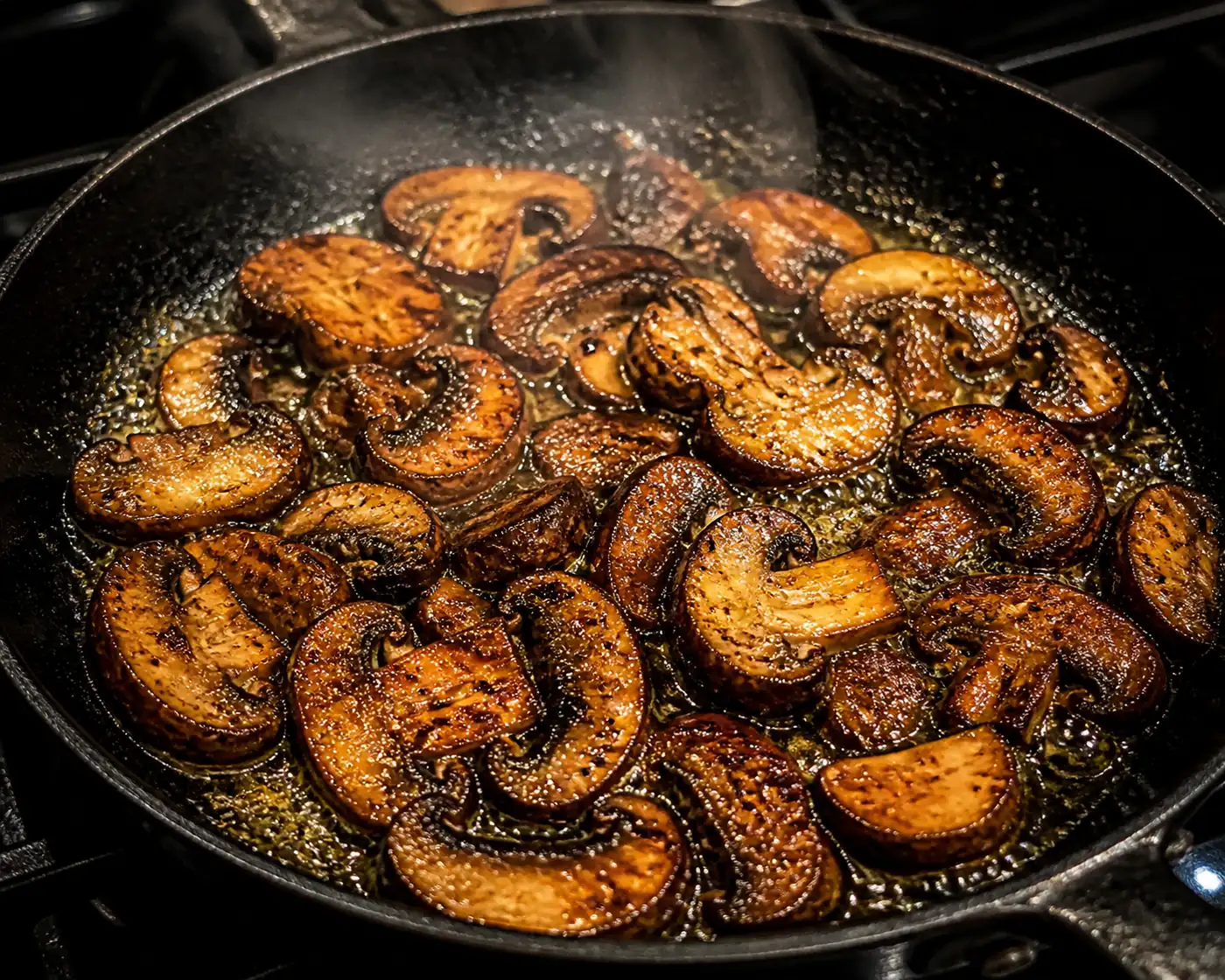
What can be said is the endpoint. Slices should be well browned and thoroughly shrunken rather than pale, soft and still holding their shape, which is a state you can see in a pan without a timer.
Undercooked counts as raw for this purpose, which is the part that catches people out.
The sources group uncooked and undercooked together in the same phrase, so a quick toss in a hot pan to finish a dish is not enough. The mushroom needs to be cooked as the point of the cooking rather than warmed through as part of something else.
There is a reasonable way to think about how long the cooking runs, without inventing a figure.
Every source that treats a heat-labile toxin seriously is describing minutes of real cooking rather than seconds of contact with heat. Slicing thinly rather than leaving caps whole helps, because the heat has to reach the middle of the piece rather than the surface of it.
Quantity changes the cooking calculation as well, and that is worth one line.
A single undercooked slice in a large dish is a different exposure from a plate of undercooked blushers, and the compound is dose dependent in the ordinary way. That is a reason to be careful with a big pick rather than a reason to relax about a small one.
Dried blushers are a question worth answering while it is here.
Drying is not cooking, and nothing in the sources supports treating dried blusher as safe to eat without then cooking it. Anything dried gets rehydrated and cooked exactly as fresh material would be.
A small first portion is the right habit here and it works.
Unlike the delayed poisonings elsewhere in this series, a reaction to undercooked blusher arrives promptly enough that a small portion is genuinely informative. Eating a little and waiting before eating more tells you something real.
If a meal has already gone wrong, the response is not complicated.
Symptoms after a mushroom meal that involved anything from this genus deserve a phone call rather than a wait-and-see, and it is worth saying the word Amanita on that call. That single word changes how the conversation goes.
Whether to bother with it at all
Beginners need to weigh the identification risk even for a species described as edible.
The identification reference describes the blusher in detail but declines to recommend it for food.
We do not recommend this species in any of our mushroom menus.
An identification reference, at the end of a full and favorable description
That comes after two thousand words of careful description. An edible reputation does not remove that caution.
That refusal is the strongest thing any source says about the mushroom.
An identification reference that describes the species in full detail, gives its chemistry and explains exactly how to tell it apart, then states that the writers do not recommend it in any of their mushroom menus. That sentence is worth more than a paragraph of hedging.
A foraging school arrives at a similar position on identification from a different direction.
It rates the blusher advanced identification and says that tasting should only be attempted by more experienced foragers and mycologists, which is a polite way of saying the same thing.
It is worth being clear about what that refusal is and is not saying.
Neither source claims the cooked mushroom is dangerous, and neither is telling experienced foragers to stop. Both are declining to hand the species to somebody whose identification they cannot vouch for, which is a judgement about readers rather than about mushrooms.
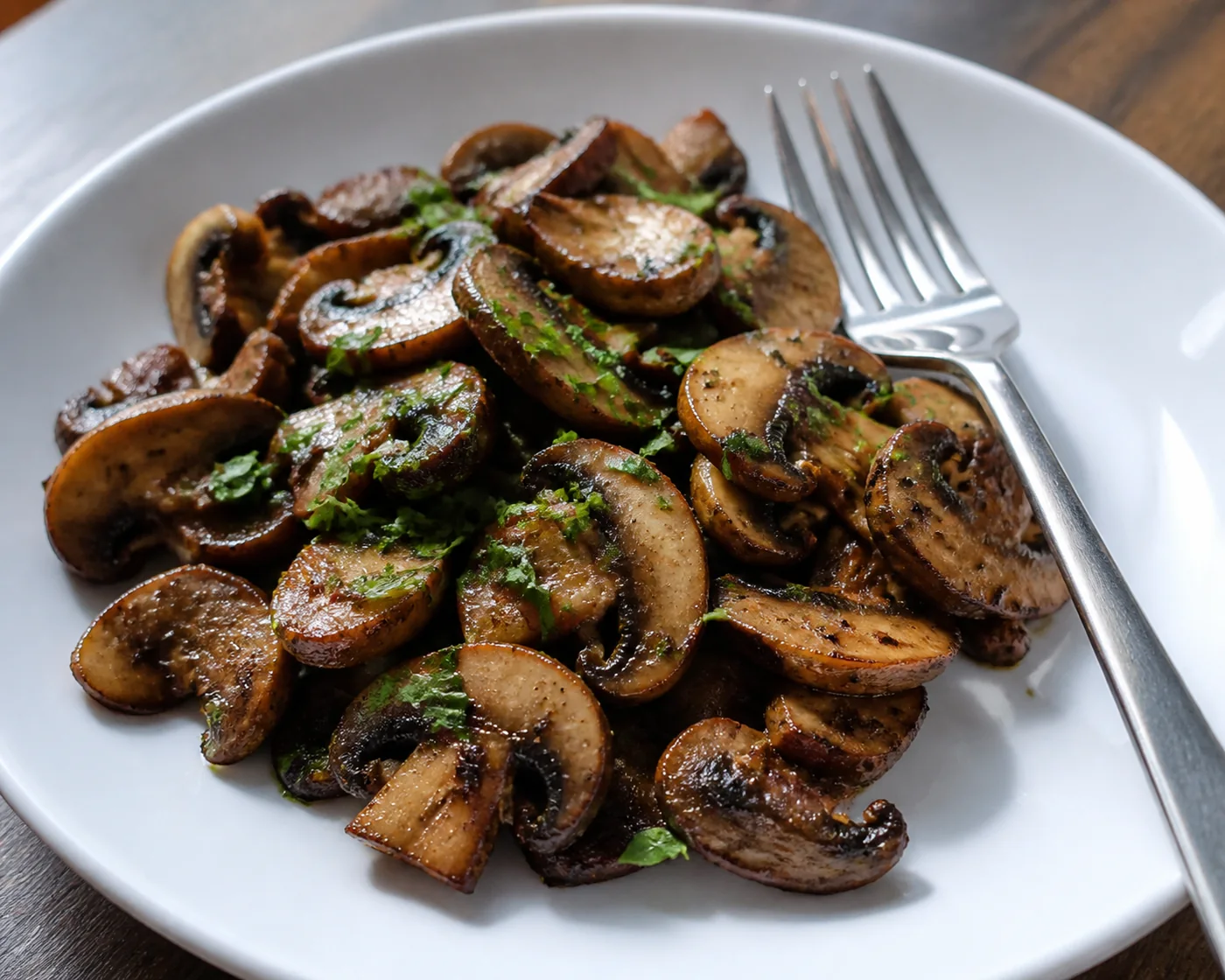
Set against that, the mushroom is genuinely good cooked and genuinely common.
People who know the genus well eat blushers happily and have done for a long time, and there is nothing dishonest about that position either. The difference between them and a beginner is not courage, it is that the checks in the middle of this page are automatic for them.
There is a middle path that neither source mentions and that is worth naming.
Somebody can learn the blusher properly without eating any of it. Find them every autumn, lift them whole, cut them and watch the color arrive.
A season of doing that costs nothing and builds the exact competence the refusal is asking for.
That is how most people who eat Amanitas safely got there.
Nobody starts by eating one. They start by handling a great many of them and getting the answer right before it matters, which is a slower route than a page like this one and a considerably better one.
The useful version of the answer depends on who is asking.
Somebody who can already name three Amanitas by sight and has cut and waited on a dozen of them is looking at a decent edible. Somebody who found a pinkish mushroom, looked it up, and got here is looking at the poisonous species index instead, and that is the better link of the two.
Sources & References
- Amanita rubescens, Blusher, First Nature The identification reference used here, and the source of the refusal quoted on the page. Gives the 5 to 20 cm cap ranging from almost white through pink and brown to almost black with irregularly distributed off-white or gray universal veil fragments, the white crowded gills that blush pink or dull red when handled and are often marked with pink or rusty red spots, the 7 to 15 cm stem white above the ring and reddish-brown below, the thin fragile grooved and often ragged ring, the swollen base with no distinct basal rings once mature, the white spore print, the undistinctive odor and taste, the June to October season, and the mycorrhizal habit with hardwoods and conifers, particularly abundant in conifer forests on poor acidic soils. States that it is generally considered edible if well cooked but that since it is known to contain a hemolytic toxin in its raw state and hence causes anaemia if eaten raw, most people steer clear of it, that the toxic compounds are destroyed if it is cooked thoroughly, and that the writers do not recommend this species in any of their mushroom menus. Separates Amanita excelsa on unchanging flesh color, Amanita caesarea on the orange striated cap and yellow stem, Amanita muscaria on pure white veil fragments, and Amanita pantherina on flesh that does not blush pink.
- Foraging guide, Blusher, Foraging Course Company The source for the ring grooves and the skill rating. States that it must be thoroughly cooked as it contains a haemolytic toxin in its raw state and that it is poisonous if uncooked or undercooked, that the cap and flesh bruise pink when damaged, that the stem ring has striations on the upper surface, that only very young specimens have visible volval remains at the stem base and more often it appears swollen, and that gray or dirty-white fragments of the universal veil remain on the cap though these can be washed away in heavy rain. Separates the panther cap on both the absence of pink bruising and the absence of striations on the ring. Classes the species as advanced identification and states that as this is an Amanita, tasting should only be attempted by more experienced foragers and mycologists.
- Amanita rubescens, Identifying the Blusher Mushroom, Ultimate Mushroom States that raw blushers contain hemolytic toxins that can break down red blood cells, that they should never be eaten raw, and that cooking completely neutralizes these toxins. Names Amanita excelsa, Amanita caesarea, Amanita muscaria and Amanita pantherina as lookalikes, separating the panther cap on its brown cap and flesh that does not turn pink when cut, and gives no cooking time and no guidance about who should attempt the species.