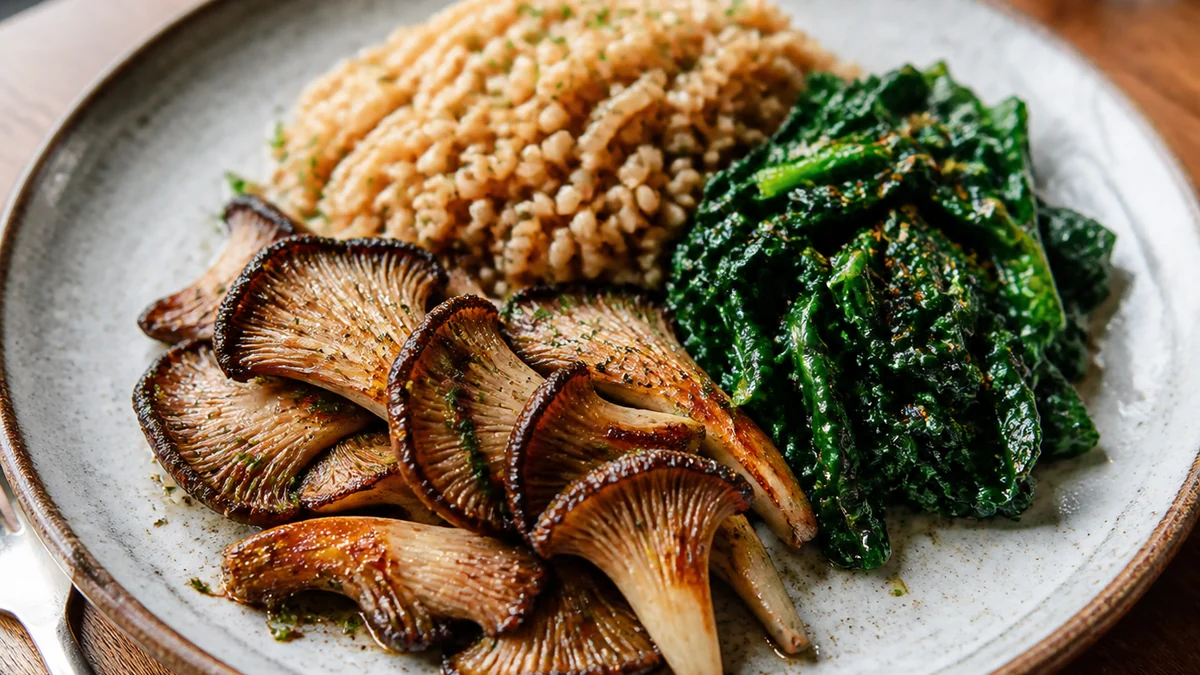
Cremini are the best all-purpose mushrooms for sauce, dried porcini build the deepest liquid base, and shiitake lead when soy, ginger, or miso sets the direction.
Cremini are the best mushrooms for sauce when you need one dependable answer. They brown well, remain visible after reduction, and fit cream, wine, tomato, or mustard without forcing the sauce in one direction.
Dried porcini are better when the liquid itself needs deep mushroom aroma, while shiitake lead in soy, ginger, hoisin, or miso. Morels, oyster mushrooms, and maitake solve narrower jobs involving delicate aroma, tender pieces, or crisp contrast.
The useful question is whether the mushroom should dissolve its flavor into the sauce or remain recognizable in each spoonful. That decision controls the variety, quantity, cut, and moment when liquid enters the pan.
Choose by Sauce Structure
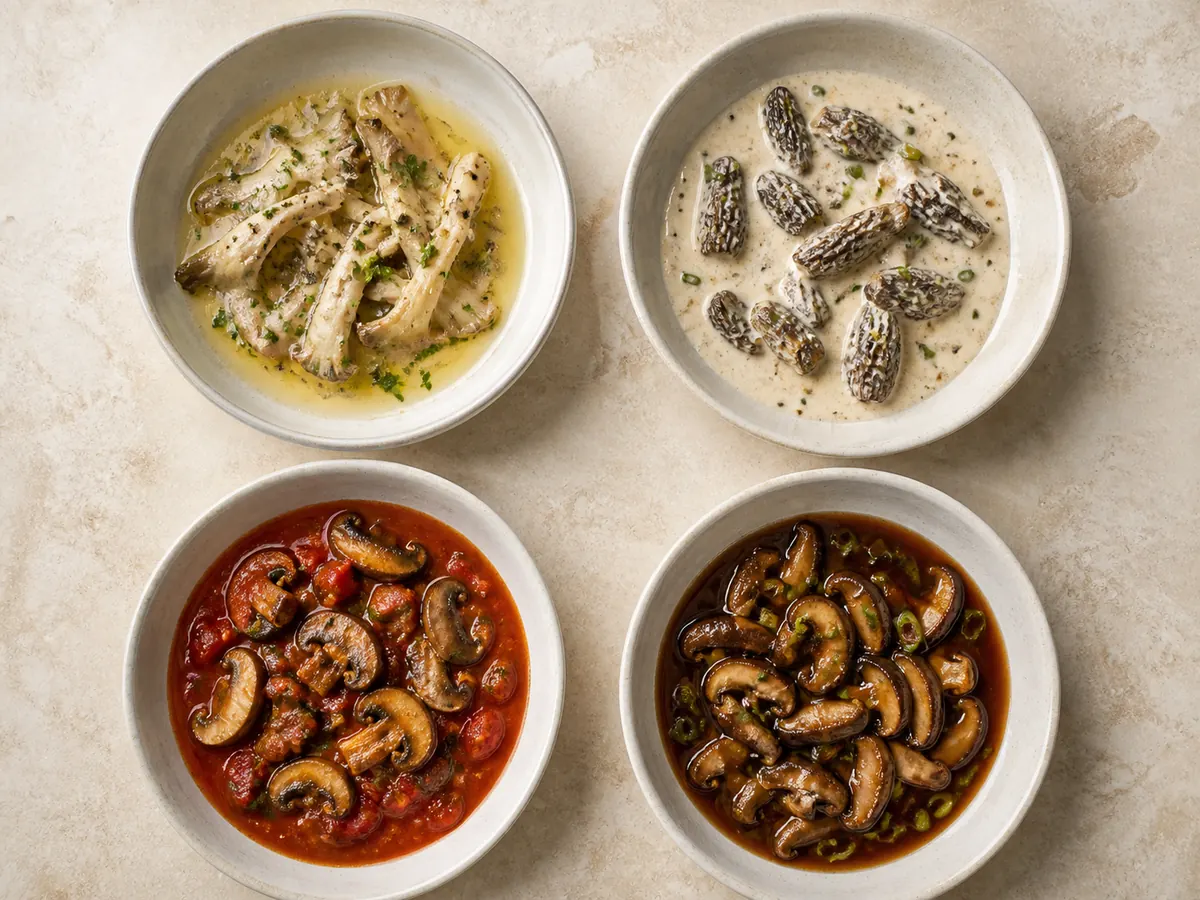
A light butter or white-wine sauce exposes every aroma, so delicate morels and oyster mushrooms remain distinct.
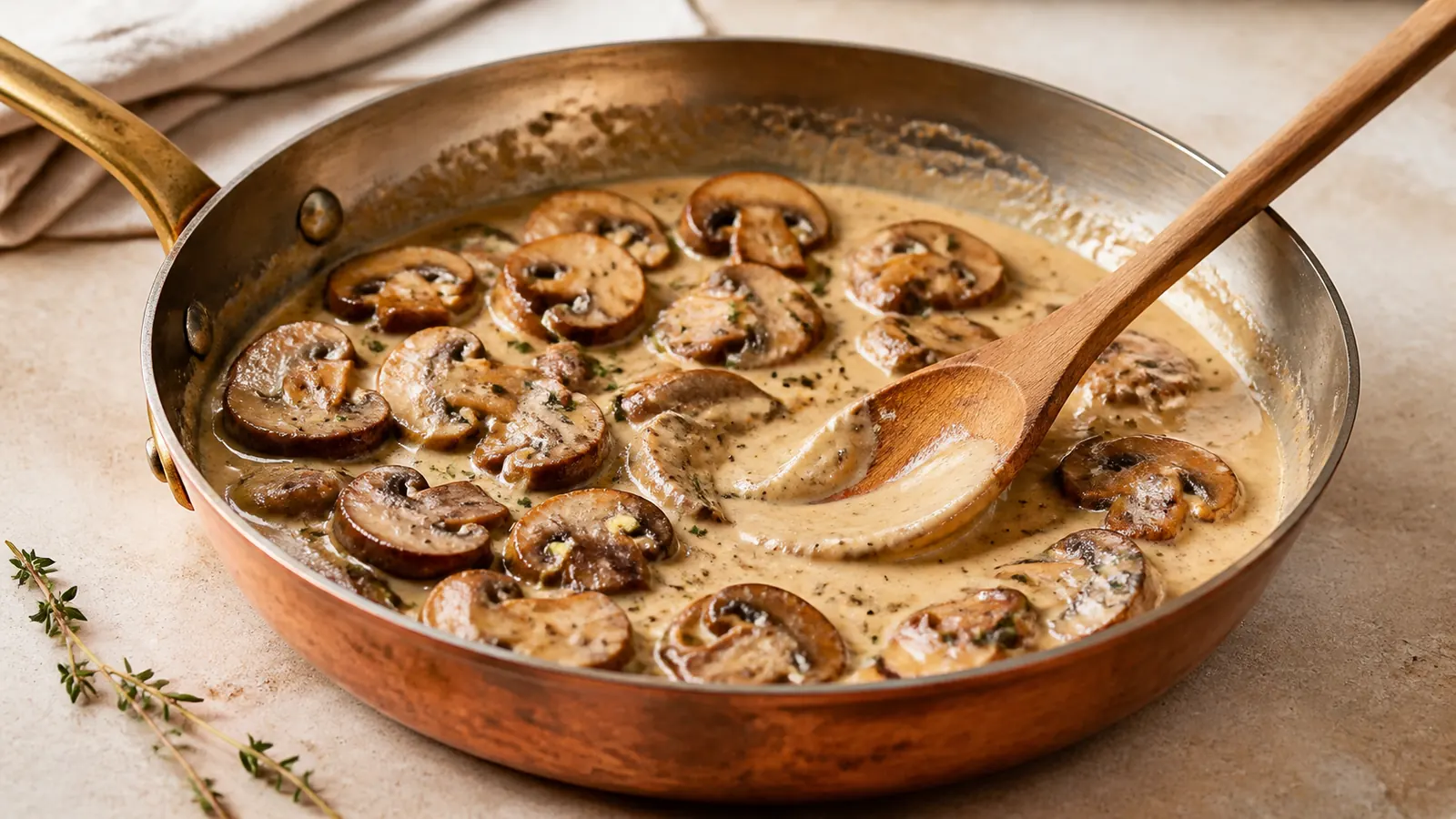
Cream softens sharp edges and spreads mushroom aroma across the plate. Cremini provide enough browned flavor to survive the dairy, while a small amount of dried porcini can deepen the liquid without filling it with chewy pieces.
Tomato contributes acidity, sweetness, and its own strong aroma. Use browned cremini for a balanced result or shiitake when garlic, chile, smoked meat, or fermented seasoning already makes the sauce assertive.
Soy, ginger, hoisin, and miso call for shiitake because its characteristic sulfur compounds remain recognizable beside equally strong ingredients. Oyster mushrooms can supply softer pieces in the same sauce, but they should not be asked to carry its flavor alone.
Choose the sauce family first, then decide whether the mushroom supplies the base, the visible pieces, or both.
| Sauce structure | First choice | Mushroom's main job | Starting treatment |
|---|---|---|---|
| Butter, white wine, or light stock | Morel or oyster mushroom | Stay aromatic and visible | Cook gently, then reduce liquid around the pieces |
| Cream or mustard | Cremini | Brown deeply and carry the finished sauce | Evaporate mushroom water before adding dairy |
| Tomato, chile, or smoked meat | Cremini or shiitake | Remain distinct beside strong seasoning | Brown firm slices before tomato enters |
| Soy, ginger, hoisin, or miso | Shiitake | Flavor the glaze and provide chew | Remove stems and slice caps evenly |
| Wine, stock, or a reduced brown sauce | Dried porcini | Concentrate the liquid | Soak, filter, chop, and reduce in stages |
If your real decision concerns noodle shape and the amount of sauce a pasta can carry, mushrooms for pasta require a different comparison. For roux-thickened gravy or roast-dripping gravy, use a recipe intended for that method rather than treating it as an unthickened mushroom sauce.
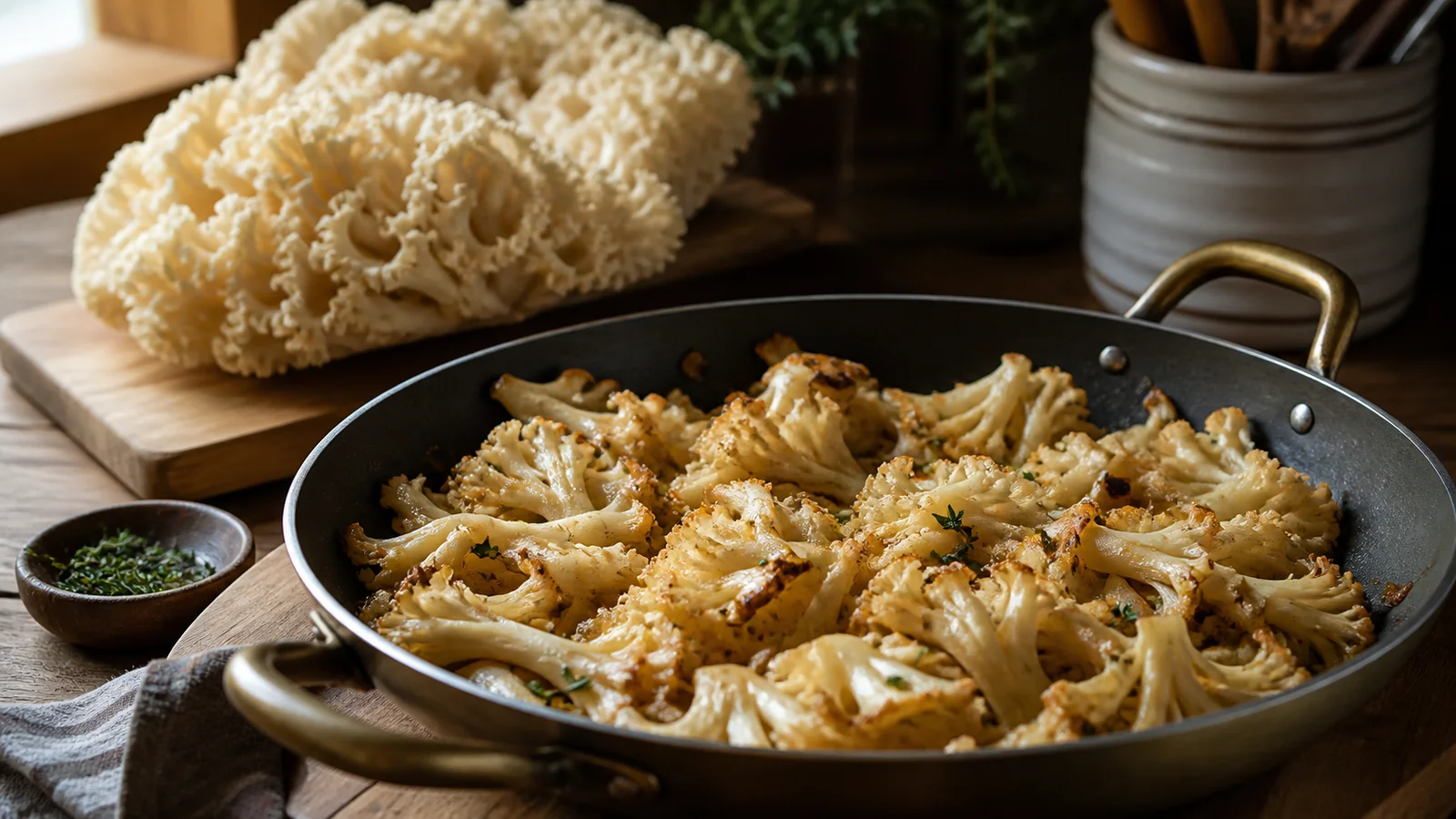
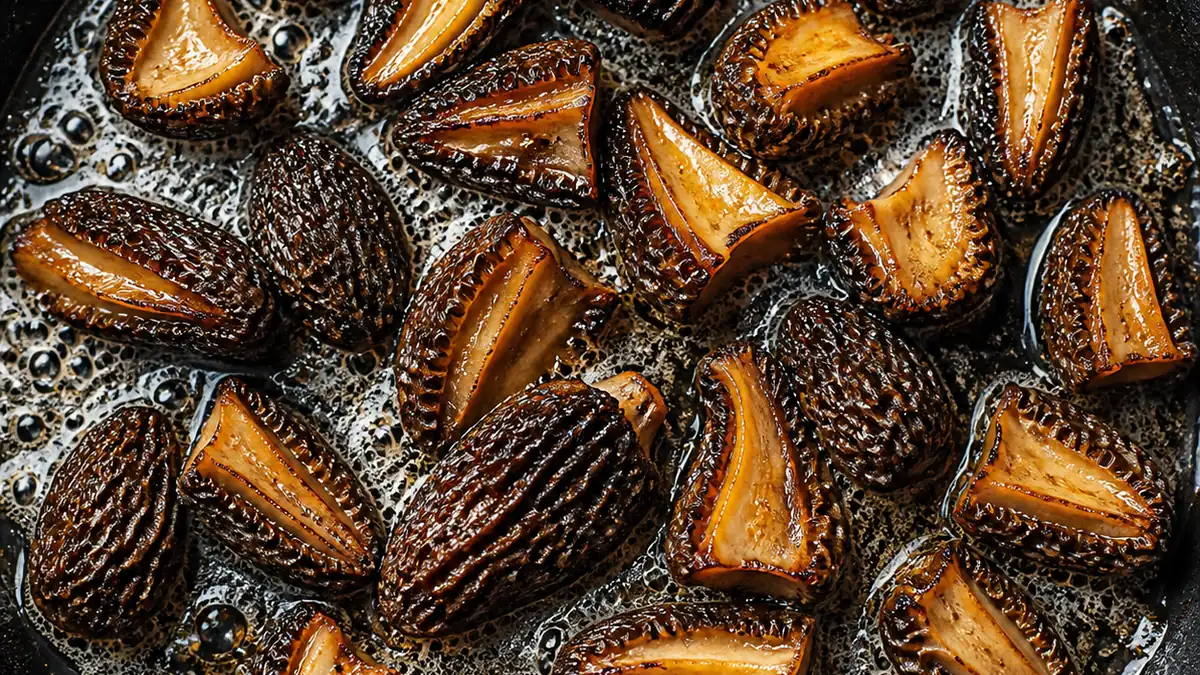
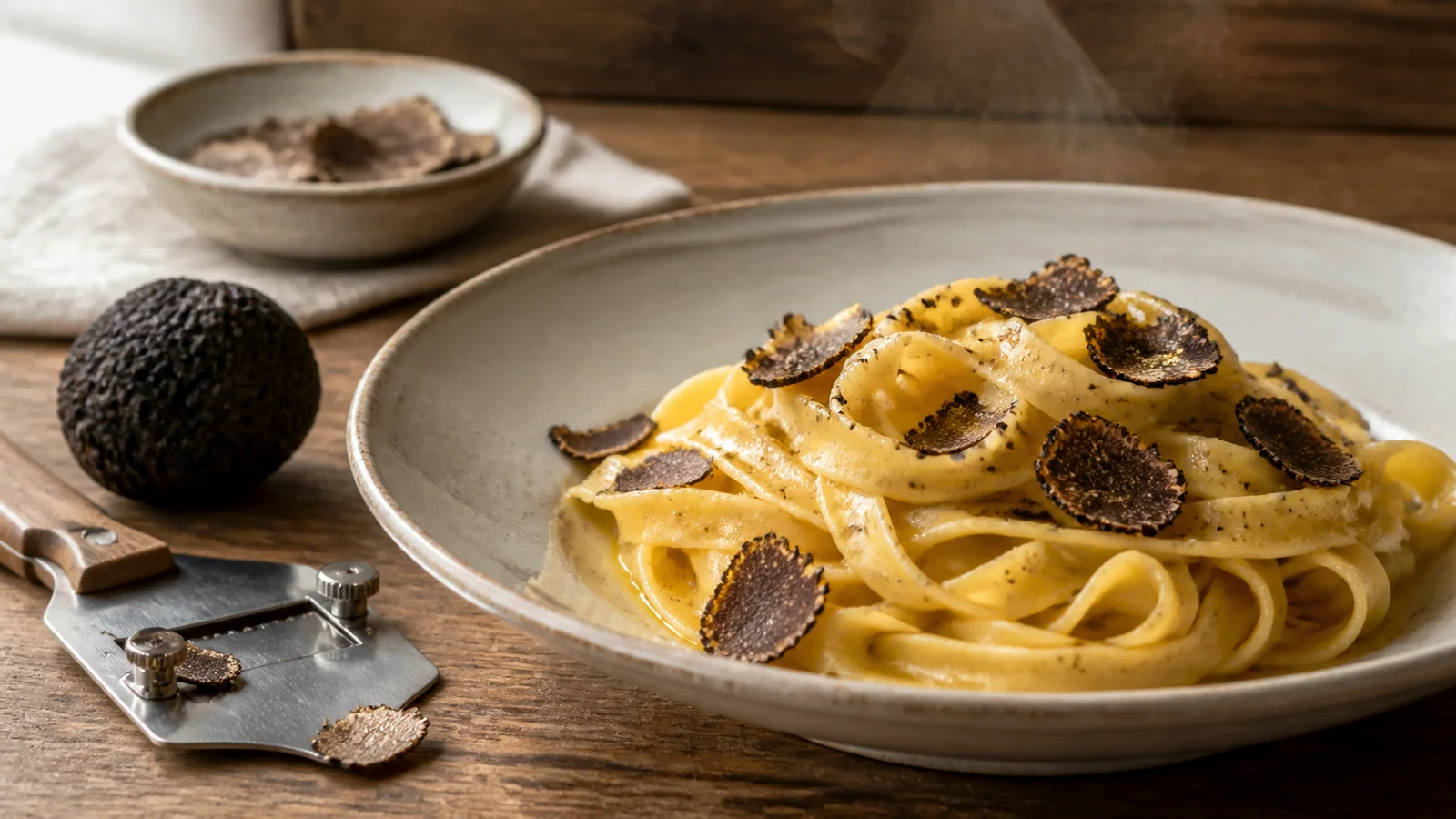
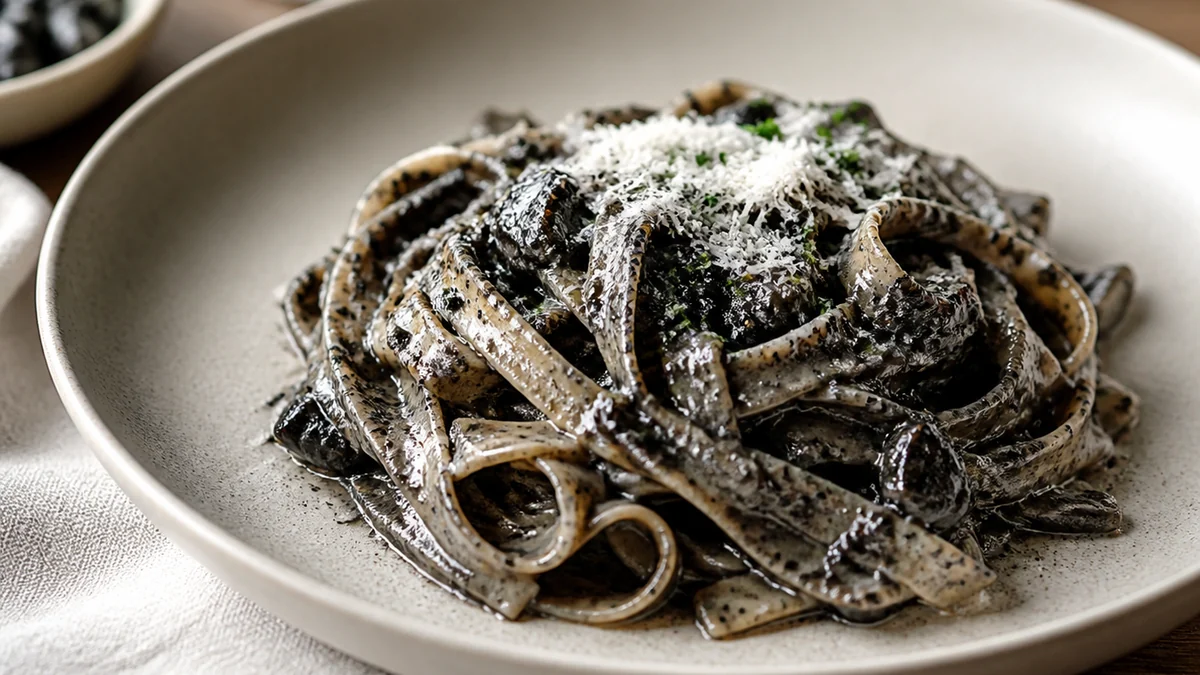
The four sauce styles below show how mushroom pieces change when the surrounding liquid becomes richer, darker, or more assertive.
6 Best Mushrooms for Sauce
These six mushrooms are ranked by how reliably they perform a distinct sauce job. The order favors usefulness, but each lower-ranked choice can beat cremini when its specific texture or aroma is the reason for making the sauce.
1. Cremini: Best All-Purpose Choice
Cremini give you both browned flavor in the liquid and substantial pieces in the finished sauce. Use 340 to 450 g fresh mushrooms for four mushroom-forward servings, which leaves roughly 85 to 115 g per person before shrinkage.
Slice caps about 6 mm thick when the pieces should remain obvious. For a smoother sauce, mince the stems and smaller caps so their exposed surfaces release flavor quickly, then keep a portion of sliced caps for contrast.
A Mushroom Council pan-sauce formula uses 16 ounces of crimini for four servings and browns them before wine, broth, and cream enter.
Cremini are less aromatic than porcini or morels, so color supplies much of their depth. Give the pan enough space rather than compensating with more garlic, salt, or cheese.
2. Porcini: Best Concentrated Flavor Base
Porcini are the strongest choice when the sauce liquid needs a deep woodland aroma. For four servings, start with 15 to 25 g dried porcini and treat them as seasoning rather than bulk.
Soak the pieces until pliable, lift them out instead of pouring the bowl through a coarse strainer, and chop them finely. Pass the amber liquid through a coffee filter, fine cloth, or very fine sieve because grit settles below the mushrooms.
Fresh porcini can remain in slices, but dried pieces may stay chewy after a short reduction, which makes fresh cremini useful for bite.
The Riverford red-wine sauce uses 15 g dried porcini soaked in 300 ml hot water. You rarely need all the soaking liquid at once, so add it in portions and stop when the aroma is clear but the sauce still tastes balanced.
3. Shiitake: Best for Soy and Ginger Sauces
Shiitake carry soy, ginger, hoisin, miso, citrus, and chile better than delicate mushrooms. Use 225 to 280 g fresh caps for four servings because their stronger character needs less bulk than cremini.
Remove the tough stems and slice the caps 5 to 6 mm thick for chewy pieces, or chop them finely to distribute flavor through dumpling, noodle, or soy reductions.
Research on shiitake odorants identifies mushroom-like and sulfur-containing compounds as important parts of its aroma, with drying changing which compounds dominate. That helps explain why shiitake remains noticeable beside fermented and aromatic seasonings that would cover oyster mushroom.
A published stir-fry formula pairs 8 ounces of shiitake with broth, soy, hoisin, vinegar, ginger, and garlic, a combination too assertive for quiet butter sauce unless shiitake should dominate.
4. Morel: Best for Butter and Cream
Morels earn their place through aroma and structure rather than everyday value. Their hollow caps catch cream and shallot while remaining recognizable, so use 170 to 225 g fresh or 20 to 30 small morels for four servings.
Clean the hollow interiors carefully and split large specimens lengthwise. Cook morels thoroughly because raw or undercooked morels can cause illness, and never use a wild collection unless its identity is certain.
Butter, light stock, restrained wine, shallot, and cream leave enough space for morel aroma, while tomato, smoked meat, blue cheese, or aggressive chile waste their quality.
The Indiana Department of Natural Resources gives 20 to 30 small morels or 10 to 15 large ones for a cream sauce. Size varies widely, so weight is the more repeatable buying measure when the seller provides it.
5. Oyster Mushroom: Best for a Light Sauce With Pieces
Oyster mushrooms give sauce tender, irregular pieces instead of uniform slices. Use 280 to 340 g fresh mushrooms for four servings, then tear the caps along the grain so the pieces retain natural edges.
Cook dense cluster bases before the thin caps, or dice the bases for the sauce and reserve the tender caps for a brief finish.
Long simmering softens the thin edges and makes every piece taste like the surrounding liquid. Add most oyster mushroom pieces near the finish when their tender shape is the point.
Heavy tomato, long braising, or strong smoked seasoning makes oyster mushrooms anonymous. Choose cremini or shiitake when the sauce cannot stay light.
6. Maitake: Best for Crisp Contrast
Use 280 to 340 g fresh maitake clusters for four servings and tear them into pieces with a dense base that can contact the pan.
Sear the bases while the frilled tips remain exposed. Return most of the maitake only long enough to coat it, then place the reserved crisp pieces on top after the sauce leaves the heat.
Brown butter, sage, garlic, Parmesan, and restrained cream all suit maitake. A long simmer removes its main advantage, while very high heat can burn the thinnest tips before the center is tender.
Maitake is ranked sixth because the technique is less forgiving, not because its result is weak. Choose it when texture matters enough to justify cooking part of the mushroom separately.
| Rank and mushroom | Amount for four | Best sauce job | Preparation | Main limit |
|---|---|---|---|---|
| 1. Cremini | 340 to 450 g fresh | All-purpose cream, wine, tomato, or mustard | Slice 6 mm or mince part for the base | Needs real browning for depth |
| 2. Porcini | 15 to 25 g dried | Concentrated wine, stock, or cream base | Soak, lift, chop, and fine-filter | Grit and chewy large pieces |
| 3. Shiitake | 225 to 280 g fresh | Soy, ginger, hoisin, miso, or chile | Remove stems and slice caps evenly | Can dominate a quiet sauce |
| 4. Morel | 170 to 225 g fresh or 20 to 30 small morels | Butter, shallot, and cream | Clean interiors, split, and cook thoroughly | Cost, season, and safety |
| 5. Oyster mushroom | 280 to 340 g fresh | Light wine, lemon, herb, or cream sauce | Tear and add tender caps late | Softens during long simmering |
| 6. Maitake | 280 to 340 g fresh | Crisp contrast for a smooth sauce | Tear, sear bases, and reserve fronds | Tips can scorch or soften |
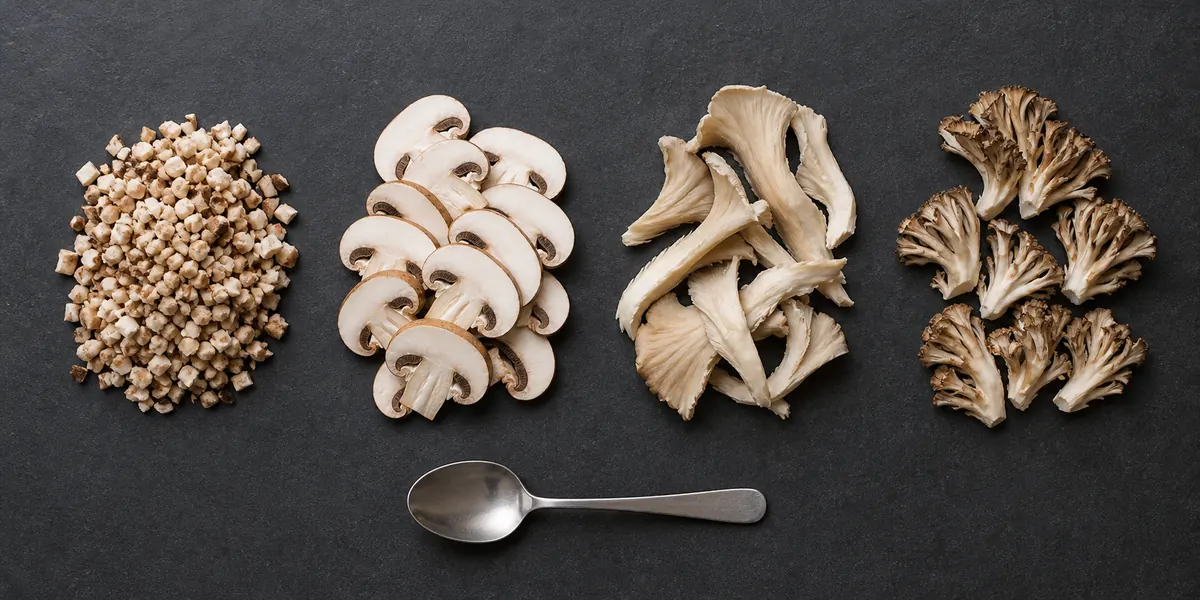
The lineup makes the preparation differences visible before any of the mushrooms enter a pan.

Let the Mushroom Flavor the Liquid or Remain Visible
Fine mince exposes more cut surface, so mushroom flavor enters the fat and liquid quickly. Use it when you want a cohesive sauce rather than large pieces, but keep the pan dry enough for the mince to brown instead of forming a gray paste.
Medium slices divide the work. Their cut faces brown and enrich the pan residue, while the centers preserve enough structure to stay recognizable in cream, tomato, or wine.
Torn oyster caps and maitake fronds prioritize shape over extraction. Coat them briefly or reserve some for the finish because extended simmering transfers their flavor to the liquid while erasing the texture you selected them for.
- Mince cremini stems or rehydrated porcini when the sauce base needs broad flavor distribution.
- Slice cremini or shiitake when each serving should contain substantial pieces.
- Tear oyster mushrooms and maitake when irregular edges should catch a light coating.
- Reserve crisp maitake or tender oyster caps when the finished texture matters more than extraction.
Mushrooms for soup follow a different liquid job because broth can extract flavor over a longer simmer without reducing to a coating.
The cut comparison below shows the progression from a mushroom that becomes part of the base to one that stays on the plate as a distinct piece.
Use Dried Mushrooms as a Flavor Base
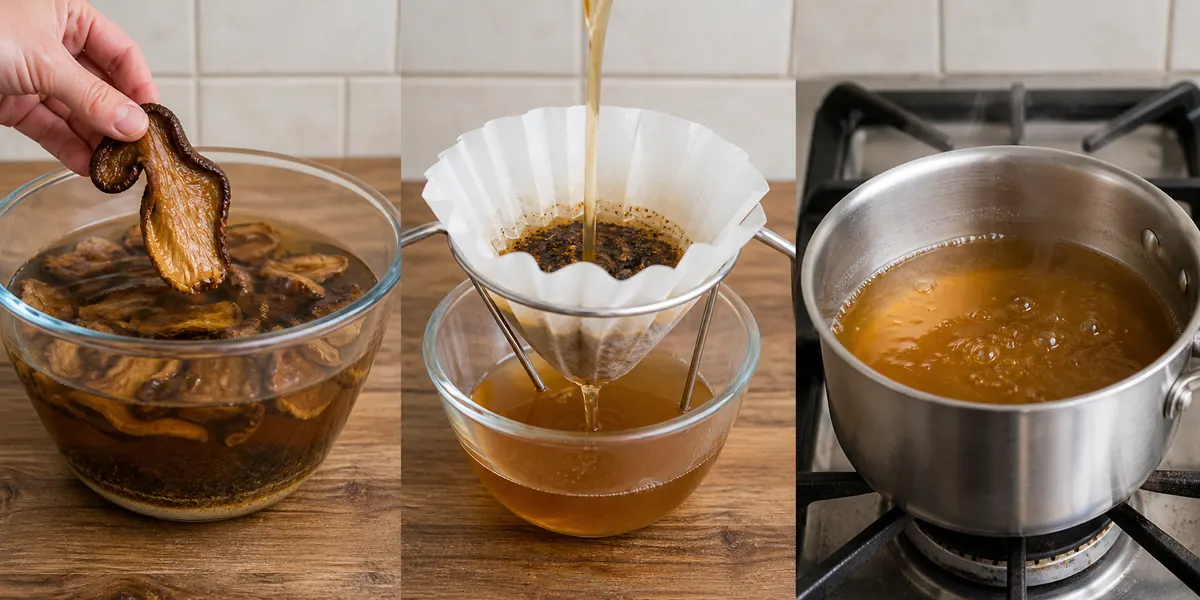
Dried porcini hold concentrated aroma but often carry fine forest debris. The cleanest method separates the useful liquid from both sediment and large rehydrated pieces before the sauce is assembled.
Soften the dried pieces
Cover them with warm water and wait until they bend without a dry center.
Lift without stirring
Remove the mushrooms from the surface so settled grit remains at the bottom of the bowl.
Filter the liquid
Pass it through paper, fine cloth, or a very fine sieve.
Reduce in portions
Chop the softened pieces and add measured portions of the clean liquid to the sauce pan.
Do not squeeze the filter or pour the last cloudy spoonful into the pan. The small amount of liquid recovered is rarely worth the grit it can carry.
Reduce one portion before adding another because every sauce has a different capacity for porcini. Cream rounds the aroma, wine sharpens it, and tomato can absorb more concentration before the porcini becomes obvious.
Fresh cremini can restore browned pieces when dried porcini provide the base because rehydrated pieces may remain leathery during a short sauce reduction.
Stop when the mushroom aroma is distinct but not isolated from the fat, acid, stock, or dairy around it.
- Starting amount
- Use 15 to 25 g dried porcini for four servings
- Best liquids
- Pair the concentrate with wine, stock, cream, or a reduced brown sauce
- Fresh partner
- Cremini add browned pieces when rehydrated porcini remain chewy
- Stop point
- Keep the aroma distinct but integrated with fat, acid, stock, or dairy
The process image separates the three jobs that are often collapsed into one careless pour.
Keep Water Out Before You Build the Sauce
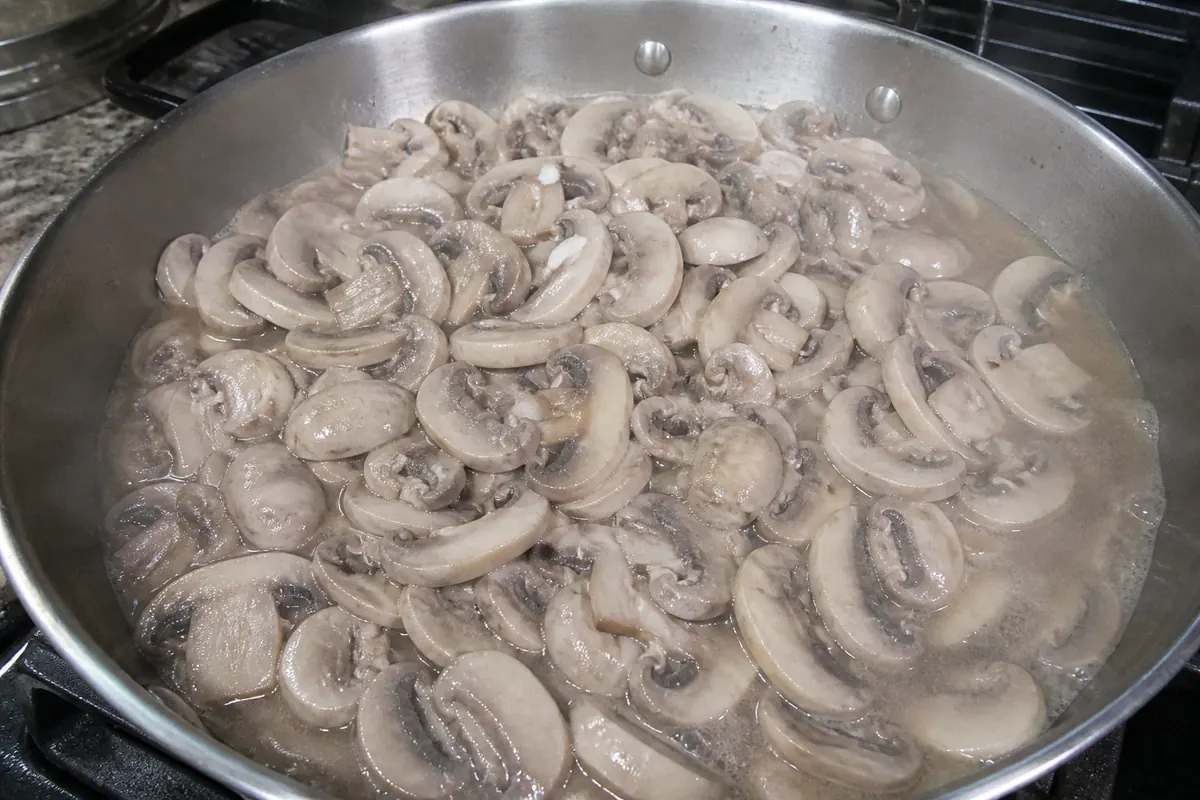
Fresh mushrooms release water before their surfaces can brown. When too many pieces share a small pan, they sit in that water and steam while the future sauce base becomes diluted.
Use the broadest heavy pan available and leave visible metal between many of the pieces. Work in batches when 340 to 450 g of cremini would otherwise form more than one layer.
The pan sounds quieter when released water surrounds the mushrooms. A sharper sizzle returns after free water evaporates, and browned edges begin to appear soon afterward.
Do not keep adding oil merely because pale mushrooms look dry, since space, heat, and evaporation work better and excess fat can leave the sauce greasy.
Once brown surfaces appear, remove delicate pieces or push sturdy ones aside. Cook shallot or garlic in the open pan, deglaze the browned residue with a measured liquid, and reduce before cream or butter finishes the sauce.
Cream should enter after watery mushroom liquid and wine have reduced. High heat after dairy enters can split the sauce, so lower the heat and let a gentle simmer finish the coating.
Brown first and dilute deliberately later, because liquid is easy to add and slow to remove after dairy or tender mushroom pieces are present.
The crowded pan below shows the failure state. The mushrooms are pale because the released water cannot escape quickly enough.
Fix the Sauce by Its Symptom
Taste and look before adding another ingredient. Thin, flat, greasy, split, and rubbery sauces come from different causes, so one universal correction usually creates a second problem.
Reduce a thin sauce before adding more salt because evaporation concentrates both. Remove mushroom pieces first when they are already tender, then return them after the liquid reaches the intended body.
A rich sauce that tastes flat may need a few drops of lemon juice or wine vinegar added away from aggressive heat so dairy does not turn grainy.
Greasy sauce needs measured water and movement to bring fat back into suspension. Split dairy may improve with lower heat and a small amount of warm liquid, but severely curdled cream is more reliable to remake than to disguise.
Rubbery mushroom pieces cannot be softened by indefinite simmering. Remove them if they are distracting, correct the sauce itself, and change the cut or cooking time on the next batch.
| Symptom | Likely cause | Best correction | Stop when |
|---|---|---|---|
| Sauce pools like broth | Mushroom water or added liquid was not reduced | Remove tender pieces and reduce the liquid alone | A spoon leaves a brief clean trail in the pan |
| Sauce tastes flat but salty enough | Richness lacks contrast | Add lemon juice or wine vinegar a few drops at a time | Mushroom aroma becomes clearer without sourness |
| Sauce looks greasy | Too much fat or a weak emulsion | Whisk or toss in small additions of warm water | The surface looks glossy rather than oily |
| Cream has started to split | Heat was too high after dairy entered | Lower heat and stir in a little warm liquid | Small fat beads disappear |
| Mushroom pieces are rubbery | Pieces were too thick or cooked too long | Remove distracting pieces and finish the liquid | The sauce is balanced without further simmering |
The correct finish coats the back of a spoon and falls in a continuous ribbon, while browned mushroom pieces remain distinct.
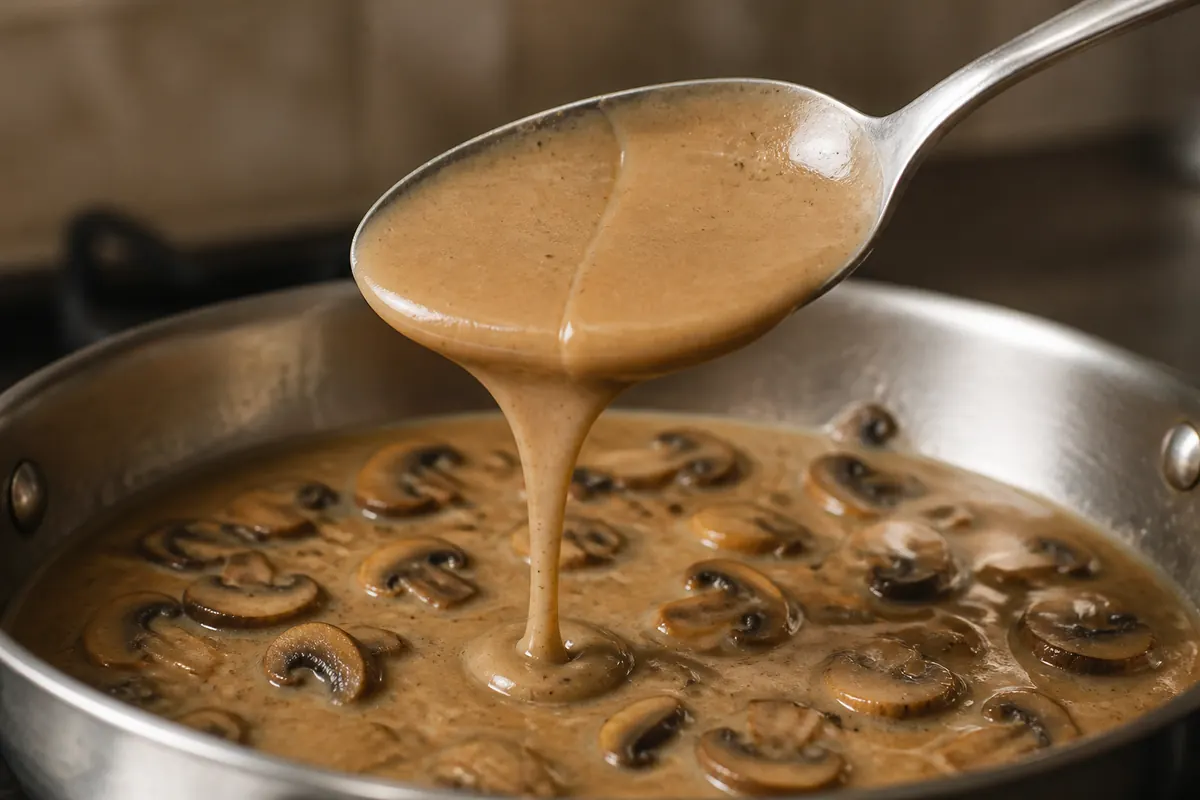
Use the spoon test before serving because a sauce that still runs like broth needs reduction, not another thickener.
Tip
For a first attempt, use 340 g cremini and build the sauce only after the mushrooms brown. This choice makes water release, reduction, and final consistency easier to read.