An orientation guide to the mushroom supplement category, covering what is physically in the jar, the fruiting body against grain-grown mycelium split that decides what a product contains, the five formats and what each can deliver, an honest account of the evidence including its formal certainty grade, which species carry human trial data, the four purchase decisions in the order they matter, and a starting position that costs almost nothing.
Everything in this category is the same raw material, dried, sold in five formats, and separated mainly by which part of the organism went into the jar.
That sentence is more useful than any list of benefits, because every real difference between two products traces back to one of those two things.
Compare the product form, the evidence for the claimed benefit, and the safety precautions before buying. It says what the material is, what the formats can and cannot deliver, what the evidence honestly looks like, and which four decisions a purchase actually turns on.
What is actually in the jar
A mushroom supplement is fungal material that has been dried, and then had something done to it.
That is the whole category. There is no synthesized compound anywhere in it, which already separates it from most of the shelf it sits on.
The reason anything else happens to that material is structural rather than commercial.
Key takeaway
Fungal cell walls are built largely on chitin, the same polymer as an insect shell, and human digestion has no enzyme that opens it. The compound class most of the research concerns sits bound inside those walls, which is why a processing step is doing real work rather than adding a markup.
That single fact is why the category exists as an industry rather than as a shelf of dried mushrooms.
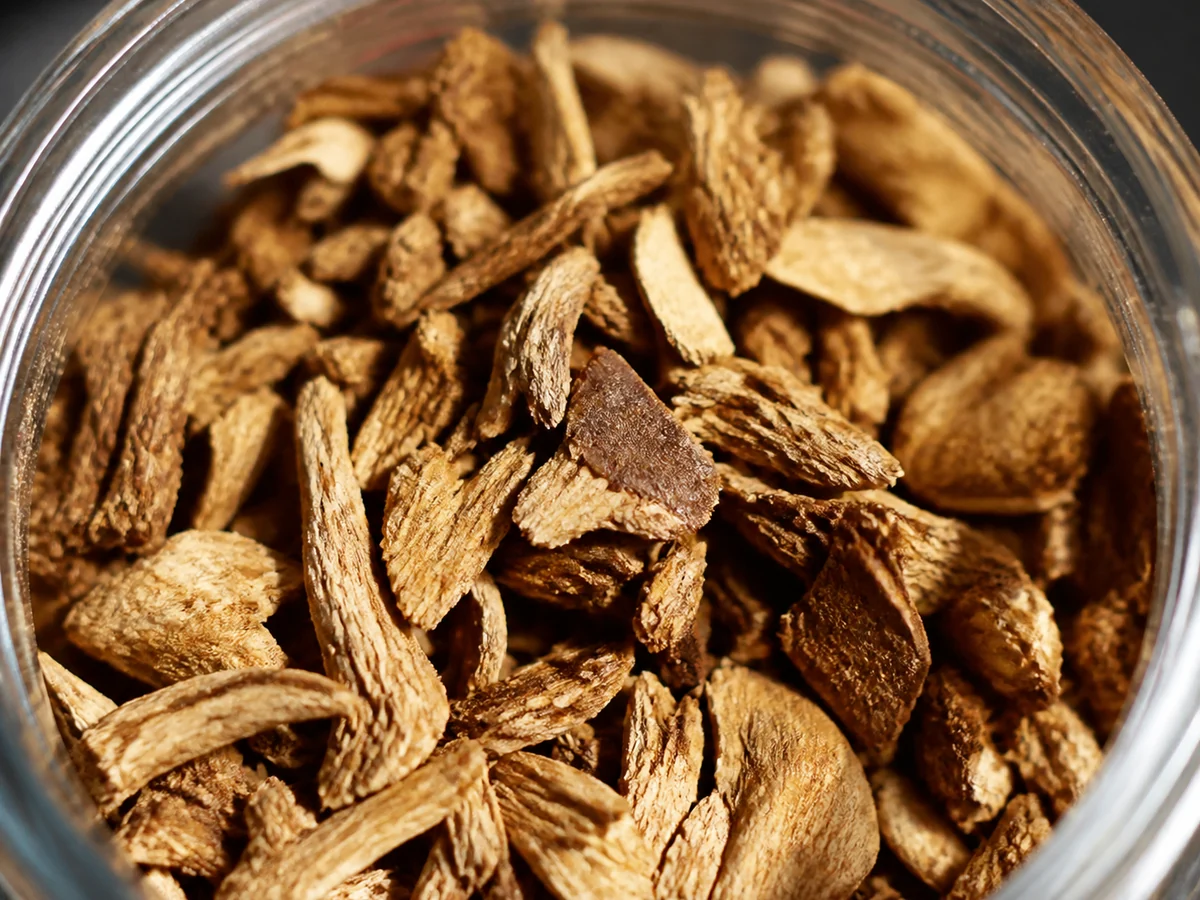
So the useful frame for the whole category is a question about processing. Something was done to this material, and a product is worth what that something achieved.
Two products can name the same species, cost four times as much as each other, and differ entirely in what was done after drying.
That is also why the species name on the front is a weaker signal than most shoppers treat it as. It is not always right either.
Published barcoding work on commercial fungal products found that five of thirty-three samples carried a completely incorrect Latin name, so even the species line is a claim rather than a fact until somebody checks it.
Drying is the one step almost every product shares, and it is worth a sentence of its own.
Fresh mushroom is around ninety percent water, so nothing in this category is sold fresh. Drying is what makes the material stable, transportable and measurable by weight, and it is also why every figure in the category is quoted against dry weight.
Everything below is an attempt to make those differences visible without having to take anybody's word for them.
Medicinal MushroomsLion's Mane Benefits: What Human Trials Actually FoundFruiting body or mycelium on grain
This is the division that decides more than any other, and most labels do not draw it clearly.
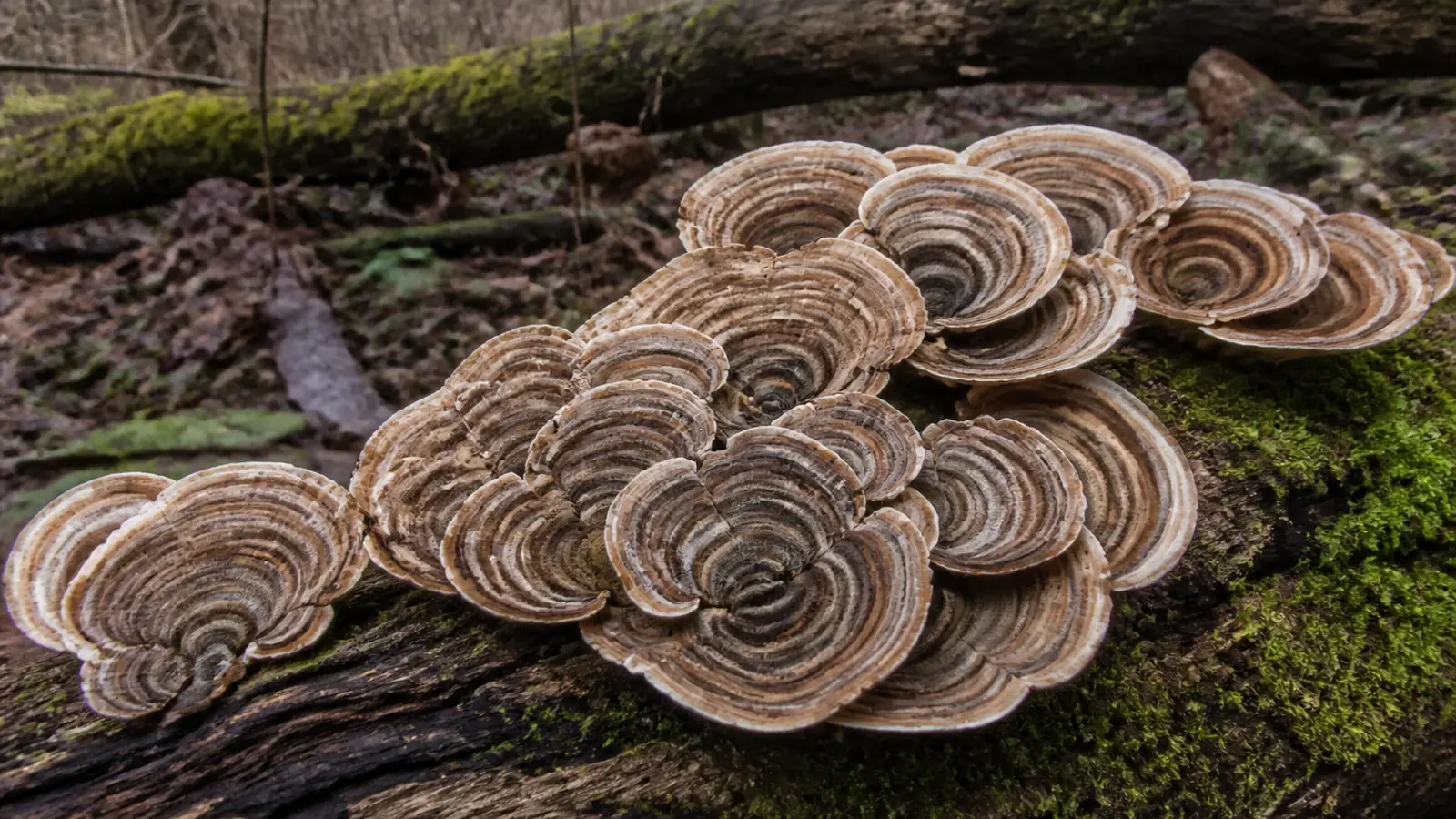
The fruiting body is the mushroom itself, the visible thing that appears above ground or on a log. The underlying mycelium is the network of fine threads it grows out of, which is the larger and longer-lived part of the organism.
Only the last of those four avoids the problem the next few paragraphs describe.
The objection here is often stated badly, so it is worth being precise.
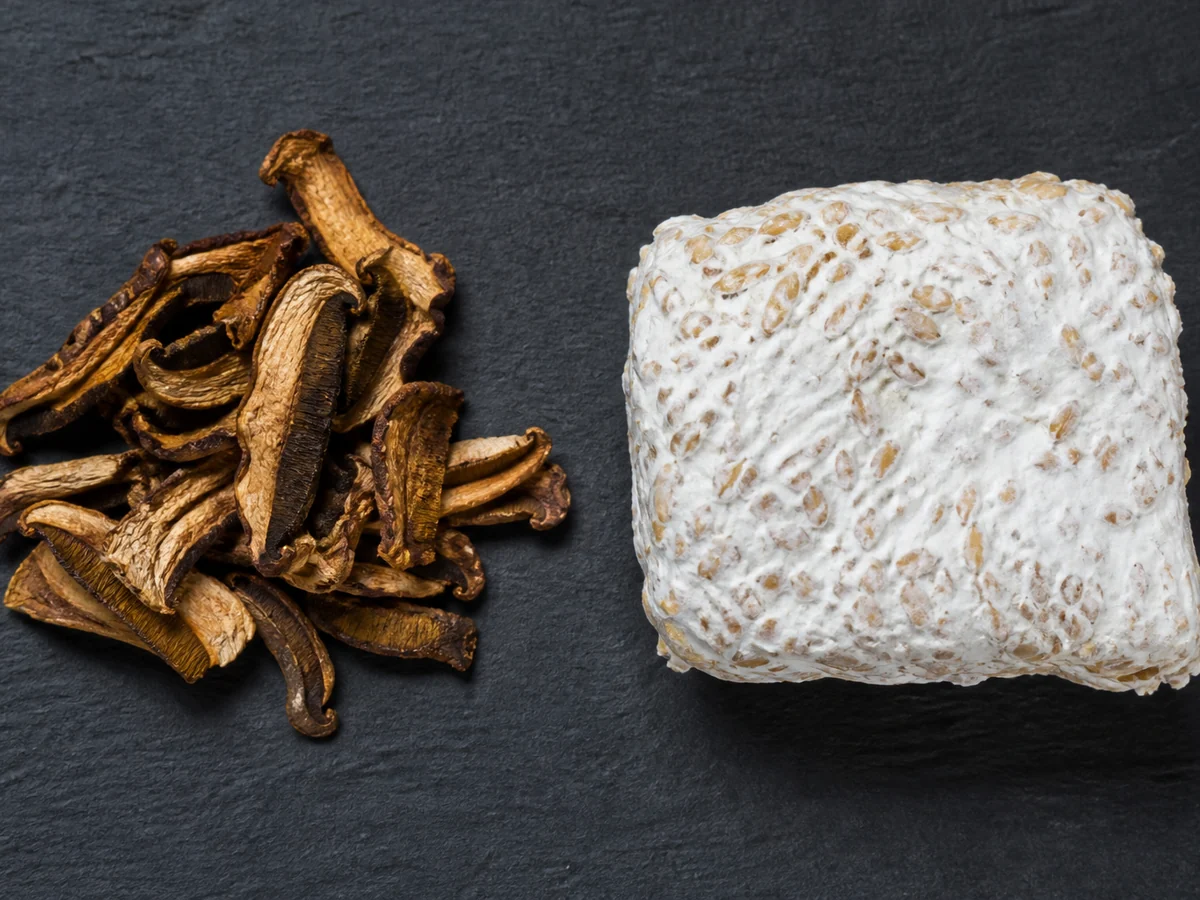
Mycelium is genuine fungal tissue and there is nothing fraudulent about selling it. The issue is that grain-grown mycelium arrives with its grain attached, so a fraction of the finished powder is cereal starch rather than fungus.
That fraction is not small in many products, and it is not declared anywhere on the front of the container.
A reader who wants to know how that starch inflates the numbers printed on a label will find it explained under powder against extract, which is where the label mechanics live.
For the purposes of a first pass, the ingredient line is enough. If it says mycelium and does not say the substrate was removed, the substrate is in there.
The trade has its own vocabulary for this and it is worth recognizing.
Myceliated grain, myceliated biomass and full spectrum are all terms that describe the same arrangement, which is fungal tissue sold together with the material it was grown on. None of them is a lie and none of them tells a shopper the proportion.
There is also a legitimate defense of these products that rarely gets made. Growing mycelium is faster and cheaper than fruiting mushrooms, which is why mycelium products are usually the affordable end of a shelf, and an affordable product that says what it is beats an expensive one that does not.
Five formats, and what each one can deliver
Format gets treated as a preference and it is really a consequence, because each one carries a different part of what the material contains.
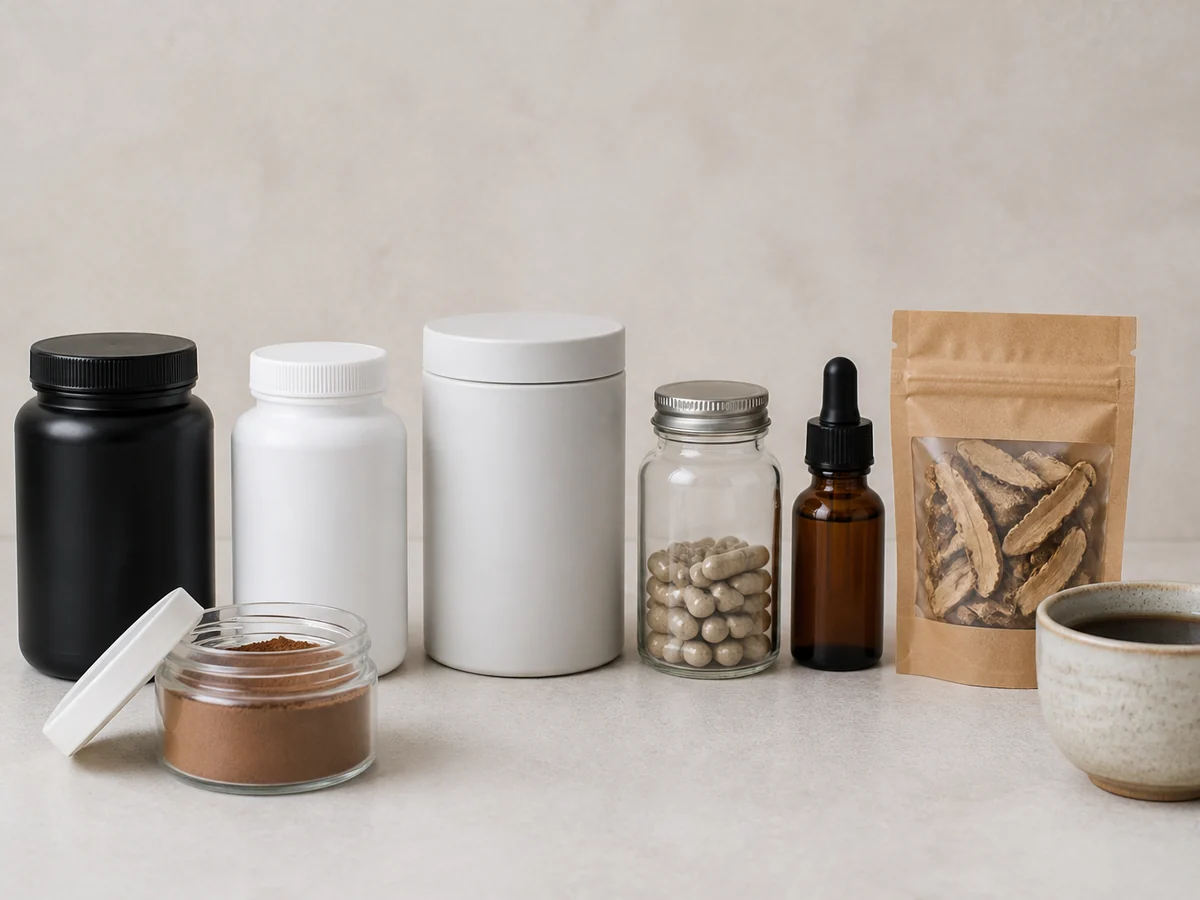
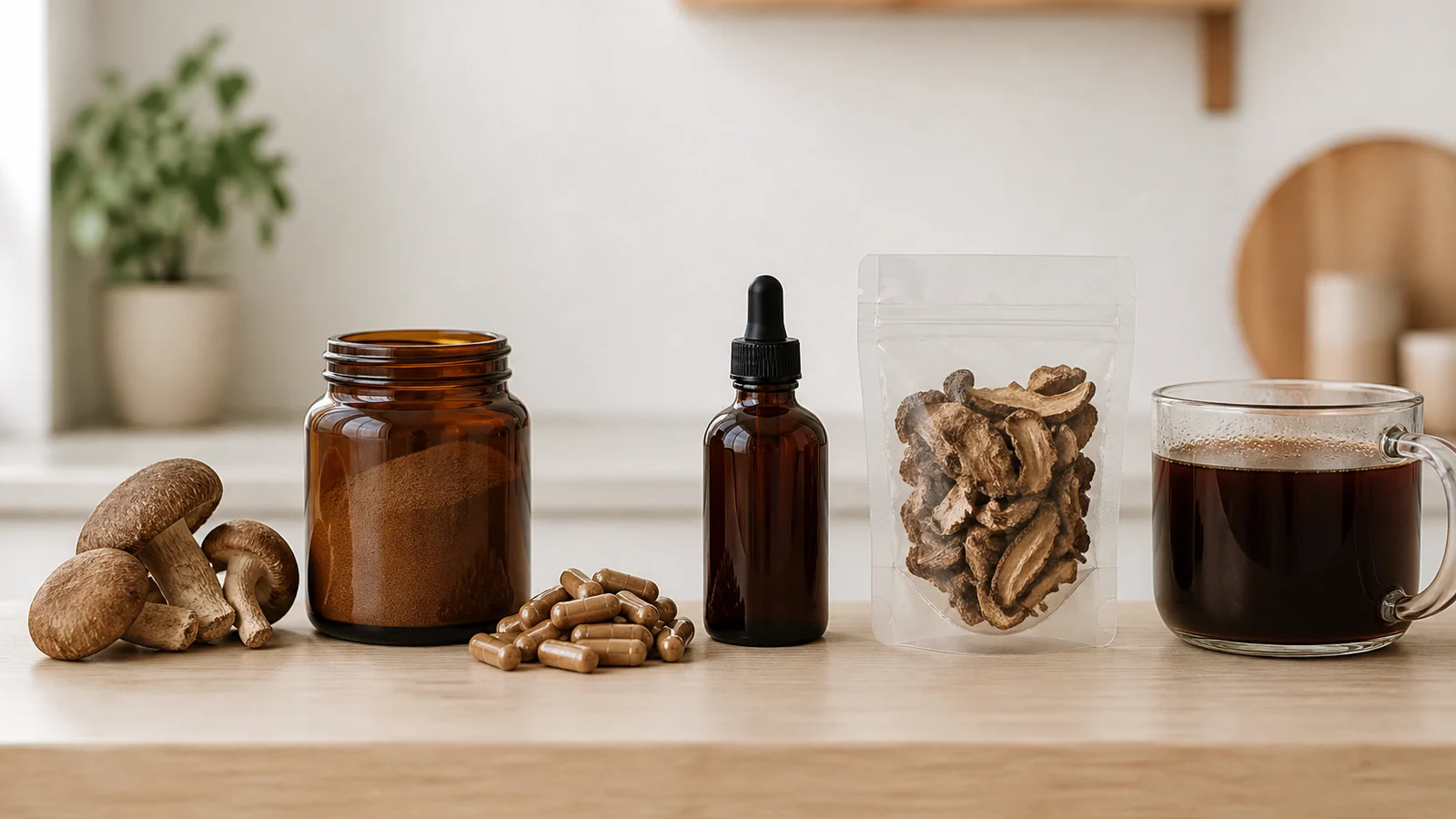
There are five of them, they account for essentially everything sold, and they are not interchangeable.
- Dried whole material
- An ingredient rather than a supplement, and cooking it is itself a heat and water process
- Milled powder
- The same material with more surface area, with nothing released and nothing removed
- Extract, loose or encapsulated
- A fraction that came out into a solvent and was dried back into a powder
- Tincture
- An alcohol extract that was never dried, carrying the non-polar fraction rather than the polysaccharides
- Home decoction
- A water extraction the buyer runs themselves, from material bought in almost any form
Reading down that list, the pattern is that each format answers a different question about the same jar of dried fungus. The question is what you want out of it.
- If you want food, dried whole material and cooking is the format, and it needs no supplement industry at all
- If you want the water-soluble fraction, an extract or a decoction will carry it and a plain powder largely will not
- If you want the alcohol-soluble fraction, a tincture is the only format that reaches it
- If you want convenience above everything, capsules are the format, and what is inside them is a separate question entirely
Capsules deserve a note of their own because they are the default and they hide the most.
A capsule is a delivery shell rather than a preparation. It can contain a plain milled powder, a concentrated extract or a mycelium and grain blend, and from the outside all three look identical.
The fill weight compounds that problem. A large capsule holds around half a gram of powder, so a trial amount in the region of three grams is six capsules rather than the two most labels suggest.
There is a sixth thing on shelves that does not sit neatly in the list, which is the drink mixes.
Mushroom coffee and similar blends are extracts mixed into something else, so they are a format question and a quantity question at once, and the quantity is usually the smaller of the two numbers on the packet.
Medicinal MushroomsWhich Reishi Benefits Hold Up in Human Studies?What the evidence looks like from a distance
An overview owes a newcomer an honest answer here, and honest does not mean either enthusiastic or dismissive.
The literature on these species is real and it is small. Human trials typically enroll participants in the tens rather than the hundreds, and most published work on the species is in animals rather than in people.
Held next to a jar, the whole human literature is a smaller object than most people expect.
Setting out what actually exists against what it will carry makes the position easier to hold.
| What exists | What it supports | What it does not support |
|---|---|---|
| A handful of small randomized human trials | That specific preparations have been tested in people at gram-scale amounts | Any claim that a given jar will do a given thing |
| A large body of animal and cell work | Plausible mechanisms worth investigating further | Direct application to a person at any amount |
| Long records of traditional use | That these species have been consumed for a long time without obvious catastrophe | Any efficacy claim, because traditional use is not a trial |
| A pooled certainty rating of very low | That further research would very likely change the current estimates | Confident statements from anybody, including sellers |
That last row is the one worth carrying around. A very low certainty grade is a formal judgment rather than a hedge, and it means the reviewers expect the picture to move.
One frequently quoted cognition trial makes the point in miniature. Scores improved against placebo during sixteen weeks of treatment, and had fallen back four weeks after the treatment stopped.
Two structural problems sit underneath all of it and are worth naming.
Small trials that find nothing are less likely to be published than small trials that find something, which tilts any pooled picture upward. And traditional use, however long, records that people consumed something rather than that it worked.
None of that makes the category worthless. It means anybody speaking about it with certainty is drawing on something the published record does not contain.
Medicinal MushroomsMushrooms for Brain Health, Ranked by EvidenceThe species people actually buy
A dozen names appear on shelves and a much smaller number account for almost all sales.
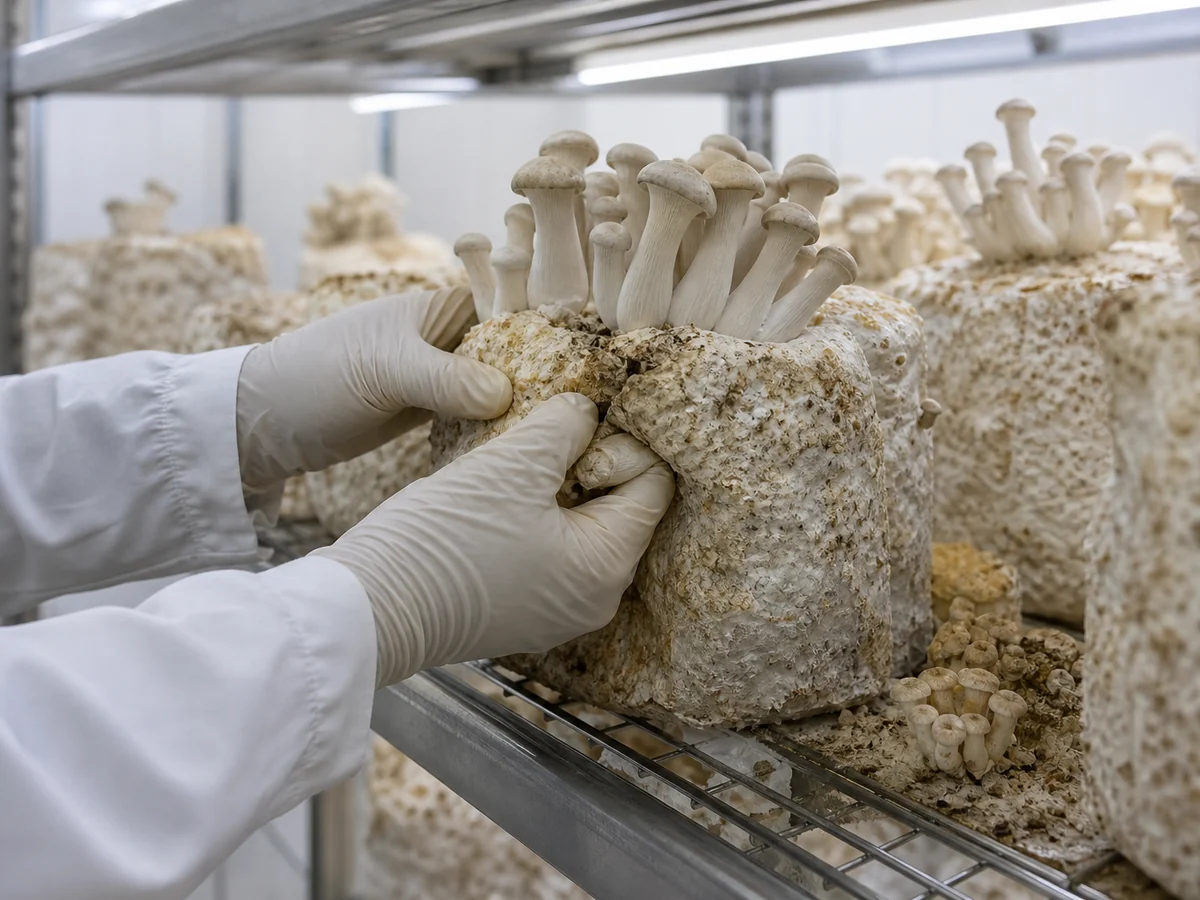
The split worth knowing is between species with human trial data and species resting on traditional use and animal work. That line runs straight through the shelf.
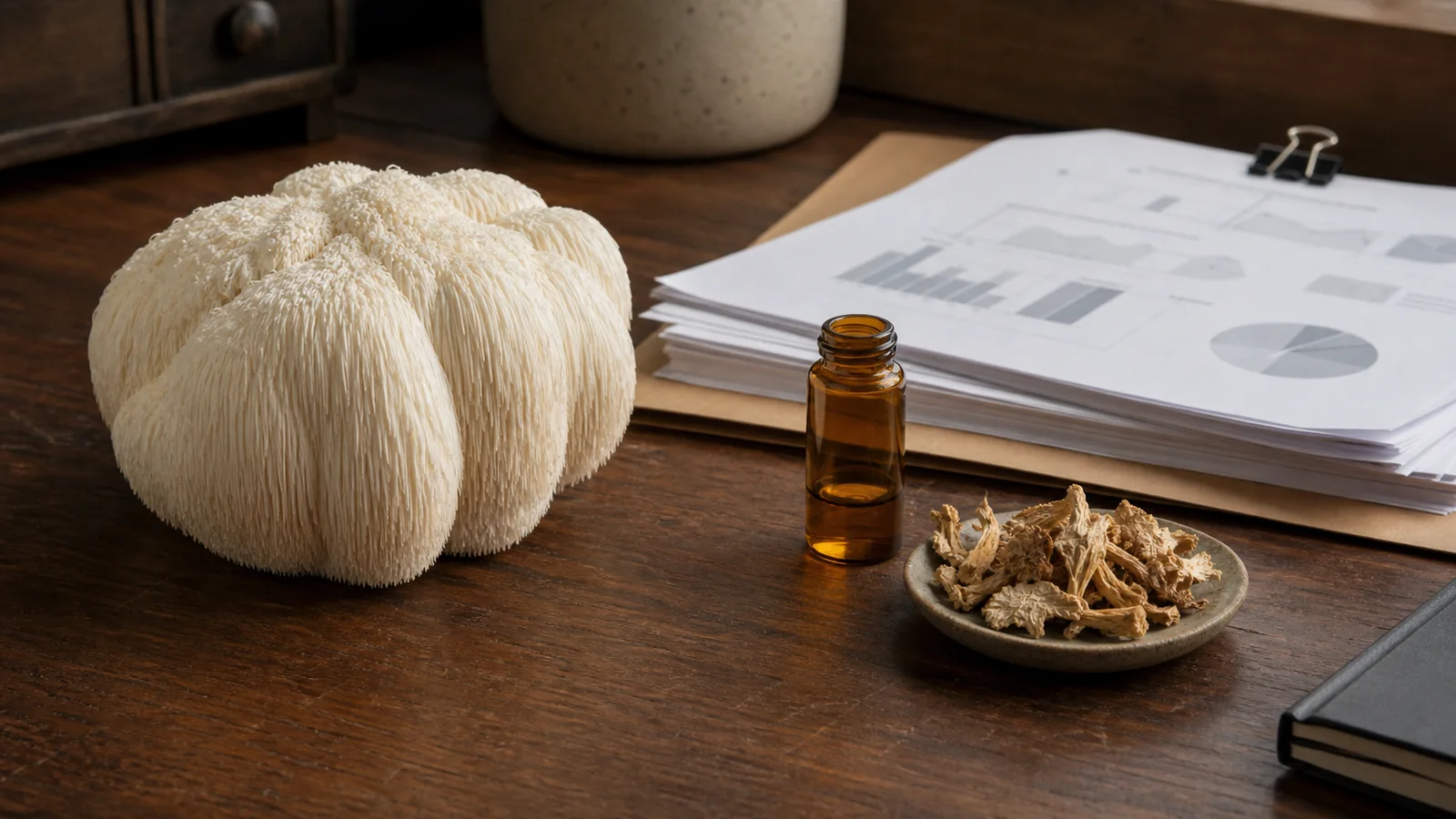
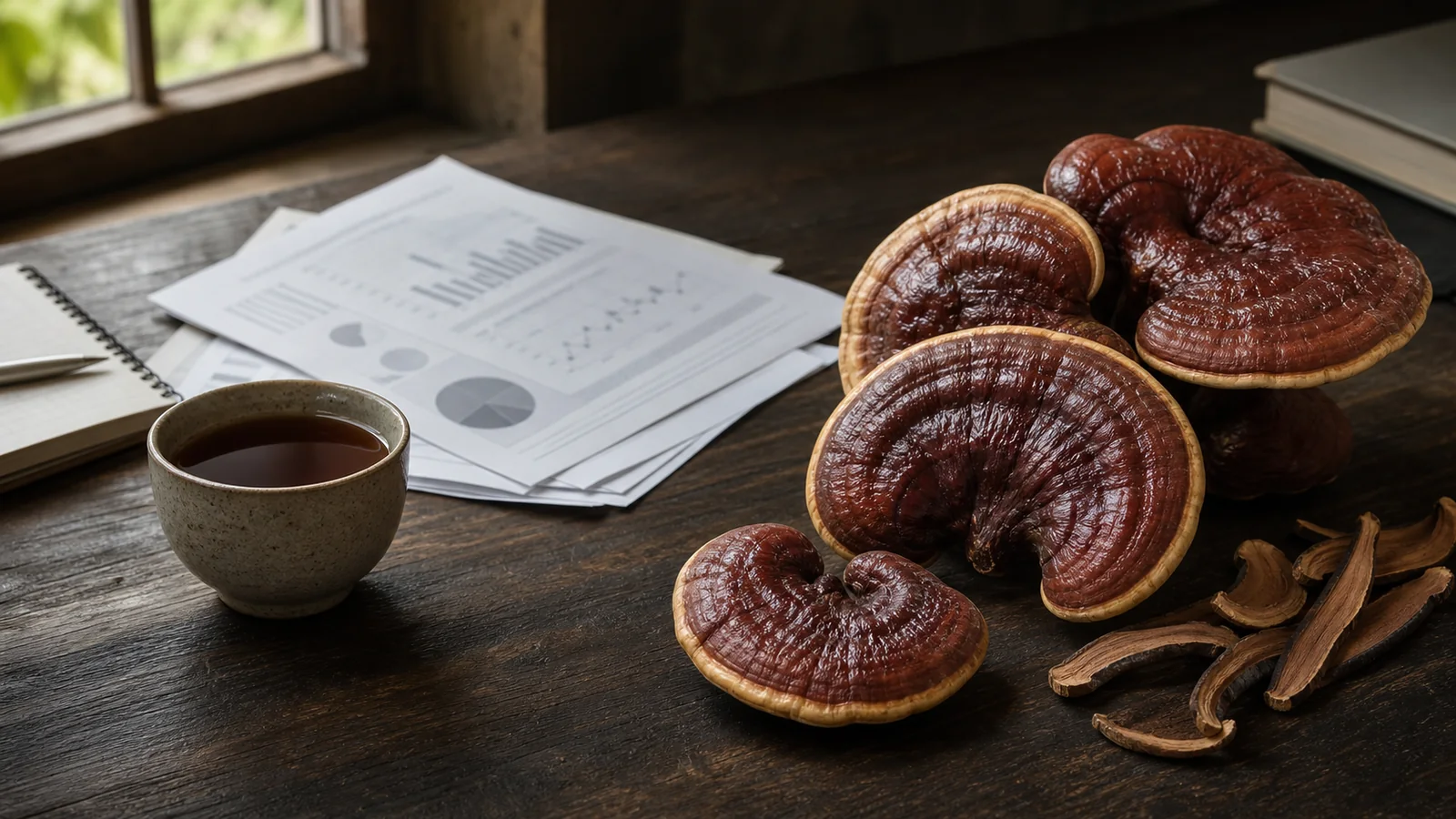
The two with the most human data are lion's mane and the reishi bracket, which are also the two most heavily marketed.
Whether the marketing is proportionate to the data is a separate question from whether the data exists, and it usually is not.
Several other popular names have essentially no human trials behind them. That does not make them useless and it does make the confident claims attached to them harder to justify.
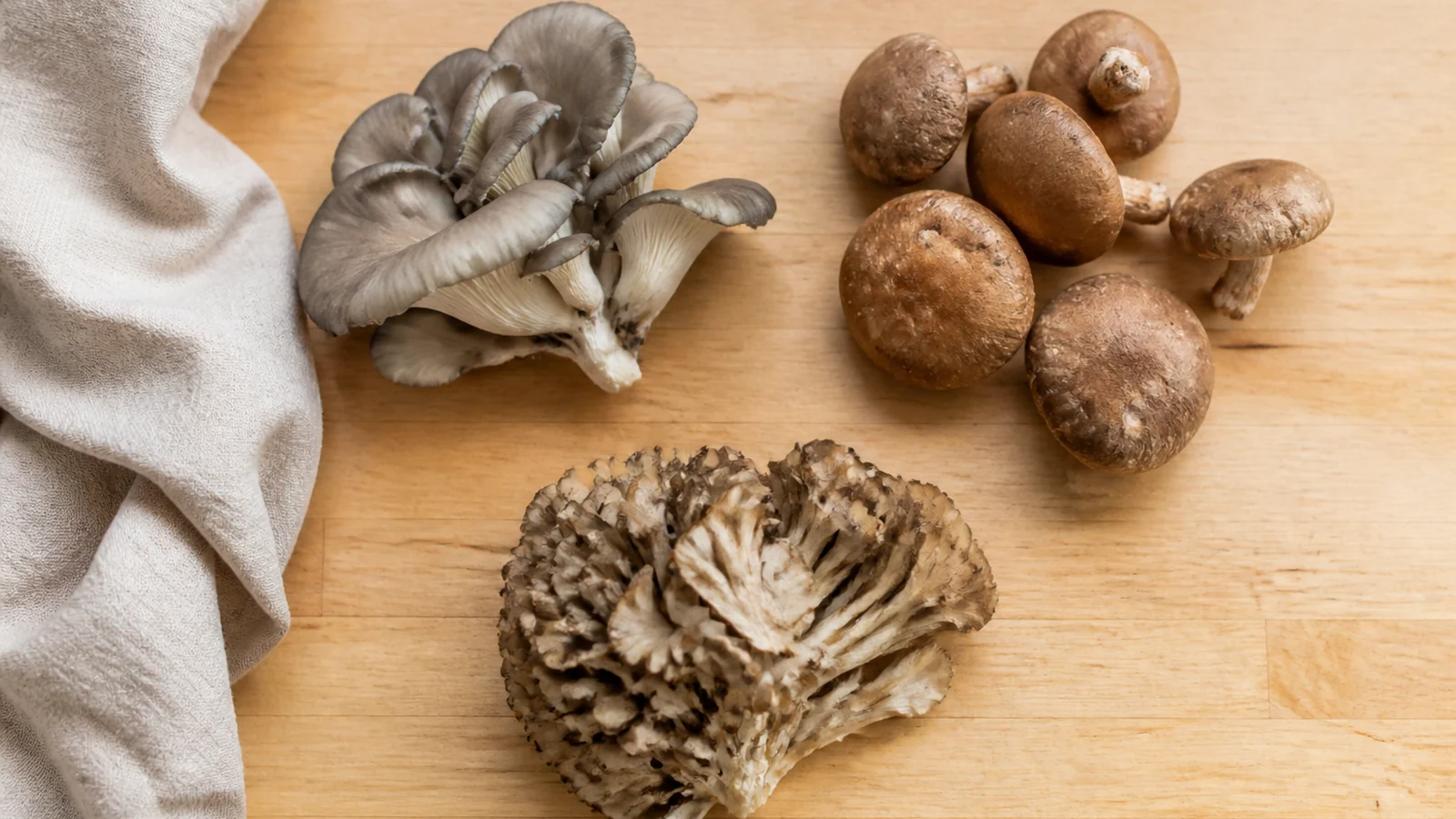
A second distinction cuts across the first. Some of these species are food that can be cooked and eaten, and some are woody things nobody would chew, which changes what a supplement of them is even for.
For an edible species, a supplement is a convenience purchase competing against a bag of dried mushrooms in a shop.
For a woody species there is no competition, because eating it is not an option and a preparation of some kind is the only route in. That is the group where processing genuinely earns its cost.
The one thing almost all of them share is that the commercial supply is cultivated indoors on prepared substrate rather than gathered from anywhere.
Wild-harvested marketing is the exception in this category rather than the norm, and where it does appear it is worth more skepticism rather than less, since ground nobody chose is ground nobody tested.
Cultivation is not a compromise here. A known substrate is the reason a supplier can specify what went in, which is the only basis anybody has for saying what came out.
Four decisions, in the order they bite
A purchase in this category is four separable decisions, and taking them out of order is why so many comparisons go nowhere.
- Which part of the organism, because a mycelium and grain product and a fruiting body product are different materials before anything else is considered
- Which format, because that decides what fraction of the material can actually be delivered
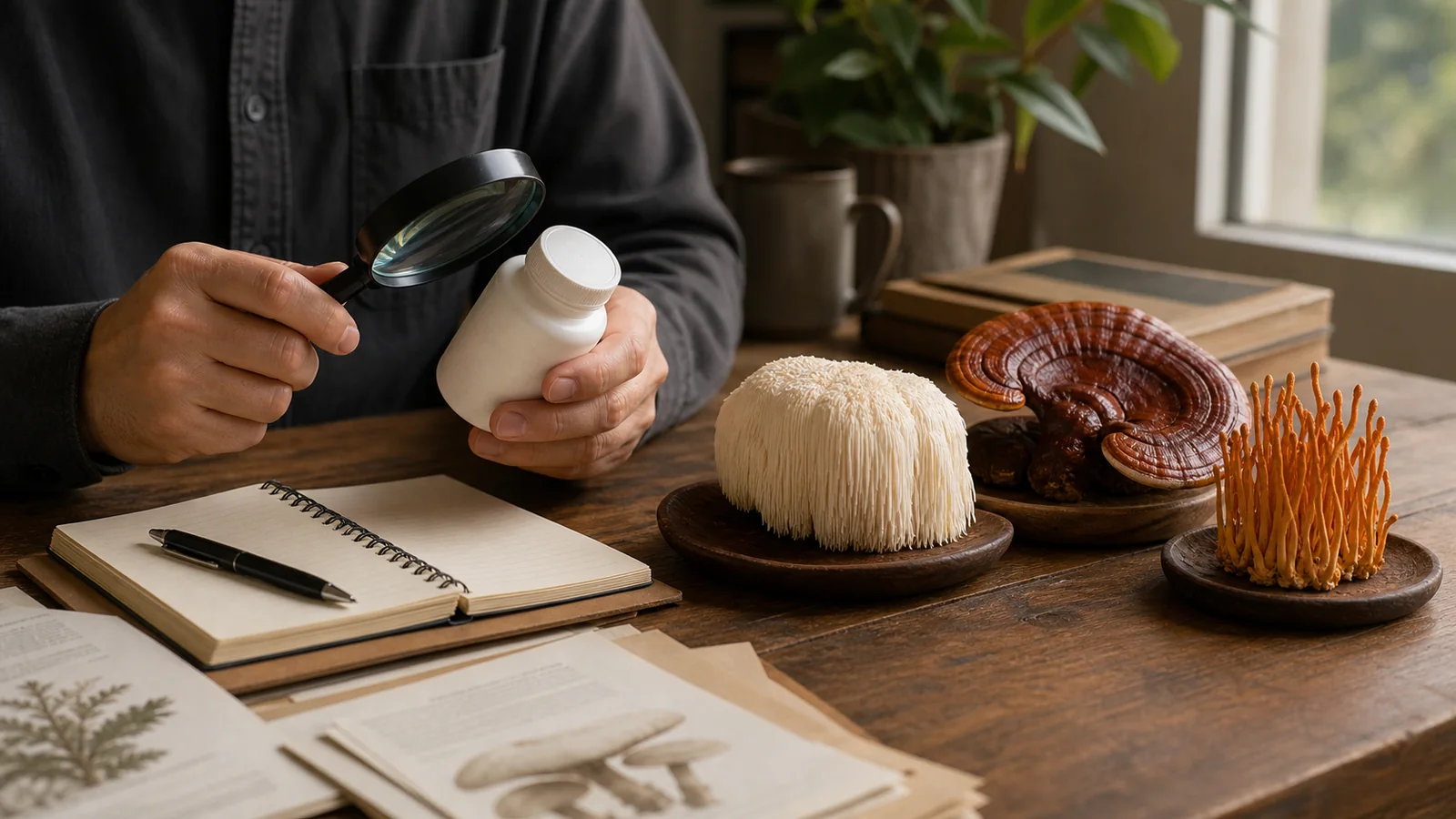
- Whether the seller can show what is in the container, because everything above is a claim until somebody tests it
- How much, which only becomes a real question once the first three are settled
The order is not arbitrary. Answering the fourth first is how people end up comparing two products on the only number both of them happened to print.
The third decision is the one most newcomers skip and the one that carries the most weight, since it is the only step where an outside party is involved at all. What a test report contains and how to ask for one is covered under choosing a supplement.
The fourth is genuinely harder than it looks, because no authority has set an amount for any of these species and the published trials span a very wide range. That question has its own page, at supplement dosage.
A worked example makes the ordering concrete.
Somebody comparing two jars on price per capsule has skipped all three earlier decisions, so they may be comparing a fruiting body extract against a mycelium and grain powder at half the fill weight. The cheaper one wins a contest that was never about the same thing.
Working through them in order means each answer narrows the next question rather than leaving four open at once.
A reasonable way to start
The cheapest first move in this whole category involves buying no supplement at all.
Several of the species sold as supplements are food. Buying a culinary species fresh or dried and cooking it costs less than a bottle, involves no label reading, and tells you whether you like the thing.
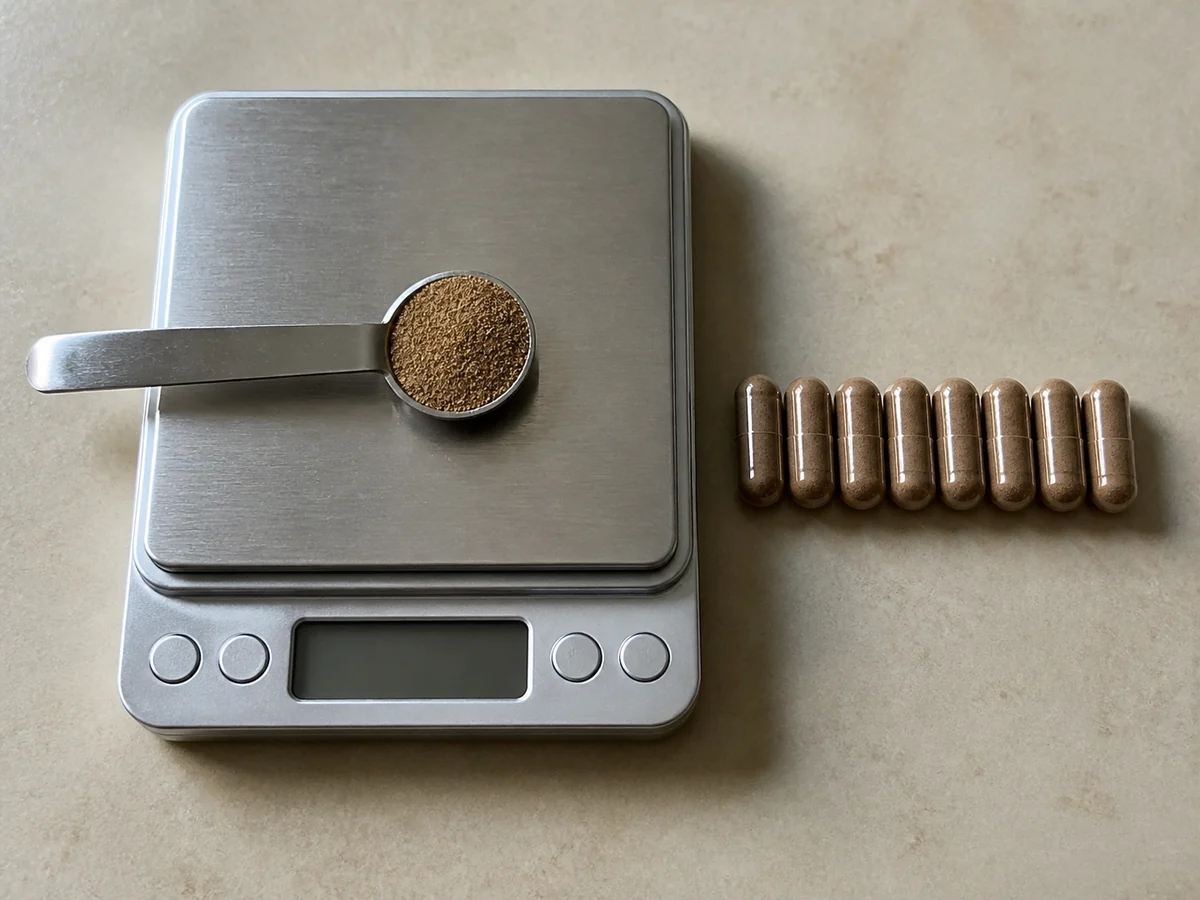
If you do want a product, three choices make the first purchase informative rather than confusing.
Start with one species rather than a blend, because anything that happens with a blend is unattributable across six ingredients. Start with a loose powder or extract rather than capsules, because you can see and weigh what you have.
Give it the kind of duration the trials gave it. A two week experiment answers nothing at all, and the published work runs to six, sixteen and twenty-four weeks.
That duration point has a budget consequence people rarely plan for.
- A sixteen week trial of anything is four bottles rather than one, so price the experiment rather than the jar
- Buying a large quantity of an unfamiliar species is a bet placed before any information arrives
- A single small container of something you can weigh is the cheapest way to find out whether you will keep taking it
- Most people stop within a month, which is worth knowing about yourself before committing to four bottles
Write down the species, the format, the amount in grams and what you were hoping to notice. That last item is the one people skip, and without it the other three are unreadable later.
If anything unpleasant happens, that is information rather than an obstacle, and what to do about it belongs under side effects rather than being pushed through.
Sources & References
- The Nutritional Significance of Ganoderma lucidum on Human Health, a GRADE-assessed systematic review and meta-analysis, Food Science and Nutrition That seventeen pooled trials covering 971 participants used doses from 200 to 11,200 milligrams a day, with certainty rated very low across all outcomes.
- Improving effects of the mushroom Yamabushitake on mild cognitive impairment, Phytotherapy Research That a sixteen week improvement against placebo had fallen back four weeks after treatment stopped.
- DNA barcoding for identification of consumer-relevant mushrooms, Food Chemistry That five of thirty-three barcoded commercial fungal samples carried a completely incorrect Latin name.
- Edible mushrooms and beta-glucans, impact on human health That beta-glucans are bound into chitin-based cell walls, which is why a processing step exists at all.
- US Food and Drug Administration, Questions and Answers on Dietary Supplements That supplements are not approved before marketing and that the manufacturer evaluates its own product.